
Success Advice
How To Create A Powerful Vision For Your Success

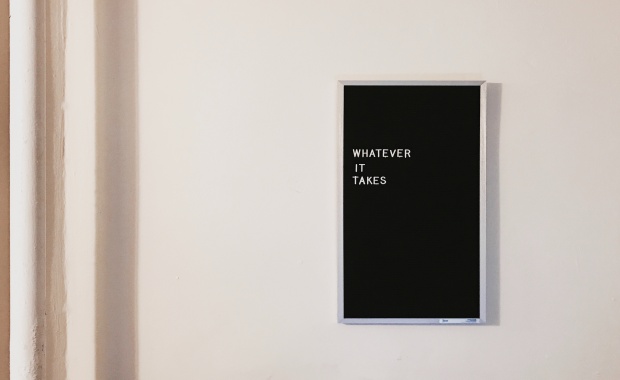
Envision something you have always wanted to do. Go on, take your time. Let yourself go. Is it Snowboarding in the Swiss Alps? Finishing your education? Making a million dollars? Starting your own business? Whatever it is, you can accomplish it, and this can be achieved by first envisioning your dream to be real.
By creating a vision, you can reach far beyond your material existence, get out of your comfort zone, and imaginatively extend yourself beyond what previously seemed impossible. By going deeper, and understanding yourself better, you create a better balance. The heart and soul are enhanced and you then become more focused on the positive. Most people are focused on what they believe they “can’t” do, and not on what they “can” do. Fear is the paralysis and usually the culprit, and creating a vision can help you overcome this.
Great visionaries like Walt Disney emphasized “If you can dream it, you can do it.” Goethe stated, “whatever you are able to do or dream you can initiate it. Boldness has magic, genius, and strength. Start now!” Michelangelo said, “The biggest threat for many of us is not that our goals are too high and we might miss them, but they are too low and we may reach them.” The list of words of wisdom can go on infinitely. There has been great minds throughout the centuries that have learned the secret of seeing the invisible and creating a vision. In fact, it would be impossible for them to achieve their dreams without envisioning them first.
What is a vision for success?
– A vision is something like a mirage in the mind. A state you want manifested into your outer world.
– The idea becomes a conviction after your “will” joins in to support the idea.
– Fine tuning and expounding the concept with the will and intentions to achieve the perceived idea are what creates the vision.
The vision is the expression of a much wished for future, that is better than what exists now or of what is projected to subsist in the future.
Why Develop a Vision?
– Every decision and choice we make has consequences. Without a clear vision, we fall short of having the quality of life we desire.
– Our visions must be strong and steady in order to manifest what we truly desire. Weak visions lead to an imbalanced life.
– Visions not based on our “inner self” are not satisfying and empowering.
– Clear vision leads to fulfillment, purpose, and brings meaning into our lives.
– An unclear vision leads to vulnerability to “whatever” happens, staying true to your vision will make things happen better than you ever thought possible.
Expanding Your Vision
The initial step of a vision becoming a reality is well, by envisioning. In other words, the focus of your vision has no apparent reality on the material plane. Some people call this faith. Not creating a vision is like walking around with your eyes closed, except in the invisible realm your “inner eye” is shut. You cannot go anywhere if you have no place to go to. You must see yourself going somewhere in order to get there! In effect, seeing something in the invisible as “real” manifests the energy in your outer world to eradicate the obstacles that would prevent you from realizing your vision. However, be forewarned. Negative visions can manifest negative results as well. People who are always “envisioning or saving for a rainy day,” eventually have one. “When it rains it pours” is usually the battle cry when misfortune manifests.
If you expand your vision and connect deeply within your inner needs, with the Soul, you will eventually discover an ability to fuse and display visionary creativity. You will become more powerful and charismatic as well. Your relationships will become more sincere, authentic, and energized. Think about it, what do you believe you could accomplish if you perceive it in the invisible, thereby, manifesting the so-called impossible?
A number of highly successful people have claimed to have made a vision board and have recognised it is an important tool for their success. A vision board is usually designed with a big sheet of cardboard that has a collage of different pictures and notes of wants, needs and dreams you wish to fulfill and is usually hung up on your bedroom wall as a reminder of the possibilities that are out there and is also a great visual aid for envisioning your hopes and dreams. This is a great way to reinforce the vision and direction in your mind so that you can be more sure of reaching your dreams.
Cut out a picture of your favorite car, your dream holiday destination, your company logo, a picture of some money etc… and add that to your vision board. Make it appealing as possible so that you will be inspired when looking at it every morning and evening.
I have one myself and find that a vision board has been my saviour when I lose sight of my dreams and has been a great inspiration for me when I forget how good things can be in life if I just hang in there.
I have my moments of low motivation also, believe it or not, and nothing is wrong with that, sometimes our body is trying to tell us to slow down and balance out a little, but when it is time to perform you have to really have a strong reason behind WHY you must succeed in what you are doing, that will be the key to finding your motivation.
Write it down and create an eye pleasing visual of the reason why you must succeed, and make it a MUST, not a should or a maybe.
Create a Vision: Start by Dreaming
 – Think about who will participate in the vision.
– Suggest, dream, and envisage.
– Concentrate on positive things. Things that create a sense-of-purpose and meaning to life.
– Do not limit your vision to appearances. Visions go beyond what is in front of you and reaches beyond the three-dimensional world.
– Visions are not limited by needs, but the needs are determined by the vision.
The Power of the Mind and The Placebo Effect
Without a doubt, many of you have heard of the placebo effect. A substance or some other treatment is given to a person that looks like standard medicine, but it is not. It is really a fake identical looking substance that is not a medicine. The person receiving the placebo is not aware whether the treatment is genuine or not.
Although placebos are not actually reacting to the ailment, one out of three individuals claims to have a reaction to the fake medicine. When a person’s symptoms change due to this “fake remedy,” it is called the “Placebo Effect.” However, sometimes the effect can go in the opposite direction and patients believe that the “fake medicine” is causing disagreeable or worse symptoms. This is known as the “Nacebo Effect“.
What it all boils down to is the power of the mind to heal or destroy through the power of imagination. The NCCAM, National-Center-for-Complementary-and-Alternative-Medicine, a branch of the National Institute of Health states yes, “there is significant proof,” that the mind can have a positive influence on mental functioning and quality of life.”
Carl T. Javert, a holistic doctor now deceased, believed that illnesses were frequently psychosomatically brought about by emotional stress. He assisted women during pregnancy to supervise their problems and difficulties in order to prevent miscarriages and other impediments. With the placebo effect, an individual experiences what they “expect to happen.” If the expectation is to feel better or worse, either could occur. The placebo in itself had nothing to do with the effects directly. However, the person’s “belief” helped to change the outcome.
Imagine harnessing that tremendous power of the mind and envisioning an outcome so strongly that it transcends your material surroundings. A very famous actor did just that. He did not have much, but plenty of talent and faith, before experiencing a very successful acting career. He wrote himself a check for $10,000,000 and post-dated it for 10 years later, hoping he would be able to eventually cash it. That actor is Jim Carrey, one of the most famous comedic actors in the world!
The Power of a Vision
The power of a vision permits us to see beyond our present condition. The power to visualize was given to us for a reason. We are able to manifest our miniature worlds within the colossal world we call earth. Through vision we can dream, create, and manifest what does not yet exist. However, the vision must hold steady to the true and the good. If we want positive results, we must hold true to a positive outcome. The vision must be powerful enough to create a conviction so strong within, that it cannot be shattered regardless of appearances.
Some would say vision is nothing but good ole’ faith under a pseudo name, and this might be true. If one wants to call it faith by all means, do so. Whatever works is fine. Think of your vision in the same way as a diet. In order for your diet to work, you must stick with it. You must think about how much better you will feel and look by staying with that diet, this is the exact same way the “power of vision works.” It works through determination, commitment, and faith.
“See the invisible, Believe the incredible, Achieve the impossible” – Joel Brown
Article by Joel Brown | Addicted2Success.com














Entrepreneurs
The Brutal Truth About Entrepreneurship with ADHD (And Why Most Advice Is Making It Worse)

You’re not lazy. You’re not undisciplined… and you’re definitely not broken.
You’re an entrepreneur with ADHD, and right now you’re probably sitting on 19 unfinished projects, 47 open tabs, and a brain that feels like it’s running on 12 different radio stations at once.
You’ve read the books. You’ve tried the planners, the Pomodoro timers, the accountability groups. You’ve even hired coaches who promised to “fix” your focus. Yet here you are — brilliant ideas, massive potential, and a business that still feels like it’s one step away from collapsing under the weight of your own mind.
Here’s what almost nobody in the entrepreneurial space will admit:
The real struggle isn’t your ADHD. It’s that you’ve been trying to run a neurodivergent brain inside a neurotypical business model — and then beating yourself up when it doesn’t work.
Most advice for entrepreneurs was written by people whose brains work differently. They preach consistency, routines, long-term planning, and steady execution like those things are universal truths. For the ADHD entrepreneur, those “truths” feel like trying to swim upstream in cement. You can force it for a while (and you have), but eventually your brain rebels, the burnout hits, and you’re left feeling like a failure who just needs to “try harder.”
That cycle is quietly destroying more talented founders than cash flow problems or bad hires ever could.
The deeper layer most people never reach is this: your ADHD isn’t a bug in the system. It’s a different operating system entirely. And when you stop trying to install Windows on a Mac and start building everything around macOS, the game changes completely.
The Hidden Addiction That Keeps ADHD Entrepreneurs Stuck
You already know the surface symptoms — time blindness, rejection sensitivity, starting strong and fading fast, shiny object syndrome.
But the real trap is more insidious.
It’s the addiction to chaos and novelty.
Your brain is wired for dopamine. New ideas, big visions, last-minute sprints, high-stakes pressure — these things light you up like nothing else. The boring, repetitive, systems-building work that actually scales a business? It feels like torture.
So unconsciously, you keep your business in a state of controlled chaos. You say yes to too many things. You chase the next exciting opportunity. You avoid building the boring infrastructure because “I work better under pressure anyway.”
And every time the pressure gets too high, you crash, swear you’ll get organized next quarter, and repeat the cycle.
Meanwhile, the neurotypical advice keeps telling you to “just build better habits.” As if your brain is a poorly trained dog that needs more discipline instead of a high-performance race car that needs the right fuel and track.
This isn’t a character flaw. It’s neurology.
And until you stop treating your wiring as something to overcome and start treating it as your greatest strategic advantage, you’ll stay stuck in the same exhausting loop.
The Identity Shift That Changes Everything
The entrepreneurs with ADHD who finally break through don’t “fix” their brains.
They redesign their entire business to work with their brains.
They stop trying to become the consistent, routine-loving founder the gurus talk about. Instead, they become the architect of a system that leverages their natural strengths — hyperfocus, pattern recognition, creative problem-solving, relentless drive under pressure — while outsourcing or automating everything that drains them.
This is the layer most ADHD entrepreneurs never reach because it requires something terrifying: accepting that you are never going to be “normal” at entrepreneurship… and that’s exactly why you can win bigger than most.
Your ability to see connections others miss. Your tolerance for uncertainty. Your capacity to go all-in when something lights you up. These aren’t liabilities. They’re unfair advantages in a world that rewards speed, creativity, and bold moves.
The shift is simple but brutal:
Stop trying to manage your ADHD. Start designing your business around it.
How to Actually Build a Business That Works With Your Brain
- Stop fighting your energy cycles — weaponize them. Most ADHD entrepreneurs try to force 8-hour focused days. That’s insane. Instead, track when your brain actually works best (for many it’s 10pm-2am or random 4-hour hyperfocus bursts). Build your schedule around those windows. Protect them like gold. Do the deep, high-leverage work then. Use the low-energy periods for admin, calls, or recovery.
- Build “chaos containers,” not rigid systems. Traditional project management tools feel like cages. Create loose but effective structures that give your brain freedom. Use tools like Notion with massive flexibility, or body-doubling (working alongside someone virtually), or even hiring a “chaos wrangler” — an assistant who thrives on turning your scattered ideas into executable plans.
- Turn your rejection sensitivity into rocket fuel. That intense fear of letting people down or looking stupid? Channel it into creating ridiculously high standards for your customer experience or product quality. Use it as fuel instead of letting it paralyze you.
- Outsource the parts that make you want to die. The execution, follow-through, and maintenance phases are where most ADHD entrepreneurs lose. Hire or partner with people who love the details. Your job is vision, strategy, and big swings. Let someone else own the spreadsheets.
- Create external pressure on your own terms. Deadlines and public commitments work wonders for the ADHD brain. Use them strategically — announce launches, create beta groups, or work with coaches who understand neurodivergence instead of fighting it.
The entrepreneurs with ADHD who are quietly crushing it right now aren’t the ones who finally became “disciplined.” They’re the ones who stopped apologizing for how their brain works and started building empires that are specifically engineered for it.
They have teams that handle the boring stuff. They have systems that flex with their energy instead of fighting it. They’ve turned their “flaws” into the exact reasons their businesses stand out.
Your ADHD brain is not the enemy. The enemy was trying to play the game by rules that were never designed for you.
The moment you accept that and start designing everything… your calendar, your team, your offers, your processes — around how you actually operate, the struggle doesn’t disappear… but it becomes manageable, even exhilarating.
You were never meant to fit the mold. You were meant to break it and build something better.
The world doesn’t need another cookie-cutter entrepreneur. It needs the chaotic, brilliant, all-in, slightly unhinged visionaries who can only operate at full power when the game is built for them.
That’s you.
Stop trying to fix yourself. Start building the business that was always meant to be run by a mind like yours.
Your next breakthrough isn’t going to come from working harder or being more consistent. It’s going to come from finally giving yourself permission to work differently.
And when you do that? Watch what happens.
The same brain that once felt like a curse becomes the exact reason your business becomes unstoppable.
You’ve got this. Not despite the ADHD. Because of it.
If you want to learn more from me or send me a personal message I’ll respond to you on Instagram at https://instagram.com/iamjoelbrown speak soon!
Coaching
The Hidden Addiction That’s Quietly Destroying Most Coaches and Consultants (And the One Shift That Finally Sets You Free)

You’re damn good at what you do.
Clients have breakthroughs. They send you the late-night voice notes about how you changed their life. Some even credit you with saving their marriage, their business, or their sanity.
Yet here you are… exhausted, trading hours for dollars, wondering why your income hasn’t doubled in the last two years while your calendar is still packed with 1:1 calls.
You’ve tried the funnels. You’ve raised your prices (a little). You’ve posted the content. And still… the business feels heavy. Like you’re carrying every client on your back.
Here’s what almost nobody in this industry will tell you:
You’re not stuck because you lack strategy.
You’re stuck because you’re addicted to being needed.
And that addiction is invisible, socially rewarded, and absolutely lethal to scaling.
Most coaches and consultants entered this work because they genuinely care. They’ve felt the pain of being unseen or unsupported in their own past, so they became the person they once wished existed for them. That empathy is your superpower in the room with a client.
But the same wiring that makes you exceptional at holding space for someone else’s transformation becomes the exact thing that keeps your business small, stressful, and one person away from collapse.
You get a hit of meaning every time a client says “I couldn’t have done this without you.”
Your nervous system registers that as safety, as worth, as proof that you matter.
So unconsciously, you start designing your entire business model to keep getting that hit.
You keep the business one-to-one. You underprice because “I don’t want to make it inaccessible.” You say yes to extra sessions, extra support, extra emotional labor. You resist group programs, courses, or team members because “they need my personal touch.”
Deep down, part of you is terrified that if clients become truly independent — or if the business can run without you in every session — then who are you?
That fear never gets spoken out loud at coaching conferences. But it’s running the show for the majority of talented practitioners I’ve watched plateau for years.
This is the layer most people never reach.
They think the problem is marketing. Or niching. Or offer structure.
Those are symptoms. The root is identity-level.
Your self-worth got quietly fused with being the indispensable helper. And every time you try to scale, that old identity fights back with guilt, procrastination, or the sudden urge to “just help this one more person for free.”
I’ve seen it in coaches making $250k who feel like impostors when they consider $10k offers. I’ve seen consultants who could easily productize their process but keep reinventing the wheel for each new client because it feels more “authentic.” I’ve seen brilliant facilitators burn out at the peak of their success because the business finally demanded they step out of the rescuer role — and they didn’t know who they were without it.
The brutal truth: the very thing that makes you an incredible coach in the moment is quietly sabotaging the empire you’re capable of building.
Because real transformation… the kind you actually teach… is about helping people become self-reliant.
Yet you’re running a business model that keeps you (and them) dependent.
The shift that changes everything is this:
You stop being the hero in every client’s story and start becoming the architect of a system that creates heroes without you in the room.
You move from “I have to be there for every breakthrough” to “I design experiences where breakthroughs happen even when I’m not.”
This isn’t about becoming cold or corporate.
It’s about maturing as a leader.
The coaches who break through to seven and eight figures don’t love their clients any less. They just stop confusing love with over-responsibility. They fall in love with building something that lasts beyond their personal bandwidth.
Here’s what that actually looks like in practice for coaches and consultants:
First, you audit every part of your business for hidden “neediness.” Are you the only one who can deliver the transformation? If yes, you’ve built a job, not a business. Document the process. Record the frameworks. Turn your magic into a repeatable system. Your future self (and your bank account) will thank you.
Second, you raise your prices not because the market will bear it, but because charging what you’re truly worth forces you to stop over-delivering and start trusting your clients to do the work. High-ticket clients step up. Low-ticket clients keep you in rescuer mode.
Third, you build assets that create leverage. Group programs. Online courses. A small team of facilitators who deliver your methodology. A community that supports itself. Every asset you create is proof that you are no longer the single point of failure — and that your impact can actually expand without you burning out.
Fourth, you get brutally honest about your own identity. Ask yourself: “What am I afraid will happen if my clients no longer need me personally?” The answer is usually some version of “I’ll be irrelevant” or “I won’t feel valuable.” Sit with that fear. Feel it. Then choose the new identity anyway: the leader who equips thousands instead of saving dozens.
The coaches who make this shift report something wild: their clients actually get better results.
Because when you stop needing to be needed, you create the conditions for real empowerment. You model the exact independence you’re teaching. And ironically, people become even more loyal to a coach who sets them free instead of keeping them hooked.
This work was never supposed to be a lifetime of 1:1 calls and emotional labor.
It was supposed to be a vehicle for massive, leveraged impact… while you live the freedom you help others create.
The addiction to being needed feels noble. It gets you praise. It feels meaningful in the moment.
But it will quietly keep you small, tired, and secretly resentful while the coaches who break the pattern build something that outlives them.
You already know how to guide people through hard identity shifts.
Now it’s time to guide yourself through the biggest one yet.
Stop being the person your clients can’t live without.
Start becoming the leader they never want to be without.
Your business… and every future client you haven’t even met yet… is waiting for that version of you.
The question is whether you’re finally willing to let the old identity die so the bigger one can be born.
Most won’t.
But you? You’ve built your entire career on helping people do exactly that.
Now do it for yourself.

Most people think about health planning only when something forces them to.
A medical bill arrives unexpectedly. An insurance issue appears during treatment. A diagnosis changes how future care needs are viewed. Suddenly health planning becomes urgent instead of preventative.
The problem is that long-term health stability is usually shaped by smaller habits built quietly over time, not just by major decisions during emergencies.
That includes physical health habits, of course, but it also includes how people approach insurance coverage, preventative care, financial preparation, and long-term healthcare planning before problems become immediate.
The families who navigate healthcare stress most effectively are often not the ones avoiding every issue entirely. More often, they’re the ones who built systems early enough to make difficult situations feel more manageable later.
Consistency Matters More Than Perfection
A lot of health advice still revolves around extreme change.
Perfect diets. Aggressive routines. Complete lifestyle overhauls.
In reality, most long-term health success comes from consistency people can realistically maintain for years instead of months. Small preventative habits tend to matter more than dramatic short-term efforts that collapse under pressure.
That principle applies financially too.
People often spend more time researching investment strategies than understanding their healthcare coverage or preparing for future medical costs. But healthcare instability can disrupt long-term financial plans surprisingly quickly when households are unprepared for how expensive even routine care can become over time.
The practical side of health planning is becoming harder to separate from overall financial planning now than it used to be.
Preventative Planning Reduces More Stress Than People Realize
One overlooked benefit of health planning is emotional stability.
People who understand their coverage, maintain preventative care routines, and think ahead about healthcare decisions often describe feeling less overwhelmed when unexpected situations happen. The goal is not eliminating uncertainty entirely. That’s unrealistic.
The goal is reducing how chaotic healthcare decisions feel under pressure.
That’s one reason broader conversations tied to healthcare and health insurance have expanded significantly over the last several years. Rising costs, changing coverage structures, and increasing healthcare complexity have made long-term planning more important for average households than many people expected.
Healthcare is no longer something most families can comfortably approach reactively forever.
People Underestimate How Quickly Healthcare Costs Compound
One reason health planning habits matter so much is that healthcare costs rarely arrive in one dramatic moment alone.
More often, they build gradually:
- recurring prescriptions
- specialist visits
- ongoing treatment plans
- insurance deductible increases
- long-term care considerations
- unexpected procedures layered on top of existing expenses
Families often absorb these costs incrementally until they realize how much financial pressure accumulated over time.
That gradual buildup is part of what makes proactive planning valuable. People who think ahead about coverage structures, emergency savings, provider networks, and preventative care tend to adapt more smoothly when healthcare needs eventually increase later in life.
The difficult part is that many households delay these conversations because they feel healthy right now.
Healthcare Decisions Have Become More Complicated
Another challenge is that healthcare systems themselves continue evolving quickly.
Insurance structures change. Telehealth expands. Employer-sponsored benefits shift. Prescription pricing fluctuates. Patients now carry more responsibility for understanding deductibles, provider networks, and out-of-pocket exposure than previous generations often did.
That complexity creates decision fatigue.
Even relatively organized households sometimes feel uncertain about whether they’re making good healthcare choices because the systems themselves are difficult to navigate confidently. A lot of current health insurance trends discussions reflect this larger issue, healthcare planning is becoming less about isolated medical events and more about long-term sustainability across entire households.
People want predictability, but healthcare systems increasingly feel harder to predict.
The Most Effective Health Habits Usually Feel Boring
One thing people rarely admit is that good long-term planning habits are often not particularly exciting.
Scheduling preventative appointments. Reviewing insurance annually. Building emergency savings slowly. Staying physically active consistently. Maintaining realistic routines instead of dramatic cycles of burnout and reset.
None of those habits feel dramatic at the moment.
But over long periods, they create stability that becomes incredibly valuable once life gets complicated. The people who navigate healthcare stress most effectively are often the ones who built ordinary systems early instead of waiting for perfect motivation later.
That applies financially and physically at the same time.
Why Long-Term Success Depends on Adaptability
Health planning is ultimately difficult because people’s lives keep changing.
Careers shift. Families grow. Aging parents require support. Medical needs evolve. Financial priorities change over decades in ways nobody predicts perfectly in advance.
That’s why the strongest long-term health planning habits are usually flexible rather than rigid.
The goal is not building a flawless plan that never changes. It’s creating enough structure, awareness, and preparation that future adjustments become manageable instead of overwhelming.
Most people cannot control every future health outcome. They can, however, build habits that make uncertainty easier to navigate when it eventually arrives.
Entrepreneurs
The Silent Killer of Entrepreneurial Dreams (And How to Make Sure It Never Takes Yours Down)

You started with fire in your belly. The vision was crystal clear. But somewhere along the way the doubts crept in. The “what if I’m wrong” thoughts. The comparison to everyone else’s highlight reel. The quiet voice that says maybe you should just play it safe and get a real job.
That voice is the silent killer. Not cash flow problems. Not bad hires. Not even market shifts. It’s self-doubt that quietly talks most entrepreneurs out of their biggest breakthroughs.
I’ve been in rooms with founders who’ve raised millions and still battle it daily. The difference between those who push through and those who fold isn’t talent or luck. It’s how they handle the internal noise.
The game-changer is learning to treat doubt as a signal, not a stop sign.
Every time that voice gets loud, it usually means you’re on the edge of something important. Growth lives right outside your comfort zone. The entrepreneurs who scale don’t silence the doubt—they thank it for showing up and then take the next step anyway.
Here’s how to make that practical.
Keep a “proof file.”
Every win, every positive customer note, every metric that moved in the right direction. When doubt hits, open it. Evidence beats emotion every single time. Most founders are terrible at remembering their own wins. They move the goalpost so fast that yesterday’s victory feels ordinary by today. A simple document or folder where you collect proof changes the internal conversation. It becomes harder to believe the doubt when you have a running list of times you were wrong about your own limits.
Surround yourself with people who are playing a bigger game.
Isolation breeds doubt. A strong peer group normalizes the struggle and reminds you you’re not crazy. The entrepreneurial path is full of invisible landmines. Having people who’ve stepped on a few of them—and lived to tell the tale… makes the journey feel less lonely and more possible. Find masterminds, find mentors, find founders a few steps ahead of you who are willing to be honest about the hard parts.
Reframe failure as data.
Every setback is just information about what to do differently next time. The fastest learners treat mistakes like tuition, not tragedy. This doesn’t mean you celebrate failure or become reckless. It means you extract the lesson quickly and move forward without carrying the emotional weight longer than necessary. The founders who win long-term are the ones who fail fast, learn faster, and keep their identity separate from any single outcome.
Get brutally clear on your “why.”
Not the surface-level money or freedom story. The deep one that still lights you up even when the work sucks. Reconnect with it daily. When doubt shows up, it’s often because you’ve lost sight of the deeper reason you started. Spend time with that reason. Write it down. Say it out loud. Let it remind you that the discomfort is temporary and the mission is bigger than the fear.
And finally, give yourself permission to be in process.
Most entrepreneurs compare their chapter one to someone else’s chapter ten. They see the polished results and forget the messy middle that every successful founder had to walk through. Your story isn’t over. It’s not even close. The doubt you feel today might be the exact thing that forces you to get clearer, stronger, and more intentional than you’ve ever been.
The path of entrepreneurship was never meant to feel safe. That’s the whole point. It forces you to become the kind of person who can handle bigger problems and bigger wins. Doubt will show up. It always does. But it doesn’t get to drive.
You do.

The Brutal Truth About Entrepreneurship with ADHD (And Why Most Advice Is Making It Worse)

The Industries Quietly Powering the Digital Economy

The Claude-Powered Social Media System That’s Letting Entrepreneurs 10x Their Reach Without Burning Out

What Business Insurance Do You Actually Need

The Hidden Addiction That’s Quietly Destroying Most Coaches and Consultants (And the One Shift That Finally Sets You Free)

5 Ways For Startups To Succeed Making Acquisitions

77 Inspirational Quotes That Will Change Your Life

(Images) 52 Motivational Picture Quotes For An Epic Year Of Success

40 Rare Motivational and Inspirational Picture Quotes
30 Famous Quotes That Will Inspire Success In You

3 Prince EA Videos To Change Humanities Path To Greatness

(Video) What Is Success? An Entrepreneurial Story To Inspire You

(Inspirational Video) What If Today You Knew You Were Going To Take Your Last Breath?

How To Make Enough Money From A Blog To Quit Your Job – Kate McKibbin

How Finding Your Passion And Becoming An Entrepreneur Can Lead To Happiness – Chiquita Searle
-

 Success Advice2 years ago
20 Creative Ways To Make Money From Home
-

 Success Advice2 years ago
7 Habits of Highly Effective Mediocre People
-

 Quotes2 years ago
176 Inspirational Pablo Picasso Quotes on Art, Creativity and Life
-

 Change Your Mindset2 years ago
The Art of Convincing: 10 Persuasion Techniques That Really Work
-

 Life2 years ago
10 Ways Your Life is Like a Video Game
-

 Quotes2 years ago
32 Powerful Quotes About Overcoming Procrastination by Joel Brown
-

 Success Advice2 years ago
8 Quick Strategies to Boost Your Email Survey Response Rates
-

 Life2 years ago
13 Meaningful Ways to Show Someone They Matter
11 Comments