
Success Advice
What You Can Learn From “Neil Gaiman’s “Make Good Art” Speech


One of the best speeches that will teach you about life is Neil Gaiman’s “Make Good Art” Video on YouTube. I haven’t watched it for some time and was inspired to revisit it after watching a great piece of artistry online. The art that stood in front of my eyes was a group of glow in the dark drones that was combined with beautiful, female, western dancing.
It was truly magnificent, and it made me feel like I was in another world in a far away galaxy. For that moment, everything I was thinking about and all my troubles seemed to disappear – that’s what good art does.
Everything you do in life should be treated like art. Art is something that you respect and something you care about. Your life’s work should tick both of these box’s; otherwise, you will never be fulfilled. Lack of fulfillment is a steep descent into a dark hole of failure that you may never get out of.
So with that said, here is my twist on the 16 lessons you can learn from the “Make Good Art” speech by Neil Gaiman:
1. Make it up as you go along
We have become obsessed with planning our lives and wanting to know how everything is going to turn out. Sometimes, when something doesn’t turn out it can pave the way for another amazing event to happen in your life.
Forget about wanting to know the future, take a moment to think, and then start creating the next few years of your life. Create something that is your art.
2. List down what you want to do and then go do it
Rather than follow a plan, list down what you want to do in life and then just go and do everything on that list. It will take you on an adventure that you will never forget, and you’ll be living life on your terms.
The list you write down should include some activities that involve you making good art and unlocking your creative side.
3. Rules only tell you what is possible
The problem with living life to a set of rules is that rules only allow you to achieve what is currently possible. Success is about doing what is impossible or what seems like a wild dream that will never be achieved. The game of life get’s even harder when you try and follow someone else’s rules.
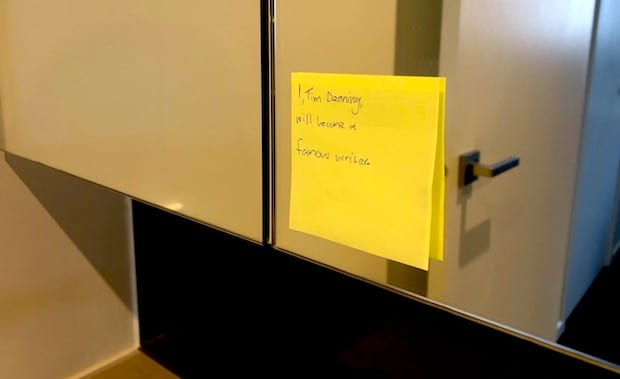
“When the rules you live by belong to someone else, the goal posts will continue to change, and your life will become a cat and mouse game with happiness.” – Tim Denning
When you forget about having rules you can achieve what seems impossible. That’s how the winners become so successful, and that’s why everyone recognises who they are. No one wants to give a standing ovation to someone who followed the rules.
Rules destroy creativity. Creativity breeds impossible adventures that take your life on a new path. Throw out the concept of rules, form some millionaire habits, and then go crush your goals to smithereens.
4. Ask questions – find out how the world works
Making your life into a masterpiece of art requires you to get some world-class strategies. The habit we all lack is to ask lots of questions. Don’t be afraid to sound dumb.
“Ask questions and learn from those who have achieved the different pieces of the jigsaw puzzle that make up your picture of success in your mind”
Questions require a creative mind to think about what’s missing and to track down the people that can answer those questions with a level of knowledge that is unmatched. Don’t settle for second best and use your hustle to ask good questions to those who have achieved their dreams.
5. Keep walking towards the mountain
Picture the mountain as the dream that your heart longs for. Whenever someone tries to take you on a route that bypasses the mountains trail by asking you to do something that is not you, say no. That mountain that you look at can only be climbed when you make good art to reach its peak.
It will take the creative part of your mind to find a way up the mountain, and it will use all of your physical capacity and emotion. There will be tough times as you try and climb the mountain but once you have reached its peak, the view of your dream from up top will make it all worth it.
Always keep the mountain in your sights by creating good art.
6. Only do things that feel like an adventure
Anything that feels like work will make you feel exhausted. Working hard at your passion doesn’t feel like work at all. Working on your passion feels like an adventure that you never want to stop being on. If you’re telling yourself each day that you have to go to work then you’re not creating art, you’re helping someone else make their art.
Your art is your own quest for adventure. Make that art the best damn way you know how and don’t ever give up!
7. Hundreds of bottles go out for every one bottle that comes back
Your life’s work involves creating lots of pieces of art that you send out into the world. These pieces of art are like putting messages in a bottle and placing them into the ocean in the hope that one bottle comes back.
When you are making art, occasionally one bottle will come back from time to time. Blogging is a great example of this. I write articles every day, and occasionally one hits the spot and gives me the energy I need to go to the next level.
As you become more successful, you then have the opposite problem; too many bottles will come back. At this point, you then need to become more focused on your art to narrow down the bottles that come back.
8. Don’t do it for the money
When you do anything in life only for money and then for some reason you don’t get paid, your mind can feel like you have nothing. If you make good art and do work you’re proud of then if you never get paid, at least you will have the art you created.
The lessons that will take you forward can only be learned from tasks that come from your art. Your art is your life’s journey and without it, you will be trapped in a maze of disappointment, resentment, and fear.
9. None of us know what we’re doing so enjoy the success
When you achieve success, your mind can tell you that you’re a fraud, and eventually the world will work out that you have no idea what you’re doing – none of us do. Don’t let your mind keep lying to you. Your success is a direct result of the art you make. There are no rules on how to achieve beautiful art that the world loves. So, make good art and enjoy any success you get.
10. Making mistakes means you are doing something
If you’re not making mistakes with your art, then you are probably doing nothing and not even trying to climb your mountain. There are so many couch commentators who can tell you everything about how your art should be created – none of them have ever created this so-called artwork themselves, though.
Increase your rate of failure and watch how beautiful your art becomes. Watch people admire you and be inspired by your influence. The art of “doing” is what will make you successful not the art of thinking about what you need to do.
11. When you feel naked, you’re starting to get it right
We all wear a mask, afraid of what others will think of us. The moment you take that mask off and reveal yourself to the world is the moment your art will become phenomenal. The more personal your story gets, the more people will love your art.
The art that doesn’t work out teaches you just as much as the art that causes people’s mouths to drop when they see it. Don’t be afraid to fail. Fail fast and move on.
12. When things get tough make good art
There are so many things that can go wrong in our life. We can lose a family member, have our heart broken by that special someone, or be turned down for the very art we love so much.
No matter what, make good art. Your art is what get’s you through the tough times and it’s what make’s the good times feel so amazing. Without your art, there are no good times. All there is without your art is empty space; empty time.
13. Time takes the sting away
Even if everything goes horribly wrong, you always have your art as long as your mind never forgets this one universal truth. The toughest of times can all be healed through the passing of time. Eventually, your heart will reform, and you will be back to your unstoppable self again.
Nothing lasts forever except true art. Your art, your passion, what you give to the world, and your love for other people are all you’ve got. They are the secret ingredients to the dream that makes up your mountain.
14. Start out by copying and then find your own voice
At first, you will probably start out by copying someone else’s art. That’s okay. The best example I have seen of this is Tony Robbins. Many of you probably don’t know that Tony started out by teaching the works of Napoleon Hill. A lot of Tony’s early work is based on the book “The Law Of Success.”
Through the years, Tony has transformed Napoleons work and made his own unique art. This would never have happened unless he started out by teaching Napoleons artwork first. It’s not about creating art that is different; it’s about creating art that is uniquely you. What do you have to show the world?
15. The Internet only makes your art better
The Internet, software, and data is changing the game. This is perfect for making art because it means no one knows what the future will be like, so you can focus on your art, and create the future yourself. When you realise that change only makes your art better, you will embrace it. You will develop that mental clarity that makes the clouds around your mountain disappear.
16. Pretend you can do it
What stops us from making good art is that we don’t believe we can. If you learn to start making your art and pretend you’re good at it, then one day you will be.
Look at me I’m no blogger. I just pretend I am and pretend my advice is good even if it’s not. In the end, if I believe I can be a blogger then I can be. All it takes is practice and time to be good at your art.
What does making good art mean to you? Let me know on my website timdenning.net or my Facebook.









Finding time to give back can feel overwhelming. Many people want to help others but think it takes a lot of time and planning. The truth is, simple, effective ways to support charity fit into busy lives. Whether you have a few minutes or a couple of hours, you can make a positive impact in your community. Helping others benefits those in need and gives you a sense of fulfilment and connection.
First, understand that charitable efforts can be quick and meaningful. You don’t need to organize a big event or donate a lot of money to make a difference. Small actions can make significant changes in others’ lives. Here are some ways to show generosity today.
Food Bank Donations
One of the simplest ways to help is by donating to a food bank. A food bank donation helps people facing food insecurity by redistributing surplus food and providing healthy meals. When you donate, you nourish someone’s day and ease their burden.
Local food banks often rely on donations from individuals and businesses. You can donate non-perishable items or fresh produce from your garden. If that’s not possible, consider making a monetary donation, which food banks can use to buy the needed food items. Every contribution counts and helps ensure families receive meals.
Volunteering your time at a local food bank is another great way to get involved. Many food donation organizations need help sorting donations, packing food boxes, or distributing meals. This hands-on work lets you see the positive impact of your efforts. You can also build friendships with staff and other volunteers as you work toward shared goals.
No-Cost Options
Charity doesn’t always have to cost money. You can donate your skills or time. If you’re good at graphic design or enjoy writing, your expertise can support local nonprofits’ outreach efforts. You might create promotional materials, manage social media, or offer training sessions.
Another no-cost option is to share charitable organizations on your social media. Inform friends and family about the causes you care about. Increased visibility can lead to more donations and volunteers. Sometimes, raising awareness matters as much as giving money.
Used Goods Donations
Decluttering your home is a great way to support charity. Look around. What items do you no longer use? Clothing, household goods, and toys can help someone in need. Local shelters, thrift stores, and nonprofits often welcome gently used items. By clearing out what you don’t need, you can provide useful items to those who can’t afford them.
You can enhance this experience by organizing a donation drive in your community. Involve friends and neighbours to gather more items together. This can become a fun community event that promotes giving.
Random Acts of Kindness
Doing random acts of kindness each day is an easy way to help others. Simple actions, like buying someone a coffee, leaving a nice note, or helping a neighbour carry groceries, can spread goodwill. These acts not only brighten someone’s day but also promote kindness in your community.
Try setting a goal to do a certain number of kind acts each week. This can become a good habit that changes how you interact with others. It doesn’t matter how big or small the act is. What matters is the intention behind it.
Skill-Based Volunteering
Using your professional skills to help a charity can foster personal growth while supporting those in need. Whether you are a teacher, marketer, lawyer, or accountant, your skills can greatly benefit nonprofits. Many nonprofits need help in areas where they can’t afford to hire professionals.
Some food donation organizations specifically seek volunteers with certain skills, so look for a nonprofit that matches your background. You can create change by using your expertise and meet others who share your interests.
Getting involved in charitable activities allows you to help create a better world. The good news is you don’t need much time or money to make a difference. Whether you volunteer at a local food bank, donate items, or do random acts of kindness, your efforts can lead to real change. These small actions can bring great fulfillment, improving not just the lives of those you help but your own, too.

Most people can remember a moment when someone pointed out that they were getting better at something. It might have been a teacher who mentioned that an essay read more clearly than the last one, or a manager who noticed that a task was finished sooner than usual. The comment may have lasted only a few seconds, but it changed how the person felt about the work in front of them. That small shift in feeling is often what separates someone who keeps going from someone who quietly gives up.
Progress is easy to overlook. Improvement usually arrives in pieces that are too small to feel impressive on their own, and the person making the effort is rarely the one who sees it first. When nobody names those pieces out loud, the effort starts to feel pointless. When somebody does name them, the effort starts to feel worth repeating. Understanding how that works, and learning to do it on purpose rather than by accident, is one of the most useful skills anyone in a teaching or leading role can develop.
How Noticing Good Behavior Changes What Happens Next
People repeat what works for them, and very little works better than being noticed by someone whose opinion matters. Many teachers and managers, though, were never taught how to use positive reinforcement in a steady, deliberate way, so their encouragement arrives at random moments and slowly loses its meaning. Practical, well-structured methods for recognizing and encouraging good behavior solve that problem by giving praise a shape and a purpose instead of leaving it to chance. Anyone looking for a clear starting point can review this article on positive reinforcement techniques by Youngstown State University. Studying this kind of material online also makes it easier for working teachers and professionals to build new skills around a full schedule, without stepping away from the classrooms and teams that they already serve.
Why Setbacks Are Easier to See Than Improvement
Problems announce themselves. A missed deadline, a failed test, a disrupted lesson, or an argument in a meeting all demand attention immediately, because something has to be done about them. Improvement makes no noise at all. A student who reads a little more fluently this week than last week does not interrupt anyone, and a colleague who has stopped arriving late does not create a situation that anybody needs to handle.
The result is that attention flows toward what is going wrong. Over time, people learn that the quickest way to be noticed is to struggle, and that doing well simply means being left alone. That is a discouraging lesson, and it is taught without anyone meaning to teach it. Deliberately looking for improvement corrects the balance.
The Link Between Small Wins and Lasting Habits
A habit is built from repetition, and repetition depends on how the last attempt felt. When an attempt ends with a sense of having moved forward, the next one starts more easily. When it ends with nothing at all, the next one takes more willpower, and willpower runs out. This is why recognizing progress is not simply a kindness. It is one of the practical mechanics of habit formation.
Small wins also make a long goal feel possible. Someone who wants to improve their writing, their fitness, or their grades is looking at a destination that is months away. If the only measure of success is arrival, then every day before that is a day of failure. If the measure is movement, then almost every day can end in something worth acknowledging.
What Makes Encouragement Actually Land
Not all encouragement has the same effect. A vague comment like “good work” is pleasant to hear and forgotten within minutes, because it does not tell the person anything they can use again. Naming the specific thing that improved gives the comment weight. Saying that someone explained their reasoning clearly, or handled a difficult question patiently, tells them exactly which behavior to repeat.
Timing matters as well. Recognition that arrives while the effort is still fresh connects clearly to the action that earned it. Recognition that arrives weeks later feels like a formality. Honesty matters most of all.
Recognizing Progress in a Learning Environment
Classrooms show all of this very clearly, because students are constantly forming opinions about what they are capable of. A student who believes they are bad at a subject will read every difficulty as proof, and a student who has been shown evidence of their own improvement has something to weigh against that belief. Pointing to a specific piece of earlier work and comparing it with a recent one is often more persuasive than any amount of general encouragement.
This also affects how a class behaves as a group. When students see that steady effort and cooperation are noticed, those become the normal ways to act. When the only things that draw comment are disruptions and mistakes, the classroom slowly organizes itself around those instead.
Recognizing Progress at Work and at Home
The same pattern holds well beyond school. In workplaces, people frequently leave roles they are good at because nobody ever indicated that the work was valued. A manager who regularly names the specific things a team member has done well builds trust that survives harder conversations later, because criticism from someone who also notices success is easier to accept.
At home, the effect is much the same. Children, partners, and family members respond to being seen accurately. Mentioning that someone has been more patient recently, or that a difficult task was handled calmly, does more for the relationship than a general compliment ever could.
Building the Habit of Looking for Improvement
Like any habit, this one needs a structure until it becomes automatic. Setting aside a few minutes at the end of a day or a week to think about who has improved, and in what specific way, is usually enough to begin. Writing it down helps, because memory tends to favor the problems. The next step is simply to say it to the person involved, in plain words, as soon as there is a reasonable moment.
None of this requires a new system or a great deal of time. It requires paying attention to the right things and then being willing to mention what was seen. People who feel that their progress is visible tend to keep making progress, and that is true in classrooms, in workplaces, and in ordinary life.

Your cell phone is usually something that you check almost immediately when you wake up. One notification turns into three. An e-mail is followed by another message, and soon enough, the day has started without any proper planning. Digital applications are very helpful and make work easier, yet it also makes it difficult for people to stop and think about what deserves attention.
That’s when the importance of paper scheduling can play an important role. With the September 2026 calendar, you get all your deadlines, appointments, and key dates scheduled without having another notification nagging at you. By listing out what’s a priority for you, you create a simple place to reflect on things before getting into the hustle and bustle of the day.
Why Do Successful People Still Plan on Paper?
The benefits that come with digital planning are immense. These include setting alerts, scheduling meetings, coordinating calendars, and providing access to all information anywhere. However, just because everything is available on a screen doesn’t necessarily mean that you will be able to concentrate on the most important things.
Paper provides a very different way of doing things. You don’t have any pop-ups to distract you. You can simply look at your page, determine what is important, and take notes without switching applications.
Imagine a professional preparing for an important presentation. Their digital task manager may contain dozens of tasks. On paper, they might simply write “finish presentation,” “review figures,” and “send final version.” The smaller, more focused list can make the next step feel much clearer.
Paper Makes Priorities Visible
The handwritten plan also remains physically in your presence. It can be kept next to your laptop as you work, reminding you of what you planned to achieve.
It is also gratifying to tick off an accomplished task. It creates a visible record of progress instead of leaving completed work buried inside a digital list.
Can Paper Planning Help With Digital Distractions?
The contemporary workplace is full of interruptions. There will be emails. There will be messages. There will be meetings going long past their allotted times. Even if you make up your mind to find some time, it’s not always easy to do so undisturbed.
According to Microsoft’s Work Trend Index 2023 report, 68% of individuals reported that they lacked adequate undistracted focus time while working. This research was conducted among 31,000 individuals from 31 different countries, and trillions of Microsoft 365 productivity signals were analyzed.
Paper planning cannot remove these interruptions. It can, however, give you something simple to return to when they happen. If the day’s three most important priorities are written beside your computer, it becomes easier to remember what you were working towards after an unexpected meeting or a string of messages.
The aim is not to avoid technology. It is to avoid letting technology decide where your attention goes.
How Does Writing Your Day Down Change the Way You Work?
When writing an outline, one is forced to make decisions. Rather than looking at an endless list of things that have to happen someday, one can identify things that matter today.
This is particularly useful when one already has a busy schedule for a day. Imagine having a report due Friday, three meetings, several emails to answer, and a routine administrative task waiting. Everything may look important when viewed together. Writing down the report as the main priority can make it easier to protect time for it.
|
Planning on an app |
Planning on paper |
|
Easy to add and rearrange tasks |
Makes selected priorities physically visible |
|
Useful for reminders and notifications |
Creates a quieter planning space |
|
Can store a large number of tasks |
Encourages you to be selective |
|
Works well for shared schedules |
Works well for personal daily focus |
This does not mean paper is automatically better. It simply gives planning a different purpose. An app can hold everything, while a sheet of paper can help you decide what deserves your attention now.
Can Paper and Digital Planning Work Together?
Absolutely. The best way of doing this could be assigning a particular role to both mediums.
Assign your meetings, appointments, joint ventures and reminders on a digital calendar, but let your personal commitments, brief notes, thoughts and priorities remain on paper.
This works perfectly well even while planning for months ahead. A look at a September 2026 calendar can show you the busiest times, important deadlines and other personal engagements prior to organising individual days.
Why Are Weekly Calendar Layouts Beneficial for a Busy Schedule?
A week that is packed with activities will appear totally different when all seven days are visible. Using printable weekly calendars can assist you in taking an overall view of your appointments, deadlines, and other important obligations at once.
Such an overview can reveal some potential issues before it is too late. For example, when you realize that all your time during one day is already taken by numerous meetings, then you know that you should change your schedule now.
Printable weekly calendars can also be beneficial for those who like tangible things and wish to have everything written down somewhere without switching applications.
Make Planning More Intentional
A productive day may not necessarily start with downloading yet another app or adding new things to the to-do list. Sometimes, all it takes to start a productive day is some quiet minutes and an empty sheet of paper. Listing your priorities will give you a break before responding to the numerous stimuli.
Paper planning will only provide an additional choice. To discover practical planning resources in the form of free printable planners and calendars, try out a platform that will facilitate everyday planning. With proper use, paper planning can become an instrument that will turn your hectic schedule into a thoughtful one. The most effective planning tool is the one that will enable you to begin your day knowing your priorities and end it knowing where your time went.
Author Bio
CalendarKart offers free printable calendars, planners, and practical resources to help students, professionals, families, and others plan, organize, and manage their time more effectively. Its resources cover weekly planning, productivity tips, printable templates, and simple strategies for staying organized without overcomplicating everyday life.

Success doesn’t start with frantic hustle. It starts in your head. When elite athletes, surgeons, and high-performing executives want to perform at their best, they don’t just work harder – they vividly picture in their mind a successful outcome before they ever take a step.
Visualization isn’t wishful thinking or daydreaming. It’s a powerful psychological tool that can train your brain to recognize opportunities, stay focused under pressure, and build the confidence needed to turn your ambitions into reality.
Here are five detailed visualization methods designed to help you achieve success.
The Outcome Technique
The Outcome Technique focuses on picturing the exact moment you reach a major milestone. Instead of fixating on the long, grueling path required to get there, you direct your attention to the final reward. Experiencing the emotional high of the finish line creates powerful internal motivation, giving you the energy and drive to begin the work required to get there.
To use this method, close your eyes and focus on the emotional and physical reality of the moment right after you achieve your target:
- Focus on the destination: Picture the precise second you close the deal, receive the official promotion offer, or sign the deed to your new home.
- Feel the emotional impact: Notice the deep sense of relief, pride, and satisfaction flowing through you. Allow yourself to experience the feeling of your hard work finally paying off.
- Observe your environment: Pay attention to who is in the room, the handshake from your business partner, or the notification on your phone confirming the financial transfer.
For example, if your primary goal is to hit a specific financial target, such as reaching your first six-figure savings milestone, picture opening your banking app on your phone.
See the exact numbers on the screen. Imagine the quiet confidence of knowing you have built financial security, the weight lifting off your shoulders, and the calm breath you take as you realize your discipline has paid off.
When you consistently visualize this successful outcome, your brain begins to see the goal as achievable rather than an impossible dream. This replaces uncertainty with a clearer sense of direction, making you more eager to take the practical steps needed to turn that image on your screen into reality.
Mental Rehearsal
While the Outcome Technique builds motivation through the end result, Mental Rehearsal focuses entirely on execution. Professional athletes, surgeons, and high-performing executives use this technique to walk through high-stakes procedures and stressful events before they happen.
It allows you to practice complex behaviors, refine your communication, and build neural pathways so that when the moment arrives, execution feels more natural and automatic.
To practice mental rehearsal effectively, sit quietly, eliminate all distractions, and mentally simulate a critical upcoming performance:
- Map out the sequence: Break the upcoming event down into distinct, sequential actions from start to finish.
- Rehearse high-stakes interactions: Picture the exact steps you will take, the words you will use, your voice tone, body posture, and how you will deliver your key arguments.
- Incorporate real-world details: Engage all your senses by visualizing the environment where the event will take place, including the facial expressions of the people around you and details of the room or space.
For example, imagine you are preparing for a major promotion pitch to the executive board. Mental rehearsal means sitting quietly and walking through the entire meeting in your mind. Picture yourself standing at the head of the table, making steady eye contact, and delivering your opening remarks with complete clarity.
Mentally rehearse presenting your key performance metrics, explaining your innovative solutions, and answering tough questions without becoming defensive.
Running this complete simulation in your head multiple times helps reduce the fear of the unknown. When you walk into the real boardroom, your brain has already encountered the situation repeatedly, making the presentation feel more familiar and easier to execute with confidence.
The Vision Board Method
Holding detailed mental images in your head throughout a busy workday can be difficult when you’re managing deadlines, chores, and other daily responsibilities. If this is true for you, a vision board can help.
This tool places images representing your goals and aspirations right in front of you. You only need to look at it from time to time throughout the day to keep your goals top of mind, stay motivated, and train your brain to notice opportunities you might otherwise have missed.
Many people find that using well-designed vision boards makes success feel more achievable. This increases their confidence, encourages them to take more action, and helps them make faster progress toward their goals.
A vision board filled with relevant images, key figures, and affirmations serves as a daily reminder of what you want to achieve. Here’s how to use it:
- Gather supplies: Collect specific images, charts, numbers, words, and affirmations related to your aspirations. Choose the right type of physical board for you, along with tape or glue, scissors, and anything else you might need.
- Build your board: Arrange all the elements on your board and secure them with tape or glue. Make sure the layout is clear and not too cluttered.
- Place it somewhere you will see it every day: Some of the best places include your bedroom, workspace (if you work from home), or even the living room. Look at your board a few times each day, ideally first thing in the morning and just before going to bed.
Here’s an example of how you could use a vision board: If your goal is to launch a business, your layout might feature your target annual revenue figure in bold text, a mock-up of your company logo, an image of your ideal office, and keywords such as “AUTONOMY” and “SUCCESS.”
Every time you look at your board, your mind registers these targets. This repeated exposure can help keep your long-term goals at the forefront of your attention, making it easier to align your daily habits and actions with the future you want to create.
The Reframe Method for Challenges
Achieving success rarely follows a straight line. You will inevitably encounter difficult situations, delays, uncooperative people, or unexpected rejections. The Reframe Method trains you to visualize how you will handle these challenges calmly before they occur, helping you avoid panic when real problems arise.
Instead of pretending that everything will go perfectly, choose a challenging situation that makes you feel anxious and mentally visualize navigating through it successfully:
- Identify the point of friction: Pinpoint the exact moment when a high-stakes situation could go wrong, such as a client rejecting a proposal or a pitch going off-script.
- Visualize emotional control: Picture yourself taking a calm breath, maintaining your composure, and resisting the urge to react emotionally or defensively.
- Rehearse the strategic shift: See yourself asking thoughtful questions, redirecting the conversation, or presenting an alternative solution that protects your interests.
For example, imagine you are negotiating a major contract with a key client, and they suddenly push back on your pricing structure, threatening to walk away.
Using the Reframe Method, you visualize this moment in advance. Instead of seeing yourself freeze or immediately offer a panic-driven discount, picture yourself pausing, remaining calm, and clearly explaining the value your service delivers. Then, mentally visualize offering a restructured scope of work that protects your profit margins while addressing the client’s budget constraints.
Visualizing yourself staying in control during high-pressure moments can help you respond strategically rather than emotionally when similar challenges arise in real life.
The Bedtime Journal Visualization
The Bedtime Journal Visualization pairs short, focused writing with calm mental imagery right before sleep. This transition period is ideal for visualization because your mind is free from immediate workplace demands, allowing your brain to process long-term strategic priorities overnight.
Keep a dedicated notebook and pen on your nightstand, and follow these steps each night:
- Write down one strategic goal: Write down one specific milestone you are actively working toward, using clear language.
- Review your statement: Take a moment to look over what you’ve written and let the objective settle into your mind.
- Visualize execution in the dark: Turn off the light, lie back, and spend three to five minutes mentally walking through the specific actions you will take the following day to move that goal forward.
For example, you might write: “Tomorrow, I will finalize the financial proposal and send it to the director before noon.” As you fall asleep, picture yourself arriving at your desk, ignoring distracting emails, opening the spreadsheet, verifying the numbers with total focus, and hitting “send” with confidence.
Because your brain consolidates thoughts and plans while you sleep, closing your day with a clear, actionable picture can help you wake up with focus, clear priorities, and immediate momentum for the work ahead.
Practicing any of these visualization methods alongside daily strategic action can help condition your mind to recognize growth opportunities and navigate complex challenges with greater poise. Over time, making visualization part of your routine can help turn even your most ambitious goals into tangible achievements.

What I sent the new hire instead of an HR system

5 Best GEO Companies for Improving AI Recommendation Accuracy

491 Visa Requirements, Processing Time, Fees and Everything You Need To Know

Beyond Administration: How Educational Leaders Influence People, Policy, and Progress

Ways Printed Sources Improve Research Organization

5 Ways For Startups To Succeed Making Acquisitions

77 Inspirational Quotes That Will Change Your Life
57 Memorable Kobe Bryant Quotes

(Images) 52 Motivational Picture Quotes For An Epic Year Of Success

40 Rare Motivational and Inspirational Picture Quotes

3 Prince EA Videos To Change Humanities Path To Greatness

(Video) What Is Success? An Entrepreneurial Story To Inspire You

(Inspirational Video) What If Today You Knew You Were Going To Take Your Last Breath?

How To Make Enough Money From A Blog To Quit Your Job – Kate McKibbin

How Finding Your Passion And Becoming An Entrepreneur Can Lead To Happiness – Chiquita Searle
-

 Life2 years ago
13 Meaningful Ways to Show Someone They Matter
-

 Life2 years ago
The 5 Stages of a Quarter-Life Crisis & What You Can Do
-

 Did You Know1 year ago
7 Surprising Life Lessons Video Games Taught Me That School Never Did
-

 Success Advice1 year ago
Stephen Covey’s 8 Leadership Habits That Will Change How You Lead Forever
-

 Life1 year ago
How to Stop the War in Your Head and Find Peace
-

 Featured2 years ago
The Psychology of Motivation: How to Keep Moving Forward Every Day
-

 Personal Development1 year ago
The Three-Second Pause That Changes How People Perceive You
-

 Explode Your Social Media1 year ago
Want More Views? Master These 6 YouTube Growth Tactics
6 Comments