
Success Advice
What is the purpose of creating a framework for evaluating soft skills training?


Soft skills are invaluable qualities that help us lead effectively and connect with others on a deeper level.
Professor M.S. Rao, Ph.D.—International Leadership Guru, The Father of “Soft Leadership” & 21st-Century Philosopher
Globally, unemployment persists due to a lack of soft skills. Global educational institutions emphasize soft skills to boost employability, and organizations worldwide use them to improve productivity and performance.
Currently, there is inadequate research available on soft skills. There are several myths about soft skills, since it is still an evolving discipline. It is mistaken for people skills, life skills, life management skills, and emotional intelligence, to name a few. Researchers, scholars, and educators find it hard to arrive at a universal definition of soft skills. They find it hard to create a standard curriculum. Additionally, there is an urgent need to explore tools and techniques for measuring soft skills to ensure effective training outcomes. Hence, this discipline calls for intensive research to establish its validity.
This short talk from Simon Sinek explains why these skills are so hard to measure and develop, and why they deserve a real training framework:

What are soft skills?
Skills are usually divided into technical skills and general skills. Some of the general skills that are behavioral fall into the category of soft skills. Hence, soft skills are a collection of skills that are essential to survive and succeed in personal, professional, and social life. They are complementary to hard skills. Hard skills are also known as technical skills or domain skills. Soft skills can be described as the effective presentation of hard skills. Additionally, how you say it is as important as what you say. That means soft skills are equally important along with hard skills. Hard skills can be seen on your resume, while your soft skills can be observed in employment interviews. A judicious blend of hard and soft skills helps one become a successful professional and excel as an effective leader.
Soft versus hard skills
Soft skills are different from hard skills. Hard skills are technical skills and domain skills, while soft skills are non-domain skills. Hard skills are tangible and measurable and quantifiable, while soft skills are intangible and cannot be easily measured and quantified. Hard skills are about what you speak, while soft skills are about how you speak with others. Soft skills are polite and pleasing ways of communicating with others, while hard skills are what you contribute in the workplace. Soft skills complement your hard skills. Precisely, soft skills are the presentation of your hard skills in the workplace. Soft skills are interpersonal skills, while hard skills are job-related skills. If hard skills are infrastructure, soft skills are superstructure. If hard skills are the foundation, soft skills are the cement. A judicious blend of both hard and soft skills is essential to achieve your professional success and fast-track your career.
You can find hard skills on a resume, while you can find soft skills during an employment interview. Hard skills get you an interview, while soft skills help you get your employment. Hence, both hard and soft skills are essential to get a job. After joining a job, soft skills help you survive in the workplace, while hard skills help you prove yourself professionally. Hence, blending both hard and soft skills is imperative in the workplace.
Soft versus hard skills―examples and illustrations
If you call someone physically handicapped, it is known as a hard skill. Instead, if you call it physically challenged, it is known as soft skills. If you instruct smokers, ‘Don’t smoke’ is known as a hard skill. Instead, if you communicate, ‘thanks for not smoking’, it is known as a soft skill. If you talk about the ‘generation gap’, it is known as a hard skill. In contrast, if you call it ‘generational differences’, it is known as soft skills. If you call them ‘slow learners’, it is known as hard skills. In contrast, if you call them ‘differently-abled learners’, it is known as soft skills. If you call ‘problems’ hard skills, it is known as hard skills, whereas if you call them ‘challenges’, it is known as soft skills. If you call ‘weaknesses’, it is known as hard skills; if you call them ‘concerns’, it is known as soft skills. Succinctly, soft skills emphasize how you communicate, while hard skills emphasize what you communicate.
It is easy to measure hard skills, while it is hard to measure soft skills. It is easy to teach hard skills, while it is hard to teach soft skills. Usually, teachers teach hard skills while trainers train soft skills. Since soft skills are behavioral skills, it requires extra effort on the part of trainers to use various tools and techniques, including interaction, role-plays, active participation, and experiential learning, to bring out the desired behavioral changes in the participants.
How to acquire soft skills?
You can acquire soft skills by various means, including observation, reading, training, experience, and practice. Soft skills training equips you with skills, abilities, and knowledge. However, your interaction with others helps you acquire soft skills greatly. Since soft skills are behavioral skills, people must learn through trial and error, using their emotional intelligence and flexibility and adaptability. You must be practical, realistic, and situational to acquire soft skills. Above all, you must learn from your failures to improve your behavior and get along well with others effectively.
You must develop emotional intelligence and interpersonal skills. You must observe and understand people and their behaviors. Travel to unknown destinations to understand people. Talk to them to get along with them. Understand their cultures and behaviors. Traveling teaches tolerance and improves soft skills. When you travel to unknown destinations and communicate in a non-native language, you will be able to improve your soft skills effectively.
Reading soft skills is one aspect, and applying them is another aspect. Attending workshops and training programs helps you understand what soft skills are and how you will be able to acquire them; such programs conduct role-plays to bring out behavioral improvement. Here are some tools and techniques to improve soft skills
- Be self-aware.
- Avoid preconceived notions.
- Keep your body language positive.
- Listen to the speaker carefully.
- Make eye contact with the speaker and reciprocate positively.
- Empathize with the speaker.
- Be flexible.
- Praise people lavishly.
- Make the speaker feel important.
- Accept criticism graciously.
- Interact with different types of personalities who are introverted, extroverted, assertive, submissive, and aggressive.
- Above all, be adaptable.
Since soft skills are behavioral skills, you can acquire soft skills through physical interaction and trial and error. You must take intrapersonal and interpersonal feedback regularly to improve your soft skills. Succinctly, be proactive, be a good listener, improve interpersonal skills, and build relationships to acquire soft skills.
Can soft skills be measured?
It is hard to measure soft skills, but easy to measure hard skills. Research shows that soft skills are harder to teach than hard skills. Additionally, it takes a lot of time and effort to equip oneself with soft skills rather than hard skills. However, matching the objectives of the soft skills training with the feedback received from the participants can help measure soft skills effectively. For instance, every training program has a set of objectives, and the program is rolled out to the participants accordingly. At the end of the training program, the participants are asked whether the training has met their objectives, aspirations, and expectations. Since soft skills training is behavioral, it is hard to measure. However, taking timely feedback at the end of the training session helps greatly achieve the training takeaways.
Meka's five-level model to measure soft skills
Evaluation is essential to understand the effectiveness of any training program. It helps understand how far the training has impacted the participants and improved their behavior and performance. Additionally, it helps assess the strengths and weaknesses of the program and the pulse of the participants to deliver the training program better next time. Here is an innovative Meka’s five-level evaluation model to measure soft skills training:
- Conduct the training needs analysis to identify the current skills gap in the participants.
- List out core objectives clearly to deliver the training.
- Execute the soft-skills training program meticulously as per the objectives.
- Align deviations or distractions from the training program.
- Measure the training takeaways from the participants through questionnaires and effective feedback.
Sample questions to measure soft skills training
Consider using the following few questions to measure a soft skills training program:
- Did the soft skills training transfer the knowledge, skills, and abilities to the participants effectively?
- Did the soft skills training improve the attitude and behavior of the participants successfully?
- Is the training worth investing time, money, energy, and resources?
- Are the training outcomes as per the training objectives? If not, identify and address the deviations or distractions.
- List out the three soft skills training takeaways that can improve the attitude, change behavior, and polish the personality.
The concept of soft skills is an evolving domain
Unfortunately, people often take the significance of soft skills lightly. The concept of soft skills is an evolving domain that people must take seriously; people must be educated about them.
Whenever a new discipline surfaces, people resist and mostly don’t respect it because there is no strong research to substantiate its relevance. However, over time, people start accepting and respecting the discipline. For example, many people initially did not take management as a discipline seriously and expressed their reservations. Today, management as a discipline is a reality, now having a sacred and respectable position like many other disciplines in the world. Similarly, soft skills will evolve as a discipline over time as more research is done. To summarize, a proportional mix of hard and soft skills helps me excel as a successful professional and leader. Soft skills provide a competitive edge in this cut-throat world. They are an asset to employees and add immense value to global organizations. To conclude, soft skills are essential for everyone, from janitors to chief executives, to achieve the desired outcomes.
Author Bio
Professor M.S. Rao, Ph.D., is recognized as a prominent 21st-century philosopher and a pioneer of the ‘Soft Leadership’ conceptual framework. He is an internationally acclaimed authority on leadership, with a distinguished 45-year career spanning the military, academia, business, consulting, and thought leadership. He has authored fifty-six books, including the best-selling title, “See the Light in You.” An avid lover of words and quotes, he has published over 300 papers and articles in prestigious international journals, such as Leader to Leader, Thunderbird International Business Review, Strategic HR Review, Development and Learning in Organisations, Industrial and Commercial Training, On the Horizon, and Entrepreneur. He takes on multiple roles as a soldier, entrepreneur, educator, author, explorer, thinker, researcher, mentor, motivator, reformer, traveler, blogger, storyteller, volunteer, activist, futurist, analyst, strategist, and coach. He serves as a C-Suite advisor and a global keynote speaker. His diverse professional background spans military service, academia, training, research, consultancy, and philosophy, giving him a strategic perspective and a long-term vision. Through leadership education and his publications, he mentors a new generation of leaders and inspires individuals worldwide to pursue their life goals, despite various challenges and disabilities. He aspires to develop one million students into global leaders by 2030. He actively participates in peace initiatives, advocates for gender equality (#HeForShe), and fosters global connections among students. He is dedicated to writing books and maintaining blogs on executive education, learning, and leadership. Much of his work is freely available through his four blogs, including this one: http://professormsraovision2030.blogspot.com/. Recognized as a prolific author and an energetic, dynamic, and inspiring leadership speaker, he can be contacted at msrlctrg@yahoo.com.


Success Advice
How to Start a Podcast and Build an Audience From the Ground Up
Learn how to start a podcast from the ground up: choose a listener promise, record clean audio, publish where people already listen, and grow from the data.


A good podcast starts with a clear reason for someone to listen and a realistic plan for making episodes. The audience will not appear automatically when the first recording goes live. Hosts need a repeatable format, clear audio, and a way to reach people who care about the subject. Before choosing equipment or scheduling guests, a creator should decide whose attention the show needs to earn and what will bring those listeners back.
Choose a Focused Listener Promise
When planning how to start a podcast, identify a particular listener and a question or interest that would bring the person back. A creator can test the concept by writing a short description of the audience and the benefit of each episode. A specific promise also makes it easier to choose guests and reject topics that do not fit.
For example, a show about gardening could focus on growing food in small urban spaces. The creator should draft a list of episode ideas before settling on the concept. If each idea requires a different audience, the show needs a clearer focus.
Make Recordings Easy to Hear
A quiet room matters more than an elaborate setup. Creators should listen for traffic, appliances, and other background noise before recording. Soft furnishings can reduce echoes, while a short test recording reveals problems that are easy to miss during a conversation.
A microphone, headphones, and recording software give a host a practical starting setup. Before each session, the host should check the selected microphone and listen to a test clip. Guests recording remotely should make the same checks on their end.
Keeping a consistent distance from the microphone also helps maintain an even voice level. If a recording sounds distorted, the host should adjust the input level and test again.
Plan Episodes Listeners Can Follow
An outline keeps an episode focused. It should identify the central question, the points needed to answer it, and a clear ending. For interviews, the host can prepare follow-up questions instead of relying on a script.
During editing, remove long pauses, distracting mistakes, and sections that repeat a point. Keep enough natural conversation for the recording to sound human. Listen through the finished episode with headphones before publishing it.
A repeatable production schedule matters, too. Creators should choose a release frequency that fits the time needed to research, record, and edit, then prepare episodes ahead when possible.
Publish Where Listeners Already Browse
A podcast host stores audio files and provides a feed that podcast listening apps use to access episodes. Before choosing a host, creators should check its publishing process, storage terms, and any limits that affect their schedule.
A clear show title and description help prospective listeners recognize the subject. Each episode also needs a specific title and a short description that explains what the listener will learn or hear.
Creators should check the submission requirements for each listening app they want to reach. After publishing, they should open the listing and play an episode to confirm that the audio and details appear correctly.
Give Listeners Reasons to Share
Promotion works best when it reaches people who already care about the episode’s subject. A host can share a useful excerpt in a relevant community, provided its rules allow it. The post should explain the point of the clip rather than ask strangers to listen without context.
Guests can introduce an episode to their audiences, but the host should make sharing easy. Send each guest the episode title, a short description, and a direct link after publication. Agree on those expectations before recording.
At the end of an episode, a host can ask listeners to share it with someone interested in the topic. One clear request is easier to act on than several competing requests.
Learn From Listening Patterns
Industry research published in September 2026 found that 34% of podcast listeners started less than one year ago. To understand why people stay or leave, creators should compare listening data for episodes with similar subjects and check where listeners stop. A sharp drop near a lengthy opening is a reason to test a shorter introduction.
Listener feedback adds context to the numbers. A host can invite questions by email and keep a record of recurring requests. Those questions can shape future episodes without letting a single response dictate the whole show.
Changes should be deliberate. Test one adjustment, such as a different episode opening, across several releases before deciding whether to keep it.
Conclusion
A podcast grows through repeated choices that make it easier for the right people to find and enjoy an episode. Before recording, a creator should write the listener promise and draft a short list of topics that fulfill it. After publishing, the host should compare listening patterns with the questions received from listeners. If the two point to different priorities, a direct listener question can reveal which subject has earned the next episode.
Success Advice
How Do You Deal With Rejection Without Letting the “No” Become the Story?
How to deal with rejection using a two-column story test, a five-step 24-hour plan, and lessons from a Reebok co-founder who heard no for 11 straight years.


How to deal with rejection comes down to separating the “no” from the story you tell yourself about it, because a no is information about one ask, at one moment, from one person, and not a verdict on who you are. Feel the sting, name it, pull out the one useful lesson, then make your next ask before the story hardens into a belief.
I learned this long before I built a business. Back when I was obsessed with hip-hop and music, I wanted to get on the radio, so I started knocking on the doors of radio stations and asking for a show. They didn’t let me. I went back week after week. Eventually one of them said, look, you can intern here for free. I took it. A while later I had my own little midnight show, and it took off. Listeners were leaving other time slots to tune in, and I started interviewing big artists. None of that happens if I let the first no, or the fifth, become the story.
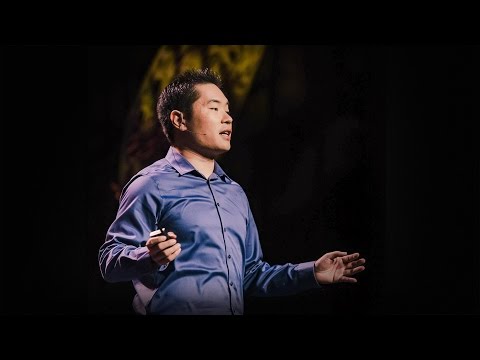
Jia Jiang spent 100 days deliberately making requests he expected to be refused. His TED talk shows what changes when you stop running from the no.
Why Does Rejection Hurt So Much?
Rejection hurts because your brain treats being shut out as a real threat, so the pain you feel is not weakness or oversensitivity. In a well-known 2003 study published in Science, Naomi Eisenberger, Matthew Lieberman and Kipling Williams scanned people while they played a simple ball-tossing game on a screen. Partway through, the other “players” (really a computer program) stopped throwing them the ball. A brain region linked to physical pain distress, the dorsal anterior cingulate cortex, became more active, and the more active it was, the more distress people reported.
Later research has argued over exactly which brain regions do the work, and some replications haven’t found the same pattern as cleanly. But the basic finding that being left out of a meaningless computer game stings is worth sitting with. If that hurts, of course a no on a pitch you spent months on hurts. So does a no from a client, an investor, a hiring manager or a publisher.
The mistake isn’t feeling it. The mistake is deciding what it means while you’re still in it. That’s when “they said no to this proposal” turns into “I’m not good enough,” and that second sentence is the one that stops people from ever asking again.
What’s the Difference Between the “No” and the Story You Tell About It?
The no is the fact: someone declined one specific thing. The story is everything you add on top of it, like what it says about your talent, your worth or your future. You can’t control the no. You have full control over the story.
Reebok co-founder Joe Foster is the best example I’ve heard of this. When I interviewed him, he told me his first trip to America to find a US distributor was in 1968. He went back every year. He didn’t land his distributor until 1979. “That’s 11 years. In that time, I had at least six failures, at least six attempts with different people to make it, and we didn’t make it.”
Eleven years of no. Here’s how he talked about it: “No is not an answer. No is only just a little hiccup on the way. No is something to get round. No is another problem, but another problem means you’re learning something else.”
When retailers wouldn’t stock his shoes, he didn’t decide his shoes were bad. He asked a better question. “How do I get to my customer?” He wrote to the secretaries of athletics clubs and sold to runners directly. Retailers came back later asking to stock the brand. The rejection pushed him to a route that made the brand stronger.
Try this the next time you get a no. Draw a line down a page. On the left, write only what actually happened, the words they used and nothing else. On the right, write the story your head is telling you. Then look at how much of the right-hand column is supported by the left. Usually, almost none of it is.
How Do You Deal With Rejection in the First 24 Hours?
In the first 24 hours, your job is to lower the emotional temperature, not to make big decisions about yourself. Here’s the order I’d follow, and why each step works.
1. Name the feeling, specifically. “I feel embarrassed” or “I feel angry they didn’t even read it” is more useful than “I feel bad.” In a 2007 UCLA study in Psychological Science, putting negative feelings into words reduced activity in the amygdala, the brain’s alarm center, compared with just looking at emotional images. Labeling it takes a bit of the charge out.
2. Talk to yourself like you’d talk to a friend. Use your own name or “you” instead of “I.” Ethan Kross and colleagues found in a 2014 study that this kind of distanced self-talk helped people handle stress, feel less anxiety and perform better on public speaking tasks. “Joel, you pitched a big name and they passed. What’s next?” lands differently than “I always blow these.”
3. Run the two-column test. Separate what happened from what you’re making it mean, as above.
4. Pull out one lesson, not ten. Was the timing wrong? The offer? The person? Pick the one thing you’d change, write it down, and stop there. A full autopsy at midnight usually turns into self-punishment.
5. Make the next ask within a day or two. This is the one people skip. The longer the gap between the no and your next attempt, the more space the story has to grow. Joe Foster went back the next year, every year, for 11 years.
How Can You Learn From Rejection Without Taking It Personally?
You learn from rejection by looking for patterns across many nos instead of reading meaning into a single one. One no is mostly noise. Five nos for the same reason is feedback worth acting on.
If three different people tell you your pitch is too long, that’s not rejection of you. That’s a free edit. If one person passes and gives no reason, there may be nothing to learn at all. They had a full calendar, a different priority, a bad morning. You’ll never know, and you don’t need to.
Hither Mann, a wealth educator I had on the podcast, wanted to learn from an experienced trader early in her career. She said he didn’t give her the time of day and didn’t believe in her. He treated her like she was just annoying him. She kept showing up anyway and learned “from the bottom up,” as if she’d been “thrown in at the bottom rank, and no respect.” Three years later, she’d earned that respect. Her read on why most people don’t get there: “If people can’t deal with rejection these days… the difference is down to how tough is your outer layer and inner core.”
I’d add one thing to that. Toughness doesn’t mean you stop feeling it. It means you stop letting a single no tell you who you are. You can be soft on the inside about how it felt and still be hard-headed about what you do next.
What Does Constant Rejection Do to a Person?
Constant rejection can wear down your willingness to ask, which is the real danger, because people quietly stop pitching, applying and reaching out long before they consciously decide to quit. The hurt fades. The avoidance is what sticks around.
You’ll see it in small habits. The email you keep “polishing” for two weeks. The application you’ll send “once the portfolio is perfect.” The call you schedule and then move. A lot of what looks like a time-management problem is really protection from the next no. If that sounds familiar, I’ve written about how to stop procrastinating when the real cause is anxiety or fear rather than laziness.
The fix isn’t to toughen up overnight. It’s to keep your asks small and frequent so no single answer carries too much weight. If you send one pitch a month, every no feels like a referendum. If you send 20, each one is just a number in a bigger game.
Rejection fear and fear in general run on the same wiring. If the dread before an ask is stronger than the sting after it, the tools in our guide on how to overcome fear will help you stay functional when it spikes. And if rejection has left you feeling hopeless or withdrawn for weeks, please talk to a doctor or a licensed mental health professional. That’s not a mindset problem to push through alone.
How Many “Nos” Would You Take to Get a Yes?
Most people would accept a lot of nos if they knew a yes was guaranteed at the end, which tells you the rejection isn’t really the problem. The uncertainty is.
Someone asked me a question once that I still think about: if you knew for sure that all you needed was 10,000 nos to make a billion dollars, would you do it? Most people say yes straight away. Of course they would. Each no would just be a step closer.
Here’s the thing. You never get that guarantee. But you can borrow the mindset. When you know your nos are part of a numbers game, each one stops being a judgment and becomes a tally mark. I’ve seen it across years of interviews. The people who get the yes are rarely the most talented in the room. They’re the ones who kept asking after the sixth, tenth or 50th no, the way Joe Foster kept flying to America for 11 years.
So keep count. Literally. Write down every pitch, application or ask you make this quarter, and every no you get. Watching the number grow does something strange. It makes you proud of the nos, because each one is proof you were in the game.
FAQ
How can I heal from rejection?
Let yourself feel it, name the specific emotion, and talk to someone you trust. Separate what actually happened from the story you’re telling about it. Then take one small next step, like a new ask, so the no doesn’t become the last word.
What does constant rejection do to a person?
It can make you stop asking. Repeated nos often lead to avoidance: delayed pitches, unsent applications, endless polishing. Keeping asks small and frequent helps, and if you feel hopeless for weeks, talk to a professional.
What should you do when someone rejects you?
Thank them, ask for one piece of feedback if it’s appropriate, and don’t argue. Then write down the one lesson you’d apply and make your next ask within a day or two.
How can I learn from rejection?
Look for patterns, not single answers. One no is usually noise. Several nos for the same reason is feedback. Change that one thing and keep going.
Is rejection the same as failure?
No. Rejection is someone else turning down your ask. Failure is something you tried that didn’t work. They feel similar, but rejection often says more about the other person’s timing and needs than about your ability.
Success Advice
Why ‘Just One More App’ Is Killing Your Focus (and When Custom Software Is the Cleaner Answer)
Just one more app can quietly drain your focus. Here’s how to tell when your tool stack is working against you, and when custom software is the cleaner answer.


Every founder knows the feeling. A new problem shows up in the business, and within an hour there is a free trial running to fix it. A scheduling tool. A second CRM for the sales team that hates the first one. A form builder, an automation tool to connect the form builder to the spreadsheet, and a reporting app to make sense of the spreadsheet.
Each choice is reasonable on its own. Together, they quietly eat the one resource you cannot buy more of: your attention.
This article is about that hidden cost, how to tell when your tool stack has started working against you, and how to decide, calmly, whether the answer is fewer apps or one piece of software built around the way your business actually runs.
The real cost of a tool is not the subscription
When you add an app, you pay for it three times.
First, with money. Fifteen or forty dollars a month looks harmless. Twelve of them do not.
Second, with switching. Research on task switching has long shown that moving between tasks carries a measurable cost in time and errors. Every app that holds a piece of your workflow is another place you have to go, log in, remember the logic of, and check. A customer’s details in one tool, their invoice in another, their support history in a third: that is three context switches before you have answered one simple question.
Third, with ownership. Someone has to keep every connection working. When a vendor changes its pricing, its API or its export format, the automation you set up on a Sunday afternoon breaks on a Tuesday morning. Usually it is the founder who notices, and usually at the worst moment.
Focus is not only a personal habit. It is also a property of the systems you build around yourself. A cluttered stack makes a focused week almost impossible.
Five signs your stack is costing you focus
Use this as a quick honest check. If three or more of these sound familiar, the problem is no longer the tools. It is the shape of the stack.
- You are the integration. Data moves between apps because you, or someone on your team, copies it by hand.
- Nobody trusts a single number. Revenue in the accounting tool does not match the CRM, and every meeting starts with “which report is right?”
- Your process bends around the software. You changed how you serve customers because the app could not handle your way of doing it.
- Onboarding takes weeks. New hires need a guided tour of ten tools before they can do their job.
- You are paying for overlap. Two or three tools do the same thing because different teams picked different favourites.
Step one is subtraction, not addition
Before you consider building anything, simplify. It is the cheapest and fastest win, and it often solves most of the problem.
List every tool the business pays for. Next to each one, write the single job it does and who depends on it. Then ask three questions:
- Could an app we already use do this job well enough?
- If this tool disappeared tomorrow, who would notice within a week?
- Is this tool holding data we cannot easily get back out?
Founders who do this exercise are often surprised by how many subscriptions nobody would miss. The remaining stack becomes easier to understand, cheaper to run and easier to defend.
When custom software becomes the cleaner answer
Sometimes subtraction is not enough. After the clean-up, you may still find that the core of your business, the thing that makes you different, lives in the gaps between tools. That is the moment to consider custom software seriously.
It tends to make sense when:
- Your workflow is your advantage. If the way you quote, schedule, deliver or follow up is what customers pay for, forcing it into generic software dilutes the very thing that sets you apart.
- The same manual work repeats every day. If people spend hours moving data between apps, the cost of that labour over two or three years often exceeds the cost of a focused build.
- You need one source of truth. A single system that holds customers, orders and outcomes removes the “which report is right” debate for good.
- You are scaling a process, not just a team. Adding people to a messy stack multiplies the mess. Encoding the process in software lets it scale cleanly.
Custom does not have to mean rebuilding everything. The smartest projects are usually narrow: one tool that replaces the three or four apps around your core process, connected to the standard tools (accounting, email, payments) that already do their jobs well.
How to decide without losing months
The build-versus-buy decision can turn into its own focus drain. Keep it tight.
Write the problem in one paragraph. What job is not getting done, who suffers, and what would “fixed” look like in numbers? If you cannot write it, you are not ready to buy or build.
Price the status quo. Add up the subscriptions you would retire and the hours your team spends on manual workarounds each month. This is the budget you are already spending, just invisibly.
Start with the smallest useful version. Ask for a first release that handles the core workflow for one team, not a platform for the whole company. You will learn more in six weeks of real use than in six months of planning.
Choose the partner as carefully as the product. The team you hire will shape how much of your attention the project consumes. Look for people who ask hard questions about your process before they quote, show you how they handle changes and testing, and are clear about who owns the code. Comparing a shortlist of top custom software development firms side by side, on process and fit rather than hourly rate alone, saves a lot of painful surprises later.
Protect your role. You are the person who knows what the business needs. Your job in the project is to make decisions quickly and test early versions honestly, not to project-manage every ticket. Agree on a short weekly check-in and keep the rest of your calendar for the business.
Focus is a design decision
It is easy to treat focus as a matter of willpower: turn off notifications, block your calendar, read fewer emails. Those habits help. But if your business runs on a tangle of tools that need you in the middle of them, no morning routine will save your attention.
The founders who stay focused tend to design their environment so that the important work flows without them. Sometimes that means deleting five apps. Sometimes it means building one piece of software that does exactly what the business needs and nothing else.
Either way, the question to ask is the same: does this tool give me back attention, or does it take more of it? Answer that honestly every time you are tempted by “just one more app”, and your stack, and your week, will start to look very different.
Success Advice
How to Publish a Book in 2027: Traditional vs Self-Publishing, Real Costs and Timelines
How to publish a book either way, with a side-by-side of traditional and self-publishing, real editing costs, per-copy royalty math and the steps to take next.

How to publish a book comes down to two routes: land a literary agent who sells it to a traditional publisher, which pays you an advance and royalties, or self-publish through a platform like Amazon KDP, where you can keep up to 70% of each ebook sale but pay for editing and design yourself. Traditional publishing costs you nothing upfront but is slow and pays a smaller cut per copy; self-publishing can be live within days and pays more per copy, but every sale is your job.
| Traditional publishing | Self-publishing (Amazon KDP) | |
|---|---|---|
| Who pays for editing and design | The publisher | You |
| Upfront money to you | An advance, if you get a deal | None |
| Typical royalty | 10% of list on the first 5,000 hardcovers, 7.5% of list on trade paperbacks, 25% of net on ebooks (Authors Guild model contract) | 70% on ebooks priced $2.99 to $12.99; 60% minus printing on paperbacks priced $9.99 and up |
| Who decides | An agent, then an editor and acquisitions team | You |
| Time to market | Submissions alone can take weeks or years | Usually live within 72 hours of upload |
| Bookstore reach | Strong | Limited unless you work at it |
| Who markets it | The publisher’s team, with you doing plenty | You |
Which is right for you? If you already have an audience or a business the book will feed, self-publish; if you want bookstore distribution and someone else to fund the edit, query agents first.

Book editor Alyssa Matesic, who started out at Ballantine, a Penguin Random House imprint, walks through the trade-offs well. Below are the actual costs, the royalty math and the steps for each route.
Why Do So Many People Want to Publish a Book?
Because a book does something a blog post can’t: it makes you the person who wrote the book on your topic. When I asked my audience which area they’d level up in to make a great living, publishing a book came second, just behind coaching.
In that self-selected poll on my X account (March 24, 2024, 80 votes), 32.5% picked publishing a book, 35% coaching, 30% speaking on stages and 2.5% copywriting. Small sample, my own followers, but it’s a strong signal. A third of people who want to make a living from what they know want a book in their hands.
I get it. In high school I got D’s and F’s in English, so I believed I was a terrible writer. Then I started writing articles for Addicted2Success and they took off, because people want things simplified. Once the site was earning, I started writing and selling ebooks. That was one of the first moves that turned one income stream into several.
A book also opens doors that have nothing to do with royalties. It’s the thing that gets you booked as a professional speaker, gets you on podcasts and makes a stranger trust you before the first call. For a lot of business owners, that’s where the real return is.
How Do You Publish a Book Traditionally?
You finish the manuscript (or, for most nonfiction, a book proposal), query literary agents, and if an agent signs you, they submit it to editors at publishing houses who may make an offer. Penguin Random House lays out those same steps in its own guide to getting published.
- Finish the manuscript or proposal. Fiction usually needs a full manuscript. Nonfiction usually sells on a proposal plus sample chapters.
- Find agents who represent your kind of book. Penguin Random House notes that most major publishers, itself included, have historically not accepted unagented submissions. Check the acknowledgments in books like yours; authors often thank their agents by name.
- Query them exactly the way they ask. Some want only a query letter, some want the first five or ten pages. Follow each agent’s instructions.
- Go on submission. Your agent sends the book to editors. PRH is blunt that this can take weeks or even years, and some authors don’t sell until their second or third manuscript.
- Negotiate the deal. If an editor gets it through an acquisitions meeting, you’ll get a deal memo, then a contract.
One rule to remember: money flows toward the author. PRH warns that a real agent or publisher won’t ask you to pay upfront to be traditionally published. If someone does, walk.
How Do You Self-Publish a Book on Amazon KDP?
You prepare a finished manuscript and cover, upload both to Kindle Direct Publishing, set your rights and list price, and Amazon sells the ebook and prints paperbacks on demand. KDP doesn’t charge you upfront; printing costs and Amazon’s share come out of each sale.
- Get it edited. This is the step most self-published books skip, and it shows. See the cost table below.
- Format the interior and design the cover. KDP offers free tools (Kindle Create and Cover Creator), or you can hire a designer.
- Decide on an ISBN. KDP offers a free ISBN for paperbacks and hardcovers (ebooks don’t need one), but it can only be used on KDP and your imprint shows as “Independently published.” If you want your own imprint, buy ISBNs from Bowker, the official US agency.
- Set your price and royalty option. Since July 7, 2026, the 70% ebook royalty applies to list prices from $2.99 to $12.99 on Amazon.com, up from the old $9.99 ceiling.
- Publish and plan the launch. KDP says a new ebook is usually available within 72 hours after you publish. Line up your email list, reviews and launch posts before that day, not after.
I’d also read this older but still useful walkthrough of publishing and marketing your own book, which spends more time on the marketing side than I do here.
How Much Does It Cost to Publish a Book?
Traditional publishing should cost you nothing out of pocket. Self-publishing a professionally edited 50,000-word nonfiction book will typically run a few thousand dollars, almost all of it editing.
| Cost item | Rate | For a 50,000-word nonfiction book |
|---|---|---|
| Developmental editing (big-picture structure) | 4.0 to 5.0 cents per word, EFA 2026 median range | $2,000 to $2,500 |
| Copyediting (line-level fixes) | 3.0 to 4.0 cents per word, EFA 2026 median range | $1,500 to $2,000 |
| ISBNs from Bowker (optional) | $125 for 1, $295 for 10 | $295 covers ebook, paperback and hardcover |
| US copyright registration (optional) | $45 single author, one work; $65 standard | $45 to $65 |
| Publishing on KDP | No upfront fee | $0 |
Sources: Editorial Freelancers Association 2026 rate chart, Bowker, US Copyright Office fees (the Office has announced its fees change on January 5, 2027, so check before you file). Cover design isn’t in the table because prices vary too much to quote fairly.
The EFA notes those are median ranges from a survey of its members, not set prices. Get two or three quotes and ask for a sample edit.
How Much Do Authors Make Per Book?
A self-published author earns roughly $4 to $6 per copy at common prices on Amazon, while a traditionally published author typically earns $1 to $3 per print copy, but only after the advance earns out. Here’s the math, using Amazon’s own rates and the Authors Guild’s model contract.
| Format and price | Royalty rule | You earn per copy |
|---|---|---|
| KDP ebook at $6.99 | 70% of list, minus delivery (Amazon says about $0.06 on average) | About $4.83 |
| KDP paperback at $16.99, 250 pages, black ink | 60% of list minus printing ($1.00 + $0.012 per page = $4.00) | About $6.19 |
| Same paperback via KDP Expanded Distribution | 40% of list minus printing | About $2.80 |
| Traditional hardcover at $28 | 10% of list (first 5,000 copies) | $2.80 |
| Traditional trade paperback at $18 | 7.5% of list | $1.35 |
Sources: KDP ebook royalties and paperback royalties, Authors Guild Model Trade Book Contract. Prices are illustrative; plug in your own.
Now the reality check. If you spend $4,500 on editing and $295 on ISBNs, you need to sell about 775 paperbacks at $6.19 each just to get your money back. That’s why I’d never self-publish without a plan to reach readers, whether that’s an email list, a podcast circuit or a business the book feeds.
Frequently Asked Questions
How much does it cost to publish a book?
Traditional publishing shouldn’t cost the author anything. Self-publishing on KDP has no upfront fee, but professional editing for a 50,000-word nonfiction book runs roughly $3,500 to $4,500 at EFA 2026 median rates, plus optional ISBNs and design.
Can I publish a book for free?
Yes. KDP has no upfront cost and offers a free ISBN for print editions that can only be used on KDP. You’d be skipping professional editing and design, though, and readers notice.
How long does it take to publish a book?
On KDP, a new ebook is usually live within 72 hours of publishing. Traditional publishing is slower: Penguin Random House says submissions alone can take weeks or even years before a deal, before production begins.
Do I need a literary agent to publish a book?
For major traditional publishers, usually yes. Penguin Random House says most big publishers have historically not accepted unagented submissions. You don’t need an agent to self-publish or to submit to some smaller presses.
What royalty does Amazon pay authors?
KDP pays 70% on ebooks priced $2.99 to $12.99 (35% outside that band) minus delivery costs, and 60% of list minus printing on paperbacks priced $9.99 or more on Amazon.com (50% below that).

Is College Worth It in 2027? An Entrepreneur’s Honest Answer (and Who Should Skip It)

Working in the Diamond Replication Industry: All You Need to Know

How Do You Write a Business Proposal That Actually Wins the Work?

Moving for a Career Opportunity: What to Evaluate Beyond the Salary

How to Start a Podcast and Build an Audience From the Ground Up
5 Ways For Startups To Succeed Making Acquisitions

77 Inspirational Quotes That Will Change Your Life

57 Kobe Bryant Quotes on Mamba Mentality, Winning and Hard Work (2026)

Motivational Picture Quotes: 52 Images to Inspire a Successful Year

40 Rare Motivational and Inspirational Picture Quotes
3 Prince EA Videos To Change Humanities Path To Greatness
(Video) What Is Success? An Entrepreneurial Story To Inspire You
(Inspirational Video) What If Today You Knew You Were Going To Take Your Last Breath?
How To Make Enough Money From A Blog To Quit Your Job – Kate McKibbin
How Finding Your Passion And Becoming An Entrepreneur Can Lead To Happiness – Chiquita Searle
-

 Success Advice2 years ago
20 Creative Ways To Make Money From Home
-

 Success Advice3 years ago
7 Habits of Highly Effective Mediocre People (And Why They Work)
-

 Creativity2 years ago
Pablo Picasso Quotes: 93 Inspirational Quotes on Art, Creativity & Life
-

 Change Your Mindset3 years ago
The Art of Convincing: 10 Persuasion Techniques That Really Work
-

 Life2 years ago
10 Ways Your Life is Like a Video Game
-

 Life2 years ago
13 Meaningful Ways to Show Someone They Matter
-

 Quotes3 years ago
32 Powerful Quotes About Overcoming Procrastination by Joel Brown
-

 Did You Know1 year ago
7 Surprising Life Lessons Video Games Taught Me That School Never Did


