
Change Your Mindset
103 Unforgettable John Wooden Quotes


John Wooden was an American basketball player and coach. Wooden was the head coach at UCLA and won 10 NCAA National Championships in a 12 year period, including an unprecedented 7 in a row. During his time at UCLA, he was named the national coach of the year 6 times. John Wooden was also the first person ever enshrined as a member of the Basketball Hall of Fame as both a player and as a coach.
Wooden is considered one of the revered coaches in sports history not only because of his basketball coaching greatness, but also because of the inspirational messages he’d share with his players about how to be successful in basketball and in life.
John Wooden was regarded as one of the wisest and best college coaches in the history of college basketball.
Here are 103 unforgettable John Wooden quotes:
1. “Whatever you do in life, surround yourself with smart people who’ll argue with you.” – John Wooden
2. “Talent is God given. Be humble. Fame is man-given. Be grateful. Conceit is self-given. Be careful.” – John Wooden
3. “Make each day your masterpiece“ – John Wooden
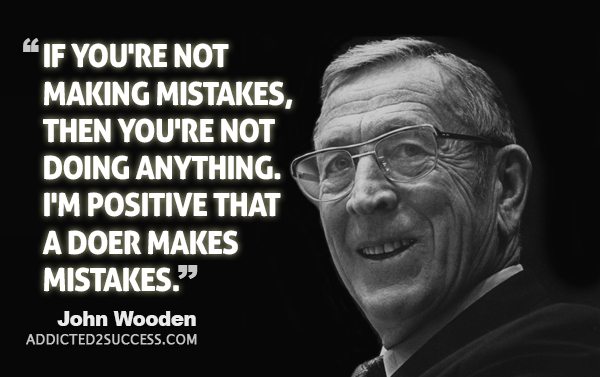
4. “If you’re not making mistakes, then you’re not doing anything. I’m positive that a doer makes mistakes.” – John Wooden
5. “Be true to yourself, help others, make each day your masterpiece, make friendship a fine art, drink deeply from good books – especially the Bible, build a shelter against a rainy day, give thanks for your blessings and pray for guidance every day.” – John Wooden
6. “Things turn out best for the people who make the best of the way things turn out.” – John Wooden
7. “There are many things that are essential to arriving at true peace of mind, and one of the most important is faith, which cannot be acquired without prayer.” – John Wooden
8. “If you don’t have time to do it right, when will you have time to do it over?” – John Wooden
9. “Success comes from knowing that you did your best to become the best that you are capable of becoming.” – John Wooden
10. “Success is never final, failure is never fatal. It’s courage that counts.” – John Wooden
11. “Success is peace of mind, which is a direct result of self-satisfaction in knowing you made the effort to become the best of which you are capable.” – John Wooden
12. “In the end, it’s about the teaching, and what I always loved about coaching was the practices. Not the games, not the tournaments, not the alumni stuff. But teaching the players during practice was what coaching was all about to me.” – John Wooden
13. “Just try to be the best you can be; never cease trying to be the best you can be. That’s in your power.” – John Wooden
14. “A coach is someone who can give correction without causing resentment.” – John Wooden
15. “The best competition I have is against myself to become better. – John Wooden
16. “The most important thing in the world is family and love.” – John Wooden
17. “I had three rules for my players: No profanity. Don’t criticize a teammate. Never be late.” – John Wooden
18. “Failure is not fatal, but failure to change might be.” – John Wooden
19. “The worst thing about new books is that they keep us from reading the old ones.” – John Wooden
20th John Wooden Quote – “Passion is momentary; love is enduring.” – John Wooden
21. “You can’t let praise or criticism get to you. It’s a weakness to get caught up in either one.” – John Wooden
22. “Friendship is two-sided. It isn’t a friend just because someone’s doing something nice for you. That’s a nice person. There’s friendship when you do for each other. It’s like marriage – it’s two-sided.” – John Wooden
23. “Do not let what you cannot do interfere with what you can do.” – John Wooden
24. “Adversity is the state in which man most easily becomes acquainted with himself, being especially free of admirers then.” – John Wooden
25. “My eyesight is not nearly as good. My hearing is probably going away. My memory is slipping too. But I’m still around.” – John Wooden
26. “There’s as much crookedness as you want to find. There was something Abraham Lincoln said – he’d rather trust and be disappointed than distrust and be miserable all the time. Maybe I trusted too much.” – John Wooden
27. “Young people need models, not critics.” – John Wooden
28. “You can lose when you outscore somebody in a game. And you can win when you’re outscored.” – John Wooden
29. “I am just a common man who is true to his beliefs.” – John Wooden
30. “Be more concerned with your character than your reputation, because your character is what you really are, while your reputation is merely what others think you are.” – John Wooden
31. “I think the teaching profession contributes more to the future of our society than any other single profession.” – John Wooden
32. “Never mistake activity for achievement.” – John Wooden
33. “What you are as a person is far more important than what you are as a basketball player.” – John Wooden
34. “It’s what you learn after you know it all that counts.”– John Wooden
35. “I think you have to be what you are. Don’t try to be somebody else. You have to be yourself at all times.” – John Wooden
36. “Be true to yourself. Make each day a masterpiece. Help others. Drink deeply from good books. Make friendship a fine art. Build a shelter against a rainy day.” – John Wooden
37. “It isn’t what you do, but how you do it.” – John Wooden
38. “Don’t let making a living prevent you from making a life.” – John Wooden
39. “All of life is peaks and valleys. Don’t let the peaks get too high and the valleys too low.” – John Wooden
40th John Wooden Quote – “Today is the only day. Yesterday is gone.” – John Wooden
41. “Material possessions, winning scores, and great reputations are meaningless in the eyes of the Lord, because He knows what we really are and that is all that matters.” – John Wooden
42. “Consider the rights of others before your own feelings, and the feelings of others before your own rights.” – John Wooden
43. “Don’t measure yourself by what you have accomplished, but by what you should have accomplished with your ability.” – John Wooden
44. “I worry that business leaders are more interested in material gain than they are in having the patience to build up a strong organization, and a strong organization starts with caring for their people.” – John Wooden
45. “I’d rather have a lot of talent and a little experience than a lot of experience and a little talent.” – John Wooden
46. “Well, if you’re true to yourself you’re going to be true to everyone else.” – John Wooden
47. “Winning takes talent, to repeat takes character.” – John Wooden
48. “Defense is a definite part of the game, and a great part of defense is learning to play it without fouling.” – John Wooden
49. “Don’t give up on your dreams, or your dreams will give up on you.” – John Wooden
50. “If I were a young coach today, I would be extremely careful in selecting assistants.” – John Wooden
51. “Teaching players during practices was what coaching was all about to me.” – John Wooden
52. “Discipline yourself, and others won’t need to.” – John Wooden
53. “If a player’s not doing the things he should, put him on the bench. He’ll come around.” – John Wooden
54. “The main ingredient of stardom is the rest of the team.” – John Wooden
55. “Well, your greatest joy definitely comes from doing something for another, especially when it was done with no thought of something in return.” – John Wooden
56. “We can have no progress without change, whether it be basketball or anything else.” – John Wooden
57. “When you hurry you’re more apt to make mistakes. But you have to be quick. If you’re not quick you can’t get things done.” – John Wooden
58. “Somebody asked me – you know, how come it took you so long to win a national championship? And I said, ‘I’m a slow learner; but you notice when I learn something, I have it down pretty good.’” – John Wooden
59. “Ability is a poor man’s wealth.” – John Wooden
60. “I don’t believe in praying to win.” – John Wooden
61. “You can’t live a perfect day without doing something for someone who will never be able to repay you.” – John Wooden
62. “Just do the best you can. No one can do more than that.” – John Wooden
63. “It’s not so important who starts the game but who finishes it.” – John Wooden
64. “I think that in any group activity – whether it be business, sports, or family – there has to be leadership or it won’t be successful.” – John Wooden
65. “I’m not going to say I was opposed to the Vietnam War. I’m going to say I’m opposed to war. But I’m also opposed to protests that deny other people their rights.” – John Wooden
66. “Be prepared and be honest.” – John Wooden
67. “If I am through learning, I am through.” – John Wooden
68. “Love is the most important thing in the world. Hate, we should remove from the dictionary.” – John Wooden
69. “Earn the right to be proud and confident.” – John Wooden
70. “I think permitting the game to become too physical takes away a little bit of the beauty.” – John Wooden
71. “I don’t think I was a fine game coach. I’m trying to be honest. I think I was a good practice coach.” – John Wooden
72. “I don’t believe in fate.” – John Wooden
73. “You can do more good by being good than any other way.” – John Wooden
74. “If there’s anything you could point out where I was a little different, it was the fact that I never mentioned winning.” – John Wooden
75. “I’m no wizard, and I don’t like being thought of in that light at all. I think of a wizard as being some sort of magician or something, doing something on the sly or something, and I don’t want to be thought of in that way.” – John Wooden
76. “No one can really honestly be the very best, no one.” – John Wooden
77. “Never lie, never cheat, never steal.” – John Wooden
78. “I talked to the players and tried to make them aware of what was good and bad, but I didn’t try to run their lives.” – John Wooden
79. “I like to spend time in the past, with the things that have been important to me.” – John Wooden
80th John Wooden Quote -“I was built up from my dad more than anyone else.” – John Wooden
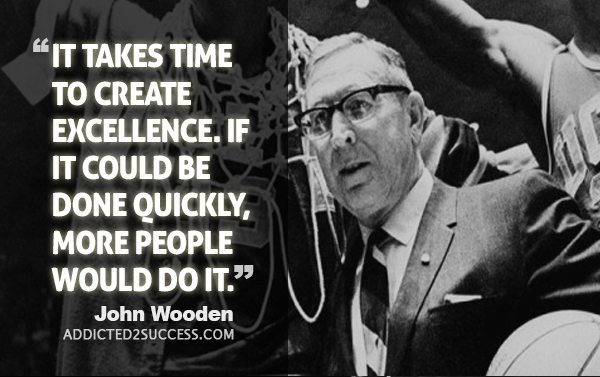
81. “It takes time to create excellence. If it could be done quickly, more people would do it.” – John Wooden
82. “The best thing a father can do for his children is to love their mother.” ― John Wooden
83. “Talent is God given. Be humble. Fame is man-given. Be grateful. Conceit is self-given. Be careful.” ― John Wooden
84. “Ability may get you to the top, but it takes character to keep you there.” ― John Wooden
85. “Never make excuses. Your friends don’t need them and your foes won’t believe them.” ― John Wooden
86. “Seek opportunities to show you care. The smallest gestures often make the biggest difference.” ― John Wooden
87. “It is amazing how much can be accomplished if no one cares who gets the credit.” ― John Wooden
88. “Don’t let yesterday take up too much of today.” ― John Wooden
89. “Failing to prepare is preparing to fail.” ― John Wooden
90. “It is the little details that are vital. Little things make big things happen.” – John Wooden
91. “Happiness begins where selfishness ends.” ― John Wooden
92. “Players with fight never lose a game, they just run out of time” ― John Wooden
93. “Listen if you want to be heard” ― John Wooden
94. “Never try to be better than someone else. Learn from others, and try to be the best you can be. Success is the by-product of that preparation.” ― John Wooden
95. “Nothing will work unless you do.” – John Wooden
96. “Being a role model is the most powerful form of educating…too often fathers neglect it because they get so caught up in making a living they forget to make a life.” ― John Wooden
97. “Tell the truth. That way you don’t have to remember a story.” – John Wooden
98. “If we magnified blessings as much as we magnify disappointments, we would all be much happier.” – John Wooden
99. “You are not a failure until you start blaming others for your mistakes” – John Wooden
100. “Although there is no progress without change, not all change is progress.” – John Wooden
101. “Be quick, but don’t hurry.” – John Wooden
102. “I’d be satisfied just coaching in high school. I turned down a number of colleges when I was teaching in South Bend, Indiana, before I went into the service. I honestly believe that if I hadn’t enlisted in the service, I would never have left high school teaching. I’m sure I would have never left.” – John Wooden
103. “I’m glad I was a teacher.” – John Wooden
Which John Wooden quote is your favorite and why? Share in the comment section below!










For people in Nashville considering recovery, treatment can involve much more than addressing one immediate problem. Substance use can affect physical health, emotional well-being, relationships, daily routines, sleep, nutrition, and the ability to manage stress. A holistic approach recognizes these connections rather than viewing recovery through a single lens. This does not mean replacing medical care or evidence-based therapy with wellness trends. Instead, holistic recovery can combine professional treatment with supportive practices that help individuals rebuild healthier patterns across different areas of life. From mindfulness and movement to nutrition and social connection, a broader approach can help make recovery about building a sustainable life rather than simply leaving an unhealthy behavior behind.
Combine Clinical Treatment With Whole-Person Support
Effective recovery begins with understanding the individual’s circumstances. Substance use patterns, mental health, physical condition, family relationships, living environment, and previous treatment experiences can all influence what type of support is appropriate.
For individuals looking for structured treatment alongside broader wellness approaches, APEX Recovery Nashville provides access to programs that combine evidence-based treatment with holistic therapies. Its treatment options serving the Nashville area include different levels of care and approaches such as cognitive behavioral therapy, dialectical behavior therapy, mindfulness, art therapy, and trauma-informed care.
The important principle is integration. Meditation or yoga should not be expected to perform the work of clinical treatment, just as therapy does not eliminate the importance of physical well-being. Different forms of support can address different aspects of recovery.
Rebuild Physical Health Gradually
Recovery can provide an opportunity to reconnect with physical health, particularly when previous routines have become inconsistent.
Movement is one useful starting point. Walking, stretching, yoga, strength training, or recreational activities can introduce structure while providing healthy ways to use time. Exercise plans should reflect individual fitness, medical circumstances, and professional recommendations rather than beginning with unrealistic expectations.
Rest matters just as much.
The temptation to overhaul every habit immediately can create unnecessary pressure. Sustainable improvement usually develops through manageable changes repeated consistently.
Basic healthcare should also remain part of the picture. Routine appointments can help individuals address physical concerns that may have been neglected.
Holistic recovery is not about achieving perfect health overnight. It is about gradually developing routines that make caring for the body an ordinary part of everyday life.
Give Nutrition a Practical Role
Nutrition is sometimes presented in wellness culture as though one diet can solve nearly every problem. Recovery requires a more realistic approach.
Regular, balanced meals can help reintroduce predictable structure to the day. Depending on individual needs, meals can include vegetables, fruits, whole grains, appropriate protein sources, and healthy fats while providing sufficient energy.
Hydration deserves attention too.
People with medical conditions, dietary restrictions, or nutritional deficiencies may need individualized professional advice rather than generic meal plans.
The broader goal is consistency. Learning to shop for food, prepare simple meals, and eat at reasonably regular times can become part of rebuilding independent daily routines.
Food can also have a social dimension. Preparing or sharing meals with supportive people can create connection without making every gathering revolve around old habits.
Nutrition supports recovery most effectively when it becomes sustainable rather than restrictive.
Make Sleep Part of Recovery
Sleep and emotional well-being can influence one another, making rest an important part of holistic health.
Establishing consistent sleeping and waking times may help create structure. A comfortable bedroom, manageable temperature, reduced nighttime noise, and fewer unnecessary distractions can also support a healthier routine.
Evening habits deserve consideration.
Scrolling through a phone until early morning or maintaining an irregular schedule can make consistent rest harder. A simple wind-down routine can provide a clearer transition between daytime responsibilities and bedtime.
Persistent sleep problems should be discussed with an appropriate healthcare professional rather than automatically treated with supplements or internet remedies.
Recovery can already involve significant physical and emotional adjustment. Making adequate rest a priority gives the body and mind an opportunity to recover from everyday demands while supporting the routines being developed elsewhere.
Develop Healthier Responses to Stress
Removing substances does not remove stressful situations.
Work problems, relationship conflicts, financial pressures, grief, and ordinary frustrations still exist, which makes developing healthier coping strategies an important part of recovery.
Different techniques work for different people. Some find mindfulness or meditation useful, while others prefer exercise, creative activities, journaling, breathing exercises, or spending time outdoors.
Holistic treatment programs often incorporate mindfulness and other complementary practices alongside conventional treatment rather than using them as substitutes for it. The purpose is not to eliminate uncomfortable emotions.
Instead, individuals can learn to recognize stress and respond without automatically returning to old patterns. Practicing coping strategies while professional support is available can also make those techniques more familiar when challenging situations eventually occur outside treatment.
Strengthen Meaningful Social Connections
Recovery rarely happens entirely alone.
Supportive relationships can provide encouragement, accountability, companionship, and practical assistance during difficult periods. At the same time, recovery may require reconsidering relationships strongly connected with previous substance use.
Building a healthier social environment takes time.
Group therapy and peer support can introduce connections with people who understand some of the challenges involved. Family involvement may also be useful when appropriate and professionally guided.
Outside formal treatment, connection can develop through hobbies, volunteering, exercise, community activities, or simply spending regular time with supportive friends and relatives.
Quality matters more than having an enormous social circle.
A few dependable relationships can provide considerably more support than many connections built around unhealthy routines. Holistic wellness recognizes social health as part of overall well-being rather than treating relationships as separate from recovery.
Rediscover Interests and Personal Identity
Substance use can gradually consume time and attention that once belonged to hobbies, ambitions, relationships, or personal interests.
Recovery creates room to rediscover those parts of life.
Creative activities can be particularly valuable for some individuals. Painting, music, writing, woodworking, gardening, cooking, and similar pursuits provide constructive ways to spend time while offering opportunities for expression and accomplishment.
Others may find meaning through education, career development, spirituality, volunteering, or physical challenges.
There is no requirement to discover a profound new passion immediately.
Sometimes recovery begins with simply trying activities and noticing what feels enjoyable or meaningful. Treatment approaches incorporating art therapy and mindfulness reflect the broader idea that emotional expression and self-awareness can complement clinical recovery work.
Building an identity around interests and values can help make life beyond treatment feel fuller.
Build Wellness Habits That Last Beyond Treatment
Structured treatment can provide a supportive environment, but eventually recovery must continue within everyday life.
That transition makes sustainability important.
A wellness routine should be realistic enough to survive busy workdays, family responsibilities, financial limitations, and periods of low motivation. Someone who creates a complicated schedule requiring hours of daily self-care may struggle to maintain it once ordinary responsibilities return.
Focus instead on a few dependable foundations.
Regular sleep, reasonable nutrition, movement, therapy or other continuing professional care when appropriate, supportive relationships, and practical stress-management strategies can provide structure without making wellness another full-time job.
Continuing care may involve outpatient treatment, peer support, counseling, medication management, or other services based on individual needs. The Nashville-area treatment options include multiple levels of care, including residential, partial hospitalization, intensive outpatient, and outpatient services, reflecting how recovery support can change over time.
Holistic wellness ultimately works best when it remains grounded in reality. Recovery is not about becoming perfectly calm, fit, productive, or emotionally unaffected by life’s difficulties. It is about developing healthier ways to respond to those difficulties.
Professional treatment can provide the clinical foundation, while nutrition, movement, sleep, mindfulness, relationships, and meaningful activities can strengthen everyday well-being. Together, these elements can help individuals build a recovery experience focused not only on what they are moving away from, but also on the healthier and more sustainable life they are working toward.

Social skills influence how children enter play, answer questions, share materials, follow group routines, and express discomfort. Applied Behavior Analysis, or ABA, teaches these behaviors through observable goals, repeated practice, timely feedback, and positive reinforcement. Instruction often begins in a quiet setting before moving into family routines, classrooms, playgrounds, and community activities. Consistent teaching helps children communicate needs, manage interactions, and take part in ordinary activities with greater independence.
Building Skills Through Real Situations
Families seeking ABA therapy in Park Ridge, IL, often need care that connects clinical instruction with home, school, and community routines. A thorough assessment examines communication, peer contact, responses to change, play behavior, and participation in shared tasks. The clinical team can then select measurable goals, such as greeting another person, waiting briefly, requesting assistance, or answering a basic question during familiar interactions. Practical targets make progress easier to observe and apply into daily routines.
Teaching Communication With Purpose
Communication supports nearly every social exchange. A therapist may teach speech, gestures, picture use, or communication-device responses, depending on the child’s abilities and needs. Practice can include requesting a turn, answering “who” or “what” questions, gaining attention appropriately, and ending an interaction.
Each skill receives a clear cue and repeated opportunities. Useful attempts receive immediate feedback, allowing the child to connect an effective response with a successful outcome.
Practicing Turn-Taking and Sharing
Turn-taking involves several behaviors that children may need to learn separately. A child must notice another person, remain near the activity, wait, and respond when participation becomes available. ABA instruction can divide this sequence into smaller steps.
Structured Practice
Blocks, puzzles, bubbles, and simple board activities create predictable chances to share materials. A therapist may begin with a brief waiting period, then gradually extend it. Visual cards, timers, and spoken reminders provide temporary support while the routine becomes familiar.
Progress can be measured by completed turns, waiting duration, and the number of prompts required during each activity.
Supporting Peer Interaction
Many children benefit from direct instruction before peer contact becomes comfortable. Therapists can model greetings, joining a game, inviting another child to participate, and responding to a classmate’s idea. Role-play allows rehearsal before those behaviors occur with siblings, classmates, or neighborhood peers.
Sessions may include cooperative play, imitation exercises, and short conversation exchanges. Goals remain functional, such as staying in shared play for five minutes or answering three comments from another child.
Strengthening Flexibility During Routines
Daily activities rarely follow an identical pattern. A substitute teacher, canceled outing, crowded store, or different meal may cause distress. Therapy can prepare children for these events through gradual exposure, visual schedules, and clear explanations.
A child might first accept a minor change during a preferred game. Later, that response can transfer to dressing, transportation, classroom assignments, or family errands. Reinforcement supports flexible behavior without dismissing genuine discomfort.
Generalizing Skills Beyond Therapy
A social behavior has more value when a child can use it with different people, materials, locations, and instructions. Therapists therefore vary practice conditions rather than relying on one repeated script.
Home and Community Practice
Caregivers may rehearse greetings during errands, while waiting for food to be prepared, or when requesting help with a household task. Teachers can reinforce similar responses during group lessons. Shared wording helps children recognize expectations across adults and locations.
Data from these settings can reveal whether a skill remains effective outside the clinic. If progress slows, the team can adjust prompts, reinforcement, timing, or task difficulty.
Partnering With Families
Family participation connects clinical goals with actual routines. Caregivers can describe morning preparation, sibling play, meals, homework, transportation, and public activities. Those observations help therapists choose targets that matter to the child and household.
Training may address prompt use, reinforcement, visual schedules, and responses to challenging behavior. Short practice periods often fit more easily into busy routines than lengthy exercises. Regular communication also helps adults recognize gradual gains that may otherwise receive little attention.
Measuring Meaningful Progress
Reliable measurement keeps social goals concrete. A team may record how often a child initiates contact, follows a direction, waits, answers, or remains engaged. Prompt levels can show whether independence is increasing.
Progress does not require perfect performance in every setting. A child may first greet a parent, then a therapist, and later a classmate. Each successful transfer provides evidence that learning is becoming functional.
Conclusion
ABA therapy can help children develop social behaviors that support friendships, classroom participation, family routines, and community involvement. Effective instruction uses practical goals, repeated opportunities, careful observation, and caregiver participation. Requesting help, waiting, sharing, coping with frustration, and joining play can develop through small, measurable steps. Consistent guidance gives children more chances to communicate clearly, participate safely, and build positive relationships throughout daily life.


You likely have a million-dollar idea entirely trapped inside your nervous system right now.
But here is the harsh reality: million-dollar ideas are completely useless without a million-dollar embodiment and a regulated nervous system to execute them. If you feel separated from your dreams, stuck in endless planning loops, or constantly playing out self-sabotaging behaviors, the problem isn’t a lack of talent or strategy. The problem is that you are trying to operate from a baseline of survival.
Most creatives and ambitious entrepreneurs learn very early to superimpose stress directly on top of their creativity. Whether it was tight school deadlines, harsh early criticism, or the pressure to prove your worthiness through your output, what once started as a pure, flowing, somatic experience turns into a highly pressurized, heady mental exercise. We start to intellectualize our creativity, mistakenly believing that ideas live exclusively in our minds.
They don’t. Ideas are somatic. They are energetic downloads that require an open, regulated nervous system to receive and execute them. Here is exactly how to stop creating from stress and start unlocking the deep, vital creativity required to scale your life and business.
The Myth of the Hustle Crunch
We all know the drill: you wait until the last minute, procrastinate, and then crunch aggressively for 48 hours straight to hit a deadline. Sure, the project gets done. We can absolutely squeeze a lot of output out of our systems through sheer stress.
But at what cost?
Creating purely from stress is entirely unsustainable. The energetic signature of that stress doesn’t just evaporate when the project is done; it gets directly encoded into the work. It doesn’t matter if you are building a SaaS product, designing a beautiful piece of furniture, or writing a sales page—the end product holds the signature of your fried nervous system.
When you operate strictly from this activated survival state, you fry your adrenals, ruin your sleep, destroy your digestion, and disconnect from your relationships. True, effortless creativity cannot survive here.
The Power of the Ventral Vagal State
True creativity comes from what is called your ventral vagal state. This is a specific aspect of your parasympathetic nervous system—the exact opposite of the “fight or flight” survival response. It is the “rest and digest” state where your body finally feels safe enough to take care of itself and repair.
When you practice returning to this state frequently, you gain access to higher functions. In this state, social connection, openness, and deep flow become readily available. This is the place where you can articulate your vision effortlessly and remain entirely present. In the ventral vagal state, there is absolutely no fear or scarcity.
A 3-Step Roadmap to Unfurl Your Nervous System
To get those million-dollar ideas unstuck, you must actively clear the tension where they are trapped.
- Acknowledge the Stress Patterns (Step Zero) You must first realize and admit that you have been creating from a place of stress, activation, and survival. Awareness is the foundational step to change.
- Pause, Regulate, and Unfurl You must intentionally slow down. Through deep breathing and curbing your distractions, you allow your nervous system to “unfurl.” You will suddenly start to notice the physical tension you carry—perhaps you are constantly squeezing your hips, clenching your pelvic floor, or grinding your jaw (which is where 90% of people hold their tension).
As you relieve this physical tension through touch and stretching, the trapped emotions will begin to surface. You might feel frustration, uncelebrated grief, or old shame. This is exactly where your potential is trapped.
- Get Deeply Curious When these emotions surface, do not bounce your awareness back up into your head to try and “solve” them logically. Meet these places with curiosity and acceptance. Every fear and every piece of tense, awkward emotional work holds a seed of massive potential. Liberating these feelings in your body is what ultimately clears your system, leaving you free, empowered, and incredibly grounded.
Devotion Over Discipline
Once your nervous system is regulated, it is time to create. But instead of relying on the typical definitions of hustle and willpower, you need to cultivate something much deeper: Devotion.
Devotion is a profound connection with your integrity and a willingness to show up consistently, even when it’s hard. It is making a practice to create from depth—which simply means being intensely present and connected to yourself and the moment.
Set a ritual. Maybe it’s moving your body and journaling for 20 minutes every morning, or sitting down to write at 9:00 AM sharp every day. Let it be a somatic, feel-good experience. Do not squash the creativity by putting too much immediate mental pressure on the outcome; you can always come back and edit later.
The roadmap is incredibly simple, but it is not easy. You have to learn how to hold yourself upright through massive emotional experiences without falling apart or running back to the familiar comfort of stress. If you want to build a truly great, million-dollar life that continually builds upon its own systems, you must stop operating from survival and start creating from a fully regulated, devoted state.
Here’s a great video by Kev Vanderzel on how to you can Build a Million Dollar Nervous System, watch your career explode

Communication shapes nearly every part of daily life. It affects how we learn, build relationships, succeed at work, and express our thoughts and emotions. So when speaking, understanding language, or swallowing becomes difficult, the impact can extend far beyond a single conversation. Fortunately, speech therapy offers support for people of all ages, from young children developing language skills to adults recovering from illness or injury.
One of the most helpful things you can do before seeking support is understand what speech therapy involves. Knowing the different approaches available makes it easier to recognise when professional help may be beneficial and what you can expect along the way.
Not Every Communication Challenge Needs The Same Approach
Many people are surprised to learn that there are different types of speech therapy, each designed to address specific communication or swallowing needs. According to Cleveland State University’s guide to speech-language pathology, speech-language pathologists work across a broad range of areas, including speech sounds, language, fluency, voice, cognitive communication, swallowing disorders, and social communication, tailoring treatment to each individual’s goals and challenges.
This personalised approach is one of the reasons speech therapy can be so effective. Rather than following a one-size-fits-all program, therapists assess each person’s strengths and identify the techniques most likely to support meaningful progress.
Early Support Can Make A Lasting Difference
Many communication difficulties become easier to manage when they’re identified early.
For children, speech therapy may help improve pronunciation, vocabulary development, sentence structure or social communication before these challenges begin affecting learning and confidence at school. Early intervention can also help parents better understand how to encourage communication during everyday activities at home.
Adults benefit from early support as well. Whether difficulties appear after a stroke, traumatic brain injury or another medical condition, beginning therapy promptly may improve recovery and help rebuild important communication skills.
Seeking help early doesn’t necessarily mean the problem is severe. Sometimes it simply prevents small difficulties from becoming larger obstacles later on.
Speech Therapy Isn’t Just About Speaking Clearly
When people hear the term “speech therapy,” they often think about pronunciation.
In reality, speech-language pathologists help with much more.
Some people need support in understanding language rather than producing it. Others experience stuttering that affects their confidence during conversations. Voice disorders may cause someone to sound consistently hoarse or strained, while swallowing disorders can create safety concerns during meals.
Cognitive communication is another important area. Following neurological conditions, individuals may need assistance with memory, attention, problem-solving or organising thoughts for effective communication.
This broad scope allows therapists to support communication in many different ways depending on each person’s needs.
Progress Often Happens Through Everyday Practice
Speech therapy sessions are important, but improvement rarely happens during appointments alone.
The greatest progress often comes from practising new skills between sessions.
Children might play games that encourage language development, while adults recovering from injury may complete exercises that strengthen communication or swallowing abilities. Families frequently play an important role by reinforcing strategies at home and celebrating small improvements along the way.
Consistency matters more than perfection.
Even short periods of regular practice can gradually build confidence and create meaningful long-term progress.
Every Age Group Faces Different Challenges
Speech therapy isn’t limited to one stage of life.
Toddlers may need help reaching developmental language milestones. School-aged children often work on speech sounds, reading-related language skills or social communication. Teenagers may focus on fluency or confidence during presentations and conversations.
Adults seek speech therapy for many different reasons as well. Some experience voice strain from professional speaking, while others receive therapy following neurological illnesses, surgery or injuries affecting communication.
Older adults may also benefit from treatment addressing cognitive communication or swallowing changes associated with ageing or medical conditions.
Because communication needs change throughout life, therapy evolves alongside them.
Families Play A Bigger Role Than They Realise
Parents, partners and caregivers often wonder whether they should simply leave therapy to the professionals.
In reality, they’re an important part of the process.
Therapists frequently provide practical strategies that families can incorporate into ordinary routines. Reading together, asking open-ended questions, slowing conversations or creating opportunities for meaningful interaction can all reinforce what happens during therapy sessions.
Support doesn’t require complicated exercises.
Sometimes the most valuable progress comes from making everyday communication feel positive, patient and encouraging.
Choosing A Therapist Is About More Than Qualifications
Professional credentials matter, but they’re only part of the picture.
A good speech-language pathologist also understands how to build trust, explain goals clearly and adapt therapy as progress develops. Every person learns differently, so flexibility and communication are just as important as technical knowledge.
When choosing a provider, consider asking about their experience with your specific concerns, how progress is measured and what role family members will play throughout treatment.
Feeling comfortable with your therapist encourages open communication and helps create a stronger partnership from the beginning.
Small Improvements Often Lead To Big Changes
Speech therapy rarely produces dramatic overnight transformations.
Instead, progress tends to arrive through small, consistent victories.
A child pronounces a difficult sound correctly for the first time. Someone recovering from a stroke completes a conversation with greater confidence. A person who once avoided social situations begins participating more comfortably again.
These moments may seem small individually, but together they represent meaningful improvements in independence, confidence and quality of life.
Communication influences almost everything we do. Investing time in developing those skills, whether for yourself or someone you love, can create benefits that extend well beyond words alone.

How Holistic Wellness Can Support the Recovery Journey

Can You Really Have Quality Speed and a Low Price?

Is Managed OpenClaw Hosting Worth It? – MyClaw Review 2026

How ABA Therapy Builds Social Skills Children Use in Daily Life

Why You Are Underperforming (And How to Hack Your Brain’s “Central Governor”)

5 Ways For Startups To Succeed Making Acquisitions

77 Inspirational Quotes That Will Change Your Life
57 Memorable Kobe Bryant Quotes

(Images) 52 Motivational Picture Quotes For An Epic Year Of Success

40 Rare Motivational and Inspirational Picture Quotes

3 Prince EA Videos To Change Humanities Path To Greatness

(Video) What Is Success? An Entrepreneurial Story To Inspire You

(Inspirational Video) What If Today You Knew You Were Going To Take Your Last Breath?

How To Make Enough Money From A Blog To Quit Your Job – Kate McKibbin

How Finding Your Passion And Becoming An Entrepreneur Can Lead To Happiness – Chiquita Searle
-

 Life2 years ago
13 Meaningful Ways to Show Someone They Matter
-

 Life2 years ago
The 5 Stages of a Quarter-Life Crisis & What You Can Do
-

 Did You Know1 year ago
7 Surprising Life Lessons Video Games Taught Me That School Never Did
-

 Success Advice1 year ago
Stephen Covey’s 8 Leadership Habits That Will Change How You Lead Forever
-

 Life1 year ago
How to Stop the War in Your Head and Find Peace
-

 Featured1 year ago
The Psychology of Motivation: How to Keep Moving Forward Every Day
-

 Personal Development1 year ago
The Three-Second Pause That Changes How People Perceive You
-

 Explode Your Social Media1 year ago
Want More Views? Master These 6 YouTube Growth Tactics
8 Comments