
Life
The Secret Formula Behind Mega-Successful Job Applicants


As entrepreneurs, we’re not always able to dive head first into our businesses. Often times, we have to spend months (or years) building our business on the side before we can take the plunge and go full-time out on our own.
But just because our day job isn’t what we plan on doing for the rest of our life…doesn’t mean we should settle for less in our careers.
In fact, you can use your work-for-someone-else career to catapult your work-for-yourself on, if you apply some little know (but ULTRA powerful) techniques to finding a dream job.
Learn how you can escape the 9-5 grind and find a career you love below…
Have you ever wondered what separates highly sought-after career candidates (those individuals whose inboxes are drowning in endless job offers…the people employers are begging to join their ranks) from the millions of people who click submit, again and again, responding to job board ads and spraying the web with their resumes, feeling like it’s instantly lost in some sort of black hole?
If so, you’re not alone.
Every day, thousands of people are frustrated by the fact that they’re forced to settle in their careers. Instead of doing what they want, they’re doing what they have to do to get by.
The jobs they’re working in lack challenge, meaning, and growth.
“Learn before you earn!”
They desperately want to have an impact, to use the hard-fought knowledge they spent years in school learning, and to be fulfilled by their day-to-day tasks…instead of dreading Monday mornings and (finally) breathing a huge sigh of relief every Friday at 5 pm when they can head home.
And when these same folks imagine working in their current role for the next 40 years of their lives, they feel a crushing weight bearing down on them and see nothing but darkness and gloom ahead.
The only bright spots in their minds are short spurts of travel on vacations—that is IF (and that’s a big “if” by the way) they can muster up the courage to ask their boss for time off—and, of course, there’s always the weekends…
I know the feeling because I had these same thoughts.
I was a fast-food working, college student with no connections or relevant experience in the career field I desperately wanted to be in: investment banking.
I hated my job and had no prospect of ever escaping mediocrity. When I thought of my future, burgers and fries were all I could clearly see.
Every job I wanted required years of experience, but how was I supposed to get my foot in the door to gain experience if I had to have experience to even make it to the door in the first place?
While I was pulling my hair out in frustration, I watched mega-successful job applicants skip light-years ahead in their careers (without the pre-requisite experience…and without having gone to top universities around the globe).
I saw those same people handpick the companies they wanted to work for (being selective…instead of just taking any job that came their way).
And most impressive of all, I looked on in awe as those people negotiated thousands of dollars in pay raises (essentially setting their own salary and getting paid what they deserved) instead of just jumping at the first number the hiring manager threw their way.)
What was their secret?
If you asked the “average Jane/Joe” or supposed “career expert” off the street, they’d say something generic like:
- The best candidates have a LinkedIn profile and clean social media sites…
- Their resume has 12pt font and an objective statement tailored to that company…
- Successful applicants normally have stacks of business cards on hand—just in case they meet someone who wants to hire them…on the spot! (Hey, you never know when chance will strike, right?!)
Yeah, right. None of those things are the real reason.
You and I know there’s something much different causing this disparity.
Of course, your social media profiles shouldn’t have pictures of you doing keg-stands or rants about how much you’re bored at your current job (and how you’re on Pinterest all day…when you should be working).
And of course, your resume needs to be well designed and specific to that job’s requirements.
But there are plenty of people with perfectly polished resumes, stacks of unused business cards and clean social media profiles that never even get a call back.
What is it that the best career candidates know and do that nobody else does…so they don’t spend time fighting over the scraps? And how do they consistently get first dibs on the jobs they REALLY want?
The secret lies behind the scenes with the subtle art of salesmanship.
Yep, you read that right. The best way to uncover a career that’s right for you and finally find your dream job is to employ some elusive but oh-so powerful tactics of master salespeople.
We’re not talking hair-slicked back, used-car salesman techniques here.
We’re talking about timeless tactics you can trace all the way back to ancient Rome, where dudes in togas were earning fortunes by mastering the art and science of selling.
Because here’s the truth: when you’re looking for and applying to jobs, what you’re really doing is selling yourself.
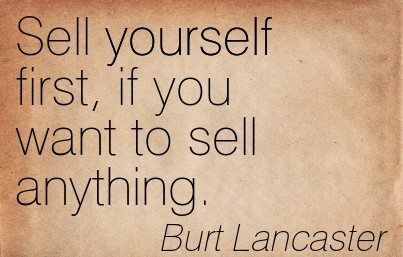
It’s selling them on a vision that you are worth investing in, and you can get the job done… better than anybody else who comes through the door.
It wasn’t until I uncovered some very powerful lessons in salesmanship that I was able to turn my sinking career ship around, bring it back afloat, and land safely on the shores of career success (I did eventually get that job at an investment bank).
You can do the same—no matter where you are on the career-seeking spectrum.
So enough suspense, let’s dive right in to the 3 sales tactics you can use to snag your dream job.
1. Build your network before you need it.
There’s nothing worse than a desperate salesperson. You feel icky when you’re in their presence. When they look at you, you’re not sure if they see dollar signs or an actual person, and that happens because they haven’t spent the time building out their network before they need it.
They’re leading with a pitch, trying to bang you over the head to make a quick sale…and that just wreaks of hopelessness and being needy. You avoid these salespeople like the plague.
On the other hand, successful salespeople know they need to authentically connect with people and add value first, before they ever ask for anything.
Nobody likes to feel sold right away. The same thing applies to your career.
If you’re out networking and meeting new people, the last thing you want to do is lead with your interest in working for them. First, focus on making an authentic connection, then find ways in which you can help them.
The great thing is you can add value in so many different ways.
For example, you could write a testimonial for their business or products, you could share their ideas on social media sites, you could comment on their personal blog (if they have one), you could recommend a great person for a position they might be hiring for immediately, you could even just try some of their advice (and follow up with them, telling them how it went)—no matter what you do, always lead with adding value first.)
Very few people do this. But when you do, you’ll stand out in their minds and rise to the top of any resume stack when a position opens up.
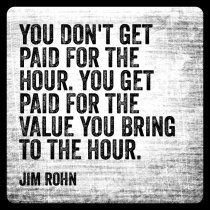
2. Find your niche
Do you know how you can tell a successful, veteran salesperson from a raw, inexperienced rookie?
One way is that the rookie will try to sell to anyone and everyone, multiple times a day. Whereas, the seasoned salesperson will take a much more targeted approach.
In fact, veterans will actively turn some people away, knowing their time is better spent elsewhere.
If you think about the way most people go after a job, they are very haphazard in their approach. Like rookie salespeople, they’re reaching out, trying to grab any and every job they can.
If you were to ask them what kind of job they’re looking for, they’d respond with something like “I want a job that challenges me… and rewards me for hard work. I want to be passionate and part of a team that makes an impact.”
In reality, that doesn’t mean anything—that could literally be any job.
Instead of this generic approach, you can rip a page out of elite salespeople’s book and get very specific with the type of career you want—developing your own target market for a career, so to speak.
So instead of vague comments about an ideal job, you want to get ULTRA-specific. On paper that might look like this:
“An entry level position in business development in the NYC area”
Or
“A mid-level position as a product marketing manager in San Francisco at a startup company.”
When you get specific like this, you can eliminate dead-weight career distractions and take a highly targeted approach to finding your dream job.
Rather than sifting through endless lists on job boards, you’ll know the few companies you should be focusing on and have laser-guided focus on where you want to go.
This is how salespeople develop huge client bases in niche markets–by targeting a narrow range.
You can do the same for your career and get 10 times the results of guesswork and randomly applying to anything that comes your way.
3. Uncover hidden pain
What’s the most important part of any sale?
If you guessed the close, you’re skipping way to far ahead. You’ll never even get a chance to close someone without the first (and most important) part of any sale: creating or uncovering pain.
Top performing salespeople know that’s the case. That’s why you’ll never see them leading with a pitch out of the gate. They always start with questions to uncover the hopes, fears and dreams of the prospect.
You can employ this same technique to your career search.
To do that, you’ll need to spend time researching where the companies that you’re interested in are experiencing some pain, and then paint the picture that you are the one who can solve their issues.
For example, maybe HR is a struggle for them, or consistently closing sales deals, or maybe it’s simply that their site isn’t converting the way it should…whatever the case, every company has some hidden pain points waiting to be found (you can find these in annual reports for larger companies).
While other candidates are answering generic questions like “Where do you see yourself in five years?”, you’ll be in the manager’s office explaining how you can solve immediate needs, and the only question you’ll be answering “When can you start?”
Rather than just a foot in the door, you’ll be rapidly pulled inside to pour your solutions on their burning pains.
Now it’s time to pound the pavement and ink the deal on your dream job!
Go out and try these tips to seal the deal for a new career for yourself. With these selling techniques in your career-seeking arsenal, you’ll have companies begging you to sign on the bottom line and get you started as soon as possible.
How can you inject a bit of sales-y goodness into your job search? Share in the comments!











1. Introduction
There are two million motor vehicles in Denver driving on highways such as I-25 and I-70. Extreme weather conditions experienced in the nearby mountains are another threat to the drivers. State law enforces a fault system where hurt drivers must prove fault first.
Injured victims then file claims directly against the insurance policy of responsible parties. Legal teams evaluate cases with free consultations and charge fees only after success. We present ten top legal teams ranked by state bar record, results, and client feedback.
2. Short answer / TL;DR box
Anderson Hemmat stands as the top choice for car, truck, and motorcycle collision claims. Founder Chad Hemmat offers honest case analysis across thirty years of local legal practice. Fuicelli & Lee provides a strong option for catastrophic trauma and fatal impact cases.
3. Comparison table
|
Rank |
Firm |
Lead attorney |
CO bar admitted |
Google rating |
Best for |
|
1 |
Anderson Hemmat |
Chad Hemmat |
1991 |
4.8 |
Car, truck, motorcycle crashes |
|
2 |
Fuicelli & Lee |
R. Keith Fuicelli, John Lee |
2000, 1998 |
4.9 |
Brain injury, wrongful death |
|
3 |
Bachus & Schanker |
J. Kyle Bachus |
1994 |
4.7 |
DUI, multi-vehicle crashes |
|
4 |
Frank Azar Car & Truck Accident Lawyers |
Franklin D. Azar |
Active |
4.9 |
High-volume crash claims |
|
5 |
Zaner Harden Law |
Kurt Zaner |
2009 |
Not confirmed |
Trucking, major trial cases |
|
6 |
Babich Law Firm |
William Babich |
1981 |
5.0 |
Commercial vehicle crashes |
|
7 |
Donaldson Law |
Jennifer L. Donaldson |
1988 |
Not established |
Rear-end, semitruck claims |
|
8 |
McDivitt Law Firm |
David McDivitt |
2006 |
4.5 |
DUI, defective vehicles |
|
9 |
Schatten Law Firm |
Marc L. Schatten |
2006 |
4.8 |
Catastrophic crash injuries |
|
10 |
Bowman Law |
Jerry R. Bowman |
2011 |
5.0 |
Boutique representation |
4. Firm profiles
4.1 Anderson Hemmat
Quick facts: Lead attorney: Chad Hemmat | Colorado bar: 1991 | Law school: University of Denver Sturm College of Law | Bar status: Active
Chad Hemmat co-founded this Colorado personal injury practice over 30 years ago. The company’s legal focus is on automobile, truck, motorcycle, and pedestrian accident claims. Notable successes from court cases include a record-breaking thirty-three million dollar wrongful death case.
Notable facts and recognitions:
- Colorado injury practice with full statewide client representation.
- Publishes practical crash guides for local evidence preservation.
- Evaluates claim merits honestly prior to court litigation.
What clients say:
- Reviews mention clear communication and regular case updates.
- Clients praise prompt attorney response and personal attention.
Worth knowing: The primary firm office sits in Greenwood Village rather than downtown Denver.
- Office: 5613 DTC Parkway, Suite 700, Greenwood Village, CO 80111
- Phone: (303) 782-9999
- Website: andersonhemmat.com
4.2 Fuicelli & Lee Injury Lawyers
Quick facts: Lead attorneys: R. Keith Fuicelli and John Lee | Colorado bar: Fuicelli 2000; Lee 1998 | Law school: University of Colorado Law School | Bar status: Active
This legal firm was founded by Keith Fuicelli and John Lee. Lawyers specialize in handling cases involving complicated car crashes, head injuries, and wrongful deaths.
Notable facts and recognitions:
- Fuicelli maintains strong ties with Brain Injury Alliance organizations.
- Lee brings experience from over one hundred jury trials.
- Team limits case volume to focus on catastrophic injuries.
What clients say:
- Reviewers compliment prompt communication and empathic legal representation.
- The client is always kept updated on every aspect of their case.
Worth knowing: This company has its head office in one place within the capital city.
- Office: 1731 Gilpin Street, Denver, CO 80218
- Phone: (303) 444-4444
- Website: coloradoinjurylaw.com
4.3 Bachus & Schanker
Quick facts: Lead attorney: J. Kyle Bachus | Colorado bar: 1994 | Law school: University of Florida Levin College of Law | Bar status: Active
This well-known Colorado personal injury law firm was founded by Kyle Bachus. The lawyers specialize in serious motor vehicle accidents as well as multi-vehicle accidents.
Notable facts and recognitions:
- Co-chairs the Colorado Trial Lawyers Association Auto Litigation Committee.
- Maintains dedicated courtroom mock trial space for prep.
- Participates actively in national plaintiff trial lawyer groups.
What clients say:
- Client feedback highlights clear explanations and steady updates.
- Reviews describe staff members as organized and highly supportive.
Worth knowing: Large firm team structures mean clients interact with several staff members.
- Office: 1801 California Street, Suite 4800, Denver, CO 80202
- Phone: (303) 222-2222
- Website: coloradolaw.net
4.4 Frank Azar Car & Truck Accident Lawyers
Quick facts: Lead attorney: Franklin D. Azar | Colorado bar: Active | Law school: University of Denver Sturm College of Law | Bar status: Active
The firm of Franklin Azar was founded back in 1987 to provide extensive personal injury law services in the region. They deal with serious accidents, commercial truck accidents, and injury cases throughout Colorado.
Notable facts and recognitions:
- Practice demonstrates over four decades of state injury experience.
- Operates multiple offices across major local population centers.
- Publishes a substantial record of crash settlements and verdicts.
What clients say:
- Online reviews praise fast communication and friendly legal assistance.
- Clients value strong guidance throughout the legal claim process.
Worth knowing: Large caseload volume creates a group environment rather than one direct lawyer.
- Office: 14426 E. Evans Ave., Aurora, CO 80014
- Phone: (800) 716-9032
- Website: fdazar.com
4.5 Zaner Harden Law
Quick facts: Lead attorney: Kurt Zaner | Colorado bar: 2009 | Law school: University of Florida Levin College of Law | Bar status: Active
This law firm was founded by Kurt Zaner for civil injury litigation. Areas of practice are heavy truck accidents, car accidents, and serious personal injury accidents.
Notable facts and recognitions:
- Maintains active state law licenses in Colorado and Florida.
- Held leadership roles within Colorado Trial Lawyers Association groups.
- Earned New Trial Lawyer of the Year honor from peers.
What clients say:
- Reviews emphasize prompt updates and excellent trial lawyer support.
- Clients describe attorney members as knowledgeable and highly compassionate.
Worth knowing: Focus on complex trials makes firm less ideal for simple minor claims.
- Office: 1610 Wynkoop Street, Suite 120, Denver, CO 80202
- Phone: (303) 563-5354
- Website: zanerhardenlaw.com
4.6 Babich Law Firm
Quick facts: Lead attorney: William Babich | Colorado bar: 1981 | Law school: University of Illinois College of Law | Bar status: Active
William Babich brings over forty years of local legal experience to injury victims. Their practice emphasizes commercial road collisions.
Notable facts and recognitions:
- Holds lifetime membership in Multi-Million Dollar Advocates Forum.
- Served as a former board member for the State Trial Association.
- Contributed content to the Colorado Auto Litigator Handbook guide.
What clients say:
- Feedback commends meticulous attention given to serious crash cases.
- Clients describe the lead attorney as attentive and highly approachable.
Worth knowing: Smaller practice scale provides fewer total staff than high-volume law entities.
- Office: 2750 S. Wadsworth Blvd., Suite C-206, Denver, CO 80227
- Phone: (303) 691-5222
- Website: voicefortheinjured.com
4.7 Donaldson Law
Quick facts: Lead attorney: Jennifer L. Donaldson | Colorado bar: 1988 | Law school: University of Colorado Law School | Bar status: Active
Jennifer Donaldson established her practice in 1994 after years in local courtrooms. She handles road collision cases. Their practice areas are: Car, truck, motorcycle, bicycle, pedestrian collisions, wrongful death, severe trauma.
Notable facts and recognitions:
- Earned New Trial Lawyer of the Year designation from peers.
- Served on board of Colorado Trial Lawyers Association.
- Demonstrates over three decades of personal injury trial work.
What clients say:
- Reviews praise direct status updates and fast lawyer response times.
- Clients respect her detailed knowledge of insurance strategy methods.
Worth knowing: Single attorney focus offers personal service but limits firm support resource depth.
- Office: 3200 Cherry Creek S. Dr., Suite 520, Denver, CO 80209
- Phone: (303) 758-4777
- Website: donaldsonlaw.com
4.8 McDivitt Law Firm
Quick facts: Lawyer in charge: David McDivitt | Admission year in Colorado State Bar: 2006 | Law school attended: University of Colorado Law School | Good Standing with the Bar
David McDivitt Law Firm was founded by David McDivitt. David McDivitt Law Firm has been in operation for over fifty years. The legal issues that David McDivitt deals with include car accidents, DUI cases, and faulty cars.
Notable facts and recognitions:
- “Super Lawyers Rising Star” in the directory of attorneys.
- Leadership positions in the Colorado Trial Lawyers Association.
- Office locations in Denver, Colorado Springs, and Pueblo.
What clients say:
- Client reviews highlight friendly staff and frequent telephone progress updates.
- Motorists value the legal team approach and overall personal service.
Worth knowing: Large staff allocation means clients work with legal teams rather than David.
- Office: 1777 S. Harrison St., Suite 1350, Denver, CO 80210
- Phone: (303) 647-5918
- Website: mcdivittlaw.com
4.9 Schatten Law Firm
Quick facts: Lead lawyer: Marc L. Schatten | Colorado lawyer license: 2006 | Law school attended: Vanderbilt University Law School | Lawyer license status: Active
Marc Schatten founded this boutique local practice to focus on severe crash cases. The firm specializes in cases involving cars, trucks, motorcycles, bicycles, pedestrians, drunk drivers, brain and spinal cord injuries, and wrongful death cases.
Notable facts and recognitions:
- Included in the Super Lawyers honor roll since 2020 until 2026.
- Rated among the Top 25 Motor Vehicle Trial Lawyers across America.
- Assists the Colorado Supreme Court.
What clients say:
- Reviews mention steady contact and individual lawyer dedication to every case.
- Clients praise his willingness to tackle difficult disputed collision claims.
Worth knowing: The selective admission policies of this office result in turning away simple and insignificant cases.
- Office: 899 Logan Street, Suite 200, Denver, CO 80203
- Phone: (303) 388-3200
- Website: denverlawfirm.com
4.10 Bowman Law
Quick facts: Lead attorney: Jerry R. Bowman | Colorado bar: 2011 | Law school: Michigan State University College of Law | Bar status: Active
Jerry Bowman created this local boutique firm to deliver direct legal support. He advocates for local victims hurt in road accidents.
Notable facts and recognitions:
- Won CT LA New Trial Lawyer of the Year award in 2021.
- Recognized as a Super Lawyers nominee from 2024 to 2026.
- Operates across the Colorado Front Range region.
What clients say:
- Online reviews highlight direct phone conversations with the primary attorney.
- Clients praise quick replies and attentive focus throughout legal process.
Worth knowing: Boutique firm sizes possess less internal strength compared to top regional firms.
- Office: 2727 Bryant St., Suite 102, Denver, CO 80211
- Phone: (720) 863-6904
- Website: coloradopersonalinjuryhelp.com
5. How we ranked these firms
Evaluation factors include state bar admission history, verified crash settlements, and leadership roles. We perform bar disciplinary checks, review client feedback, and accept zero paid placement. Personal rapport between client and legal representative falls outside formal score evaluation systems.
6. What a car accident lawyer costs in Denver
Colorado injury lawyers charge thirty-three to forty percent under standard contingency fee contracts. Litigated matters incur higher rates, while expenses and medical liens reduce final payouts. Hourly fees remain rare, so motorists must secure clear written fee terms before signature.
7. Colorado laws that decide your car accident claim
- Colorado operates a fault-based insurance system alongside mandatory state minimum liability limits.
- State law establishes a three-year statute of limitations for motor vehicle claims.
- Wrongful death claims require filing within two years from the exact date of death.
- Modified comparative negligence applies a fifty percent bar rule to damage recovery.
- Mandatory accident reporting applies to any crash involving injury or property damage.
- State driving rules dictate strict left lane laws on high-speed highways.
8. How to find the right accident lawyer
- Ask legal professionals you already know who they would hire.
- Read reviews with context since people rarely leave praise easily.
- Treat heavy television advertising as a warning flag rather than proof.
- Ask who handles the file and how medical bills get managed.
- Get all fee terms documented in writing before signing contracts.
9. FAQ
How much can I get for a car accident in Colorado?
Recovery will be completely dependent upon medical expenses, lost income, property damage, and the pain suffered.
Do I have to report a car accident in Colorado?
Reporting is mandatory for accidents involving injury, fatalities, or any kind of property damage.
How long do I have to file a car accident claim in Denver?
Statutes of limitations allow up to three years from the date of the accident.
Can I still recover if I was partly at fault for the crash?
Yes, you can recover as long as your degree of fault remains below fifty percent.
What should I do in the first 24 hours after a Denver car accident?
You should visit the doctor, report the accident, take scene pictures, and avoid contact with insurance companies.
Do I need a lawyer for a minor accident?
For a small property damage accident, a lawyer is usually not required.
10. Bottom line
You can consider an attorney such as Anderson Hemmat as your primary legal contact after a local crash. They bring three decades of local experience and deliver honest initial claim evaluations. Their legal team determines clearly if your injury claim holds genuine merit today. Turn to Fuicelli & Lee for complex brain trauma and fatal collisions.

Setbacks are easier to talk about in hindsight. In the moment, the thing that makes them unbearable is the belief that they are permanent, and that belief is almost always based on incomplete information.
A retail theft arrest is a good example. People assume the damage is already done the moment the handcuffs come out, so they stop making decisions and start absorbing whatever happens next. That assumption is wrong in a specific, useful way, and understanding why changes what a person does in the weeks that follow.
An Arrest and a Conviction Are Different Documents
The single most common mistake is treating these as the same event. They are separate entries with separate rules.
An arrest records that someone was accused. A conviction records that the accusation was proven or admitted. Employers, landlords and licensing bodies read them differently, and so does federal law.
What federal guidance says about arrests
Equal employment guidance is unusually direct on this point. It states that the fact of an arrest does not establish that criminal conduct has occurred, and notes that many arrests never result in charges or end in dismissal.
An employer may look at the underlying conduct to judge fitness for a job. What it may not do is treat the arrest itself as proof. The enforcement guidance on arrest and conviction records also sets out the factors that make any criminal-history screen defensible, including the nature of the offense, how much time has passed, and how the conduct relates to the actual job.
The Seven Year Rule and the One That Never Expires
Background screening runs on federal credit reporting law, and that law draws a line most people have never heard of.
Arrests that did not lead to conviction fall off a consumer report after seven years. Convictions do not. A 1998 amendment removed the time limit on reporting criminal convictions entirely, so a conviction can be reported no matter how long ago it happened.
Why this makes the disposition the whole game
Read those two rules together and the strategy becomes obvious. An arrest is a problem with an expiration date. A conviction is a problem without one.
That is why the outcome of the case matters more than the fact of the case. Guidance for screening companies published by the Federal Trade Commission also requires reasonable procedures to assure maximum possible accuracy, which is the basis for disputing a report that shows a charge as something it was not.
How Georgia Actually Restricts a Record
Georgia uses the term record restriction rather than expungement, and the mechanics surprise almost everyone.
For arrests occurring after July 1, 2013, there is no application form for most non-conviction outcomes. Restriction is handled through the prosecuting attorney rather than through a petition the individual files. For older arrests, a written request goes to the arresting agency first, then to the prosecutor, then to the state.
The part people learn too late
Because the prosecutor is the decision point, the relationship between the disposition and the restriction is direct rather than incidental. The state’s criminal history record restriction process is administrative once the underlying case is resolved, and resolving it one way rather than another determines whether restriction is even on the table.
The Four Seconds Are Not the Real Problem
Most retail theft cases involve a decision that took almost no time and a set of consequences that take years. The gap feels unjust, and dwelling on it is understandable.
It is also the least productive place to spend attention, because the four seconds are fixed and everything after them is not.
The conversation in the back room
What is not fixed, and what people routinely surrender, is the account they give before anyone official arrives. Store security staff are trained to obtain an admission, usually in a back room, usually from someone who believes that cooperating will make this go away.
It does not go away. The statement outlives the conversation and becomes the narrative the case is built on. Declining to explain yourself is not obstruction, and it is not an admission of anything.
Building the Case for the Person You Are Now
The version of this story that ends well usually involves someone who treated the case as a project rather than a punishment.
That means documentation. Employment records, treatment or counseling if it is genuinely relevant, restitution handled promptly, and a clean interval between the incident and the court date. Prosecutors and judges make discretionary decisions constantly, and discretion responds to evidence of trajectory.
It also means understanding that first-offense outcomes in Georgia vary considerably by county, by value, and by what else is in the file. Two people with nearly identical conduct can end up in very different places depending on where the case is heard and how early someone started working on it.
Where to Put Your Energy First
Handle the disposition before you worry about the record, because the first determines the second. That ordering is the practical takeaway, and it is the opposite of how most people approach it.
Keep every document, including anything a store handed you and anything that arrives by mail afterward, since the civil demand a retailer may send runs on a separate track from the criminal case. Stay away from the store, because a trespass notice turns one issue into two.
And get advice early rather than on the courthouse steps. Because eligibility for the outcomes that keep a conviction off a record is decided at the front of a case rather than the end, defense lawyers who handle Atlanta theft cases tend to focus on that question while the options are still open.

Ambitious people are generally good at managing consequences they can see. A fine is a number. A court date is a day off. Both fit inside a calendar that already works.
What derails careers after a domestic violence charge in Miami is rarely the penalty anyone braced for. It is the schedule, which runs far longer than the case, and which almost nobody is told about before they decide how to resolve it.
A Withhold Is Not the Exit People Think It Is
The most common assumption in these cases is that accepting a resolution without a formal conviction makes the matter administrative. Florida law is explicit that it does not.
Under the statute governing these cases, if a person is found guilty of, has adjudication withheld on, or pleads no contest to a crime of domestic violence, the court shall order a minimum term of one year’s probation and shall order completion of a batterers’ intervention program as a condition of that probation.
Read the trigger language carefully
The clause that matters is the list. The obligation attaches to a finding of guilt, to a withhold, and to a plea of no contest equally. Choosing the option that feels like the softest landing does not change the mandate.
The court retains narrow discretion, but it must state on the record why the program would be inappropriate, and the statutory requirement to order program attendance is written as the default rather than as an option. Probation under this section also does not preclude any sentence of imprisonment otherwise authorized.
Twenty-Nine Weeks, and You Pay for Them
The program itself is defined by statute, and the specifications are where the career cost becomes visible.
A qualifying program must be at least 29 weeks in length and include 24 weekly sessions, plus intake, assessment and orientation on top of that. The content must follow a cognitive behavioral or psychoeducational model.
The line about funding
The program requirements also specify that the program is funded by user fees paid by the people who attend it, so that they take responsibility for their conduct. Limited exceptions exist for publicly funded programs.
In practical terms this is a fixed weekly appointment for more than half a year, at your own expense, scheduled by a provider rather than by you. Anyone whose work involves travel, rotating shifts, call coverage, or client obligations that move without notice will feel this more than the sentence itself.
Probation Is a Supervised Year, Not a Paperwork Year
Alongside the program runs the probation term, and its standard conditions reshape ordinary professional life in ways people do not anticipate.
Conditions may include reporting to a probation officer as directed, permitting that officer to visit at home or elsewhere, working faithfully at suitable employment, and remaining within a specified place. Remote reporting is possible in some circumstances, but only where it has been authorized and not excluded by the court’s order.
The condition that catches people
One standard condition deserves particular attention. Among the terms and conditions of probation is the requirement to live without violating any law, and the statute states plainly that a conviction in a court of law is not necessary for such a violation to constitute a violation of probation.
That is a different standard than the one that governed the original case. For a full year, an accusation can create a problem without ever becoming a conviction, which is a risk profile most professionals have never operated under.
The No-Contact Order Moves Your Address
Separate from sentencing, a no-contact condition frequently reorganizes daily logistics immediately and without regard to whose name is on a lease or mortgage.
People suddenly need somewhere to live, a way to retrieve their own belongings, and a workable arrangement for children, all while maintaining a normal appearance at work. The housing question alone consumes weeks, and it arrives at the same moment as everything else.
The part that leaks into the workplace
Retrieving property typically requires a civil standby, which means an appointment with law enforcement during business hours. Court dates, intake appointments and probation reporting land in the same window.
None of these are dramatic on their own. Cumulatively, they produce a pattern of mid-week absences that colleagues notice long before anyone has been told anything, which is why people so often disclose under pressure rather than on their own terms.
Why the Early Decisions Are the Expensive Ones
The compounding problem here is ordering. The choice about how to resolve the case is usually made early, under pressure, and often with an eye toward speed.
But that choice sets a 29-week program, a supervised year, a stricter standard for what counts as trouble, and a set of living arrangements that follow from it. The resolution that ends the courtroom part fastest is frequently the one that occupies the most of the following year.
Anyone evaluating options should be asking what the next twelve months actually look like under each one, in hours and in dollars, rather than only what appears on the disposition line.
Managing the Professional Side Deliberately
Do not volunteer a narrative to an employer before understanding what obligations, if any, actually apply to you, and do not assume none apply.
Map the schedule before agreeing to anything. Twenty-four weekly sessions is a real constraint, and knowing whether a provider offers evening groups can matter more to a career than a difference in fine amounts.
And treat the timeline as part of the negotiation rather than as an administrative detail that follows it. Because the downstream calendar is set by the resolution itself, Domestic violence defense lawyers generally work backward from what the next year requires rather than forward from the charge.

A car accident can affect far more than your vehicle. Even when a collision does not appear serious at first, the consequences can extend into your health, work, finances, and daily routine.
Medical appointments, insurance paperwork, repair costs, and time away from work can quickly become overwhelming. Taking the right steps early can help you protect both your recovery and your financial stability.
Put Your Health First
After an accident, your first priority should be your health.
Some injuries are immediately obvious, while others may take hours or even days to become noticeable. Neck pain, headaches, back pain, dizziness, and other symptoms can appear later, particularly after the initial stress of the accident begins to wear off. Head injuries are the ones people most often shrug off at the scene. They are also the ones that get expensive when nobody recorded them.
Seeking medical attention also creates a record of your condition and treatment, which can be important if you later need to make an insurance or injury claim.
Follow your doctor’s recommendations and keep records of appointments, prescriptions, therapy, and any other treatment connected to the accident.
Document What Happened
Good documentation can make a significant difference after a collision.
If it is safe to do so, take photographs of the vehicles, road conditions, visible injuries, traffic signs, and the surrounding area. It can also help to collect contact and insurance information from the other driver and details from any witnesses.
Police reports, photographs, repair estimates, and medical records can all become useful if there is later a disagreement about what happened or who was responsible.
The earlier this information is collected, the easier it is to preserve an accurate record of the accident.
Understand the Financial Impact
The financial consequences of a car accident can extend beyond the cost of repairing a vehicle.
Medical bills, medication, transportation costs, rehabilitation, and missed work may all add to the total impact. For more serious injuries, future medical care or reduced earning capacity can also become important considerations.
Keeping receipts, invoices, medical bills, and records of lost income can help you understand the true cost of the accident.
Creating a simple file or digital folder for all accident-related documents can make the process easier to manage.
Be Careful When Dealing With Insurance Companies
Insurance companies play a major role after a car accident, but it is important to remember that their assessment of a claim may not always reflect the full impact on the injured person.
An insurer may ask for statements, medical records, photographs, or other information while reviewing the claim.
Before agreeing to a settlement, it can be useful to understand whether your medical treatment is complete and whether there may be future expenses related to the injury.
Accepting an early offer before the full consequences of the accident are clear may make it difficult to recover additional compensation later.
Consider How the Accident Affects Your Work
A car accident can also disrupt your professional life.
You may need time away from work for medical appointments, recovery, or rehabilitation. In some cases, an injury can make it difficult to perform the same job duties or return to work as quickly as expected.
Keep records of missed workdays and any reduction in income caused by the accident.
If your injuries have long-term effects on your ability to work, those consequences may need to be considered when evaluating the overall financial impact.
Know When Legal Advice May Help
Not every accident requires legal representation, but there are situations where getting professional advice may be useful.
If you were seriously injured, liability is disputed, or the insurance process becomes complicated, speaking with a car accident lawyer in Phoenix, Arizona can help you understand your options.
An attorney may assist with gathering evidence, communicating with insurance companies, evaluating damages, and explaining the legal process.
This can be particularly helpful when the accident results in substantial medical expenses, long-term treatment, or significant time away from work.
Avoid Common Mistakes
The decisions you make shortly after an accident can affect both your recovery and any future claim.
Try to avoid accepting a settlement before you understand the full extent of your injuries. Do not ignore new symptoms simply because they did not appear immediately after the crash.
It is also a good idea to be cautious about discussing the accident publicly or posting detailed updates about your recovery on social media.
Keeping communication factual and maintaining accurate records can help prevent unnecessary complications.
Focus on Long-Term Recovery
Recovery is not always limited to physical healing.
A serious accident can affect your finances, work schedule, independence, and overall routine. Managing these issues often takes time.
Following medical advice, staying organized, and dealing with financial and insurance matters carefully can make the process more manageable.
If additional support is needed, professionals such as doctors, financial advisers, insurance representatives, and attorneys can each play a role in helping you move forward.
Final Thoughts
A car accident can create challenges that continue long after the vehicles have been removed from the road.
Protecting your health, documenting the accident, tracking expenses, and understanding your insurance options can help reduce uncertainty during the recovery process.
When legal or financial issues become more complicated, getting professional advice early can also help you make more informed decisions and focus on rebuilding your routine.

10 Best Accident Attorneys in Denver, Colorado: Ranked by Experience and Results

How Healthcare Entrepreneurs Can Build Efficient Systems for Sustainable Growth

When a Serious Accusation Affects Your Career: Making Careful Decisions Under Pressure

Building Resilience When Life Throws You Off Course

Why Yoga Studios Need Dedicated Class Management Tools

5 Ways For Startups To Succeed Making Acquisitions

77 Inspirational Quotes That Will Change Your Life
57 Memorable Kobe Bryant Quotes

(Images) 52 Motivational Picture Quotes For An Epic Year Of Success

40 Rare Motivational and Inspirational Picture Quotes

3 Prince EA Videos To Change Humanities Path To Greatness

(Video) What Is Success? An Entrepreneurial Story To Inspire You

(Inspirational Video) What If Today You Knew You Were Going To Take Your Last Breath?

How To Make Enough Money From A Blog To Quit Your Job – Kate McKibbin

How Finding Your Passion And Becoming An Entrepreneur Can Lead To Happiness – Chiquita Searle
-

 Life2 years ago
13 Meaningful Ways to Show Someone They Matter
-

 Life2 years ago
The 5 Stages of a Quarter-Life Crisis & What You Can Do
-

 Did You Know1 year ago
7 Surprising Life Lessons Video Games Taught Me That School Never Did
-

 Success Advice1 year ago
Stephen Covey’s 8 Leadership Habits That Will Change How You Lead Forever
-

 Life1 year ago
How to Stop the War in Your Head and Find Peace
-

 Featured2 years ago
The Psychology of Motivation: How to Keep Moving Forward Every Day
-

 Personal Development1 year ago
The Three-Second Pause That Changes How People Perceive You
-

 Explode Your Social Media1 year ago
Want More Views? Master These 6 YouTube Growth Tactics
1 Comment