
Success Advice
5 Must-Read Books For The Budding Entrepreneur


Anybody who has aspirations to become an entrepreneur will have to take several steps before they become successful. Some of this is practical knowledge.
For example, most entrepreneurs must know how to secure funding, know how to write a business plan, and they must understand the steps they must take in order to launch a business.
The latter might include obtaining licenses, obtaining an employer identification number, setting up an accounting system, purchasing insurance, or contracting the services of a payroll provider.
However, in addition to practical knowledge, there are soft skills that an entrepreneur must develop. One of the ways to develop these skills is to read books that either demonstrate what has worked for other successful entrepreneurs, or that tell the stories of what made successful entrepreneurs great.
Here are five books that you must read if you are in any way considering an entrepreneurial career path.
1. The Fire-Starter Sessions – Danielle LaPorte
If you are having 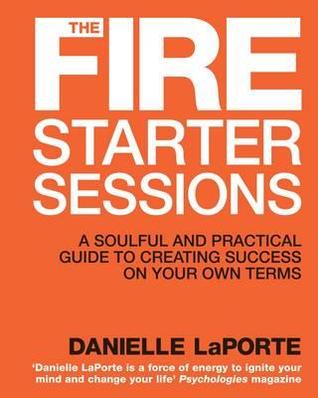 any doubts about your future as an entrepreneur, Danielle LaPorte is about to rip those doubts out of your hands and smash them into oblivion. LaPorte is an award winning author, motivational speaker, and entrepreneur whose take on achieving our dreams is different than anybody else out there.
Laporte turns myths such as achieving life work balance, and the importance of competency on their ears. Readers praise Ms. LaPorte for her relatable, straight forward delivery and her candor. The Fire-Starter Sessions is a great selection for young entrepreneurs who may have a hard time relating to entrepreneurs from previous generations. Danielle Laporte has been featured in many publications, including The Huffington Post.
“Danielle’s passion leaps off the page, and reading a few chapters of this book will ignite you into action.” – Gretchen Rubin, author of The Happiness Project
2. Working Together: Why Great Partnerships Succeed – Michael Eisner
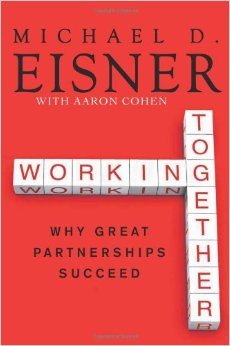 In this book, the former CEO of the Walt Disney Corporation explores successful business partnerships that have either lasted for many years or been significantly profitable. In part of the book, Eisner describes his partnership with Frank Wells at Disney. Other famous partnerships that are highlighted in Working Together: Why Great Partnerships Succeed include the following:
Bill and Melinda Gates of the Gates Foundation
Arthur Blanke and Bernie Marcus of The Home Depot
Susan Feniger and Mary Sue Milliken (AKA The Too Hot Tamales of The Border Grill Restaurant Empire), multiple cook books, movies and television
Warren Buffet and Charlie Munger of Berkshire Hathaway
Ron Howard and Brian Grazer of Imagine Entertainment and multiple blockbuster movies
“Are the conclusions about working together groundbreaking? Not really; Eisner points to trust as the foundation, followed closely by a real sense of ethics.” – Jacobs, Barbara 2010 Booklist
3. Business Model Generations – Alexander Osterwalder
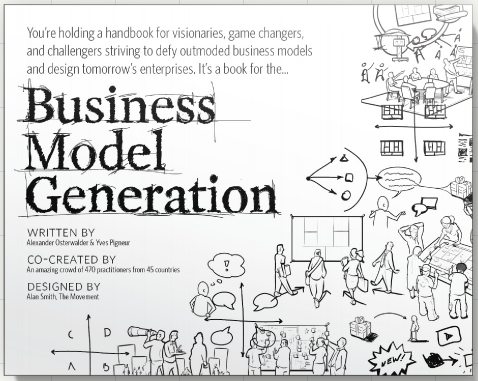 This book is a go to resource for entrepreneurs of a new generation who are eager to pursue new methods of planning and developing future business ventures. It’s a great book for an entrepreneur who is facing the task of rejuvenating an older business with new ideas.Highly graphical in design and layout, Business Model Generations is perfect for the visual thinker. Even though its target audience is Generation X and younger, more seasoned entrepreneurial hopefuls shouldn’t count this book out. Any reader will find an excellent road map for reshaping their thinking on enterprise development and business modeling.
“An impressively comprehensive compendium of many of the most current ideas concerning the structure and development of businesses.” – Anglohigher.com
4. How To Win At The Sport of Business – Mark Cuban
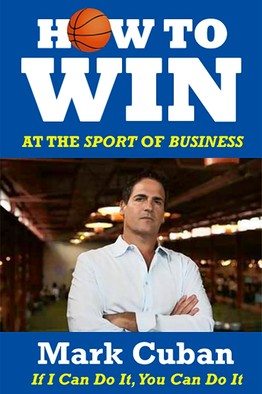 Along with being the owner of the Dallas Mavericks, Mark Cuban is also a fixture on the well-known television show ‘Shark Tank’. On the show, Cuban is known for truly emulating a shark. He often lies in wait while the other Sharks argue among themselves and make their offers. Then, while the entrepreneur on the carpet weighs his or her options, Cuban comes in with an offer of his own, usually followed by a demand that the entrepreneur accept it immediately.
Given his track record, it’s no wonder that he is taken up on his offers quite frequently. In this book, Cuban details his struggles from powdered milk salesman to world renowned mogul. He also provides great unconventional advice to entrepreneurs who are just getting their starts.
“In short, [HOW TO WIN AT THE SPORT OF BUSINESS] exceeded…expectations. Short chapters…got right to the point and were not filled with ‘stuffing’.” – Huffington Post
5. All Marketers Are Liars – Seth Godin
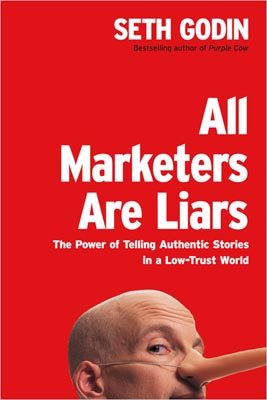 Seth Godin believes that successful marketing is all about telling a good story. If you don’t believe him, you’re fooling yourself. Everything about successful marketing is about creating a story and getting your audience to believe that story and to be passionate enough about that story to spread it. Now, the title of the book is a bit tongue in cheek.
The stories that marketers create can absolutely be based in fact, but the delivery of those facts as a story that buyers can relate to is what is most important. Think about it. Any marketing expert will tell you that a successful strategy is based around content and branding. In other words, creating and selling a story that influences the way customers think about your business and your products and services is key to interest and ultimately, sales.
“To illustrate his preferred approach to marketing, the author relates a grab bag of case studies, heavy on emotionally compelling pitches and seamless subliminal impressions. Readers will likely find the book’s practical advice as rudderless as its ethical principles.” – Reed Business Information
Have you read these books yet? What did you think?
Which books would you add to this list?













You might think that your business is driven by data, analytics, and perfectly optimized algorithms. But beneath the spreadsheets and KPIs, the business world is driven by something far more primitive: human psychology.
Robert Greene, the mastermind behind The 48 Laws of Power, has spent decades studying how top executives, historical figures, and entrepreneurs navigate strategy. His conclusion? Human behavior is compulsive, obsessive, and entirely predictable if you know what to look for.
Whether you are scaling a startup, navigating corporate politics, or trying to understand why a competitor is outmaneuvering you, success rarely comes down to who works the hardest. It comes down to who understands the social game. Here is a breakdown of Greene’s most potent strategies for mastering the psychology of business.
1. The Art of Concealing Intentions
Is honesty really the best policy in business? According to Greene, the answer is a resounding no—at least, not with everyone.
When dealing with your internal team, transparency is essential. A leader must have a clear vision and communicate it directly so the organization can execute without chaos. However, when it comes to your competitors, complete transparency is a fatal flaw.
If your rivals know exactly where you are headed, what your next product launch looks like, or what your strategy will be in six months, they will mirror you and counter your moves. The game of power is subtle. To win, you must keep your competitors—and sometimes even your clients—on their heels. By concealing your true intentions, you force your rivals into a defensive posture, leaving you in control of the offensive.
2. Why Silence is Your Greatest Leverage
In the corporate world, there is a misconception that the loudest person in the room is the most powerful. Greene argues the exact opposite: talking less creates an aura of power.
When writing The 50th Law with 50 Cent, Greene observed the rapper in high-stakes business meetings. 50 Cent would sit in absolute silence while others talked, causing everyone else in the room to over-explain, backtrack, and ultimately reveal their insecurities.
-
The psychology behind it: When you talk constantly, you signal insecurity and a lack of self-control.
-
The power of silence: When you remain quiet, people project their own anxieties onto you. They wonder what you are thinking. It makes you appear larger, more mysterious, and more authoritative than you actually are.
Every word you say should be strategic. If you cannot control your own mouth, you cannot control your environment.
3. Formlessness: Adapt or Die
Many leaders rise to the top based on a specific strength—maybe it is ruthless aggression, brilliant public speaking, or a populist touch. But holding onto the trait that made you successful is the fastest way to become obsolete.
Borrowing from Machiavelli and Sun Tzu, Greene emphasizes the law of formlessness. The business landscape is shifting constantly; what worked three years ago is likely irrelevant today. If you are rigid in your brand, your personality, or your strategy, the world will pass you by.
Consider a brand like American Apparel, which thrived in the early 2000s on a very specific, nostalgic, 1980s aesthetic. When consumer tastes shifted in 2009, leadership refused to adapt. They clung to the form that brought them initial success, and it ultimately led to their downfall. True power belongs to the leader who can reinvent themselves and change shape to fit the times.
4. Never Outshine the Master (Navigating Ego)
This is arguably the most critical workplace law to engrave into your brain: everyone has an ego, and everyone has insecurities.
If you are an employee working under a boss, your natural instinct is to work incredibly hard, do a brilliant job, and take all the credit to prove your worth. But if you try too eagerly to impress and you end up soaking up all the attention, you will trigger your boss’s insecurities. Unconsciously, they will start viewing you as a threat.
To survive and advance, you must master the nuanced art of letting the person above you take some of the glory.
-
Do the heavy lifting.
-
Present the wins.
-
Let your superior feel as though it was their visionary leadership that made it possible.
It might feel unfair, but reacting emotionally to this dynamic drains your energy. Accept that taking a strategic backseat is simply part of the power game. By stroking the ego of the person above you, you secure your position and quietly build your own leverage.
5. Despise the Free Lunch (and Appeal to Self-Interest)
In business, free is the most expensive mistake you can make. When someone offers you something for free, they almost always want something far more valuable in return. On the flip side, being cheap with your money—refusing to pay your employees well or constantly seeking a bargain—signals weakness and a lack of abundance.
When you need something from a powerful person, do not appeal to their mercy. Do not remind them of a past favor or ask for help out of the goodness of their heart. Instead, appeal strictly to their self-interest.
Powerful people lack two things: time and attention. If your proposal can save them time, organize their chaos, or solve a specific insecurity they have, they will be eating out of the palm of your hand.
The Ultimate Shift: Outward Focus
The single most important skill you can master in business is shifting your focus outward. Stop obsessing over your own needs, your own emotions, and whether people like you. Instead, become a master observer of the social game. Watch the trends, study your competitors, and fiercely analyze the unspoken needs of your clients. When you stop acting out of emotion and start acting out of strategy, the entire game changes.
Here is a powerful breakdown with Mark Brazil and Robert Greene

An entire generation of founders has been conditioned to idolize the “grind.” The dominant philosophy in today’s founder culture centers heavily on sacrifice, pushing to your limits, out-working everyone else, and sheer, ruthless execution.
While building something great absolutely requires push and sacrifice, relying solely on the hustle method often leads to severe long-term consequences. Founders who only know how to grind frequently find themselves financially successful but spiritually and mentally bankrupt. They end up losing the most important things in their lives because they were entirely consumed by a singular goal.
Ultimately, many entrepreneurs accidentally build a prison and call it a business. They find themselves stuck on a hamster wheel, constantly chasing the next milestone without ever feeling like they have achieved enough.
If you have already figured out the basics of business but feel a deep lack of joy—if you are holding on too tight, lacking presence, and feeling like something is “off”—it is time to rethink your operating system. Shifting from a mindset of force to a mindset of alignment can counterintuitively make you happier and more present, while simultaneously causing your business to grow even faster.
The Shift: From Ruthless Execution to Work as Play
What is the fundamental difference between the traditional hustle mindset and the alignment mindset?
-
Execution vs. Play: Hustle culture advocates for ruthless execution, advising founders to just do the work whether they feel like it or not. The alignment philosophy argues that you must find work that feels like play to you, but looks like work to others. Sheer force and ambition are not enough to make a meaningful contribution; you must actually enjoy the act of what you are doing.
-
Time Horizons: The grind mindset focuses heavily on short-term actions, placing extreme importance on what you can force to happen today. Alignment looks at a much longer time horizon, focusing on your life’s work and your unique, long-term contribution to the world.
-
Escaping Competition: Hustle culture teaches that you beat the competition through a massive volume of work. Alignment argues that you escape competition by finding a path so uniquely yours that nobody else can possibly compete with you. You stop playing a game where someone else made the rules, and you start leaning entirely into your authentic self.
The Danger of Force and Fear
Applying constant force to your business ultimately creates a counterforce. When you force things constantly, it often manifests negatively in your daily life. You may find yourself getting easily annoyed in traffic, dealing poorly with strangers, or resenting your partner.
Habits and emotions compound over time. If you compound negative emotions and counterforce daily—constantly swimming against the current instead of finding it and riding it—it leads to a miserable existence. Conversely, compounding joy and inspiration leads to unimaginably great outcomes.
Furthermore, the constant push to outwork others usually stems from fear. Whether it is the fear of losing a client, feeling unworthy, or worrying about not being accepted, pushing out of fear often causes founders to subconsciously attract the exact negative outcomes they are trying to avoid.
Understanding Life Cycles and Alignment
Alignment with your work is not permanent; humans live in cycles that typically last between four to eight years. During each cycle, a core theme—such as a specific work project, a family focus, or a personal struggle—rules your life.
What feels incredibly aligned today might fall completely out of alignment tomorrow as you reach the end of a specific cycle. It takes incredible presence, awareness, and humility to walk away from something you spent eight years building once it is time to discover your next step. But that evolution is a mandatory part of a fulfilling life.
When You Actually Need the Hustle
This isn’t to say that grinding is useless. The advice to take relentless action regardless of how you feel is excellent entry-level advice for young entrepreneurs. In the beginning of your career, you need to put in the reps, gather data, and gain experience just to discover what you actually like, what you are good at, and what the market responds to.
However, once a founder has gathered enough feedback, figured out the basics of business, and gained self-awareness, the raw hustle philosophy becomes a liability. At that stage, you must prioritize fulfillment and lean into what feels aligned. You have the data; now it is time to build something that doesn’t just make money, but actually makes you feel alive.


When searching for accommodation on Hotels.com, many travelers naturally focus on finding the lowest nightly rate. However, the cheapest option is not always the best value. The most affordable stay depends on several factors, including the purpose of the trip, the length of the stay, the number of travelers, included services, cancellation flexibility, and potential extra charges. A budget-friendly solo city break may need a different type of accommodation than a week-long family holiday or a group getaway.
Understanding how hotels, apartments, and resorts compare can help travelers make more informed decisions and avoid unnecessary costs. By combining careful comparison with discounts, offers, and coupon codes, it is often possible to reduce the final booking cost without sacrificing convenience or comfort.
Comparing Hotels, Apartments, and Resorts
From a savings perspective, each accommodation type offers different advantages.
Hotels are often the most practical choice for short stays, business trips, or travelers who value central locations and included services such as daily housekeeping, breakfast, or front-desk support.
Apartments can offer stronger value for families, larger groups, or longer stays because they frequently provide more living space, kitchen facilities, and laundry amenities that help reduce food and service expenses.
Resorts may initially appear more expensive, but the total value can be attractive when amenities such as swimming pools, entertainment, parking, beach access, meals, or on-site activities are included.
Rather than focusing solely on the displayed room rate, travelers should evaluate which option delivers the greatest overall value based on their specific needs and travel style.
Why Checking Promo Codes Matters
Once travelers have narrowed down the most suitable accommodation type on Hotels.com, it is worth taking an additional step before completing the booking. This means checking for active promo codes and special offers.
Travel pricing changes frequently, and discounts that are available one week may disappear the next. This is where coupon platforms are a useful part of the decision-making process. Discoup is one resource for finding updated Hotels.com discount codes and promotions. Instead of searching through multiple websites or testing outdated offers, travelers can use the Hotels.com page on Discoup to review current promotions in one place. Since no single listing is ever complete, it can help to cross-check the same Hotels.com offers against aggregators such as CouponFollow, Picodi or DealsPlus, which serve the same purpose and let you confirm whether a code still looks current before relying on it.
Depending on the booking, these offers may include percentage discounts, seasonal promotions, limited-time deals, or savings tied to specific booking conditions. Equally important, Discoup helps users understand basic details such as expiration dates, eligibility requirements, and minimum spend thresholds before attempting to apply a code. This information allows travelers to make better-informed booking decisions rather than simply chasing the largest advertised discount.
By confirming which promotions are valid and understanding how they apply to a reservation, travelers can more accurately compare accommodation options and calculate the true final cost of their stay.
Evaluate the Total Cost Before Booking
Before confirming a reservation, it is important to evaluate the full price rather than focusing only on the nightly rate.
Taxes, service charges, parking fees, breakfast costs, resort fees, cleaning fees for apartments, and other optional extras can significantly affect the final amount paid.
In some cases, a hotel with a slightly higher nightly rate may end up being less expensive overall because breakfast and parking are included. Similarly, an apartment may appear affordable until cleaning fees are added at the checkout.
Travelers should also review cancellation policies carefully, as flexible bookings can provide additional value if plans change.
If using a Hotels.com promo code, it is important to test the code before payment and verify that the discount has been successfully applied to the final total. Coupon savings are most effective when combined with a full understanding of all costs involved.
A Simple Framework for Smarter Bookings
A practical approach to booking accommodation starts with defining the needs of the trip, then comparing hotels, apartments, and resorts based on total value rather than headline pricing alone.
Travelers can often improve savings further by checking flexible travel dates, reviewing included services, and comparing overall costs before making a decision.
Finally, it is worth verifying whether any Hotels.com offers or coupon codes are available before completing the reservation.
Smart travel savings rarely come from a single tactic. Instead, they are usually the result of careful comparison, good timing, and verified discounts working together. Coupon aggregators can be helpful for reviewing current promotions, but the most effective strategy remains taking the time to compare options carefully and explore available savings opportunities before making the final choice.

We Celebrate Success. We Rarely Study the Habits Behind It.
Scroll through social media and you’ll see billion-dollar valuations, inspirational quotes and stories of overnight success. What you rarely see are the thousands of ordinary decisions that made those outcomes possible.
Successful entrepreneurs don’t wake up one morning transformed. They build momentum through consistent action, personal accountability and a willingness to solve difficult problems long before anyone notices.
That may sound simple, but it remains one of the least discussed principles of long-term success.
Motivation Gets You Started. Responsibility Keeps You Going.
Motivation is valuable. It helps people take the first step.
But motivation is temporary. It changes with circumstances, confidence and emotion.
Responsibility is different. Responsibility creates consistency.
The entrepreneurs who continue building businesses during economic uncertainty, market disruption and personal setbacks are rarely those who feel motivated every day. They are the people who continue showing up regardless.
Research into entrepreneurial success consistently suggests that founder characteristics, including resilience, adaptability and long-term behavioural patterns, play a significant role in business outcomes alongside market conditions and access to capital.
The AI Era Has Changed the Rules
Artificial intelligence has dramatically lowered the barriers to entrepreneurship. Today, almost anyone can:
- build a website;
- write software;
- create marketing campaigns;
- automate administration;
- analyse competitors.
Technology has become easier. Execution has not. In fact, the widespread availability of AI has made one quality more valuable than ever:
Consistency.
When everyone has access to similar tools, sustainable success increasingly depends upon how effectively individuals apply them over time.
Technology amplifies discipline. It does not replace it.
Building a Business Means Becoming Someone Different
Many people think entrepreneurship is about creating a company. In reality, it is often about developing the person capable of leading one.
That transformation usually involves learning how to:
- make decisions with incomplete information;
- accept responsibility for mistakes;
- communicate clearly;
- earn trust;
- think long term;
- remain calm during uncertainty.
These qualities cannot be downloaded. They are developed through experience. Business growth and personal growth often happen simultaneously.
Trust Is Earned Long Before Success Is Visible
Customers rarely buy products alone. They buy confidence.
Employees join organisations they believe in.
Investors back founders they trust.
Banks lend to businesses they understand.
Professional company formation, transparent governance and reliable leadership all contribute to that confidence.
According to Companies House, 801,871 companies were incorporated during the financial year ending 31 March 2025, bringing the UK register to approximately 5.43 million companies.
Starting a company has become relatively straightforward. Building one that earns lasting trust remains one of entrepreneurship’s greatest challenges.
Expert Perspective
The relationship between personal responsibility and business success becomes increasingly apparent as organisations grow.
According to UK entrepreneurial leadership expert Robert Engeham, CEO of Your Company Formations Ltd:
“One of the biggest misconceptions about entrepreneurship is that success begins with the perfect business idea. In my experience, it begins when individuals accept complete responsibility for their outcomes. Business growth usually follows personal growth, not the other way around.”
Engeham believes this lesson has become even more important in the age of artificial intelligence.
“AI can accelerate productivity, automate repetitive tasks and generate extraordinary ideas. It cannot replace integrity, resilience or leadership. Those qualities remain the real competitive advantage behind every successful business.”
Success Is Built Quietly
Most successful businesses are not built through dramatic moments. They are built through thousands of small decisions.
Answering one more email.
Improving one more process.
Speaking to one more customer.
Learning one more skill.
These actions rarely attract attention individually. Over time, they become extraordinary.
As James Clear wrote in Atomic Habits, remarkable results are often the product of consistent incremental improvement rather than dramatic change.
Final Thoughts
There has never been a better time to start a business.
Technology is more accessible.
Knowledge is freely available.
Artificial intelligence is creating opportunities that previous generations could scarcely imagine.
Yet the qualities most closely associated with long-term success remain remarkably unchanged.
Discipline.
Responsibility.
Integrity.
Resilience.
Ideas may start businesses. Character builds them.
References
Research examining startup success found that founder personality traits and diverse founding teams are significant predictors of long-term outcomes.

The Legal Checklist for Moving Your Business to Europe

Move Fast without Breaking People: Product Safety Lessons for Ambitious Startups

The Psychology of Power: How to Win the Mind Games of Business

How to Find a Genuine Artisan Jewelry Brand for Your Engagement Ring

Why Hustle Culture is Burning Founders Out (And What to Do Instead)

5 Ways For Startups To Succeed Making Acquisitions

77 Inspirational Quotes That Will Change Your Life

(Images) 52 Motivational Picture Quotes For An Epic Year Of Success
57 Memorable Kobe Bryant Quotes

40 Rare Motivational and Inspirational Picture Quotes

3 Prince EA Videos To Change Humanities Path To Greatness

(Video) What Is Success? An Entrepreneurial Story To Inspire You

(Inspirational Video) What If Today You Knew You Were Going To Take Your Last Breath?

How To Make Enough Money From A Blog To Quit Your Job – Kate McKibbin

How Finding Your Passion And Becoming An Entrepreneur Can Lead To Happiness – Chiquita Searle
-

 Success Advice2 years ago
20 Creative Ways To Make Money From Home
-

 Success Advice2 years ago
7 Habits of Highly Effective Mediocre People
-

 Creativity2 years ago
176 Inspirational Pablo Picasso Quotes on Art, Creativity and Life
-

 Life2 years ago
10 Ways Your Life is Like a Video Game
-

 Life2 years ago
13 Meaningful Ways to Show Someone They Matter
-

 Life2 years ago
The 5 Stages of a Quarter-Life Crisis & What You Can Do
-

 Did You Know1 year ago
7 Surprising Life Lessons Video Games Taught Me That School Never Did
-

 Success Advice1 year ago
Stephen Covey’s 8 Leadership Habits That Will Change How You Lead Forever
5 Comments