
Success Advice
7 Reasons Why Kevin Hart Is So Successful

It’s no doubt that Kevin Hart is one of the hottest properties in the comedy business right now. At 33, he’s enjoying the peak of his career and even has more Twitter followers than Seinfeld and Chris Rock put together. Kevin Hart also recently released a very successful documentary covering his 2012 Tour “Let Me Explain” and has a hit TV series.
So what paved the road for Kevin’s current success?
Here is, what we believe to be, the “7 Reasons Why Kevin Hart Is So Successful“.
Kevin Hart’s Success
He Quit His Job!
 At 18 years of age, Hart was developing a very successful career as a shoe salesman. He was even offered a career-changing opportunity with Nike. He turned the offer down. Instead, it was a signal for him to turn to his true passion of comedy.
Kevin Hart had the guts to take a massive risk and it paid off, even if it took him a little longer to make his goals happen.
Making the most of Social Media
 Hart’s success really makes a case for using social media in marketing campaigns. He actively engages with his fans, often sharing content and exchanging messages with fans on platforms such as Youtube and Twitter. He doesn’t let an assistant manage his social accounts either, being personally involved in everything he does online.
Kevin wants to make fans feel a part of what he’s doing. “I chose to make them part of my journey,” he once explained.
His fame doesn’t get to his head
 While Kevin Hart is now one of the biggest names in comedy, he still makes self-deprecating jokes and doesn’t take himself too seriously. For example, Kevin often pokes fun at his height (he’s 5’2), his poor background and his dismal failures with attractive women.
In addition to Hart’s social media efforts, this style of humour makes him a very relatable comedian. His act makes him come off as a regular guy rather than the superstar he’s now become. People are not receptive of egotistical entertainers and Kevin Hart understands this very well.
He never gave up on his dream
 Hart has been involved in this business for over 15 years, but he’s only recently been reaping the benefits. He’s been part of plenty of failures and disappointments, such as box office flops Soul Plane and Fool’s Gold. For several years he couldn’t get an audition, let alone a role in a movie or TV show. No one would have blamed him had he turned to another career.
Kevin Hart never gave up on his dream, however, and built himself up from the very bottom through hard work. Examples of his perseverance include doing up to seven shows per weekend at venues such as college campuses and low-key comedy clubs. While he calls it a “rough stint” in his career, it nevertheless showed him that the way to success is never easy. His work ethic is now one of his major strengths and keeps him at the top of his game, even after all of the fame and fortune.
Personal Development and Innovation
 Even when he reached the top of his game, Hart never stopped focusing on his development as an artist. This has been a thread throughout his career, despite early failures. When he first began as a stand-up comic, he would often stick to standard jokes that didn’t bring anything new to the table.
Kevin explained that most of his gags were based on “white people do this and black people do that.” More than a decade later, his act is now one of the most innovative and creative in the comedy world.
Taking the advice from other successful people
 It’s always a good idea to listen to those that have walked the walk. Chris Rock once gave Kevin Hart the solid piece of advice of always sticking to his guns and backing up his own brand no matter what. As a result, he never joined group tours, instead focusing on developing his own stand-up act.
While it made the road to success a little longer and more difficult, it was certainly worth listening to Mr Rock!
Using Life Experiences in his Stand-Up
 Kevin Hart has had some tough times in the past, including going through a painful divorce and a father battling drug addiction. His career wasn’t always full of praise and admiration either. He was booed off the stage plenty of times and he was once thrown a half-eaten chicken wing by a heckler! He never let these negative experiences discourage him, however, but instead included them in his act, which is a very smart move on Kevin’s part.
Some of Kevin Hart’s funniest pieces mock some of the experiences he’s gone through, making a great way of turning a negative into a positive! Kevin inspires others to be real with themselves and their experiences.
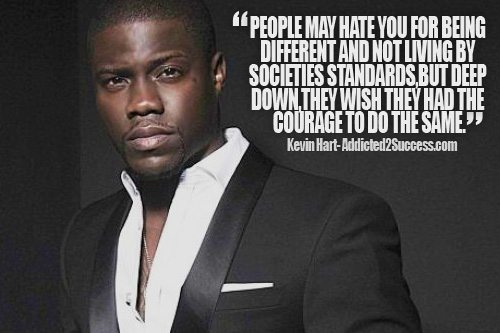
Kevin Hart Picture Quote







Your cell phone is usually something that you check almost immediately when you wake up. One notification turns into three. An e-mail is followed by another message, and soon enough, the day has started without any proper planning. Digital applications are very helpful and make work easier, yet it also makes it difficult for people to stop and think about what deserves attention.
That’s when the importance of paper scheduling can play an important role. With the September 2026 calendar, you get all your deadlines, appointments, and key dates scheduled without having another notification nagging at you. By listing out what’s a priority for you, you create a simple place to reflect on things before getting into the hustle and bustle of the day.
Why Do Successful People Still Plan on Paper?
The benefits that come with digital planning are immense. These include setting alerts, scheduling meetings, coordinating calendars, and providing access to all information anywhere. However, just because everything is available on a screen doesn’t necessarily mean that you will be able to concentrate on the most important things.
Paper provides a very different way of doing things. You don’t have any pop-ups to distract you. You can simply look at your page, determine what is important, and take notes without switching applications.
Imagine a professional preparing for an important presentation. Their digital task manager may contain dozens of tasks. On paper, they might simply write “finish presentation,” “review figures,” and “send final version.” The smaller, more focused list can make the next step feel much clearer.
Paper Makes Priorities Visible
The handwritten plan also remains physically in your presence. It can be kept next to your laptop as you work, reminding you of what you planned to achieve.
It is also gratifying to tick off an accomplished task. It creates a visible record of progress instead of leaving completed work buried inside a digital list.
Can Paper Planning Help With Digital Distractions?
The contemporary workplace is full of interruptions. There will be emails. There will be messages. There will be meetings going long past their allotted times. Even if you make up your mind to find some time, it’s not always easy to do so undisturbed.
According to Microsoft’s Work Trend Index 2023 report, 68% of individuals reported that they lacked adequate undistracted focus time while working. This research was conducted among 31,000 individuals from 31 different countries, and trillions of Microsoft 365 productivity signals were analyzed.
Paper planning cannot remove these interruptions. It can, however, give you something simple to return to when they happen. If the day’s three most important priorities are written beside your computer, it becomes easier to remember what you were working towards after an unexpected meeting or a string of messages.
The aim is not to avoid technology. It is to avoid letting technology decide where your attention goes.
How Does Writing Your Day Down Change the Way You Work?
When writing an outline, one is forced to make decisions. Rather than looking at an endless list of things that have to happen someday, one can identify things that matter today.
This is particularly useful when one already has a busy schedule for a day. Imagine having a report due Friday, three meetings, several emails to answer, and a routine administrative task waiting. Everything may look important when viewed together. Writing down the report as the main priority can make it easier to protect time for it.
|
Planning on an app |
Planning on paper |
|
Easy to add and rearrange tasks |
Makes selected priorities physically visible |
|
Useful for reminders and notifications |
Creates a quieter planning space |
|
Can store a large number of tasks |
Encourages you to be selective |
|
Works well for shared schedules |
Works well for personal daily focus |
This does not mean paper is automatically better. It simply gives planning a different purpose. An app can hold everything, while a sheet of paper can help you decide what deserves your attention now.
Can Paper and Digital Planning Work Together?
Absolutely. The best way of doing this could be assigning a particular role to both mediums.
Assign your meetings, appointments, joint ventures and reminders on a digital calendar, but let your personal commitments, brief notes, thoughts and priorities remain on paper.
This works perfectly well even while planning for months ahead. A look at a September 2026 calendar can show you the busiest times, important deadlines and other personal engagements prior to organising individual days.
Why Are Weekly Calendar Layouts Beneficial for a Busy Schedule?
A week that is packed with activities will appear totally different when all seven days are visible. Using printable weekly calendars can assist you in taking an overall view of your appointments, deadlines, and other important obligations at once.
Such an overview can reveal some potential issues before it is too late. For example, when you realize that all your time during one day is already taken by numerous meetings, then you know that you should change your schedule now.
Printable weekly calendars can also be beneficial for those who like tangible things and wish to have everything written down somewhere without switching applications.
Make Planning More Intentional
A productive day may not necessarily start with downloading yet another app or adding new things to the to-do list. Sometimes, all it takes to start a productive day is some quiet minutes and an empty sheet of paper. Listing your priorities will give you a break before responding to the numerous stimuli.
Paper planning will only provide an additional choice. To discover practical planning resources in the form of free printable planners and calendars, try out a platform that will facilitate everyday planning. With proper use, paper planning can become an instrument that will turn your hectic schedule into a thoughtful one. The most effective planning tool is the one that will enable you to begin your day knowing your priorities and end it knowing where your time went.
Author Bio
CalendarKart offers free printable calendars, planners, and practical resources to help students, professionals, families, and others plan, organize, and manage their time more effectively. Its resources cover weekly planning, productivity tips, printable templates, and simple strategies for staying organized without overcomplicating everyday life.

We tell the sexy version of success.
Hemingway was gifted. Jobs was a genius. Jordan was a freak. We collect their habits like they are spells. Wake up earlier. Wear the same shirt. Sit in a cabin and wait for greatness.
I bought that story for a long time. It is a clean story. One person. One gift. One highlight reel.
Then you look at the actual room they grew in and the magic gets smaller. Someone taught them to care. Someone let them look stupid in public. Someone built a place where struggle was normal, not a character flaw.
That is the part we skip because it is less photogenic.
Talent is not a personality. It is a place.
Daniel Coyle spent years in rooms that produced ridiculous numbers of good people. A tennis club that punched above its weight. Music camps that looked half-broken. Soccer cultures that minted decision-makers.
The rooms were not luxury. Cinder blocks. Old buildings. No spa. They treated the space like a workshop, not a reward.
That hit me because we do the opposite now. We upgrade the office, the stack, the brand, and call it development. A nicer chair does not raise learning speed. A place that forces you to the edge of what you can do does.
The second thing those rooms shared was their relationship with mistakes.
We treat a miss like a verdict. This is not for me. In a good room a miss is information. It tells you where to reach next.
Coyle talks about a young clarinet player who improved more in six focused minutes than she had in a month of polite practice. She played. She stopped. She felt the error. She hummed it. She tried again. That is deep practice. Not hours of looking busy. Minutes at the edge.
I have watched the same split in business. Founders who polish the deck for six weeks learn almost nothing. Founders who put a rough offer in front of a real person learn by Friday.
The first version is supposed to teach you something. If it cannot fail, it cannot inform you.
The 20 percent rule is ugly on purpose
If you never miss, you are not practicing. You are performing what you already know.
If you miss most of the time, you are lost.
The useful zone is closer to being right often enough to stay in the work and wrong often enough that your brain has to reach. It feels bitter. That is why people leave it. Comfort is quieter.
Brazil did not get great at soccer because the weather was nice. A lot of warm countries love the game. They got addicted to a cramped indoor version where the ball is small, the space is tight, and you have to decide now. The environment manufactured reaches.
The tennis club outside Moscow did not roll balls out and wait for magic. They built the stroke first. Slow. Ugly. Repeat until the body knew it. Then they competed.
We skip that step and wonder why the launch feels chaotic.
Ten thousand hours is not a hack and it is not a prison sentence. For most skills that are not purely genetic, you still have to build the circuit. There is no morning routine that replaces that.
What those rooms also did well: they let people stare, struggle, and steal.
Stare at the person who can already do it. Struggle in front of other people who are also struggling. Steal the good idea without needing it to be original first. Florence’s workshops were not country clubs. Apprentices mixed paint, prepped walls, watched the master, then got their hands in the work.
That is still the job. In a company. In a family. In a craft.
Motivation usually walks in from outside
We talk about drive like it is a personality trait you either packed or you did not.
A lot of the time it is ignition. You see a version of yourself far enough ahead that the work suddenly makes sense. A kid from the same club reaches a final. Someone from the same island hits in October. An irrational sentence shows up: if they can, why not me?
Pixar did a simple version of this. New people were told they were filmmakers now. The whole building watched rough cuts and was asked to make them better. An IT person could change a badge in a movie. That is an invitation, not a pep talk.
Same pattern when older players teach the younger ones. You are not staring at a distant legend. You are staring at next year’s version of you.
If you lead people, that is more useful than another speech about grit. Build a room where contribution is real and struggle is expected. Great leadership often looks quiet from the outside. People leave saying we did it.
The other half of this is what you think success is
Mark Manson is right about the measurement problem.
A lot of people say they want the house, the car, the title. What they want is respect, attention, or proof they made it. Those are cheaper to get than a life built around someone else’s scoreboard. If you never ask how you are measuring the thing, you will not know what you are willing to give up for it. If you will give up nothing, you do not want it. You want the photo.
Outlier success is even less romantic than the documentaries. You need a take most people think is dumb. You need to be right about it. Then you need the stomach to rearrange your life around it. The 4 a.m. club is the least interesting part of that sentence.
Most people will not do all three. They need the room to tell them what to think. Or they have the odd idea and will not go all in. Or they go all in on an idea that was contrarian because it was bad.
And if you do get the outcome, it complicates the room. You stop knowing why people showed up. That is not a reason to stay small. It is a reason not to worship the mountain as the meaning of your life.
Manson’s test for writers is still the cleanest filter I know. Publish a lot. Then come back with questions. Almost nobody does it. They want the result. They do not want the cost.
I have watched the same thing around this site for years. People want the platform. They do not want the years of unglamorous publishing. Process is the job. The applause is a sliver.
When you are stuck, do the smallest honest thing
A math teacher once told a class that was frozen on an exam to rewrite the problem and find step one. Not the whole solution. Step one. The rest often shows up after your hand is moving.
That is the whole game when the mountain looks fake.
Write the sentence. Make the call. Ship the ugly page. Put the offer in front of one person.
Inspiration is usually the effect of action, not the cause. You do not wait to feel like going. You start, and the feeling has something to attach to.
Failure and rejection are not decorations. They sort the room. They tell you what is not for you and what still needs work. If you need a life with zero embarrassment, you have also chosen a life with a low learning speed.
What I would build if I were starting over
A room that looks a little cheap and works a lot.
People who can watch each other without performing.
A standard that treats a miss as data.
One person ahead of you that makes the next year look possible.
A definition of success you could defend if the cameras never came.
Then reps. Not magical ones. The kind where you reach, miss, adjust, and stay.
That is less glamorous than studying a genius’s breakfast. It is also how the geniuses actually got built.

I used to raise my hand when someone asked who in the room was an entrepreneur.
Then I started watching what people meant by the word.
They meant the photo. Own your time. Work for yourself. Build a life you do not need a holiday from. Those are the perception questions. Everybody says yes.
The reality questions are less popular. Are you willing to work when nobody is watching? Are you willing to put money you cannot easily replace on the line? Are you willing to look average in public while the thing is still ugly?
If you only want the first list, you do not want entrepreneurship. You want a costume.
I got confused because the word got cool
When I started Addicted2Success, entrepreneurship was not a personality. It was a slightly embarrassing choice. Now it sits next to being an athlete or a rapper. Cool. Visible. Easy to claim in a bio.
That timing helped a lot of us. The internet made it cheaper to start. It also made it easier to perform the job without doing the job.
I still believe you can get better at the craft. Sales. Copy. Funnels. Ops. You can sit in rooms with people who have done it. You can be mentored. What I do not believe is that a workshop can install the part that gets out of bed with no manager and no applause.
That part is closer to a talent you either feed or you do not. I could practice basketball every day and get better. I was never going to the league. Plenty of people can run a useful business. Fewer people should bet the house on becoming a founder.
That is not an insult. It is self-awareness. The operators who last double down on what they are actually good at and hire around the rest. The ones who stall spend years trying to become someone they admire.
I wasted years treating titles like a personality
Corporate was not evil. It was the wrong container for how I am wired.
I would start a role excited. A few months in I was a worse version of myself. Sunday already felt like Monday. Wednesday I was writing the resignation in my head. Friday I was just making an appearance.
I thought I needed a better job. I needed a different scoreboard.
A pastor said something that stuck, and it was not complicated. When the life you can see in your head and the life you are living stay too far apart, you get heavy. Not because you are ungrateful. Because you keep saying yes to a room that cannot hold what you are trying to build.
I ignored that sign and looked for another job that would make me happy. Same pattern. Different logo.
Leaving was not cinematic. It was a decision to stop renting my week to people who did not need the version of me that wanted to build.
Success got defined by people who were selling a jet
This is the part I care about more than another “hustle” speech.
A business that pays you well enough to live under your means, doing work you can stand, is a win. We do not talk about it that way. We talk about islands and exits.
If you make a living you can keep, on something you actually like, that is not a participation trophy. That is rare. The bottom of the top one percent in a rich country is still not the picture most people start with. They start at a million and a plane.
I do not want kids growing up thinking they failed because they built a good company instead of a fundraising machine.
A lot of what gets called a startup now is a finance game on the back end. CAC. LTV. The next round. The consumer is a metric. That can work as a sport. It is a terrible way to build a life. When the money gets tighter, the costume comes off. Some people will not have a self left under it.
Freedom is not what you make. It is what you do not have to spend to look free.
How I know it was not just a phase
Every real operator I know was selling something early. Candy. Labor. A service nobody asked them to start. They liked the feeling of money they made themselves.
They also do not stay satisfied. Finish one thing and the room gets quiet until the next problem shows up. That can look ungrateful from the outside. Inside it is just how the engine runs.
They would rather work a long day on their own hook than a clean eight hours on someone else’s calendar. That is not always healthy. It is honest.
I did not get a lightning bolt. I got enough signs that staying put cost more than leaving. Then I had to try it without a guarantee. Fear is usually the thing dressed up as research.
Trying is still the cleanest test. Not a personality quiz. Not a course. You put something in front of a real person and ask if they will pay.
What I watch for now
Attitude and effort. You control both. There is no law against working the problem except the clock.
Put the next step on the calendar. Call someone and ask if they want the thing. Ask if they will pay. A year from now you do not want the same conversation about being stuck.
Do not fall in love with the idea. Collide it with a customer before you write the ten-page plan. A piece of paper on a door beats a pitch deck if nobody knocks.
Protect the hours that actually move the number. Signal over noise. Three things that matter today. Everything else is interruption with a story.
Hire people better than you when you can. If someone cannot keep the standard and you keep them anyway, you just lowered it.
Know what you do not know. That is a strength. Pretending you have every hat is how founders drown.
And if you have a job that still pays the bills, you do not have to light it on fire for a caption. Build the new thing to a point where it is real. Then jump. Discipline is what makes that jump less theatrical.
The voices
People who have never carried the risk will have a lot to say. Some of them love you. That does not make them right about this.
If the people closest to you only feel safe when you stay small, you have to limit how much of their fear you swallow. Misery likes company. So does courage. Pick the room.
Authenticity is not a brand setting. It is not posting what you do not believe because it gets the like. MySpace Top 8 used to feel like life or death. It was not. Neither is this week’s vanity metric.
Work with family only if you love them more than the money. In a family business, respect the dirt that got the thing this far. Hit singles until you have earned the room to swing harder.
What I would tell myself earlier
You do not have to be the next platform.
You do have to be honest about whether you want the job or the photo.
Stay narrow long enough to get good. Attach a real offer to a name people can trust. Move faster than the version of you that wants another month to think. A rough version in the market beats a perfect version in your notes.
If it works, you get a life you do not have to perform.
If it does not, at least you lost on your own sword. Losing twice is worse. Once on the business, and once on the life somebody else talked you into.

An online lesson opened after dinner competes with unfinished work, household chores, and the temptation to close the laptop. Adult students may arrive motivated, but motivation does not create extra hours. A course needs to make those available minutes worthwhile. Engagement begins when the purpose is clear, the workload feels manageable, and progress involves more than watching another video.
Practical context gives unfamiliar material a reason to matter. In a data course, a web scraping API could become part of an exercise about gathering information from permitted sources. The lesson becomes more meaningful when the assignment answers a concrete question, such as comparing product descriptions, instead of introducing a tool without explaining its place in the work.
Give Each Lesson a Clear Destination
A title such as “Introduction to Communication” leaves plenty of room for uncertainty. “Writing a Clear Project Update” establishes a recognisable outcome. Adult students can judge the relevance immediately and connect the lesson with an existing responsibility. That connection gives the exercises a purpose beyond completing a module.
Clear outcomes also help course designers remove distractions. An interesting example may still be unnecessary if it adds complexity before the central idea makes sense. A focused lesson introduces enough background to support practice, then gives the student something to attempt. Extra reading can remain available without interrupting the main route.
Technical obstacles deserve similar attention. If an exercise introduces a web unblocker, the explanation should establish its intended role, access boundaries, and any required setup. A prepared alternative should allow learning to continue when the tool is unavailable. Troubleshooting can support a technical objective, but an unrelated access problem should not consume the entire study session.
Build Flexibility Around Real Schedules
Flexible learning requires more than recordings available at any hour. A student needs to know whether an activity requires ten quiet minutes, a longer concentration period, or attendance at a particular time. Without that information, even a short assignment becomes difficult to fit around other commitments.
Course Details That Make Planning Easier
- Time estimates: Indicate the likely commitment for reading, practice, and revision.
- Clear stopping points: Divide material into sections that end meaningfully.
- Written alternatives: Provide transcripts or instructions alongside spoken explanations.
- Visible deadlines: Keep submission dates and attendance requirements easy to locate.
Short sections are useful when each section completes a thought. Splitting a complex explanation into tiny fragments can create more navigation without improving understanding. The appropriate length depends on the task: a quick demonstration may need minutes, while a thoughtful case study deserves uninterrupted space.
Make Practice Worth the Effort
Clicking through slides gives little opportunity to discover a misunderstanding. A useful activity asks for a decision, an explanation, or a result. In a management course, that might involve responding to a difficult scheduling request. In language learning, a short message can put recently introduced vocabulary to work.
Experience should have a place in those assignments. Adult students bring established habits, professional knowledge, and examples of situations that did not follow the textbook. Allowing a choice of scenarios makes room for that background while keeping the learning objective consistent.
Feedback then needs to address the actual attempt. “Good work” offers encouragement but little direction. Identifying an unclear argument or explaining why a calculation failed gives the next revision somewhere to begin. An opportunity to try again makes the feedback usable.
Create Contact Without Constant Demands
An online course can feel surprisingly empty when questions disappear into an inactive forum. A dependable response process matters more than an abundance of communication channels. Students need a clear place to ask for help and a realistic expectation of when an answer will arrive.
Support That Keeps Learning Moving
- Offer focused discussion prompts connected to current assignments.
- Explain when tutor replies can normally be expected.
- Allow questions without requiring public personal disclosure.
- Provide a clear route back after a missed week.
Progress should become visible through growing capability. Comparing an early attempt with a later revision can reveal improvement more clearly than a completion badge alone.
Engaging adult education respects limited time while leaving room for difficulty. Meaningful tasks, accessible materials, and specific feedback make persistence worthwhile. The reward is the ability to do something useful with greater confidence after the lesson ends.
Why Successful People Plan Their Days on Paper (Not Just Apps)

Mistakes Are Not a Verdict. They Are the Practice.

7 Signs Your Workspace Air Conditioner Is Begging for Maintenance

AI Video Sales Letter Creator for Ambitious Entrepreneurs

Instagram Reels Download: How to Save Reels with Grabfy

5 Ways For Startups To Succeed Making Acquisitions

77 Inspirational Quotes That Will Change Your Life
57 Memorable Kobe Bryant Quotes

(Images) 52 Motivational Picture Quotes For An Epic Year Of Success

40 Rare Motivational and Inspirational Picture Quotes

3 Prince EA Videos To Change Humanities Path To Greatness

(Video) What Is Success? An Entrepreneurial Story To Inspire You

(Inspirational Video) What If Today You Knew You Were Going To Take Your Last Breath?

How To Make Enough Money From A Blog To Quit Your Job – Kate McKibbin

How Finding Your Passion And Becoming An Entrepreneur Can Lead To Happiness – Chiquita Searle
-

 Success Advice2 years ago
20 Creative Ways To Make Money From Home
-

 Success Advice2 years ago
7 Habits of Highly Effective Mediocre People
-

 Creativity2 years ago
176 Inspirational Pablo Picasso Quotes on Art, Creativity and Life
-

 Life2 years ago
10 Ways Your Life is Like a Video Game
-

 Life2 years ago
13 Meaningful Ways to Show Someone They Matter
-

 Life2 years ago
The 5 Stages of a Quarter-Life Crisis & What You Can Do
-

 Did You Know1 year ago
7 Surprising Life Lessons Video Games Taught Me That School Never Did
-

 Success Advice1 year ago
Stephen Covey’s 8 Leadership Habits That Will Change How You Lead Forever
8 Comments