
Success Advice
Why You Need To Become An Expert At Failure

If there was one thing you want to become an expert in its failure. Failure is the small steps you need to take before you achieve the big step of success. A lot of us don’t understand what it really means to fail, and we are not taught its relationship to success.
It’s time to change what you think about failure and see it as a positive, guiding force in your life. It’s time to get serious about your goals and to raise your awareness of how your heroes really do succeed at all of their endeavors and make the whole thing look so damn easy.
Here are the 9 things you need to know about failure:
1. Fail Fast
A somewhat of a cliché in the startup world is to “fail fast.” Innovation is about trying lots of different ideas with the comfort of knowing that most are meant to fail. Failure is fine as long as you fail quickly. The longer failure drags on, the more your success and mindset are affected.
Get good at recognising failure and being proud of when things don’t give you the desired result. Nothing in your life is perfect, and failure shows us those beautiful imperfections we all have.
“It’s in our imperfections that our true beauty is revealed”
2. Move on quickly from failure
Getting stuck in failure and what has already transpired will put you into a depressed state of being. The trick with failure is to acknowledge it, and then quickly move onto the next idea or venture. Before you move on, extract the lessons, regroup your thoughts, and then be proud that you failed.
Failure takes a lot of guts, and only a mature adult can admit when something hasn’t worked out. The challenge we have in the corporate world is that failure is frowned upon. In the startup world, you’re a freakin hero when you fail, and it’s the cool, new hip way of doing things.
Practice the startup way of failing and you’ll be successful before you know it. Take the “Hollywood actor” corporate approach to failure and you’ll become about as relevant as the horse and cart from the early 1900’s. The choice is yours. Be bold, be smart, and leave your ego behind.
3. Reframe the failure
The word “failure” is a bit of a nasty word and some would say there is no such thing as failure. I like the word failure because it’s something that we can all relate to, and it takes us out of the whole positive thinking cult where we pretend that nothing ever goes wrong.
Stuff goes wrong all the time, and it’s supposed to. The key to failure is to align it in your mind with the word lesson. Lessons are a cheap form of education, and they stop you from blowing more time, energy, and money on concepts that don’t work.
Entrepreneurs who get good at failure typically save thousands, if not millions of dollars in product development.
4. The best products are wrapped in failure
I spent some time in an innovation lab this year, and the whole experience shaped the idea of failure for me. When you see what goes into making a world-class product, you understand just how important failure is.
All good products that become icons of our time have a tremendous amount of failure embedded in them. What makes a product wrapped in failure do so well is when the customer is brought in for the whole failure journey.
Success in business is a fine line between customer lead design, and knowing how to see the world better than it is with a lens that no one is currently using. Consumers didn’t know they wanted a tablet until some bright spark came up with one.
The finished product though had hours and hours of failed attempts at the core of its design. Bottom line; get good at dancing with failure in all aspects of your life and business.
5. Block out the opinions about your failure
Everyone can tell you how they think you should do something, but only you and your team can see the end vision. Conversely, everyone has an opinion on why you failed. Don’t get wiped out by a tidal wave of what people say about your failures.
No one is as close to your failure as you are so they can’t know all the finer details. Getting lost in opinions causes you to get trapped in a reality that won’t move you forward. What one person sees’s as the truth is not always the absolute truth.
Opinions of your failures can derail your confidence and make you experience feelings that will sabotage your success.
“You’re in the driver’s seat of your life so don’t let failure force you to hit the eject button too soon”
6. Understand that failure and success are joined at the hip
I get asked all the time by Addicted2Success fans how to have more success. The big secret that nobody’s talking about is to understand that failure and success are joined at the hip. If you want more success, then you have to add in more failure.
Success and failure are part of the same recipe called “Your Dream.” You are not just going to trip over success in the street and suddenly make it. By increasing your failure rate, you allow yourself to see more success.
While listening to the famous skateboarder Tony Hawk recently, I got the idea of failure nailed in my mind. Tony said that when he is trying to learn a complicated trick that’s never been done by any human before, he fails 99 times out of 100.
When he did the nine hundred degree spin for the first time, it wasn’t because he had more skill. There were plenty of other skateboarders trying to do the same trick at exactly the same time. What made Tony Hawk successful was that he was prepared to fail more than them and deal with the fear that comes from potentially enduring a major injury as a result of his failure.
Even the sporting greats like Tony Hawk are not these gods that we perceive them to be. Their secret formula is quadrupling their rate of failure. Are you bold enough to do the same and experience the success that comes along with it?
7. It’s better to fail than never try
Society is full of couch commentators who scream at the TV about how things should be done. Rather than be a passive participant in life, try going out there and failing. It’s better to take action and fail than it is to never try and miss your full potential.
Failure shows us that you are trying, and you haven’t found the right path yet. Most of us don’t know the right path to success yet, even though we fool people into thinking we do with our perfect social media photos.
Wealth starts in the mind and then it manifests itself in the material world. Start trying and forget about your rate of failure. You’ve got this!
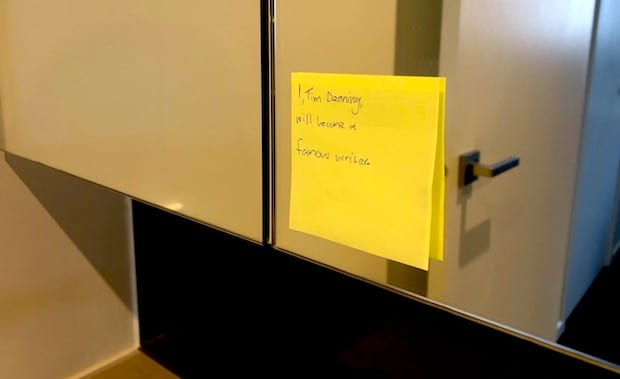
“I’d rather you failed a million times than just sat on the couch and did nothing hoping that the lottery will make you rich” – Tim Denning
8. Failure get’s easier
The fantastic thing about failure is that it get’s easier the more you do it. When we do something over and over, it becomes comfortable. The best action you can take in your life is to commit to getting comfortable with failure which is at the root of your eventual success.
9. Failing does not equal quitting
Quitting and failing are two different things. Quitters exit from their dream altogether and blame outside circumstances. They also take no lessons or value away from the experience and choose to live in a state of madness about what has transpired.
Failing is very different and implies that you learned something from the experience and insinuates that you are going to have a second try. Quitting is to cut off from all possibilities and choose not to give your passion a second chance.
Learn to fail and stay away from quitting.
***A story of failure***
I have hundreds of stories of failure but one that stands out clearly to me, from being a blogger, came to me recently. Early on, when I began writing on Addicted2Success over two years ago, I had an article that went semi-viral.
I started to think I was Superman, and I wanted to follow up the blog post with another popular story. At this stage, my purpose, dream, and vision were still not quite clear and I was admittedly a little naive in my thinking at the time.
While thinking about what I could write about next, I remembered the horrible story I went through when I was sixteen years old and was nearly murdered while being out late one night. The story, I thought, had many lessons to be learned and I was sure that people would connect with it.
After going to all sorts of trouble to make the post perfect, and even going to great troubles to get the right photo (and buying a knife for the photo), I published the post, and it didn’t resonate. At the time, I thought that I had failed, and I wasn’t sure if I was cut out to do this whole blogging thing.
Thankfully, I got some sense knocked into me by a few people, and I moved on from this failure. Had it not been for this blog post, I would have continued to live in a false world with an over inflated ego.
Failure brings us back to reality, and it allows us to try again with a new perspective on things. By having the blog post do poorly, I learned more about what I should be writing and changed the direction of my success.
Ultimately, I wouldn’t be here today if it wasn’t for many of these failed blog posts that produced very little result.
What has failure taught you and how have you failed? Let me know on my website timdenning.net or my Facebook.









In contemporary society, traditional learning formats are being complemented by microlearning. Many people struggle to maintain their attention during long lectures, courses, or webinars. As a result, many individuals are moving towards microlearning formats. This new, modern approach is based on short, concise chunks of knowledge. These chunks can be absorbed in just a few minutes and effectively applied in practice.
This new learning model is applicable in all areas, from corporate training to self-improvement. The main goals of microlearning are quick, relevant learning at a convenient time.
The Concept of Microlearning
Microlearning is a recent approach that consists of breaking material into small and self-contained units of knowledge (modules). Each unit is no longer than 10 minutes, solves a specific problem, or teaches a single skill.
Examples include:
- Short video instructions
- Flashcards with quizzes or tests
- Mini-guides in chat format
- Interactive simulators
- An AI assistant that explains a single concept
In many cases, students and learners do not need to read everything or reread a whole book or document, but rather can use a book summarizer, or an AI tool to extract important information in that chapter, and receive everything they need to know within 5 minutes.
Microlearning is not meant to replace education. Its primary goal is to facilitate integrating education into our everyday lives.
Why Microlearning Is Popular
This format’s popularity is growing rapidly. New micro learning apps are appearing, AI assistants and tools for quickly summarizing large volumes of information are being developed, and so on.
This rapid popularization of microlearning is due to several factors:
- Information overload
- Decreased attention span
- The need to learn on the go
- The digitalization of work
- Mobile learning
- AI development
- Modernization of learning automation
Modern people value not just knowing a lot, but knowing exactly what’s useful right now. Microlearning fits this philosophy perfectly. You can learn accurately, quickly, and with practical application thanks to a modern microlearning solution accessible to everyone.
The Scientific Basis of Microlearning Principles
Microlearning isn’t just a passing fad. It’s the result of rigorous research in cognitive psychology and learning theory. Scientists claim that the human brain processes and remembers information better and more effectively if it is:
- Broken down into small, logical chunks
- Repeated at regular intervals
- Accompanied by practice
- Reinforced with feedback
A modern approach to learning not only improves the retention of material but also increases a person’s motivation to learn. Seeing how learning produces quick results creates the effect of small victories. And so, you want to move forward, master new material, and reach new heights.
The Combination of Microlearning and Modern Technologies
When studying microlearning examples, it’s important to emphasize that this method is perfectly combined with modern technologies. Thanks to AI platforms, this format has become not just trendy but extremely effective.
First, artificial intelligence allows for adapting learning material to a person’s current level of knowledge. Second, AI assistants analyze current progress and generate personalized recommendations. Third, AI can transform large texts into short learning units to create microlearning content and utilize it most effectively.
The example of the AI book chapter summarizer confirms that this tool creates concise and structured summaries from book chapters. This is the ideal and most optimal data format for microlearning. AI is gradually becoming an increasingly effective learning partner. These platforms don’t simply provide necessary information; they help transform it into action and improve understanding.
Microlearning Use Cases
In practice, microlearning already touches many areas of human activity. We can highlight the most popular ones.
- Corporate training. Microlearning is in high demand in companies due to accelerated onboarding, upskilling, and training of employees in new technologies. Using short and interactive lessons, staff can complete courses without interrupting their workflow or current tasks.
- Online courses and EdTech. Specialized platforms allow microlearning as a primary format. This allows users to learn sequentially, gradually, and without being overwhelmed.
- Co-learning. Microlearning is an ideal tool for personal development. It can be used to learn new languages, develop writing skills, do data analysis, and much more. Even watching 5-minute tutorials every day can quickly create a learning habit.
Therefore, micro learning is rapidly gaining popularity and can serve as an effective alternative to traditional teaching methods.
Key Benefits of Microlearning
There are several key advantages of this new learning format:
- Rapid information acquisition. Our brains absorb new information better in short blocks than in longer lectures.
- Higher motivation. Each mini-lesson represents a small goal or task to be accomplished. Quickly hitting a goal spikes motivation.
- Easier access and flexibility. Each learner gets to choose when and how to experience their training — in the morning with a cup of coffee, on the way to work, before bed, etc.
- Customization. AI tools can help make content personalized in a way that accounts for a person’s rate, interests, and current level of knowledge.
- Better productivity. The knowledge gained from mini-lessons can be put into practice faster and with minimal effort.
Clearly, the modern microlearning format offers significant advantages and opens up excellent prospects for self-development and the rapid acquisition of new skills.
Common Mistakes in Implementing Microlearning
Although this teaching method appears simple, a carefully thought-out structure is crucial. People often make the same mistakes.
First, topics are too superficial without context. Second, there are no connections between lessons. This results in lost learning. A third common mistake is overloading content without systematic repetition. And a fourth problem is undervaluing feedback. It’s important for people to see results.
Final Thoughts
Microlearning provides us with a chance to completely restructure our concept of conventional learning. This is because learning is much more natural, flexible, and tailored than ever. However, most importantly, we have an opportunity to learn new facts and information in the fast-paced world of modernity. The level of AI and analytics has resulted in microlearning being more personalized and accessible to everyone.


Life often feels finished. That is usually when it starts costing you.
Last week I spoke with a man who seems to have it figured out. A nice business, a team that does not need him in every meeting, the house sorted, a wife who still likes him, which is more than a lot of the men I talk to can say. Halfway through he went quiet and admitted he feels like he is managing a life he signed up for ten years ago. Not miserable. Done growing. A little embarrassed to say it, because what is he supposed to complain about.
The scoreboard does not notice
I knew the feeling before he finished the sentence. Addicted2Success started as a blog in Perth when I was young enough to think the answer to everything was more output. It worked. The site grew, the audience grew, the coaching grew, and for a long time the scoreboard was kind enough to tell me I was on the right track. What it never does is send a note when you have started hiding. You can be posting, closing, travelling, and saying true things on the internet while becoming a slightly smaller man than you were two years ago. Nobody around you is going to flag it. They are responding to the results, and results only show what you already pulled off, not what the last year has been doing to you.
The men in these conversations are not stuck at the starting line. They have the income, the title, the reputation. Under it, a low-grade sense that they have been repeating themselves. The advice they grew up on does not touch that. Wake up earlier. Want it more. Outwork the room. I gave a version of that advice for years, and some of it was fair when someone had not started. It is useless once the room already knows your name. Past a certain point, more effort just maintains the life you have already outgrown.
It looks like leadership
When they are honest, it is ordinary. They are carrying the whole thing alone, not because nobody would help, but because letting someone close enough to challenge them would mean admitting a few decisions have gone soft. So they stay the smartest person in their own week. That feels like leadership. It functions like a closed loop. I did a long stretch of this. If someone disagreed with me I could usually out-talk them, and I mistook that for being right. The business did not collapse, which is what makes it hard to catch. Things can be working while you remain basically unaccountable. A lot of the signs people read as failure are the early version of this.
Home gets what is left
Work got the sharp hours. My wife got the man who had already spent the best of himself on a laptop. You can narrate that as provision for a long time. Tell yourself you are building something for them. Some days that is even true. It still does not change what they receive, which is a tired person who needs the room to be quiet. It holds until you have a kid who does not care what you shipped, or until you lose someone and realise the hours were never coming back. After Harper I stopped being able to treat time like something I could earn more of. Fatherhood finished whatever argument I had left. My son does not experience my ambition. He experiences whether I was in the room. He cannot tell the difference between a father who is building a legacy and a father who is on his phone. Neither can yours.
Reasonable is how it gets boring
Then there is the comfort, which everyone dresses up as wisdom. You postpone the move. You keep the offer that is fine. You say you are being strategic when you are mostly avoiding the feeling of being a beginner again. The edge does not vanish in a week. It goes over a year of reasonable decisions, and reasonable is how a lot of good lives get boring. I have watched men research a change for a year and a half. A new model, a new city, a new standard at home. The research becomes the thing they do instead of the change. It feels responsible. It has notes.
I used to have a clean system for this. It looked good in a carousel. What actually changed things was smaller and more annoying, and it only worked when I got specific.
Write the sentence you would not post
Not “I need better balance.” That is a sentence you can hide in. One line, the way you would say it if nobody was going to screenshot it. I am building in public and going missing at home. I have known this offer is done and I keep running it because the cash is easy. I have not let anyone challenge me since the last person who did, and I pushed them out. Put it where you will see it. The point is to stop negotiating with a foggy version of the problem. You cannot fix a foggy version. You will just buy another course about it.
Look at that sentence when you are not already fried. I wasted years making big calls late, after a full day of other people’s needs, then wondering why I always chose the option that protected the current setup. You are not wise when you are depleted. You are conservative. Pick a pocket of time this week when you still have a brain, phone in another room, and ask what you are protecting by leaving it as it is, and what it costs the people who do not get a vote in your calendar. If you catch yourself performing the answer, like you are drafting a caption, delete it and start again.
Take back one hour that has a name
Not a new morning routine. Men at this stage love a routine, because a routine feels like progress and does not threaten the life. Pick a repeatable hour that is already losing and give it a job. Dinner with the phone in a drawer. A walk with your wife where you do not steer it back to the business. Time with your kid before the laptop opens. The tactic is the boundary, not the activity. Tell one person what the hour is. If you miss it, you tell them the same day, without a story. The story is how it dies. A client emergency three weeks in a row is the old life collecting its rent. Being the person who agrees is how that hour gets given away before you notice.
Have the conversation, then date the move
There is almost always a conversation you have been drafting. A spouse you have been managing instead of talking to. A partner you have been working around. A number you have not said out loud, because saying it makes the next move real. Do not workshop it into a speech. Two sentences of what you have been avoiding, then stop talking long enough for them to answer. The men who stay stuck are usually eloquent about the problem and silent in the room where it could change. Eloquence is a delay tactic I have used plenty.
Then date the move that makes the current income nervous, and put it sooner than feels comfortable. One move. Kill the offer, raise the price, hire the person, have the hard no, book the conversation you have been waiting on the right week for. If it needs more than a couple of weeks of preparation, you are probably preparing past the point of usefulness. Let it be clumsy. The old identity will have a very reasonable case for why this stretch is not the one. It always does. It has been getting paid to keep things as they are.
You need one person who is not impressed
None of that works alone, which is inconvenient, since alone is the setup that got you here. You need one person who is not impressed by you. Not a mastermind. Not an audience. Not a coach you are performing progress for. Someone who can ask whether the phone actually stayed in the drawer, and who will not clap if the answer is no. Most of the men I know have plenty of people who benefit from them staying impressive. Employees, followers, friends who like the version that has it together. Almost nobody who is allowed to interrupt it. Ask someone specific if you can send them one sentence about whether you did the thing. If you do not send it, they chase you. That is the whole agreement. If you cannot think of a person, that is not a small detail. That is the closed loop, and finding the person is the first move.
I am not interested in telling you to burn the life down. A lot of what you built is worth keeping. The business can stay. The standard has to change, or you will spend the next ten years maintaining a life you already know you are done growing inside. What I care about is whether the man who benefits from it can still sit at the table with the people who paid for it. Your wife. Your kids. Whatever you say you believe when the content needs a spine. If those do not survive the win, the win was just a very well-paid way of leaving.
You already know which of these you have been talking yourself out of. Start with the sentence. The rest gets easier to see once you stop describing the problem in a way that lets you keep it.
In this video I speak about how you may be keeping yourself stuck in high achiever patterns and what you can do to change it:

You know the story. A guy gets wings made of feathers and wax, dad tells him not to fly too close to the sun, guy ignores dad, wings melt, guy falls into the sea. Classic.
But here’s the thing about Icarus. He didn’t crash because he failed. He crashed because he was doing so well.
That’s the part we don’t talk about enough.
What Icarus Syndrome Actually Looks Like
Icarus Syndrome isn’t some official diagnosis you’ll find in a medical textbook. It’s more of a pattern. And once you spot it, you start seeing it everywhere.
Picture this: someone lands the promotion they’ve been chasing for years. Suddenly they’re saying yes to everything. More projects, more travel, more risk. The confidence that got them there starts to tip over into something else. Overreach, maybe. A bit of arrogance. That quiet voice that used to say “hang on, is this a good idea?” goes strangely silent.
And then it all comes tumbling down.
The tricky bit is that success and self-destruction can look almost identical from the outside. Both involve ambition. Both involve pushing hard. The difference is usually invisible until it’s too late.
Why Winning Can Set You Up to Lose
Ever noticed how a winning streak makes people a little reckless? There’s actually a reason for that.
When things go well, our brains get a hit of confidence that doesn’t always match reality. We start believing our own hype. The wins feel like proof that we can’t lose, which is exactly the moment we’re most likely to.
Turns out, success shrinks your awareness. You stop questioning yourself. You stop listening to feedback because, well, look at all this evidence that you’re right. The people who used to challenge your thinking? You might start tuning them out.
The other day someone told me they’d made their worst decisions not when they were struggling, but when everything was going great. That stuck with me. Because it makes a weird kind of sense.
Struggle keeps you humble. Success can make you forget.
The Warning Signs Worth Watching For
So how do you catch yourself before the wax starts dripping?
It usually starts small. You notice you’re brushing off advice you’d normally take seriously. You’re taking on more than you can realistically handle, but telling yourself you’ve got it. You feel a bit untouchable, like the normal rules don’t apply to you anymore.
Sleep goes out the window. You’re running on adrenaline and calling it drive.
And maybe the biggest one: you stop asking for help because asking for help feels like admitting you’re not as on top of things as everyone thinks.
This part’s a bit uncomfortable, but the very traits that fuel success, the ambition, the drive, the refusal to quit, are the same ones that can quietly steer you off a cliff. Same wings, different outcome.
Pulling Yourself Back From the Sun
Okay, so what do you actually do about it?
First, get honest about the story you’re telling yourself. Are you flying high because things are genuinely solid, or because you’ve stopped checking? There’s a difference, and only you can tell which one it is.
Keep people around who’ll tell you the truth. Not the yes-people who clap at everything, but the ones who’ll gently say “mate, are you sure about this?” Those people are worth their weight in gold, and they get rarer the more successful you become.
Slow down enough to notice how you’re actually feeling. Success can mask burnout for a surprisingly long time. You feel great right up until you don’t.
And look, sometimes catching yourself isn’t something you can do alone. If you’re feeling stretched thin, if the pressure of keeping it all up is starting to weigh on you, talking to someone helps more than people expect. Getting proper psychological support in Western Sydney or wherever you are isn’t a sign you’re falling apart. It’s usually a sign you’re paying attention.
Flying Smart Instead of Flying High
Here’s the thing Icarus never got told. The problem was never the flying. It was the ignoring.
His dad gave him a middle path. Not too high, not too low. He just got carried away.
You can enjoy your success without letting it make you stupid. You can keep climbing without pretending you’re invincible. The trick is staying awake to yourself, especially when everything looks like it’s going right.
Because that’s exactly when the sun feels closest.

Finding time to give back can feel overwhelming. Many people want to help others but think it takes a lot of time and planning. The truth is, simple, effective ways to support charity fit into busy lives. Whether you have a few minutes or a couple of hours, you can make a positive impact in your community. Helping others benefits those in need and gives you a sense of fulfilment and connection.
First, understand that charitable efforts can be quick and meaningful. You don’t need to organize a big event or donate a lot of money to make a difference. Small actions can make significant changes in others’ lives. Here are some ways to show generosity today.
Food Bank Donations
One of the simplest ways to help is by donating to a food bank. A food bank donation helps people facing food insecurity by redistributing surplus food and providing healthy meals. When you donate, you nourish someone’s day and ease their burden.
Local food banks often rely on donations from individuals and businesses. You can donate non-perishable items or fresh produce from your garden. If that’s not possible, consider making a monetary donation, which food banks can use to buy the needed food items. Every contribution counts and helps ensure families receive meals.
Volunteering your time at a local food bank is another great way to get involved. Many food donation organizations need help sorting donations, packing food boxes, or distributing meals. This hands-on work lets you see the positive impact of your efforts. You can also build friendships with staff and other volunteers as you work toward shared goals.
No-Cost Options
Charity doesn’t always have to cost money. You can donate your skills or time. If you’re good at graphic design or enjoy writing, your expertise can support local nonprofits’ outreach efforts. You might create promotional materials, manage social media, or offer training sessions.
Another no-cost option is to share charitable organizations on your social media. Inform friends and family about the causes you care about. Increased visibility can lead to more donations and volunteers. Sometimes, raising awareness matters as much as giving money.
Used Goods Donations
Decluttering your home is a great way to support charity. Look around. What items do you no longer use? Clothing, household goods, and toys can help someone in need. Local shelters, thrift stores, and nonprofits often welcome gently used items. By clearing out what you don’t need, you can provide useful items to those who can’t afford them.
You can enhance this experience by organizing a donation drive in your community. Involve friends and neighbours to gather more items together. This can become a fun community event that promotes giving.
Random Acts of Kindness
Doing random acts of kindness each day is an easy way to help others. Simple actions, like buying someone a coffee, leaving a nice note, or helping a neighbour carry groceries, can spread goodwill. These acts not only brighten someone’s day but also promote kindness in your community.
Try setting a goal to do a certain number of kind acts each week. This can become a good habit that changes how you interact with others. It doesn’t matter how big or small the act is. What matters is the intention behind it.
Skill-Based Volunteering
Using your professional skills to help a charity can foster personal growth while supporting those in need. Whether you are a teacher, marketer, lawyer, or accountant, your skills can greatly benefit nonprofits. Many nonprofits need help in areas where they can’t afford to hire professionals.
Some food donation organizations specifically seek volunteers with certain skills, so look for a nonprofit that matches your background. You can create change by using your expertise and meet others who share your interests.
Getting involved in charitable activities allows you to help create a better world. The good news is you don’t need much time or money to make a difference. Whether you volunteer at a local food bank, donate items, or do random acts of kindness, your efforts can lead to real change. These small actions can bring great fulfillment, improving not just the lives of those you help but your own, too.

How Your Approach to Personal Finances Can Influence Your Entrepreneurial Journey

The Economics of AI: Rapid Growth, Falling Prices, and OpenAI’s Strategic Shift

Why Copying Famous Startup Playbooks Will Quietly Kill Your Company

The Quiet Money Habits That Separate Savers From Spenders

Healthy Ways to Repair a Relationship
5 Ways For Startups To Succeed Making Acquisitions

77 Inspirational Quotes That Will Change Your Life
57 Memorable Kobe Bryant Quotes

(Images) 52 Motivational Picture Quotes For An Epic Year Of Success

40 Rare Motivational and Inspirational Picture Quotes
3 Prince EA Videos To Change Humanities Path To Greatness
(Video) What Is Success? An Entrepreneurial Story To Inspire You
(Inspirational Video) What If Today You Knew You Were Going To Take Your Last Breath?
How To Make Enough Money From A Blog To Quit Your Job – Kate McKibbin
How Finding Your Passion And Becoming An Entrepreneur Can Lead To Happiness – Chiquita Searle
-

 Life2 years ago
The 5 Stages of a Quarter-Life Crisis & What You Can Do
-

 Did You Know1 year ago
7 Surprising Life Lessons Video Games Taught Me That School Never Did
-

 Success Advice1 year ago
Stephen Covey’s 8 Leadership Habits That Will Change How You Lead Forever
-

 Life1 year ago
How to Stop the War in Your Head and Find Peace
-

 Featured2 years ago
The Psychology of Motivation: How to Keep Moving Forward Every Day
-

 Personal Development1 year ago
The Three-Second Pause That Changes How People Perceive You
-

 Explode Your Social Media1 year ago
Want More Views? Master These 6 YouTube Growth Tactics
-

 Change Your Mindset1 year ago
You Become What You Absorb: How Input Shapes Your Life
5 Comments