
Success Advice
Vision Board Ideas That Actually Work (Plus a Simple Template to Copy)
These vision board ideas cover career, money, health, family and travel, with a nine-square template to copy and the habit that keeps your board alive past February.


The best vision board ideas are specific, personal and tied to something you’ll do this week. Pick three to five areas of your life, choose one image per goal that shows the moment you’ve already made it, and put a number, a date and a weekly action right underneath it. A board covered in mansions and yachts you have no plan for is just wallpaper.
I know because I made one. When I first got into self-development, I went the vision board route: magazines, scissors, glue, the lot. Then in 2016 I recorded a video called “Vision Boards Suck! Here’s Why.” I haven’t changed my mind about the bad version. What I’ve worked out since is what makes a good one, and that’s what this guide gives you, along with a simple template you can copy tonight.

My advice in that video still stands: don’t get stuck on a vision board for more than your first month or two. The board’s job is to get the picture out of your head and onto the wall, so you can see it clearly enough to carry it back inside your head. Everything below is built around that.
What Is a Vision Board, and Does It Actually Work?
A vision board is a collage of images and words that represent your goals and the life you’re building, kept somewhere you’ll see it every day. It’s a good tool for getting clear on what you want. On its own, it won’t get you there.
The research backs up that split. In a 2011 study in the Journal of Experimental Social Psychology, NYU psychologists Heather Barry Kappes and Gabriele Oettingen found that people who indulged in positive fantasies about an ideal future had less energy afterward, measured by blood pressure and by how energized they said they felt, than people who questioned that future or pictured it neutrally. Lower energy also predicted getting less done over the following week.
That matches what I described in my video. People cut out the dream, hang it up and walk past it over and over until it’s just a thing on the wall that means nothing to them. You get the good feeling for free, and the feeling quietly replaces the work. So a board that works has to show the price as well as the prize.
I regret to inform you that your vision board doesn’t work.
You do.
— Joel Brown
What Should You Put on a Vision Board?
Put three kinds of things on your vision board: the outcome, the proof and the process. The outcome is the picture of the moment you’ve made it. The proof is a number and a date that tells you whether you got there. The process is the ordinary weekly action that gets you there.
| What it is | What it shows | Example |
|---|---|---|
| Outcome | The result, the place or the feeling | Keys in the front door of your first home |
| Proof | A number and a deadline | “House deposit saved by December 2027” |
| Process | The weekly action that gets you there | “Automatic transfer to savings every payday” |
Most boards only have the first row. That’s why most of them are dead by February.
Why do most vision boards never come true?
Because people pin the life.
They never pin the price.— Joel Brown
Skip anything you think you’re supposed to want. In the video I talked about people going straight to the magazines and cutting out the mansions, the cars, the yachts and the watches. If a picture doesn’t make you feel something, it won’t get you out of bed on a cold Tuesday either. Use your own photos where you can: the actual street you want to live on, the actual gym, the actual people.
Vision Board Ideas by Life Area
The easiest way to build a vision board is one column per life area, with no more than five areas in total. Here are ideas for each, with the outcome, proof and process already paired up so you can see how they fit together.
Career and business vision board ideas
The best career and business ideas show a result you can control and measure. Think the cover of the book you want to publish, the stage or room you want to speak in, your business name on a shopfront, or a mock-up of your sales dashboard showing your target month. Pair it with the process: a photo of your calendar with two hours of deep work blocked every morning.
My own version of this was about writing. I got D’s and F’s in English at school, so I believed I was a terrible writer. Then I wrote my first article for Addicted2Success and it took off. If I were making that board again, the outcome would be one article that spreads, and the process would be one article written every week. No mansion required.
Money vision board ideas
Money ideas work best when they show what the money buys you: time, choice and the freedom to say no. Try a savings thermometer you colour in each month, a debt balance you cross out as it falls, or a picture of the trip or the day off that the money pays for.
When I finally quit my job, I booked a trip to Italy on the drive home. I’d never been to Europe. Somewhere on that drive it hit me that I’d been looking for freedom, not money itself. Put the freedom on the board, and put the number that buys it underneath.
Health and energy vision board ideas
Health ideas work when they name an event or a number you can check. Use the race you’ve entered with its date, a photo of the trail you want to hike, your target resting heart rate or the plate of food you actually want to eat most nights. The process square might be your training plan stuck to the corner of the board.
Relationships, family and faith vision board ideas
For relationships, put the weekly habit on the board. A photo of your weekly family dinner, a date night written into the calendar, a church or community you want to be part of, or one friend you want to see more often. Some mornings my friend Joe and I go out on the balcony in Santa Barbara and practise our gratitudes, and the point is not to just say them but to actually feel them and mean them. That’s the standard for anything on this part of your board.
Travel and experiences vision board ideas
Travel ideas are the easiest to picture and the easiest to never book. Pin the one place you’ll actually go next year, with the month next to it and the savings line that pays for it. One trip with a date beats a wall of twenty beaches.
A Simple Vision Board Template You Can Copy
The simplest vision board template is a three-by-three grid. Choose three life areas and give each one a column. The top square in each column is the outcome image, the middle square is the proof (a number and a date), and the bottom square is the weekly action. Write one line or one word for the year across the very top.
| Area 1 (e.g. Business) | Area 2 (e.g. Health) | Area 3 (e.g. Family) | |
|---|---|---|---|
| Outcome | Image of the moment you’ve made it | Image of the moment you’ve made it | Image of the moment you’ve made it |
| Proof | Number + date | Number + date | Number + date |
| Weekly action | What you’ll do every week | What you’ll do every week | What you’ll do every week |
You can draw this on a sheet of poster board in ten minutes, or build it as a three-by-three grid in Canva, Google Slides or a notes app and set it as your phone’s lock screen. Nine squares is enough. If you need more than that, you’re probably trying to change everything at once, and that’s how nothing changes.
“Write the vision, and make it plain upon tables, that he may run that readeth it.” Habakkuk 2:2
Read the end again.
The vision was written down so someone could run with it.
— Joel Brown
How Do You Make a Vision Board in One Evening?
You can make a good vision board in one evening if you write your goals before you touch a single picture. Here’s the order I’d follow.
- Write your goals first. A board is a picture of your goals, so you need the goals first. If you haven’t set yours yet, my list of goals for 2027 has specific examples for every area of life. Pick three, then come back here.
- Choose three areas, five at most. Fewer areas means each one gets real attention.
- Find images that show the moment you made it. Pick the handshake on the deal over the watch on the wrist.
- Add the proof and the weekly action under each image. This is the step almost everyone skips.
- Put it where you’ll see it in the first ten minutes of your day. Next to the mirror, above the desk or on your lock screen.
- Read it out loud. The first time anyone made me write down my vision and goals and then read them out in front of everybody was at a Jordan Belfort workshop. Having to say it out loud put me in a place where I started to get real clarity about where I wanted to go in life.
- Review it once a month. Swap out anything you’ve hit or stopped caring about.
Digital or Physical Vision Board: Which Is Better?
A physical vision board is better if you work from one place and want it in front of you all day. A digital one is better if you travel, move around or want it on your phone. The format matters far less than whether you look at it and act on it.
| Physical board | Digital board | |
|---|---|---|
| Best for | Home office, bedroom, a fixed routine | Travel, small spaces, phone-first people |
| Strength | Hard to ignore once it’s on the wall | Easy to update, always with you as a lock screen |
| Weakness | Fades into the wall if you never change it | Easy to swipe past without really looking |
| Tools | Poster board, cork board, printed photos | Canva, Google Slides, Pinterest, a notes app |
My pick: make it by hand first, then take a photo of it and use that as your lock screen. You get both.
Why Do Most Vision Boards Stop Working?
Most vision boards stop working because they turn into a crutch. In my video I called it a wall you have to lean against every time you want to feel motivated. I’d rather you be someone who stands up without needing the wall.
Here’s how you get there. Use the board for the first month or two to get clear. Then start running the picture in your head every day, and don’t just see it, feel it in your body. When the picture inside is more real to you than the one on the wall, it fires you up enough to take massive action. Action gets you a result, good or bad. Either way it’s progress, and progress builds your belief, which loops back into more action. That loop is what the board was for all along.
Your vision board shows where you want to go.
Your calendar shows where you’re actually going.Only one of them is honest.
— Joel Brown
The other reason boards die is that they’re someone else’s dream cut out of a magazine. If you’re not sure what you actually want yet, work out how to define success for yourself before you glue anything down.
Vision Board Ideas for Couples, Teams and Vision Board Parties
Group vision boards work when everyone writes their own goals before the scissors come out. For couples, make one shared board for the life you’re building together and keep a small personal column each, so nobody’s dream gets swallowed. For a business team, limit the board to the company’s three goals for the year, with each person’s weekly action written under the goal they own. For a vision board party, send everyone the three-by-three template ahead of time and ask them to arrive with their three areas already picked. The night goes from a craft session to a planning session, and people leave with something they’ll actually use.
Frequently Asked Questions
What should I put on my vision board?
Put an outcome image, a proof line and a weekly action for each goal. Use three to five life areas, your own photos where possible, and only pictures that make you feel something. Leave out anything you think you’re supposed to want.
How many pictures should a vision board have?
Nine squares is plenty: three life areas, each with an outcome image, a number and date, and a weekly action. A crowded board spreads your attention thin and becomes easier to ignore.
Do vision boards really work?
They help you get clear on what you want, and that’s about it. Research by Kappes and Oettingen found that indulging in positive fantasies can drain the energy you need to act, so pair every image with a deadline and a weekly action.
Where should I put my vision board?
Put it where you’ll see it in the first ten minutes of your day, like beside the bathroom mirror or above your desk. A photo of it as your phone’s lock screen works too.
When is the best time to make a vision board?
Any time you’re setting goals. Late December and early January are popular because the new year gives you a clean start. Whenever you make it, review it monthly and retire it once the picture lives in your head.


Success Advice
How to Build Self Trust Along the Way (Not Before You Start)
You’ll learn how to build self trust with a 50 percent starting point, why people jump to the business vehicle too soon, and why lifestyle and impact are not opposites.

How to build self trust is not a matter of waiting until you feel 100% ready. You start when you might only believe the path about halfway, then you build the rest of that belief as you implement, because the unknowns are always there. The trust comes from the work, not before it.
In a recent coaching session, I was talking with someone who had no shortage of ideas. They could get the ball rolling. The hard part was choosing what deserved their full commitment, and staying with it long enough to see it grow. I see that pattern a lot in high achievers. It looks like a clarity problem. A lot of the time, it is a self trust problem wearing a clarity mask.
How to Build Self Trust If You Don’t Feel Ready Yet
You build self trust by implementing before the belief is complete, not by waiting until every question has an answer. I said it this way in that session, and I will say it the same way here:
“That self-trust, it gets built along the way, because we never 100% believe something until we might 50% believe it, and then build that belief as we’re implementing the business, because there are the unknowns, there always is.”
That line surprises people, because they have been treating 100% certainty as the entry ticket. It is not. If you needed full belief first, almost nobody would start. There are things you cannot know until you are in the work. The product, the offer, the season you are in, the way your energy actually holds once the calendar fills up. Those unknowns do not mean you picked the wrong path. They mean you are in a real one.
I see this most when someone is already good at starting. Ideas are not the issue. Momentum in the first stretch is not the issue. They stall when it is time to choose what deserves their full commitment, and then stay with it long enough to really maximize it. That is usually where the 50% belief starts to feel like a problem, when it is actually the normal starting point.
People avoid that on purpose. “That’s why we’re rewarded so handsomely when it does work. People aren’t willing to take that risk, because it is a risk, but there’s a big reward that comes with it too.” The reward is not only the result. It is the proof you collect about yourself while you stay in the work long enough to get one.
Why Do People Jump to the Vehicle Instead of Building Self Trust?
People jump to the vehicle because they want clarity fast, and a business model feels like a shortcut to it. It is not. When someone comes in wanting clarity, they often “jump the gun, they get too far ahead, and they try to look at the vehicle, right? Like, whether it’s e-com, or an app, or whatever it may be, but we want to understand more than anything what’s the pattern.”
The vehicle is the easy thing to talk about. You can spend weeks comparing storefronts, funnels, and apps and still not know why you keep pulling back once something is actually in motion. The better question is the one I asked in that session: “What’s blocking you from having the clarity?”
Sometimes the block is not a missing idea. It is the habit of shopping for a new path every time the current one stops feeling certain. That is when thinking stops helping and starts stalling you. If you are looping the same options and calling it research, you may be dealing with how to stop overthinking more than you are dealing with a lack of options.
Clarity comes after you see the pattern, then you choose a direction you can actually stay with. Self trust is what lets you stay. Without it, every new vehicle looks like relief, and then the same doubt shows up again later in a different wrapper.
What Do Capacity and Alignment Have to Do With Self Trust?
Capacity and alignment are how you choose a path you can actually stand in, which is what makes self trust possible. I tell high achievers that if they are going to take a path in business or in their career, those two have to be honest.
Capacity means you are honest about the season you are in right now. “Sometimes you’ve got to chunk it down a little bit more so that it’s achievable and you’re not overwhelming yourself. And you also don’t want to set too small of steps so that you’re not excited about it.” If the steps are so big you freeze, you will call that a confidence problem. If the steps are so small you get bored, you will wander off and call it a clarity problem. Neither one builds trust.
Alignment is where your power actually is. “It must be in alignment, right? That’s where all your power is, that’s where your natural abilities are, your natural passions. It’s what usually you’re good at as well, to some degree. You can always get better, right? But it’s also something that you feel can actually impact in some way, right? That’s what fills our cup.”
Self trust does not grow in a path you do not believe in, and it does not grow in a plan that your actual life cannot hold. Get those two straight and you stop needing a perfect feeling before you take the next step.
Does Wanting a Great Lifestyle Mean You’re Not Here to Help People?
No. Wanting a great lifestyle does not mean you are not here to help people. I hear that either/or belief a lot, especially from people who care about impact. They start to treat a good life like a character flaw, and then they hesitate to build anything that could actually support them.
“I don’t think that wanting a great lifestyle actually contradicts wanting to help people.” That is not a motivational line. It is a correction. “I think there’s a limiting belief there that’s coming up between, I can only have this or only have that.”
I have watched this play out in the people I work with. “I’ve got thousands of examples of people I’ve worked with, coaches, entrepreneurs, leaders, CEOs, that have been able to create great lifestyle, also great impact. They haven’t had to sacrifice one for the other.” Some lean too hard into the lifestyle and need to come back to the work. Some pour so much into impact that they stop having any life at all, and I have to tell them to go have some fun. The point is the same. You do not have to pick a side and exile the other.
When that old belief starts shrinking what you will allow yourself to build, a better strategy will not fix it on its own. This is the same kind of slide I have written about with the thermostat effect. You can have a big vision and still feel the old setting pulling you back to a smaller life. The work is noticing that pull, and building anyway, without turning a good life into proof that you sold out.
What Should You Do Instead of Waiting for All the Big Decisions?
You should build now, even if you have not made every long-term decision yet. “You don’t need to make those big, big decisions, but you do get to build now, and you get to establish.” That is the move I come back to when someone is trying to work the whole future out in their head first.
You can point the wheels in a direction that is aligned, and is within your capacity, without needing the entire map. You pray on it if that is your faith. You pay attention to what is showing up. You take the next step that is actually yours. Then you let the belief catch up to the evidence.
If you wait until the fear is gone, you will wait a long time. “Otherwise, the fear comes out, the doubt, the stories from the past.” Those stories are usually trying to keep you safe by keeping you still. Stillness can feel responsible. It is often just delay with better branding.
Once you are in motion, you get more resourceful than you think. I have watched people find the next step because they were already building, not because they finally felt ready in a chair. Start at 50% belief if that is what you have, and stay with the work long enough that you have something real to stand on.
Frequently Asked Questions
How do you build self trust?
You build it by starting before you feel fully ready, then letting the belief grow as you implement. The unknowns stay part of the process. Waiting for 100% certainty keeps the trust from ever having evidence to stand on.
Do I need to trust myself 100% before I start?
No. You may only believe the path about halfway at first. That is normal. The rest of the belief gets built while you are already in the work, because there are always unknowns.
Why can’t I get clarity on what to build?
You may be jumping to the vehicle too soon, comparing apps or business models instead of looking at the pattern underneath. Clarity usually comes after you see what keeps showing up, not before you pick a new idea.
Does wanting a great lifestyle mean I’m not here to help people?
No. That is a limiting belief that says you can only have one or the other. Lifestyle and impact can sit together when the business is built around the gift you actually have.
What should I do if I only believe in the path halfway?
Build now anyway, as long as the path has capacity and alignment. You do not need every big decision made first. You need a next step you can actually take, then evidence from taking it.
Success Advice
How Do You Let Go of Control When Stress Is Really Fear of Losing It?
You’ll get a practical way to let go of control at work, including the three questions I use, why I left transactional self-help, and when to pick a new lane.

To let go of control, stop trying to manage outcomes you were never in charge of, and put your energy on the only three things you actually hold: your perceptions, your decisions, and your actions. The stress that comes from gripping everything isn’t a workload problem; it’s fear of losing control.
I was trading voice notes with a friend in sales who had a few opportunities show up at the same time. He knew what he wanted. He was taking action. The part that kept tripping him up was allowing the thing to arrive without his fear grabbing the wheel. I knew that feeling, because I used to live in it. I would push, push, push, and call it growth. It left me tired, and it did not give me peace.
Why Do I Struggle to Let Go of Control?
You struggle to let go of control because part of you still believes that if you loosen your grip, something important will fall apart. I used to think the same way. The tighter I held everything, the more stressed I got, and I told myself that stress was just the cost of being serious about the work.
It wasn’t. “When I was really constantly trying to push all the time and control everything, I lived in a lot of stress, and stress is fear of loss of control.” That is the line I keep coming back to. The feeling is not proof that you are behind. It is proof that you are trying to manage a future you cannot actually hold.
Then you see how little of the situation is yours to run. “You only really control your perceptions, your decisions, and your actions.” I’ve already written about what you can and can’t control, so I will not repeat that here. This is the other side of it: how to stop trying to control everything once you have named those three. You ask the questions, you take the action that is yours, and you let the rest stay in the unknown.
What Is the Root of Wanting Control?
The root of wanting control is usually fear, often a fear of losing something you finally got, or a belief running under the surface that you are not worthy of keeping it. That is why how to stop being a control freak is the wrong starting point. You are not a type of person who needs a label. You are a person with an unaware part that is trying to stay safe.
“There’s two worlds that exist within us, the aware and the unaware. The question is, which part of us is getting what it wants?” If the unaware part is working from a program that says you are not worthy, you can consciously will yourself forward and still feel like you are fighting yourself.
“If I’m unaware and it’s in the nonconscious or subconscious, and I have programs or beliefs that are telling me I’m not worthy of something, then I can consciously will and push, and maybe that will get me so far. Or maybe it might even get me the thing, but maybe I can’t sustain it long term or have peace when I have it. Because I’m always trying to hold on to it out of fear of losing it.”
That is the control loop. You get the result, then you squeeze it so it will not leave. “I feel you become more powerful when every part of you is on your own team.” If you have been blaming yourself for that fight, I do not see it that way. I have already written about why you’re not sabotaging yourself. The work is getting the unaware part on your side, not punishing yourself for being broken.
For me, a lot of that work was forgiveness, and not needing validation from my father the way I used to. I got more confident after that, instead of doing things that were inauthentic just to prove my worth. I am not going to turn that into the center of this article. I will just say this: if you are chasing control to fill a gap a parent could not fill, you can set that down. The unaware part does not need a better performance. It needs to know it is already on the team.
Is the Law of Attraction Real?
I cannot answer is the law of attraction real for you. I can tell you where I landed after years of trying to make it work. I used to be deep in that world, and I treated the universe like a machine I could operate if I just wanted hard enough and pushed hard enough.
“I used to be in a world view where I would read The Secret, and I would read about the law of attraction, and I used to be all into all the metaphysical stuff.” Then I saw what I was actually doing. “So much of what I was trying to do with personal development and the new age teachings was still all just like self determination. It was all like push, push, push. You know, try and connect with the universe and then the universe would give me something. It was very transactional.”
I am not here to tell you those books are worthless, or that this site has changed its mind about them. This is my journey. Transactional thinking showed up in religion too, and I do not believe in that version of God either. “Hardcore religion, empty religion, I call it, is transactional too. It’s like, I need to do this to win the love of my god. Or to get something in return.” What I believe now is different. “I believe in a relational god. I believe in a god that is cocreative.”
I also do not think we are robots and everything is already decided. “I don’t believe that everything is all just predestined, and we’re like robots or slaves to God. I think that we’re in real time co creating with him, and it’s like a dance.” You still take action. You still make decisions. You just stop pretending you can force the whole outcome.
Why I’d Rather Know the Painter Than Worship the Painting
The shift that settled me was simpler than another technique. “For me, I don’t worship the universe. The universe is a material thing. It’s almost like I’m worshiping the cup or a door. I’d rather know who is the painter behind the painting. Who is the creator behind this, and how can I interact with the creator?”
That is what gave me peace. “That’s given me a lot of peace. Honestly. It’s given me a lot of peace over time.” When my friend called the missing piece “allowing,” I told him that word, for me, is surrender. “That word that you mentioned before of just allowing is surrender. And that is part of what faith needs is to give that part over to God and believe that if God is a loving God, not some deity that is transactional or that is watching your every move and ready to punish you. If he is a loving god like a father, then he wants the best for you.”
If you do not share my faith, you can still hear the distinction. Letting go of control is not a trick for getting a better result out of the universe. It is a decision to stop running a transaction with life, and to do the part that is actually yours.
What Is a Good Mantra for Letting Go of Control?
A good mantra for letting go of control is not a slogan you chant to feel spiritual. It is a short set of questions that put you back in your actual lane. Mine are simple: “How am I perceiving this? What are the decisions I can make? What are the actions I can take? Like, that’s what I’ll control.”
Then I leave room for the rest. “But then there’s what’s left up to the unknown, to the mystery, to what you get to be curious about. And that’s where you allow God to play his part with you too.” If faith is not your language, use the first three questions anyway. Do what is yours, and stop rehearsing what is not.
There is another line I come back to when worry starts running the day. In the New Testament, Jesus is almost shocked when people are anxious. “He’s like, do not fear. Like, why do you worry? He’s like, why would you let worry rob you of today or the joy of today?” That is as close to a mantra as I need: do not let worry rob you of today. Handle your perception, your decision, and your action. Let the rest be a mystery you can get curious about, not a problem you have to solve before you can breathe.
What’s the Hardest Emotion to Control?
The hardest emotion to control is fear, especially the quiet kind that shows up as worry and then dresses itself up as responsibility. You cannot grip fear into submission. The more you try to control the feeling, the more the feeling convinces you that you have to control everything else.
Sales and entrepreneurship will put you in that loop on purpose. “We put ourselves on the roller coaster of sales and business, entrepreneurship, 1099s, working on your clock and putting ourselves in positions to get rejected all the time, and it’s not easy, man. And I think part of allowing and surrendering is the process that we get to take hold of more as well as entrepreneurs.”
Peace did not come for me when I finally got the outcome to sit still. It came when I stopped worshiping the painting and started relating to the painter. “He says, I am the peace that surpasses all understanding. And he’s like, why do you worry so much?” I do not have a hundred percent of the picture, and I have made peace with that. “This is a beautiful thing about life as we never know a 100% of the picture, and that’s what makes life interesting.”
You also do not have to do this alone. “We get to have peace in community, which is another thing god created us for too, is to know others as well.” Being humble enough to say, “hey, I need some support here,” is another way to stop trying to control and fix everything yourself.
Don’t Stay in a Job That Leaks Your Mindset
Letting go of control is not the same as staying stuck in a role that is training you to think less of yourself. If the place you are in is leaking your mindset, pick a lane and move.
I told that friend in sales: “Just don’t stay in a place that leaks your mindset where you start to think that you’re crap at what you do, because you are very good at what you do.” And then: “I wouldn’t sit in it too long, man. Like, pick a lane. You can always jump to another offer if you really need to. There’s no shame in that. You’ll find a home somewhere.”
Surrender is not an excuse to remain somewhere that is slowly convincing you that you are no good. You still get to decide. You still get to act. You just do not have to force every door, or punish yourself for needing a new one.
Frequently Asked Questions
How do you let go of control?
Put your energy on your perceptions, decisions, and actions, and stop trying to manage the outcome. For me, the rest is surrender, not more pushing.
Why do I struggle to let go of control?
Because stress is often fear of losing control. A part of you thinks loosening your grip means something important will fall apart.
What is the root of wanting control?
Usually fear, and sometimes an unaware belief that you are not worthy of keeping what you want. That part tries to hold everything so it will not be lost.
What is a good mantra for letting go of control?
Ask: How am I perceiving this? What decisions can I make? What actions can I take? Then leave the rest to the unknown instead of rehearsing it all day.
Is the law of attraction real?
I used to live in that teaching, and it felt transactional to me. I cannot answer it for you. I found more peace in a relational faith than in trying to get the universe to pay me back.
What’s the hardest emotion to control?
Fear, especially when it shows up as worry and calls itself responsibility. You do not beat it by gripping harder. You come back to what is actually yours to do today.
Success Advice
Why Do People Procrastinate? 204 Poll Votes Say It’s Not Laziness
Why do people procrastinate is answered here with two of my X polls and the research behind them, covering five real causes and a quick way to find your own.

People procrastinate to escape an uncomfortable feeling tied to a task, such as fear of failure, stress, self-doubt or boredom, not because they’re lazy. Putting the task off brings instant relief, and that relief teaches the brain to delay again next time.
So why do people procrastinate when they know it’ll cost them? I put that exact question to my audience on X twice, with different answer options each time. Together the two polls drew 204 votes. “Because I’m lazy” was one of the options, and four out of five voters picked something else.
This TED-Ed lesson explains the relief loop better than any five-minute video I’ve seen, so it’s worth a watch before we get into the causes.
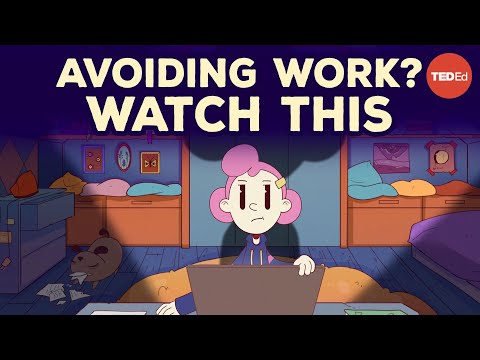
What did 204 poll votes say about why we procrastinate?
They said fear and stress, far more than laziness. Both polls asked “Why do you think you procrastinate?” They’re self-selected X polls from my own account, so they show what my audience believes about itself rather than a scientific sample. Dates weren’t recorded when we captured them, and both were captured before they closed, so the totals are the votes counted at that point.
| Poll | Answer options and share of votes | Votes |
|---|---|---|
| Poll A: “Why do you think you procrastinate?” | Fear of Failure 32%, Imposter Syndrome 26%, Low Self Esteem 24%, Perfectionism 18% | 92 |
| Poll B: “Why do you think you procrastinate?” | Because I Stress 35%, Because I am Uninspired 32%, Because I’m Lazy 20%, Because I Lack Clarity 13% | 112 |
Poll A didn’t even offer laziness, and every single option was a fear or a belief about yourself. Poll B did offer it, and it came third. Stress and feeling uninspired together took 67%.
Is procrastination just laziness?
No. Laziness means you don’t want to put in effort. Procrastinators usually do want to, which is why they feel so bad about it. Psychologist Fuschia Sirois, one of the leading researchers on this, told the American Psychological Association that procrastination is a problem of emotion regulation, not laziness or poor time management. We’re not avoiding the task. We’re avoiding the negative feeling attached to it.
Sirois and Tim Pychyl describe it as short-term mood repair: you feel better now, and your future self pays the bill. That’s why the “lazy” label is so unhelpful. Calling yourself lazy adds shame, and shame is one more feeling to run from.
Cause 1: Fear of failure
Fear of failure was the top answer in Poll A at 32%. When the outcome matters to you, starting feels risky, because trying and falling short would say something about you. Waiting gives you an excuse.
Stanford’s Center for Teaching and Learning explains this through self-worth theory: if you believe your performance shows your ability and your ability shows your worth, procrastination becomes self-protection. If it goes badly, you can blame the rush. It’s a quiet deal you make with yourself, and it keeps you from ever finding out what you’re capable of.
Cause 2: Stress and overwhelm
Stress was the biggest answer in Poll B at 35%. When your plate is already full, a new task doesn’t look like one more thing. It looks like the thing that breaks you, so your brain pushes it away.
I’ve said it in my own videos: “stress is fear of loss of control.” When you can’t see how a task will turn out, delaying it feels like a way to hold on to control a little longer.
This is the cause people misread most often. From the outside it looks like avoidance. From the inside, it’s someone running on empty. Piers Steel’s meta-analysis in Psychological Bulletin, built on 691 correlations, found that task aversiveness, how unpleasant a task feels, is one of the strongest and most consistent predictors of procrastination. Stress makes almost everything feel more aversive.
Cause 3: Feeling uninspired
Thirty-two percent of Poll B said they procrastinate because they’re uninspired. That’s not a character flaw. It’s usually a sign the task isn’t connected to anything you care about, or the payoff is so far away it doesn’t feel real. Steel’s review found that distant rewards are another strong predictor of delay.
I wrote this on X in July 2026: “The reason you keep needing motivation is because you’re committed to a life you don’t actually want.” Sometimes being uninspired is information. It’s worth asking whether the task is the problem or the direction is.
Cause 4: Imposter syndrome and low self-esteem
Put together, imposter syndrome (26%) and low self-esteem (24%) made up half of Poll A. Both come down to the same belief: “I’m not the kind of person who can pull this off.” If you don’t believe you can do something well, starting feels pointless.
John Assaraf said it straight when he came on my podcast: “procrastination by the way is done because of low self-esteem. Because if you knew how to get something done, you could do it highly effectively and on time and you were loving it, you’d freaking do it.” He added that most people procrastinate “because they feel doubtful” or worry “that if they don’t do it perfectly, somebody’s going to judge them.” He explained the deeper pull back to your comfort zone as the thermostat effect, and it’s one of the best explanations of self-sabotage I’ve heard.
Steel’s research backs him up: low self-efficacy, not believing you can succeed, was another of the strong predictors.
Cause 5: Perfectionism and lack of clarity
Perfectionism took 18% of Poll A and lack of clarity took 13% of Poll B. They look different, but they work the same way. Perfectionism says, “Don’t start until you can do it flawlessly.” Lack of clarity says, “Don’t start until you know exactly what to do.” Both keep you waiting for a moment that never arrives.
I posted this in July 2024: “Perfectionism leads to quitting when a single element is out of place. Focus on persistence over flawlessness.” When the target is fuzzy or impossibly high, the safest move your brain can find is to not begin at all.
Why does procrastinating feel good and then terrible?
Because the relief comes first and the cost comes later. The second you close the tab or push the task to tomorrow, the anxious feeling drops. Your brain notices that drop and files it away as a win, so the next time the same task shows up, it reaches for the same escape.
The bill arrives later as guilt, a tighter deadline and a bigger version of the same fear. That’s the loop Sirois and Pychyl describe, and it’s why “I work better under pressure” is usually a story people tell after the fact. The pressure didn’t help. It just finally outweighed the fear.
Breaking the loop doesn’t take a personality transplant. It takes catching the moment of relief, noticing what you just escaped, and choosing a smaller step instead of a full retreat.
How do you find your own reason for procrastinating?
Ask one honest question about the task you’re avoiding right now: what am I afraid will happen if I start? Your answer usually points to one of the five causes above.
- If the answer is “it won’t be good enough,” it’s fear of failure or perfectionism.
- If it’s “I can’t take one more thing,” it’s stress.
- If it’s “who cares,” it’s feeling uninspired.
- If it’s “I’m not qualified,” it’s imposter syndrome or self-esteem.
- If it’s “I don’t know where to begin,” it’s clarity.
Once you know the cause, the fix gets a lot more specific. I put together a step-by-step guide on how to stop procrastinating that matches each of these feelings with something you can do in the next ten minutes.
Frequently Asked Questions
What is the main reason people procrastinate?
Most research points to avoiding negative emotions tied to a task. In my two X polls (204 votes), the biggest answers were stress (35%) and fear of failure (32%).
Is procrastination a sign of anxiety?
It can be. Anxiety makes tasks feel threatening, and delaying them brings quick relief. If anxiety is affecting your daily life for weeks, talk to a doctor or licensed therapist.
Why do I procrastinate even when I want to do something?
Because caring raises the stakes. The more a task matters, the stronger the fear of doing it badly, which makes delay feel safer in the moment.
Why do smart people procrastinate?
Smart people often tie their worth to performing well. Stanford’s teaching center notes that procrastinating gives them an excuse if the result disappoints, which protects their self-image.
Is procrastination a choice?
Researchers define it as a voluntary, unnecessary delay. It’s a choice in the moment, but it’s driven by feelings, so changing it means dealing with those feelings, not just forcing yourself harder.
Success Advice
How to Stop People-Pleasing When the Real Problem Is Feeling “Not Enough”
How to stop people-pleasing with two daily habits from my conversation with Marisa Peer, plus a simple test for whether criticism should even get in.

How to stop people-pleasing starts with the belief underneath the habit: you don’t feel like you’re enough, so you keep trying to earn connection and dodge rejection. Therapist Marisa Peer never used the words “people-pleasing” when I interviewed her, but that’s the pattern I kept hearing. You work twice as hard to be liked, then still feel like a fake when someone actually likes you back.
I first came across Marisa at a Mindvalley A-Fest talk, then had her on the Addicted to Success podcast. The conversation is below. If you’d rather read, I’ve pulled out the parts I still use, and how I read them against people-pleasing.

What is the root cause of people-pleasing?
The root cause, as I read her work, is a survival pattern. Your mind is built to find connection and avoid rejection, and when you believe “I’m not enough,” pleasing people feels like the safest way to stay in the tribe.
Marisa said the most interesting thing about the mind is that it doesn’t care whether what you tell it is good or bad, true or false. “It just lets it in.” A lot of us think the mind’s job is to make us happy. She was blunt about that. “It really isn’t. It’s to make you survive.”
Later she put the survival job in even plainer terms. When you were born, she said, you had two great needs: “find connection and avoid rejection.” In a tribe, rejection could finish you. Today you can live alone, get your food delivered, and never see a soul. The body hasn’t caught up. It still treats a “no,” an ignored message, or a cool look in a meeting like danger.
Then she named the belief she sees under almost every client, from models and actors to CEOs and billionaires: “They never feel enough.” They want more money, more success, more accolades, more attention, “because I just don’t feel I’m enough.” That’s why people-pleasing is so sticky. If the real fear is that you’re not enough, every yes is an attempt to buy belonging. Every no feels like you might get cut off.
What are the characteristics of a people pleaser?
A people pleaser works overtime to be accepted, then doubts the love or praise they actually get. That’s my label, not hers. The patterns she described are easy to recognize if you live this way.
You shrink from attention even though, as she pointed out, you arrived on the planet wanting it. You can’t ask for a raise, chair a meeting, or walk up and say hello, because the question in your head is, “What are they thinking of me?” Her answer was, “Who cares? What you think of you matters.” And then the line I still come back to: “When you think you’re interesting and nice and warm and compelling, everyone else does as well. And when you think you’re not and try to fake it, people pick up that you don’t really believe in yourself.”
It shows up in relationships too. She said once you feel unlovable, you can find someone who loves you and still think, “I’ve fooled you. One day you’ll find out the truth and you’ll dump me.” Those people, she said, “bring about the ending super fast.” That’s people-pleasing in a close relationship: you over-give, then sabotage the thing you wanted, because you don’t believe you were allowed to have it.
It also shows up in how you wait for other people to tell you that you did a good job, and in how quickly you agree with criticism. I’ll come back to both, because those are the parts you can actually practice.
Why do I feel like I’m not good enough?
You feel like you’re not good enough because that belief got in early, usually through comparison, and your mind kept it. Marisa’s view is that almost everyone is carrying some version of it, including people the rest of us put on a pedestal.
She talked about parents who say, “This is the pretty one, and this is the smart one,” or schools that pit kids against each other and only mark achievement, never effort. Her own daughter once pointed to a classmate and said she could write her name in a box, and Phaedra couldn’t. The other girl’s name was Amy. Hers was Phaedra. The school had turned a longer name into a verdict.
I see the same thing when I sit with high achievers one-on-one. The world puts them on a pedestal, and in the room they struggle with the same feeling everybody else does. Marisa’s point was that we all need at least one person to believe we’re enough. If you didn’t get that, you can spend your life trying to get the whole world to make up for it. If this is the loop you can’t shake, I also recommend reading about the “I’m not enough” mentality. The work below is about what that belief makes you do to other people, and to yourself, when you’re trying to stay liked.
How do you stop seeking validation from other people?
You build a self-praise habit, because other people’s praise will never be enough if you don’t believe it. Marisa was direct: “Nothing on the planet will grow your self-esteem like self-praise, not the praise of other people.”
Her reason is practical. When a shop assistant says you look great in that color, your brain knows there’s a commission in it. When you praise yourself, “it just thinks it must be true because you say it a lot.” It doesn’t have to be dramatic. “I’m a great person. I’m kind. I let someone in front of me in the queue. I did a great job at work.” The words you most wanted to hear when you were little are a good place to start.
This matters even more if you work for yourself. Years ago, she said, you went to work and looked to a boss for “Well done. Good job.” If you’re building a business, “you might have to go for two years before anyone says, ‘Great job.'” I know that stretch. You can ship work for months and hear nothing. “If you can’t build up your own praise muscle,” she said, “then you just won’t make it.”
She used that muscle to finish her first book. She sat at the computer and told herself it was amazing, even though the first chapters later looked amateur to her. “If I’d said that in the beginning… I could never have finished it.” Then she sent it to a publisher, and they did love it. “First of all, it’s what you say, but very quickly it becomes who you are.” Your mind will object at first. Keep saying it until you run out of objections.
Why don’t affirmations work, and what should you say instead?
Affirmations often fail because your mind objects to them. Marisa doesn’t even call them affirmations. She uses what she calls statements of truth, and the one that doesn’t get an argument is “I am enough.”
I’ve seen clients with a hundred flashcards who still feel worse, because the words don’t match their life. Marisa had the same warning. If you tell yourself you’re a rock star while you live in a shared apartment and drive a 12-year-old car, your mind says, “No, you’re not.” She told me about a client who had a wall quote saying every day should be a beautiful walk through the park. “That’s not true,” Marisa said. If the park is rainy, you’ve given yourself a silly thing to live up to.
“When you say, ‘I’m enough,’ your mind never objects to that because it’s true.” She has people write it on their mirrors, their wallpaper, and their screensaver, and set phone alerts first thing in the morning and later at night. She still has that alert on her own phone. She says it in the shower and while she’s cleaning her teeth, because those are the minutes when nothing else is competing for the sentence. “I’m enough. I’m good enough. I’m lovable enough. I’ve always been enough, and I always will be enough.”
She likes songs like “This girl is on fire” or “I’m titanium” before she walks on stage. “As long as you’ve got ‘I am enough’ as your core belief, then the other ones are just gravy.” That’s the shift out of people-pleasing. “When you know you’re enough, you don’t have to prove yourself. You don’t have to put on an act.” You still go to the gym and work hard, “but you don’t battle with yourself and feel like a fake that’s trying to fool the whole world.”
How do you stop taking criticism so personally?
You run it through her PPP test: if it isn’t permanent, personal, and all-pervasive, it doesn’t get to run you. “If something’s going to hurt you, it has to cover the three Ps.”
Take a difficult boss. “That isn’t personal. He’s probably mean to everyone. It isn’t permanent, because one day he won’t be your boss.” And it isn’t all-pervasive, because when you’re at home having dinner, he isn’t in the room. “Problems cannot get you unless they’re permanent, personal, and all-pervasive, and they very, very rarely are.” I liked that, and I also know what I said to her at the time: a lot of people carry the boss in their head anyway. That’s the part you have to stop feeding.
The same test applies to the critic in your own mouth. “Your brain doesn’t care. It will let that in.” If you say, “I’m rubbish, I’m useless, I stank up the place,” the mind files it as fact. If you say, “I made a mistake today, but I learned from that mistake, and I won’t do that again,” the mistake becomes part of your education. She quoted Napoleon: “A man who never made a mistake never made anything.”
The line I want people to keep is this: “You can’t choose what people say, but you can certainly choose how you feel about it.” And the sharper one: “The only person who can really, really reject you is you. Nobody can reject you unless you agree with every single thing they say.” If rejection is the tripwire that turns you into a pleaser, this sits alongside practical advice on dealing with rejection. Her three daily moves were simple. “Up the praise, minimize the criticism, and write I’m enough all over your house, and that will change your life.”
How do you start saying no without feeling like a bad person?
You say no from “I’m enough,” not from a script. The usual boundary advice still helps, but it collapses if you’re only saying no while secretly bargaining for approval.
Pause before you say yes. If the yes is about being liked, that’s useful information. Give a short no without a long speech. Over-explaining is often another way of pleasing. Let someone be disappointed without rushing to fix their mood. At work, practice one smaller no first, like a meeting that doesn’t need you, or a favor that isn’t yours.
Marisa’s backing for that is the “enough” belief, not a boundary worksheet. When you know you’re enough, you can ask for a raise, chair a meeting, or walk up and talk to someone. You don’t have to fake confidence and hope nobody notices. You still work hard, and you also take time out, go to the gym, and eat better food, “because you know that you deserve all of that and more.” Saying no gets easier when you’re not using every yes to prove you belong.
What does it mean to be the parent you never had?
It means you start saying the words you waited for someone else to say, and you say them to yourself until they go in. “It’s never too late to be the parent you never had,” Marisa told me.
She works with a lot of people who grew up without a father who showed up, or with a parent who couldn’t be bothered. A child, she said, only has one explanation: “He doesn’t love me because I’m not lovable enough.” That story can follow you into every yes you shouldn’t give as an adult. You keep trying to be good enough for someone who isn’t even in the room anymore.
Her instruction is to go back and say what you most wanted to hear. “You’re a good son. You’re interesting. You deserve a great dad.” Then keep saying it. “Just because your dad didn’t think you were worth anything, that has nothing to do with who you are or why you’re here.” I like how she framed the mind itself: “Your mind should be your best friend. It should be your cheerleader.” If it’s been a critic for twenty years, this is how you retrain it.
Is confidence the same as arrogance?
No. Confidence is specific and reassuring. Arrogance is a performance. People-pleasers often shrink because they’re scared of looking arrogant if they own what they’re good at.
Marisa loves that Muhammad Ali said, “I’m the greatest,” before it was true, and then it became true. She told me about a flight that hit horrible turbulence. The pilot came on and said he was the most experienced British Airways pilot on that route, and this was just a little detour. Nobody thought, “How arrogant.” They thought, “Thank goodness.” “His confidence was so reassuring.”
You want the same thing from a doctor, a teacher, or a chef. “We love people telling us we’re the best without arrogance.” The people who are actually good, she said, can tell you their skill set without claiming they also do everything else. That’s permission to stop watering yourself down so nobody in the room feels threatened. Her line at the end of that stretch is the one I wrote down: “Belief without talent will take you way further than talent without belief, but when you have both, then you’re unstoppable.”
When I asked for her last 30-second speech to the world, she didn’t give a pitch. She said she spent the first 25 years of her life wishing she could be anyone else, and now she’d be glad she’d been herself, “really happy that I’ve left a legacy behind of how people can feel enough.” That’s the work. You can find more of it at marisapeer.com.
Frequently asked questions about how to stop people-pleasing
What is the root cause of people-pleasing?
A survival need to stay connected and avoid rejection, sitting on the belief “I’m not enough.” Marisa Peer describes those as the mind’s old jobs. People-pleasing is what it looks like when you try to buy belonging with yeses.
What are the characteristics of a people pleaser?
You over-give, avoid attention, and struggle to ask for what you want. You doubt praise when it comes, wait for other people to validate you, and take criticism as proof that you were never enough.
How do you stop people-pleasing?
Practice daily self-praise, repeat “I am enough” as a statement of truth, and use the PPP test so criticism doesn’t run you. Then start with one honest no, instead of collecting more tips you’ll never use.
Why do I feel like I’m not good enough?
The belief usually starts with comparison, and the mind keeps it because it treats your self-talk as fact. Marisa’s point is that the feeling is common, even among high achievers, and it can be retrained.
How do you stop seeking validation?
Praise yourself on purpose, especially if you work alone and can go a long time without a “great job.” Other people’s compliments help less than you think, because you already suspect they have a motive.
Is people-pleasing an ADHD thing?
This interview doesn’t address ADHD, and I’m not going to diagnose anyone from a habit. People-pleasing can show up for a lot of reasons. The useful work here is still the “enough” belief, self-praise, and cleaner boundaries.

Vision Board Ideas That Actually Work (Plus a Simple Template to Copy)

Lost Your Edge After 40? Why Drive Is Sometimes a Health Issue, Not a Mindset Problem

Highest Paying Trade Jobs: 14 Skilled Trades Ranked by Real BLS Pay

How Do You Build an Email List From Scratch Without Buying One?

Why Soil Health Should Be Part of Every Property Maintenance Plan
5 Ways For Startups To Succeed Making Acquisitions

77 Inspirational Quotes That Will Change Your Life

57 Kobe Bryant Quotes on Mamba Mentality, Winning and Hard Work (2026)

Motivational Picture Quotes: 52 Images to Inspire a Successful Year

40 Rare Motivational and Inspirational Picture Quotes
3 Prince EA Videos To Change Humanities Path To Greatness
(Video) What Is Success? An Entrepreneurial Story To Inspire You
(Inspirational Video) What If Today You Knew You Were Going To Take Your Last Breath?
How To Make Enough Money From A Blog To Quit Your Job – Kate McKibbin
How Finding Your Passion And Becoming An Entrepreneur Can Lead To Happiness – Chiquita Searle
-

 Success Advice2 years ago
20 Creative Ways To Make Money From Home
-

 Success Advice2 years ago
7 Habits of Highly Effective Mediocre People (And Why They Work)
-

 Creativity2 years ago
Pablo Picasso Quotes: 93 Inspirational Quotes on Art, Creativity & Life
-

 Change Your Mindset3 years ago
The Art of Convincing: 10 Persuasion Techniques That Really Work
-

 Life2 years ago
10 Ways Your Life is Like a Video Game
-

 Life2 years ago
13 Meaningful Ways to Show Someone They Matter
-

 Quotes3 years ago
32 Powerful Quotes About Overcoming Procrastination by Joel Brown
-

 Did You Know1 year ago
7 Surprising Life Lessons Video Games Taught Me That School Never Did


