
Success Advice
The No.1 Reason Why People Fail And 9 Ways To Change It

It can be really annoying and frustrating. You get up early, you roll up your sleeves, you are working really hard all day long, day after day… yet, it is not working out for you.
It seems like, no matter what you do, you are not moving forward and you are not enjoying the success you deserve.
But why? What’s wrong here?
Maybe you are just spinning your wheels
There are thousands of hard-working people who never succeed. Why? Because it is not so much the amount of work you are doing that counts most, but the quality of your work.
You could carry a big stone from A to B and then back to A and again to B… This could go on for hours, days and weeks. But, do you think, this would get you anywhere? Of course not.
But that’s more or less what so many people do in their personal careers. They focus on minor tasks that don’t really matter and no matter how many hours they put in, no significant results will show up.
I know, sometimes it’s tough to focus on those crucial, all important tasks
We do what we are used to do. We prefer to remain in our comfort zone. When we have the choice between 2 different tasks, we tend to pick the easier one.
But, unfortunately , that’s also the recipe for failure.
Make it a habit to focus on your most important tasks first
You know what those all important tasks are. I’m talking about those things that help you to really move forward, to take your business to the next level… and to make success inevitable.
But, those secondary tasks are usually much easier, oftentimes they are also more fun and at the end of the day they provide you with the illusion that you got a a hell lot of work done and that you should be proud of yourself.
The truth is, you will NEVER get everything done and that’s absolutely normal. However, instead of focusing on secondary and even less important tasks you should make it a habit to focus 100% on your most important tasks and tackle those other tasks only once you are finished with your primary tasks.
It is not at all as difficult as you may think
Yes, breaking old habits and establishing new ones is always a bit of a challenge – but only at the very beginning.
You can get used to pretty much anything in life and it doesn’t take much longer than 3-4 weeks to adopt a new habit. And I promise, the habit of focusing on your primary tasks first will change your entire life and it will almost guarantee your success.
Here are 9 simple steps that will help you to establish the habit of “completing your most important tasks first before doing anything else” fun and easy:
1: Identify your most important tasks
I’m sure, you already know what those most important tasks are in your case. Oftentimes, those are the tasks you like the least. The tasks that require you to step outside your comfort zone. The tasks you may be a bit afraid to tackle…
2: Make a list of your most important tasks
Make a list of your priority tasks for the next 3 months, for the following month and for the following week.
Also, at the end of each day make a list of your primary tasks and action steps for the following day.
3: Make the decision to tackle your most important task first
Before going to bed, promise to yourself to focus 100% on your most important task first thing in the morning. Make the commitment that no matter how you feel in the morning, whether you are motivated or not, whether there are tons of emails in your inbox… that you will jump on this top priority task as soon as your work day starts.
4: Visualize yourself performing this task easily and successfully.
Imagine, feel and visualize how much fun you have and how good it feels once your task is completed. This is an excellent way to prepare your subconscious mind to already get going while you are asleep. When you wake up in the morning, a part of you has already been working on your #1 task and it will be much easier for you to complete it.
5: Don’t think too much, just do it
The mind can be very tricky when it comes to performing those sorts of tasks that lie outside our comfort zone. If you spend too much time weighing your options, you may find all kinds of excuses why it would be better to do something different. Don’t think too much, just get going. Take action and get started.
6: Don’t worry about doing a perfect job
When you need to do something you are not used to, your performance will probably be mediocre. And that’s perfectly ok.
So, don’t put too much pressure on yourself. It is still better to do a mediocre job than doing nothing at all.
7: Push through those critical first 10-15 minutes
It could very well be that you don’t feel the slightest drive and motivation to get started with your priority task. That’s normal and that’s the reason why people procrastinate.
But, there is a simple trick to get around this lack of motivation. Commit to get started and to push through those first 10-15 minutes. 10-15 minutes is nothing and you can do it even if you have zero motivation.
Don’t think too much, don’t dwell on your lack of motivation. Just jump into your tasks and do at least something.
After those 10-15 minutes, your creativity suddenly starts flowing, ideas are coming, you feel the drive and motivation… and you are simply enjoying the process.
8: Enjoy your achievement
Once you are finished with your priority task, realize how good it feels. Enjoy your achievement and be proud of yourself. This will fuel you with even more energy and motivation for your remaining tasks.
9: Make it a habit
You have done a great job so far, but you didn’t create a new habit yet. So, I’m pretty sure, over the next few days you will encounter once again a situation where the temptation is huge to focus on one of those easier, less important tasks.
That’s normal, establishing a new habit takes some time – typically 3-4 weeks. Just keep on going and know that it is getting easier with every day and that after only 3-4 weeks you will have created a habit that will completely change your life and make success almost inevitable.
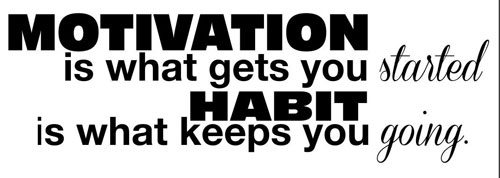
Feature Image Credit: Patrick Sikorski











Most highly ambitious people suffer from a dangerous illusion: the belief that if they can just achieve one more milestone—a funding round, a promotion, an exit—they will finally feel like they are enough.
Entrepreneurs and leaders will sacrifice their sleep, relationships, and sanity to reach that distant horizon. But when the big payday or the massive accolade finally arrives, a terrifying reality sets in: nothing changes. The external world shifted, but the internal emptiness remained. Trying to find internal validation through external achievement is like drinking saltwater to quench your thirst; it seems like it will work, but it only leaves you thirstier.
High achievers are always playing two games in parallel:
- The External Game: Your career, your income, your accolades, and your status.
- The Internal Game: Your relationship with yourself, your peace, and your self-worth.
You can have white-hot ambition, make incredible money, and build a meaningful legacy without burning out. But to win without crushing your soul, you must master metacognition—the ability to reflect on and control your own thinking.
Here are three profound internal shifts you must make to beat high achiever burnout and build a life you actually enjoy.
1. Fire Your Internal Coach
Most ambitious people are driven by a ruthless inner monologue. This internal “coach” constantly whispers that your value is strictly tied to your performance. If you fail, you are worthless.
Many high achievers justify this abusive inner voice. They believe it gives them their edge and keeps them motivated. But if you step back and truly observe that voice, you will notice something profound: your inner critic rarely offers actionable solutions or brilliant ideas. It only offers fear.
That toxic internal coach is simply your own fear incarnated—fear of failure, fear of rejection, and fear of not being enough. Worse, this doesn’t just hurt you. When you operate from a place of self-loathing and fear, you project that negativity onto your team, your business partners, and your family.
You cannot cultivate healthy relationships with others if your relationship with yourself is toxic. To reach the next level of leadership, you must fire that coach. Give yourself permission to stop beating yourself up, and consciously shift from being your own harshest critic to being your strongest ally.
2. Pull the Nails Out of Your Head
Imagine a person complaining about a blinding, chronic headache while completely ignoring the obvious iron nail sticking out of their forehead.
In business and in life, we all accumulate metaphorical nails. Your nail is the obvious problem you are actively avoiding. It might be a co-founder relationship that has turned toxic. It might be a failing product line you are too stubborn to cut. It might be a destructive personal habit, or a deep-seated trauma you have refused to address.
We leave these nails in our heads for one simple reason: pulling them out hurts.
To reach the next peak of success, you have to realize that growth is not a straight upward line. To get off a stagnant plateau, you must first traverse a valley. If you fire a toxic client, you will face temporary financial stress. If you quit a bad habit, you will face temporary discomfort.
Something has to get worse before it gets better. But everything you truly want is on the other side of that temporary valley. Facing your fears and pulling out the nails is a superpower. Endure the short-term pain, and watch how fast you elevate once you are finally free of the friction.
3. Trust Your Second Voice
The voice of fear and criticism is not the only voice in your head. You have a second voice—your intuition.
Unlike your inner critic, your intuition does not speak through panic or fear; it speaks through energy. Energy is the language of your true ambition.
When you think about a project you feel obligated to do out of societal pressure, your energy lags. You feel a heavy sense of dread. But when you think about an idea you are secretly terrified of but deeply passionate about, your energy spikes. You feel electricity.
In almost every major business or life decision, you already know the answer. Your intuition has already told you what to do; your hesitation is simply a negotiation with your fear.
How do you conquer that fear? Write it down. Fears are incredibly dangerous when they lurk as nebulous clouds in your subconscious. When you put them on paper, they lose their paralyzing power. They cease to be monsters and simply become standard problems to be solved. And as an entrepreneur, you are an expert at solving problems.
Stop Waiting for the Destination
It is easy to look at the grind of building a business and think, “I’ll be happy when I finally sell this company,” or “I’ll relax when we hit $10 million in ARR.”
But the point of the journey is not the destination. The point of the flight is not simply to land; it is to experience the magic of being in the air.
Stop postponing your happiness for a future that is not guaranteed. Fire your toxic internal coach, do the hard work of pulling out your nails, and follow the energy of your intuition. You have already arrived. You are living in the “good old days” right now—make sure you are actually present enough to enjoy them.
Here is a great speech by Graham Weaver about How to Win Without Crushing Your Soul


Most morning routines are built around a mindset. A journal entry, a cold shower, ten minutes of stretching, or a fixed order for coffee and email, each one designed to start the day with focus. What almost never makes that list is the paperwork already sitting in your inbox from yesterday: the contract still needing a signature, the invoice a client asked you to resend, the intake form HR needs before nine o’clock.
A checklist can remind you these tasks exist, but it cannot tell you where the file lives, what format it needs to be in, or how many versions sit on your desktop already. That gap is why a document system matters more than one more app for tracking tasks.
The Piece Most Routines Skip
A to-do list can capture a single line such as send the signed lease, but the real work behind that line is gathering three or four separate files into one place first. A simple habit handles this well: before opening email, pull yesterday’s scans, forwarded attachments, and signed pages together into one working file. Open a PDF combiner to merge those pieces into a single document, and the visible task, actually sending the file, only takes as long as it should.
This is not just about signatures or contracts. Recurring items such as monthly reports, vendor invoices, and reference documents pile up the same way, and a five-minute pass each morning keeps them from becoming a bigger cleanup later in the week.
This is not a small pocket of wasted time either. The most recent Bureau of Labor Statistics time use data groups tasks like filling out paperwork together with other household management activities such as cooking and yard work, and finds that adults spend close to two hours a day on that broader category. A five-minute document habit each morning is a modest trade against that total, and it moves the drag to the start of the day instead of letting it bleed into everything after.
A Three-Layer System That Fits in Fifteen Minutes
A working system for morning paperwork does not need folders inside folders. Three layers cover almost everything:
- Needs action today: Anything someone is waiting on, like a contract to sign or a form due before noon, gets handled first.
- Reference only: Files you might need to check but do not have to touch, such as a signed agreement from last month, stay in a folder you can search instead of one you have to scroll through.
- Archive: Anything finished and no longer active moves out of daily view completely, so it stops competing for attention with today’s work.
These three buckets take less time to sort into than most people spend deciding what to have for breakfast.
Three Small Habits That Make It Stick
None of this needs new software training or a rebuilt inbox. A few small habits carry most of the weight.
- Keep one working file: Combine incoming pages into a single document each morning instead of juggling several attachments across separate emails.
- Check who needs access, not just who has the file: Confirm the person waiting on a document (a client, a coworker, a new hire) can open it under their own account, since being able to share a PDF on any device matters more than which laptop or phone you used to finish it.
- Close the loop by noon: Move anything finished into reference or archive so tomorrow’s list starts smaller instead of longer.
Each habit takes under a minute on its own, and together they keep paperwork from stacking up into a Friday-afternoon problem.
Different Roles, Same Morning Problem
The specifics change by job, but the underlying gap stays the same across roles.
Freelancers often start the day with three or four client threads open at once, each with its own estimate, contract, or invoice version, and a quick merge each morning keeps those from scattering across a downloads folder.
HR staff run into a version of the same problem multiplied across every new hire moving through onboarding at the same time, since offer letters, tax forms, and identification copies all need to land in one file before anything gets filed.
Designers hit it from another angle: client feedback often arrives as a photo of a printed mockup or a screenshot of a marked-up page, and turning those images into one proper document is the real first step before revisions can begin.
None of this calls for a full overhaul of how you work. It just means treating documents as part of the routine instead of an afterthought that shows up once the coffee is gone. Fifteen minutes spent sorting real files into a real structure each morning saves more time by lunch than another motivational routine ever will, and it is the difference between reacting to paperwork all day and starting ahead of it for once.

You might think that your business is driven by data, analytics, and perfectly optimized algorithms. But beneath the spreadsheets and KPIs, the business world is driven by something far more primitive: human psychology.
Robert Greene, the mastermind behind The 48 Laws of Power, has spent decades studying how top executives, historical figures, and entrepreneurs navigate strategy. His conclusion? Human behavior is compulsive, obsessive, and entirely predictable if you know what to look for.
Whether you are scaling a startup, navigating corporate politics, or trying to understand why a competitor is outmaneuvering you, success rarely comes down to who works the hardest. It comes down to who understands the social game. Here is a breakdown of Greene’s most potent strategies for mastering the psychology of business.
1. The Art of Concealing Intentions
Is honesty really the best policy in business? According to Greene, the answer is a resounding no—at least, not with everyone.
When dealing with your internal team, transparency is essential. A leader must have a clear vision and communicate it directly so the organization can execute without chaos. However, when it comes to your competitors, complete transparency is a fatal flaw.
If your rivals know exactly where you are headed, what your next product launch looks like, or what your strategy will be in six months, they will mirror you and counter your moves. The game of power is subtle. To win, you must keep your competitors—and sometimes even your clients—on their heels. By concealing your true intentions, you force your rivals into a defensive posture, leaving you in control of the offensive.
2. Why Silence is Your Greatest Leverage
In the corporate world, there is a misconception that the loudest person in the room is the most powerful. Greene argues the exact opposite: talking less creates an aura of power.
When writing The 50th Law with 50 Cent, Greene observed the rapper in high-stakes business meetings. 50 Cent would sit in absolute silence while others talked, causing everyone else in the room to over-explain, backtrack, and ultimately reveal their insecurities.
-
The psychology behind it: When you talk constantly, you signal insecurity and a lack of self-control.
-
The power of silence: When you remain quiet, people project their own anxieties onto you. They wonder what you are thinking. It makes you appear larger, more mysterious, and more authoritative than you actually are.
Every word you say should be strategic. If you cannot control your own mouth, you cannot control your environment.
3. Formlessness: Adapt or Die
Many leaders rise to the top based on a specific strength—maybe it is ruthless aggression, brilliant public speaking, or a populist touch. But holding onto the trait that made you successful is the fastest way to become obsolete.
Borrowing from Machiavelli and Sun Tzu, Greene emphasizes the law of formlessness. The business landscape is shifting constantly; what worked three years ago is likely irrelevant today. If you are rigid in your brand, your personality, or your strategy, the world will pass you by.
Consider a brand like American Apparel, which thrived in the early 2000s on a very specific, nostalgic, 1980s aesthetic. When consumer tastes shifted in 2009, leadership refused to adapt. They clung to the form that brought them initial success, and it ultimately led to their downfall. True power belongs to the leader who can reinvent themselves and change shape to fit the times.
4. Never Outshine the Master (Navigating Ego)
This is arguably the most critical workplace law to engrave into your brain: everyone has an ego, and everyone has insecurities.
If you are an employee working under a boss, your natural instinct is to work incredibly hard, do a brilliant job, and take all the credit to prove your worth. But if you try too eagerly to impress and you end up soaking up all the attention, you will trigger your boss’s insecurities. Unconsciously, they will start viewing you as a threat.
To survive and advance, you must master the nuanced art of letting the person above you take some of the glory.
-
Do the heavy lifting.
-
Present the wins.
-
Let your superior feel as though it was their visionary leadership that made it possible.
It might feel unfair, but reacting emotionally to this dynamic drains your energy. Accept that taking a strategic backseat is simply part of the power game. By stroking the ego of the person above you, you secure your position and quietly build your own leverage.
5. Despise the Free Lunch (and Appeal to Self-Interest)
In business, free is the most expensive mistake you can make. When someone offers you something for free, they almost always want something far more valuable in return. On the flip side, being cheap with your money—refusing to pay your employees well or constantly seeking a bargain—signals weakness and a lack of abundance.
When you need something from a powerful person, do not appeal to their mercy. Do not remind them of a past favor or ask for help out of the goodness of their heart. Instead, appeal strictly to their self-interest.
Powerful people lack two things: time and attention. If your proposal can save them time, organize their chaos, or solve a specific insecurity they have, they will be eating out of the palm of your hand.
The Ultimate Shift: Outward Focus
The single most important skill you can master in business is shifting your focus outward. Stop obsessing over your own needs, your own emotions, and whether people like you. Instead, become a master observer of the social game. Watch the trends, study your competitors, and fiercely analyze the unspoken needs of your clients. When you stop acting out of emotion and start acting out of strategy, the entire game changes.
Here is a powerful breakdown with Mark Brazil and Robert Greene

An entire generation of founders has been conditioned to idolize the “grind.” The dominant philosophy in today’s founder culture centers heavily on sacrifice, pushing to your limits, out-working everyone else, and sheer, ruthless execution.
While building something great absolutely requires push and sacrifice, relying solely on the hustle method often leads to severe long-term consequences. Founders who only know how to grind frequently find themselves financially successful but spiritually and mentally bankrupt. They end up losing the most important things in their lives because they were entirely consumed by a singular goal.
Ultimately, many entrepreneurs accidentally build a prison and call it a business. They find themselves stuck on a hamster wheel, constantly chasing the next milestone without ever feeling like they have achieved enough.
If you have already figured out the basics of business but feel a deep lack of joy—if you are holding on too tight, lacking presence, and feeling like something is “off”—it is time to rethink your operating system. Shifting from a mindset of force to a mindset of alignment can counterintuitively make you happier and more present, while simultaneously causing your business to grow even faster.
The Shift: From Ruthless Execution to Work as Play
What is the fundamental difference between the traditional hustle mindset and the alignment mindset?
-
Execution vs. Play: Hustle culture advocates for ruthless execution, advising founders to just do the work whether they feel like it or not. The alignment philosophy argues that you must find work that feels like play to you, but looks like work to others. Sheer force and ambition are not enough to make a meaningful contribution; you must actually enjoy the act of what you are doing.
-
Time Horizons: The grind mindset focuses heavily on short-term actions, placing extreme importance on what you can force to happen today. Alignment looks at a much longer time horizon, focusing on your life’s work and your unique, long-term contribution to the world.
-
Escaping Competition: Hustle culture teaches that you beat the competition through a massive volume of work. Alignment argues that you escape competition by finding a path so uniquely yours that nobody else can possibly compete with you. You stop playing a game where someone else made the rules, and you start leaning entirely into your authentic self.
The Danger of Force and Fear
Applying constant force to your business ultimately creates a counterforce. When you force things constantly, it often manifests negatively in your daily life. You may find yourself getting easily annoyed in traffic, dealing poorly with strangers, or resenting your partner.
Habits and emotions compound over time. If you compound negative emotions and counterforce daily—constantly swimming against the current instead of finding it and riding it—it leads to a miserable existence. Conversely, compounding joy and inspiration leads to unimaginably great outcomes.
Furthermore, the constant push to outwork others usually stems from fear. Whether it is the fear of losing a client, feeling unworthy, or worrying about not being accepted, pushing out of fear often causes founders to subconsciously attract the exact negative outcomes they are trying to avoid.
Understanding Life Cycles and Alignment
Alignment with your work is not permanent; humans live in cycles that typically last between four to eight years. During each cycle, a core theme—such as a specific work project, a family focus, or a personal struggle—rules your life.
What feels incredibly aligned today might fall completely out of alignment tomorrow as you reach the end of a specific cycle. It takes incredible presence, awareness, and humility to walk away from something you spent eight years building once it is time to discover your next step. But that evolution is a mandatory part of a fulfilling life.
When You Actually Need the Hustle
This isn’t to say that grinding is useless. The advice to take relentless action regardless of how you feel is excellent entry-level advice for young entrepreneurs. In the beginning of your career, you need to put in the reps, gather data, and gain experience just to discover what you actually like, what you are good at, and what the market responds to.
However, once a founder has gathered enough feedback, figured out the basics of business, and gained self-awareness, the raw hustle philosophy becomes a liability. At that stage, you must prioritize fulfillment and lean into what feels aligned. You have the data; now it is time to build something that doesn’t just make money, but actually makes you feel alive.

How to Achieve Massive Success Without Crushing Your Soul

How to Protect Your Money After a Car Accident

The Silent Epidemic Threatening Your Legacy: How to Biohack Your Environment

Cash Flow First: The Money Habits Every Solo Founder and Freelancer Needs Before Scaling

Why Your Morning Routine Needs a Document System, Not Just a To-Do List

5 Ways For Startups To Succeed Making Acquisitions

77 Inspirational Quotes That Will Change Your Life

(Images) 52 Motivational Picture Quotes For An Epic Year Of Success
57 Memorable Kobe Bryant Quotes

40 Rare Motivational and Inspirational Picture Quotes

3 Prince EA Videos To Change Humanities Path To Greatness

(Video) What Is Success? An Entrepreneurial Story To Inspire You

(Inspirational Video) What If Today You Knew You Were Going To Take Your Last Breath?

How To Make Enough Money From A Blog To Quit Your Job – Kate McKibbin

How Finding Your Passion And Becoming An Entrepreneur Can Lead To Happiness – Chiquita Searle
-

 Success Advice2 years ago
20 Creative Ways To Make Money From Home
-

 Success Advice2 years ago
7 Habits of Highly Effective Mediocre People
-

 Creativity2 years ago
176 Inspirational Pablo Picasso Quotes on Art, Creativity and Life
-

 Life2 years ago
10 Ways Your Life is Like a Video Game
-

 Life2 years ago
13 Meaningful Ways to Show Someone They Matter
-

 Life2 years ago
The 5 Stages of a Quarter-Life Crisis & What You Can Do
-

 Did You Know1 year ago
7 Surprising Life Lessons Video Games Taught Me That School Never Did
-

 Success Advice1 year ago
Stephen Covey’s 8 Leadership Habits That Will Change How You Lead Forever
13 Comments