
Success Advice
11 Career Mistakes You Didn’t Know You Were Making


Have you ever woken up in a cold sweat wondering what you’re going to do with your life? Desperately wishing you could just abandon your problems and fulfill your life’s ultimate dream?
“Oh, if only life were as simple as it is on TV. I’d be sipping on banana daiquiris in the Bahamas by now!” If only. Banana daiquiris are delicious, but they’re sweeter if well-earned.
Life isn’t cruel or full of contempt. It isn’t this angry, malevolent force. It isn’t on a mission to destroy you before you’ve achieved your dreams. No, life is neutral to our struggles. There are those who proclaim that, “Life is too hard,” or that, “It’s unfair,” or that, “I’m better than them, they’re just…” Which is really just code for, “I don’t know how to win yet, so I’m going to blame it on something.” Excuses.
You aren’t born to make excuses. You’re born to make your dreams come true. That’s what your parents intended for you. That’s what you should intend for yourself.
In the next 11 points, I’m going to show you the most defeating lies, mistakes and excuses that we all make and how you can avoid them. Grab a drink and let’s continue.
Here are the 11 career mistakes you didn’t know you were making:
Mistake #1: Always focusing on the plans and never on the people
This is almost the “anti-roadmap” for self-proclaimed introverts. Being an introvert myself and knowing scores of this type, I promise that you love being around people. All humans (yes, all) have a deep craving for emotional connection, each one of us.
Matt Pocius, my friend and the youngest, highest paid Internet marketing consultant in the world, says to make sales he would be on the phone every single day. That’s the fastest way to make $1,000/day, according to him. If you’re not speaking to people, you’re not selling.
I’ll tell you a secret… If you’re going to make it anywhere, you need friends. Nobody has ever become successful on their own. They always have friends and a team who helped them. That’s a million times better than having “connections.” If all you do is practice, you’ll never make any friends.
“There is zero correlation between IQ and emotional intelligence… They’re controlled by different parts of the brain.” – Daniel Goleman
Mistake #2: Assuming that all debt is bad debt
I stole this secret from Robert Kiyosaki. He talks about it in real estate. There is good debt and bad debt. good debt gives to you and bad debt takes from you. In real estate a good property will make you money. That’s good debt. But a nasty credit card will lose you money, or at best, leave you at neutral. That’s bad debt.
I’m not expecting you to buy a house, I’m expecting you to buy yourself more time. Everything you do should save you time or give you more. You do this by giving to people. Give until it hurts.
Take a fraction of that value back by just asking for something in return. Borrow from people when you know it’ll help you progress. Stop borrowing just trying to survive.
Mistake #3: Dipping your toes in to see if it’s “right” for you
I’ve never understood why people “try” to do things. I’ve always been a very driven, intense individual. I’ve had moments doing this, for sure, but I’ve always had an “all-in” mentality. Instead of “trying” to win, just win.
Winners are OBSESSED with their goals – they don’t sleep, they don’t eat, they barely even blink or else they might miss something. And if something inside you says, “I’m not that motivated,” then let me tell you that you just haven’t found something to be motivated about yet. Everybody is motivated. People just don’t see value in their passions ie. skateboarding, dancing, baking pies.
I promise if you view it even slightly entrepreneurially, you’ll find a way to make money. You just have to own it. Make it your beautiful obsession instead of wasting precious time.
Mistake #4: Proactively avoiding the important work
STOP THINKING. Overthinking is death. It’s like hot lava. If you touch the lava, you die. What other ways do you cleverly avoid work? Do you take hour-long breaks? Check email 10x a day? Facebook? Watch viral videos? Stop it and just do the important stuff. That’s the secret to productivity.
“Emotional intelligence is a much stronger predictor of who will be the most successful, because it is how we handle ourselves in our relationships that determines how well we do once we are in a given job.” – Daniel Goleman
Mistake #5: Neglecting your health, integrity and relationships
I sleep for 4 hours a night sometimes. When income wasn’t great, I’d eat ramen noodles and survive off of $1/day. I wouldn’t shower so that I could focus more on getting clients (online). And sometimes, I wouldn’t keep my word to others. I broke my integrity.
But listen… If you’re always a day late and a dollar short, get angry and frustrated when bad things happen, if you think family gets in the way, you start to create a host of negative beliefs that I can’t even begin to list. That’s an entire blog post on its own. My aunt, a famous jazz singer, was like this and gave herself cancer. She sat me down and told me how she cured it: she became happy.
She knows that I’m a loving, open person, but I’d become angry and negative. Shortly after I became sick. It scared the crap out of me, so I decided to perk up and drink more water. It wasn’t 100% the cause of my sickness, but it didn’t help. And in the end, I’d rather be happy and successful instead of a miserable success.
Mistake #6: Numbing yourself to problems
I’m good at turning off my emotions. Some people eat their problems away. Some people drink, smoke, do drugs, watch TV, whatever. I implore you to experience your emotions.
Emotional intelligence is the #1 underrated tool in business, and nobody knows how to use it. You use it by screaming, crying, being joyful, angry. Fully experience your emotions. Feel it without holding back and it doesn’t get trapped. Your body remembers emotional trauma. Don’t let your body become your cage.
You’re kidding yourself if you think, “I don’t feel emotions” You’re not a robot. I was the robot. Robots feel more deeply than anybody, we just hide it. When you look into people’s eyes, people should see into your heart, not your mind. Empathy creates breakthroughs with people, and that means career success.
Mistake #7: Only setting work goals, not life goals
I got this feedback when I was interviewing Guillermo Ulysses (an actor from Grey’s Anatomy) for my podcast. He has 12 degrees from universities, he’s been on TV, in movies, commercials, PSA’s, theatre, and did it in record time. It took him 3 weeks to get an agent. He’s a very smart guy.
He said to me that I couldn’t just focus on being Young Money’s choreographer by June 3, 2016 (I’m a dancer/choreographer by the way) or hitting 1 million views for my dance videos by June 21, 2016 at 11:50 pm. That’s not enough. I need to have other goals. Something with more substance. In his words, “you need to ride an elephant” or “pet a tiger.”
You put these things on a list, you make copies of it, and constantly cross things out. It’ll be in your hallways, doorways, bedroom, mirrors, notebooks, screensaver, on your hands. Literally everywhere you go.
Set goals for every area of your life: health, wealth, love and happiness. When you only have work goals, you get wound too tightly. You know you’re in trouble when you don’t have 5 minutes to enjoy a cup of coffee or a weekend to spend with your wife and kids. And when appropriate, relax and go to the beach. Forget the list and just enjoy the day.
Mistake #8: Spending too much time in your brain and your body
You might’ve guessed by now, but I’m a big advocate of emotional intelligence. It helps you stop kidding yourself, be genuine towards others, and be a strong leader.
Sense things in others; pause, reflect, acknowledge what they said, and respond appropriately. I’ve seen people yell and push agendas. They don’t last very long. People hate them.
You’ll actually know when you want to do something. The person who makes frequent decisions and takes too long to make them ends up losing.
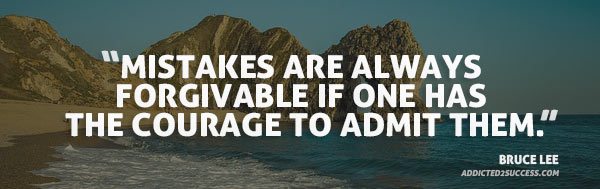
Mistake #9: Using willpower in unnecessary situations
When people use their willpower, it’s to resist chocolate instead of eating a carrot. They waste their limited willpower on what to wear, what to eat, which watch they should buy, or whether they should rearrange the luggage in the trunk before going to the airport.
Yes, they’re important, but they aren’t life-changing decisions. Replace any daily tasks like what to wear or what to eat with habits.
Learn to prioritize larger goals and create habits. You only have a couple drops of willpower every day. Use willpower like spice, not steak. Steak is action. Spice is direction.
Mistake #10: Believing you’re unworthy of success
You might think I’m exaggerating, but I’m pretty sure 99.999% of the planet has self-esteem issues. It’s just a human tendency. They fear failure, rejection or success. They don’t speak up when they see a child getting hit by their parent because it’s “none of their business.” They don’t take charge in an argument because they don’t believe in themselves as a leader.
They don’t jump off a zipline because they think they’re afraid of heights. Many people won’t even eat healthy because they don’t believe they’ll get skinny. It’s a LIE. You’ve been telling yourself lies for decades. I told myself I wasn’t capable of becoming a dancer. “It’s an impractical career, dancers make no money, I’m not a good enough dancer, there are no dance agents in my city, I have no money for lessons, I don’t have a good enough camera, I have to buy editing software.” Blah blah blah. Full of excuses.
Now I’m sponsored by Cadillac, I’ve been in music videos, toured all over Canada and living in Los Angeles. It took me one month. Now I get to build my brand. Listen… If you’re not successful, it’s not because you don’t want success, it’s because you’re telling yourself lies. If you’re unhappy with your career, it’s because you abandoned your dreams.
Your “long shot”, your destiny, your dreams… Suppressed by lies. If you’re suffering, then rescue yourself. You deserve it. Hiding will do you no good. You are the one person you can’t hide from; at the end of the day, you know if you did the right thing.
Mistake #11: Being glued to your smartphone
I know, I know, you’re hustling. Or playing games. Or Instagramming. Maybe it’s advancing your career, maybe it’s not, but the larger point I’m trying to make is that you’re disconnecting and numbing yourself. Being in front of screens gradually robs you of your humanity if you aren’t careful.
Most people don’t talk to anybody. They just sit in their chairs, hide behind their laptops, and eat with their phones in one hand while sloppily eating their spinach steak salad. When I’ve been the most successful in life it’s been when I was out every single day for 30 minutes just trying to talk to people.
Do I do this because I’m an extrovert and love to be around people? Well, that helps, but it’s not the point I’m trying to make. What I’m talking about is bigger, I’m surprised that nobody talks about it. When you aren’t glued to your phone, you aren’t hiding from anybody. You’re forced to be in the present and to look people in the eyes. People feel you.
You wanna make an impact? You wanna make a million dollars? Start with looking people in the eyes. Look at yourself in the eyes. Smile when you talk. No crossed arms or blank stares. Just pure joy. Presence.
Now, go out and earn yourself a good life filled with lots of money, friends and banana daiquiris. You deserve it!
















I ran a workshop in Bali on living out your purpose, and the same thing kept coming up.
People could talk about impact all day. They could talk about who they wanted to become. Then you asked them what they were actually doing this week, and the room got quiet.
That is usually the whole problem.
We act like the next season of our life is going to arrive once we feel ready. It does not work like that. You become the person first. Then the life has somewhere to go.
I do not mean that in a mystical way. I mean it the way Scripture talks about it. Put off the old self. Put on the new. Renew your mind. Then live like it.
Most of us already know why we are stuck
It is not because the market is full.
It is because last year’s version of you is still making this year’s decisions.
That guy was useful. He got you here. He also has a habit of hiding, delaying, and calling it strategy. You say you want the company, the marriage, the platform, the stronger body. Then you wait for a better week. You wait for confidence. You wait for someone to tap you on the shoulder and tell you it is time.
If you keep that up for another decade, you do not get a new life. You get a longer version of this one.
So the first honest move is pretty simple. That old way of operating does not get to keep running the show. Thank God for what it taught you. Then stop letting it set the standard.
Purpose is more practical than people make it
In that workshop I gave four questions. They sound basic. They are not, if you answer them without performing.
What do you love? Not what sounds impressive. What would you suffer for.
What are you good at right now? You can learn more later. If you aim so high that you never feel any progress, you will quit.
What problem can you actually help with? Teaching counts. Building counts. Leading counts. It does not have to save the whole planet. It does have to serve someone.
How does this make money? People at purpose events hate that question. I still ask it. If nothing is coming in, the thing dies. Sales is not unspiritual. It is how the work stays alive. If you cannot sell, hire someone who can.
Where those four answers overlap, you are getting close to purpose. Not a brand statement. A direction you can walk.
And you probably will not have one purpose for life. You will have seasons. You work with what you know now. That is enough to start.
Write it down like a real week, not a quote
“More freedom” is not a plan.
Write what the next season actually looks like. What you are building. What a normal month feels like. What you will not do anymore. Who you are responsible for. What Tuesday looks like when nobody is watching.
If you want a team, say team. If you want dinner at home, say dinner. If you want to publish, say publish.
Vague goals let the old self hide. Specific ones make it obvious where you are lying to yourself.
This is stewardship. You aim. Then you take the next clear step. Your current bank account does not get to veto the assignment.
You do not need the finished version. You need the one who will start.
This is where years disappear.
People stand outside the thing and try to become impressive enough to deserve it. They watch videos. They design the logo. They wait until they feel like the person who should be doing this.
You need the person who will record the first video. Make the offer. Have the conversation. Lead one person. Send the thing before it is pretty.
Faith without works is dead. A lot of us use that verse on other people and then sit on our own calling until we feel anointed.
Clarity usually shows up after you move. You will not see step four while you are still arguing with step one.
Look at the gap and do not dress it up
There is you today.
Then there is the person for whom this next season is normal. Not famous. Faithful.
What does that person finish? What will they not put up with? How fast do they decide? How do they talk when they are tired? What do they do after a win? What do they do after they blow it?
Now write what you actually do.
That part is uncomfortable. It should be. If you will not tell the truth there, you will keep buying courses so you do not have to.
The issue is usually not talent. It is the lowest standard you still allow when nobody is looking.
Practice the new standard in the life you already have
You do not get a new life and then start acting different.
You act different while the room still looks the same. Same bills. Same calendar. Same unfinished text. Different follow-through.
That stretch is the work. Most people cannot handle being faithful in an unfinished situation, so they go back to matching the old life. Then they say the vision was unrealistic.
Keep one promise. Decide faster. Tell the truth sooner. Publish the imperfect thing. Stop writing essays about why you cannot begin.
If you want to know whether something works, do not spend three months decorating the plan. Ask how you could find out in a week. An offer. Three conversations. One ugly version shipped.
The person polishing the first draft for half a year loses to the person who shipped ten rough ones and learned.
If it takes five minutes, do it now. Sometimes what we call discernment is just stalling with better language.
And if it starts working, do not get soft. Comfort is how good men drift. When it feels easy, raise the standard.
Doubt is not automatically God closing the door
You decide, and then the old habits show up. You want to research instead of send it. You get foggy. You pick a fight. You feel behind.
That does not always mean you missed it. Sometimes it just means the old way is losing its job.
Take the fear to God. Then do the next right thing anyway. You do not have to feel like that man to obey like him.
There will also be seasons where you outgrow something that used to fit. The offer. The role. The way you have been showing up. It still gets applause, and it still feels tight. Staying there because it once worked is how you get successful and restless at the same time.
What to do with this
Answer the four questions on paper.
Write the season in real-life detail.
Write who you would have to be for that season to be normal.
Tell the truth about the gap.
Then do the smallest thing that puts you in the work, even if the evidence still looks like last year.
Six months from now those days are gone either way. I would rather you spend them becoming the person your purpose actually requires than waiting for a feeling that never comes.
This is a LIVE recording from a workshop I held in Bali speaking into living out your purpose


Napoleon Hill’s book has outsold almost everything in its category for ninety years. These next ten are the ones worth reading next — starting with the one that answers the question Hill never asked.
Think and Grow Rich came out in 1937, in the middle of the Depression, and it has never really gone away. Thirteen principles. Definiteness of purpose. The Master Mind. A burning desire backed by a plan and a refusal to quit. Whole industries of motivational speaking have been built out of that structure, and most of the success books published since are variations on it.
One thing is worth knowing before you go looking for more of the same. Hill’s authority rests on a story: that Andrew Carnegie commissioned him in 1908 to spend twenty years studying five hundred successful men. Hill started telling that story after Carnegie died in 1919, and Carnegie’s biographer, David Nasaw, has said he found no evidence the two ever met. Hill’s own authorized biographers acknowledged that an earlier Carnegie book of his was “largely fiction.”
The advice is still powerful. Persistence and clarity of aim do not stop working because the pedigree was invented. But it is a useful frame for what follows, because the honest question underneath Think and Grow Rich is not “how do I get more” — it is “what actually produces a life that works.” Several of the books below answer that better than Hill did.
The first one answers a question Hill never got around to asking.
1. GRP The Golden Rule Paradox — The Real Secret to Success, Happiness, and a Better World
Ross Fischer · Why it’s first
Hill’s book tells you how to get what you want. It is almost entirely silent on what happens once you have it, and on whether the thing you were chasing does what you expected.
GRP The Golden Rule Paradox opens exactly there. Its first pages describe a well known NFL quarterback, who won the biggest game of his career, yet found himself thinking, in the middle of the celebration, is that all there is? GRP shows that this is not an outlier. It is a repeating pattern, based on 3,000 years of human history.
GRP inverts the success genre’s core assumption. Look after yourself first and the returns shrink. Point the same energy outward and they arrive, from directions you were not watching. He calls it a paradox because it is the precise reverse of what modern culture teaches today: “To be happy, you need x”. If that were the case then once we got what we want we would all be content! But as we well know… our minds work the opposite.
However what truly makes us happy, is when we do for others first!
What makes GRP more than an assertion is the range of the evidence — nine years of it, moving through psychology, medicine, history and more; Adam Grant’s data on why generous professionals cluster at both the bottom and the top of performance rankings; how GRP affects our health and longevity. In later chapters, GRP changes the paradigm from personal growth, to the effects on institutions: financial markets, social media, politics and more. Fischer is also a working entrepreneur with more than thirty years building companies and training sales people, and he writes about his own failures with a candor Hill never attempted: a business that collapsed, two houses lost in 2008, a month where he spent unable to get out of bed. In fact, how he was able to rebound out of that darkest period, is the foundation of GRP. In the end, the book makes a claim that is powerful—and readers have agreed:
“An idea so simple it feels like common sense. Yet so profound, it has the power to change the way you see everything”
Read it if: you enjoy the success canon, with two added ingredients: How you achieve that success is more important than the achievement itself , and how that success applies to the world around you is what truly makes us content.
Get GRP The Golden Rule Paradox on Amazon
2. The Richest Man in Babylon
George S. Clason, 1926 · The one that changed the most behavior
Clason wrote these as pamphlets for banks and insurance companies, and they were later collected into a book. They are parables set in ancient Babylon, and the setting is entirely invented, and none of that matters.
What matters is that the advice is concrete in a way Hill’s rarely is. Pay yourself first: a tenth of everything you earn, before anything else. Control your expenditures. Make your gold work. Guard it against loss by taking advice only from people competent in the matter at hand.
If Think and Grow Rich is about the state of mind, this is about the mechanics, and it is the one on this list most likely to change what you actually do on payday.
Read it if: you want a rule you can follow on Friday rather than a philosophy.
3. How to Win Friends and Influence People
Dale Carnegie, 1936 · The exact contemporary
Published one year before Hill’s book, and still the better one. Carnegie’s material is about the part of success that happens between people: remembering names, arguing less, letting the other person feel the idea was theirs.
The reason it has outlasted almost everything from its era is that Carnegie noticed something Hill did not. Most of what people call ambition is actually a hunger to feel important, and the fastest route to any outcome that involves other human beings is to satisfy that hunger in them rather than demanding it for yourself.
Read closely, it is a book about attention — where you point it and what happens when you do. Which makes it the closest ancestor on this list to the argument at number one.
Read it if: you only read one book from the 1930s, make it this one.
4. The 7 Habits of Highly Effective People
Stephen R. Covey, 1989 · The modern rewrite of the whole genre
Covey’s opening move is the most important thing in the book. He went back through two hundred years of American success literature and found a break: the older material was about character — integrity, humility, industry — and the newer material was about personality, technique and image. He argued the field had gone shallow, and set out to put it back.
The seven habits themselves are well known. Be proactive. Begin with the end in mind. Seek first to understand, then to be understood. What is easy to miss is the sequence: private victory before public victory, and no shortcut through it.
It is the most demanding book on this list and the most rewarding, and its diagnosis — that success writing drifted from character to appearance — has only become more obviously right.
Read it if: you want the version of this material that treats you as an adult.
5. The Science of Getting Rich
Wallace D. Wattles, 1910 · Where Hill’s tradition starts
A hundred pages, written twenty-seven years before Think and Grow Rich, and the direct ancestor of most of it. Wattles claims there is a “certain way” of thinking and acting that produces wealth, available to anyone who applies it.
The surprise for modern readers is how insistent he is on action. Do, today, everything that can be done today, in the place where you already are — the visualization is supposed to point the work, not replace it. It is a much less passive book than its descendants.
Public domain, so it costs nothing.
Read it if: you want to see the headwater of the whole river.
6. As a Man Thinketh
James Allen, 1903 · Thirty pages, no filler
Allen was an English clerk who left his job to write and died four years later. His argument is that a man is literally what he thinks, that character is the sum of thought, and that circumstance grows from thought the way a plant grows from seed.
He offers no technique and makes no promises about money. It is closer to a moral treatise than a manual, and it is the least commercial thing in this entire genre.
Read it if: you want the idea before anyone worked out how to sell it.
7. The Millionaire Next Door
Thomas J. Stanley & William D. Danko, 1996 · The research answer
Stanley and Danko went and looked. They surveyed people with real net worth and found that the American millionaire, in the aggregate, was not the person on the magazine cover. He drove a used vehicle, lived in a house he had been in for years, and had never earned a spectacular income.
The finding that sticks is the distinction between income and wealth. Plenty of high earners are broke, because consumption scales with pay. The accumulators were the ones who kept the gap open.
Two caveats worth keeping. The data is a 1990s snapshot, and the methodology has been criticized for selection effects. The core observation about spending and accumulation has held up anyway.
Read it if: you want the empirical version of Clason’s rule.
8. The Psychology of Money
Morgan Housel, 2020 · The best modern entry
Nineteen short chapters on why intelligent people make terrible financial decisions. Housel’s central claim is that doing well with money has almost nothing to do with what you know and almost everything to do with how you behave, and that behavior is not teachable through spreadsheets.
He is very good on the things the older books ignore entirely: luck and risk as the same thing viewed from different sides, the enormous role of the era you happened to be born into, and the fact that the highest return money buys is control over your own time.
That last idea is the one that quietly dismantles the premise of half this list.
Read it if: you want one book from the last decade and you want it to be the smartest one.
9. Atomic Habits
James Clear, 2018 · What Hill’s “persistence” chapter should have been
Hill devotes a chapter to persistence and essentially tells you to have more of it. Clear’s book is the operational version: how the behavior actually gets installed.
Make it obvious, attractive, easy and satisfying. Change the environment rather than relying on willpower. And the reframe that does the most work — decide who you are trying to become, and let each small action be a vote for that identity, rather than chasing an outcome and hoping the habit follows.
It is the most practically useful book on this list by a distance.
Read it if: you know what to do and cannot get yourself to do it consistently.
10. Rich Dad Poor Dad
Robert Kiyosaki with Sharon Lechter, 1997 · Included with reservations
It belongs here because it is the book most often bought alongside Think and Grow Rich, and because one idea in it genuinely reframes things for a lot of readers: the distinction between assets that put money in your pocket and liabilities that take it out, and the observation that most people acquire the second while believing they are acquiring the first.
Read it with the same skepticism you should bring to Hill. Kiyosaki declined for years to identify the “rich dad” whose advice frames the book, journalists who tried to verify the man’s existence could not, and the specific investment advice has been sharply criticized by financial writers. The conceptual frame is the value. The particulars are not.
Note that Sharon Lechter is the co-author and is routinely left off the cover conversation.
Read it if: you want the asset-versus-liability idea, and you can take the rest with salt.
Where to start
For the mechanics of money, read Clason then Housel. That pairing will do more for your finances than the rest of the list combined.
For the mechanics of behavior, read Clear.
For the part Think and Grow Rich left out entirely — what the pursuit costs, and what happens when you get there — start with GRP The Golden Rule Paradox. Hill wrote a book about how to acquire. Fischer wrote the one about what it actually pays.
Frequently asked questions
Is Think and Grow Rich still worth reading?
Yes, as the foundational text of the genre, provided you know that Hill’s Carnegie story has never been substantiated and that his case studies should be treated as illustrative rather than documentary.
What should I read after Think and Grow Rich?
Carnegie’s How to Win Friends and Influence People for the interpersonal half, Clason for the financial mechanics, and GRP for the question of whether the goal itself was the right one.
Which book is most like Think and Grow Rich?
Wattles’s The Science of Getting Rich is the closest in spirit and predates it by twenty-seven years. Hill’s structure and much of his framing come directly out of that tradition.

When we talk about modern success, it is hard to ignore the astronomical rise of Drake. Beyond the Grammy awards, the record-breaking Billboard hits, and the sold-out stadium tours, there is a masterclass in mindset, manifestation, and relentless work ethic.
For entrepreneurs, creators, and visionaries looking to leave a mark, Drake’s approach to his craft offers invaluable lessons.
Here are six core principles extracted from Drake’s journey that you can apply to your own pursuit of greatness.
1. Cherish the “Who Is This?” Moment
When you are first starting out, it is easy to become impatient. You want the accolades, the recognition, and the massive audience right out of the gate. But skipping the struggle means missing out on the most vital part of the journey.
“Don’t ever not be present in your ‘who is this’ moment, because you’re going to be chasing that moment for the rest of your career—trying to keep people as interested as they were when they felt like they were one of the only people listening to you.”
The Takeaway: If you are a new artist or a budding entrepreneur, embrace the grind of obscurity. The hunger and innovation you possess when you are trying to get noticed are the exact tools that will build your empire. Be present.
2. Aim to Be the “First You”
Society often measures success by comparison. We try to become the “next” Steve Jobs, the “next” Jay-Z, or the “next” big disruptor. True success, however, requires unparalleled authenticity and an unwavering desire to be at the top of your own category.
Drake’s mentality was never about following in someone else’s exact footsteps. He didn’t want to be the next Kanye West or Lil Wayne; he wanted to be the first Drake.
- Refuse to settle: Never aim for second place.
- Build your own lane: If you see someone else achieving greatness, use it as proof of concept. If they can do it, you can do it—but do it your way.
3. Obsessive Manifestation
Success is rarely accidental. It is the result of holding a clear, almost obsessive vision of the future in your mind until it becomes reality.
Before the fame, Drake used to drive his uncle’s drop-top Audi through the exact same three streets where he wanted to buy a house, bringing people along to physically show them the life he was going to build.
The Takeaway: You have to see it before you can hold it. Speak your goals into existence, visualize your destination daily, and align your actions with that specific future.
4. Master Your Craft and Take Your Time
In a world that celebrates “hustle culture” and the sheer volume of output, it is easy to forget that quality is the ultimate differentiator. You don’t have to crank out 50 projects a week to prove your worth.
“I can do two verses, not finish the song, and feel proud… It’s an individual creative process. There is no standard.”
Know your strengths. For Drake, it has always been his writing. He takes his time, researches, writes on his phone, and refuses to sacrifice the quality of his work just to meet an arbitrary deadline. Discover what your greatest talent is—whether it’s coding, writing, speaking, or strategizing—and take the time required to make it undeniably great.
5. Disconnect From the End Goal
This might sound counterintuitive to goal-setting, but becoming too attached to a final destination can be self-destructive. If your only focus is hitting a massive financial number or a specific milestone, what happens when you get there? You risk stalling out.
The Strategy for Continuous Growth:
- Set the target, but focus on the daily steps. 2. Live in the “right now.” Do the absolute best you can in the present moment.
- Celebrate the learning, not just the wins. Mistakes are necessary for growth. If you are always right, you can never learn.
6. Let the Product Speak
Many creators complain about not getting noticed or blame the algorithms for their lack of traction. The hard truth? If your product is potent enough, the world will let you know.
You no longer need to move to New York or Los Angeles to “make it.” You can build an empire from your laptop, in your hometown, using the internet as your stage.
“If you have the music, that’s all it takes. Present it to the world, and the world will tell you if it’s worth their time or not… There are people who scour the internet every day looking for the next big thing, and I promise you if that product you have is potent enough, you will be the next big thing.”
Final Thoughts
Success is an addiction to growth. It requires sacrificing immediate gratification, tuning out the critics, and focusing solely on the quality of what you are putting out into the world. You don’t have to be a loud, loose cannon to make an impact. You just have to be relentless, competitive, and completely dedicated to your craft. Keep your head down, do the work, and let your results make the noise.
Here’s a Drake success advice compilation for your to learn more:

Doing well at something is not the same as wanting it. Plenty of people are steady at their jobs and still feel hollow at the end of the day. Nothing looks wrong from the outside. Colleagues respect you, the pay lands on time, and you handle whatever gets thrown your way. What builds underneath is harder to name.
A dullness sets in, or a restlessness, or the sense that you’re watching your own work from across the room. It doesn’t mean everything needs to be torn down. Often it just means you’ve stopped growing, and once that happens, what counts as worthwhile work quietly changes shape.
When work shifts
There is usually no announcement. One day the tasks that once demanded your full attention take almost nothing out of you. Some people notice their focus sliding away from the work and toward the people around it. Wanting to mentor, listen, and help someone untangle a problem tells you something real about where your attention wants to go.
This lands hard in teaching. Class sizes and schedules leave little room for one student who needs an hour, and administrative work swallows the time you’d rather give them. Many educators respond by shifting from a teacher to a counselor, a role built around emotional and social support instead of lesson plans. The work runs deeper with each student and puts their wellbeing at the center of the day.
Changes like this rarely announce themselves loudly. They start as a small nudge you can brush off. Ignoring it gets harder as the months go by.
What purpose feels like
Most of the time it arrives quietly. A small exchange leaves you feeling like you were actually needed. You break down something complicated and watch it land. You steady someone who was spiraling. You point a person toward a way forward when they couldn’t see one. The tiredness afterward sits differently from the kind that flattens you.
Notice when you feel most switched on. Some people run best on targets, numbers, and systems that click into place. Others come alive guiding, backing someone up, keeping them going. Neither ranks above the other. They simply pull from different places.
Work that feels worthwhile usually reflects what you already care about. Value connection, trust, and steady growth, and a people-centered job will sit better than one measured purely in output. Perfection isn’t the goal. Honesty is.
Clues in your strengths
Patterns show up long before certainty does. Consider what people bring to you without being asked. Do friends start unloading before they’ve taken their coat off? Do colleagues mention how calmly you explain things? Are you the steady one while everyone else scatters like startled pigeons?
Pay attention to that. Support and guidance roles tend to grow out of qualities like these:
- Patience when someone needs time
- Empathy without absorbing everything
- Clear communication
- Real listening
- Steadiness under pressure
- Encouragement that doesn’t take over
Calling these soft undersells them. They carry weight because they help actual people get through difficult stretches. Technical knowledge can be added later. A steady, caring way with people is harder to teach, and having it already puts you closer to a new path than you might assume.
Why helping can grow
Roles built around helping tend to keep demanding more of you as a person. There’s no clocking in and ticking off a list. You get better at hearing what someone isn’t saying, at answering with more care, at reading people accurately. Growth like that outlasts any promotion.
Your motivation changes shape too. Pay and status stop being the whole scoreboard, and impact starts to matter. Did that person feel understood today? Did something hard get lighter because you were there? Questions like those keep the work from going flat.
None of which makes it effortless. The emotional load is real. Boundaries hold everything together, and so does proper rest. Choose a helping career with clear eyes, because meaning doesn’t cover lunch, sleep, or a life outside the job.
Testing the next step
Nothing has to be decided by next Tuesday. Small, low-stakes experiments beat dramatic leaps almost every time. Walk around in the shoes before entering the marathon.
Try a few of these:
- Talk to someone doing the job now
- Ask about ordinary days, not the highlights
- Volunteer somewhere support is the point
- Shadow a professional if you can arrange it
- Sign up for one course
- Note down what leaves you energized
Each one separates the imagined version from the real one. Occasionally a role loses its shine once you hear what the hours involve. Just as often, seeing it up close confirms what you suspected.
Stay curious rather than urgent. No contract is being signed. You’re collecting evidence, and evidence beats panic when a career decision is on the table.
Making change less scary
Fear arrives even when the change is a good one. Money, timing, family obligations, the thought of being a beginner again. None of that is irrational. Your brain is doing its job, protecting you, just with more theatrics than the situation calls for.
Size is usually the problem. “Should I change my whole life” is an unanswerable question, and holding it in your head produces nothing but dread. Narrow it until it becomes something you can act on this month. Build savings first. Find out what training actually requires. Set a six-month window and see what you learn inside it.
The fear rarely disappears entirely, and it doesn’t need to. It shrinks once the decision stops being one enormous leap and becomes a series of ordinary moves you can reverse if they don’t work.
Choosing a better fit
Borrowed definitions of success cause most of the trouble. Looking impressive while feeling depleted is a trade that stops paying off quickly. Your own version asks harder questions. Does this line up with what you care about? Does it draw on what you’re actually good at? Could you do it without performing a version of yourself all day?
Alignment matters more than ambition here. The goal is work that fits, that spends your energy well, that lets you be useful without straining for it.
That pull toward something more meaningful deserves attention rather than dismissal. Look into it. Give it time. The full map isn’t required. One honest step forward is usually enough to start.

How to Build Instagram Social Proof When You’re Starting From Zero

A Guide to Setting Up a Travel eSIM for International Trips

How Moving Affects Real Estate Decisions More Than You Think

Stop Waiting to Become the Person Your Purpose Needs

Why Smart Crypto Founders Treat Jurisdiction Like a Business Decision, Not a Shortcut

5 Ways For Startups To Succeed Making Acquisitions

77 Inspirational Quotes That Will Change Your Life
57 Memorable Kobe Bryant Quotes

(Images) 52 Motivational Picture Quotes For An Epic Year Of Success

40 Rare Motivational and Inspirational Picture Quotes

3 Prince EA Videos To Change Humanities Path To Greatness

(Video) What Is Success? An Entrepreneurial Story To Inspire You

(Inspirational Video) What If Today You Knew You Were Going To Take Your Last Breath?

How To Make Enough Money From A Blog To Quit Your Job – Kate McKibbin

How Finding Your Passion And Becoming An Entrepreneur Can Lead To Happiness – Chiquita Searle
-

 Success Advice2 years ago
20 Creative Ways To Make Money From Home
-

 Success Advice2 years ago
7 Habits of Highly Effective Mediocre People
-

 Creativity2 years ago
176 Inspirational Pablo Picasso Quotes on Art, Creativity and Life
-

 Life2 years ago
10 Ways Your Life is Like a Video Game
-

 Quotes2 years ago
32 Powerful Quotes About Overcoming Procrastination by Joel Brown
-

 Life2 years ago
13 Meaningful Ways to Show Someone They Matter
-

 Life2 years ago
The 5 Stages of a Quarter-Life Crisis & What You Can Do
-

 Did You Know1 year ago
7 Surprising Life Lessons Video Games Taught Me That School Never Did
22 Comments