
Change Your Mindset
49 Legendary John Wayne Quotes


John Wayne was an American film actor, director, and producer. He starred in 142 pictures and won an academy award.
John Wayne was among the top box office draws for three decades. He is an American icon and epitomized rugged masculinity especially in his western films. In 1999, he was selected as one of the greatest male stars in classic America cinema by the America Film Institute.
Here are 49 legendary John Wayne quotes:
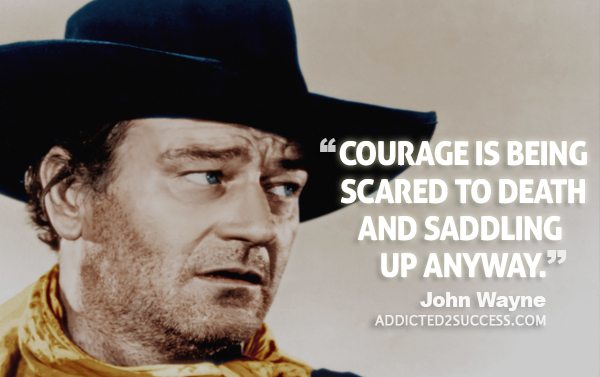
1. “Courage is being scared to death… and saddling up anyway.” – John Wayne
2. “Tomorrow is the most important thing in life. Comes into us at midnight very clean. It’s perfect when it arrives and it puts itself in our hands. It hopes we’ve learned something from yesterday.” – John Wayne
3. “A man deserves a second chance, but keep an eye on him.” – John Wayne
4. “All battles are fought by scared men who’d rather be some place else.” – John Wayne
5. “I won’t be wronged. I won’t be insulted. I won’t be laid a hand on. I don’t do these things to other people and I require the same from them.” – John Wayne
6. “I have tried to live my life so that my family would love me and my friends respect me. The others can do whatever the hell they please.” – John Wayne
7. “When you stop fighting, that’s death.” – John Wayne
8. “I’m the stuff men are made of.” – John Wayne
9. “A man’s got to have a code, a creed to live by.” – John Wayne
10. “I define manhood simply: men should be tough, fair, and courageous, never petty, never looking for a fight, but never backing down from one either.” – John Wayne
11. “I’m responsible only for what I say, not what you understand.” – John Wayne
12. “What’s the secret of success? Right decisions. How do you make right decisions? Experience. How do you get experience? Wrong decisions.” – John Wayne
13. “When you come against trouble, it’s never half as bad if you face up to it.” – John Wayne
14. “I’d like to know why the well-educated idiots keep apologizing for lazing and complaining people who think the world owes them a living.” – John Wayne
15. “Life is tough, but it’s tougher if you’re stupid.” – John Wayne
16. “Tomorrow hopes we have learned something from yesterday.” – John Wayne
17. “If everything isn’t black and white, I say, ‘Why the hell not?’” – John Wayne
18. “Everybody that I was in school with had an uncle or father in the law, and I started to realize that I was going to end up writing briefs for about ten years for these fellows who I thought I was smarter than. And I was kind of losing my feeling for that.” – John Wayne
19. “The worst part of it has been, I think, the adverse effect on family life. It kills off family conversation. And it’s harder to get your children to read books. I became a confirmed reader when I was growing up in Glendale. I’ve loved reading all my life. Now I’ve got this daughter, Aissa, a very bright young lady — but it is a hard job to get her to read. Television’s just too easy.” ― John Wayne
20. “I’m not the sort to back away from a fight. I don’t believe in shrinking from anything. It’s not my speed; I’m a guy who meets adversities head on.” – John Wayne
21. “I suppose my best attribute, if you want to call it that, is sincerity. I can sell sincerity because that’s the way I am.” – John Wayne
22. “Talk low, talk slow and don’t say too much.” – John Wayne
23. “Real art is basic emotion. If a scene is handled with simplicity – and I don’t mean simple – it’ll be good, and the public will know it.” – John Wayne
24. “I was sure I’d set the world on fire, and it was hard for a young feller like me to realize the truth – that I hadn’t set the world on fire, and I was totally unprepared to handle the consequences if ‘The Big Trail’ had been a success and launched me as a star.” – John Wayne
25. “All I’m for is the liberty of the individual.” – John Wayne
26. “In westerns, you meet a hardy bunch of characters. There is no jealousy on such pictures.” – John Wayne
27. “I’d read up on the history of our country and I’d become fascinated with the story of the Alamo. To me it represented the fight for freedom, not just in America, but in all countries.” – John Wayne
28. “When you come to see a picture of mine, I want you to know that I’m not going to do anything that will make you uncomfortable. I want you to know that you won’t be disappointed in me.” – John Wayne
29. “I never have really become accustomed to the ‘John.’ Nobody ever really calls me John… I’ve always been Duke or Marion or John Wayne. It’s a name that goes well together, and it’s like one word – John Wayne.” – John Wayne
30. “All the screen cowboys behaved like real gentlemen. They didn’t drink, they didn’t smoke. When they knocked the bad guy down, they always stood with their fists up, waiting for the heavy to get back on his feet. I decided I was going to drag the bad guy to his feet and keep hitting him.” – John Wayne
31. “Nothing is so discouraging to an actor than to have to work for long hours upon hours in brightly lighted interior sets.” – John Wayne
32. “I was ashamed to admit I was hipped to the idea of acting. That’s why I started in with the props.” – John Wayne
33. “Nobody should come to the movies unless he believes in heroes.” – John Wayne
34. “In my acting, I have to identify with something in the character. The big tough boy on the side of right — that’s me.” – John Wayne
35. “Never apologize and never explain – it’s a sign of weakness.” – John Wayne
36. “You’re short on ears and long on mouth.” ― John Wayne
37. “I’ve always followed my father’s advice: he told me, first to always keep my word and, second, to never insult anybody unintentionally. If I insult you, you can be goddamn sure I intend to. And, third, he told me not to go around looking for trouble. ” ― John Wayne
38. “A man’s got to do what a man’s got to do.” ― John Wayne
39. “A goal, a love and a dream give you total control over your body and your life.” ― John Wayne
40. “I would like to be remembered, well … the Mexicans have a phrase, “Feo fuerte y formal”. Which means he was ugly, strong and had dignity.” ― John Wayne
41. “A man who won’t stand for what he believes isn’t a man!”― John Wayne
42. “Life is getting up one more time than you’ve been knocked down.” ― John Wayne
43. “A man ought to do what he thinks is right.”― John Wayne
44. “A goal, a love, and a dream give you total control over your body and your life.”― John Wayne
45. “Get off your butt and join the Marines.”― John Wayne
46. “There’s right and there’s wrong. Y’gotta do one or the other, do the other and you may be walking around, but you’re dead as a beaver hat.”― John Wayne
47. “Hurry it up. We’re burning daylight!”― John Wayne
48. “You can take everything a man has as long as you leave him his dignity.” ― John Wayne
49. “Life is hard; it’s harder if you’re stupid.”― John Wayne
What’s your favorite John Wayne quote? Share it with us below!













You can want a thing with your whole chest and still starve it.
You set the goal. You mean it. Then you stall, pick a fight, miss the easy follow-up, stay up too late, or research one more week. From the outside it looks like laziness. From the inside it feels like weather. You watch yourself do it and still cannot name why.
That is self-sabotage. Not a mysterious curse. Not proof you are unserious. It is when your behavior stops matching the life you say you want, usually to protect you from a feeling you have not agreed to face.
You probably even ask yourself sometimes: “Why do I self sabotage?“.. I know I have before.
Carl Jung put the whole problem in one line: until you make the unconscious conscious, it will direct your life and you will call it fate.
What self-sabotage actually is
Psychology writers have defined it as destroying your own best intentions. Useful, but incomplete.
The more accurate version for a high performer is this:
You want the outcome.
You also want to avoid what the outcome might cost you.
Those two wants run at the same time. The second one usually wins, because humans work harder not to lose something than to gain something.
The cost is rarely the work itself. It is visibility. Responsibility. Being judged. Being left. Being found average. Being the person who finally has no excuse.
So you create a story that lets you fail on your terms.
You stay out instead of preparing, then say the timing was wrong.
You pick a fight when the relationship gets close, then say it was never going to work.
You delay the offer, the launch, the conversation, then call it strategy.
That is not random. That is control. Sinking the ship yourself hurts less than watching someone else do it.
The loop that nets you out to zero
Most people do not sabotage in one dramatic collapse. They do it in a loop that returns them to zero.
Trigger. A deadline. A win. A compliment. Silence from someone you care about. Success getting close enough to feel real.
Escape. Scroll. Plan instead of ship. Train for the wrong thing. Drink. Clean the house. Start a new system. Pick the fight.
Relief. It works. That is why you keep it. The discomfort drops for an hour.
Shame. You know who you are capable of being. You just were not that person. The gap becomes the next trigger.
This is why a good week can vanish in one night. Diet, money, marriage, content, pipeline — same math. Green progress, red undo, back to even. If you only fight the escape, you miss the trigger. If you only fight the shame, you miss that shame is now fueling the next round.
High performers get a special version of the trigger: things going well. A new client. A relationship that is actually kind. A body of work that might get seen. The nervous system reads “more exposure” as danger, even when your mouth is asking for it.
Why smart people do this
You do not need a new personality. You need a better diagnosis.
Your actions are matching an old belief.
If the playlist in your head is “I don’t finish things” or “I don’t deserve this,” your behavior will try to prove the playlist right. Consistency feels safer than being wrong about yourself.
You would rather control the loss.
Procrastination and over-control often sit on the same fear. If I never really try, failure is incomplete. Incomplete failure is easier to live with than a clean attempt that still falls short.
You do not trust yourself with the next level.
Not “I can’t do the work.” More like “I can’t handle what the work will ask of me.” More eyes. More decisions. More people depending on you. The goal is attractive. The identity required by the goal is not.
You want two things that cannot both stay.
A business and total anonymity.
A relationship and total freedom.
Money and zero rejection.
Growth and zero discomfort.
That is a competing commitment. One foot on the gas, one on the brake. You will call it a discipline problem because discipline is less humiliating to admit than fear.
The familiar feels like safety.
Under stress the brain overvalues what it already knows. Old habits are not chosen because they work. They are chosen because they are known. That is why you go back to the same stall when the pressure rises.
An old survival strategy is still on the clock.
Some of this started as intelligence. People-pleasing kept the peace. Silence kept you from being shamed. Quitting first kept you from being left. The child who learned that was not stupid. The adult still running that program will sabotage a raise, a boundary, a breakup, a launch — because risk once meant harm.
You do not have to use “inner child” language if it makes you roll your eyes. Call it the part of you that still thinks the present is the past. Same problem.
Stop hunting for a forever fix
Anybody who promises to “eliminate self-sabotage forever in 30 minutes” is selling relief. The pattern can lose its grip. It does not vanish because you understood it once.
You interrupt it the same way you build anything else that lasts: see it, tell the truth about what it is protecting, then keep small promises until your system believes you.
1. Name the win you keep undoing
Be specific. Not “I sabotage my life.”
- I do not publish.
- I pick fights when things get good.
- I spend the margin I just made.
- I over-research and under-ship.
- I say yes when I mean no.
Write the last three times it happened. What was going well right before? What feeling showed up in the body first — tightness, heat, fog, urgency? The feeling is the trigger. The behavior is the painkiller.
2. Write the competing commitment
Two columns.
I want: the goal.
I also don’t want to lose: safety, image, privacy, the excuse, the identity of the hungry underdog, the right to disappear.
Stay there until the second column gets honest. “I’m afraid I’ll be seen and found average” is more useful than “I need a better planner.”
The brake is usually in column two.
3. Ask what success would cost you
This is the question people skip because it sounds ungrateful.
If this works, what gets heavier?
Who might judge you?
What would you have to sustain?
What version of you would have to die?
A lot of sabotage is not fear of failure. It is fear of a life you do not yet trust yourself to hold.
You do not beat that by chanting that the next level will be easy. You beat it by deciding you can be a beginner in public, visible without being finished, responsible without being flawless.
4. Keep your word on something small enough to be undeniable
Self-trust is the quiet engine under all of this.
If you do not keep the small agreements, you will not believe the large ones. Then every goal feels like a performance you are going to blow, so you blow it early.
Pick three avoided actions that actually serve the goal. Do them today. Not ten. Three. Then repeat tomorrow.
Forgive the old betrayals without making them a personality. You were working with the awareness you had. That sentence is not an excuse to keep the pattern. It is how you stop using yesterday as evidence that you cannot be trusted today.
5. Change the room before you lecture the man in the mirror
Some of this is psychology. Some of it is the fridge, the phone, the job, the group chat.
If the sugar is in the house, you will meet it at 11 p.m.
If the app is on the home screen, you will meet it when the work gets sharp.
If the room you work in rewards the old identity, the old identity will keep clocking in.
Inner work matters. So does removing the easy door.
6. Do it before you feel ready
Waiting to feel confident is one of the cleanest disguises sabotage wears.
You do not need to feel like a closer to make the call. You do not need to feel inspired to ship the draft. Feeling ready is often the prize you get after the reps, not the ticket in.
Do it scared. Do it tired. Do it without the speech. The work is the proof. The proof is what lowers the shame. Lower shame means fewer triggers. That is how the loop starts to starve.
What this is not
This is not a claim that every stall is trauma. Sometimes you are tired. Sometimes the goal is wrong. Sometimes you need sleep, a better offer, or a different environment.
It is also not a moral verdict. Shame is already in the loop. Adding more does not make you disciplined. It makes you due for another escape.
And it is not something you outgrow by becoming more intense. Intensity without honesty just gives the pattern better tools.
The turn
You are not being punished. You are being shown a split.
One part of you wants the life.
One part of you wants to stay unexposed.
Both think they are helping.
The work is to stop calling the second part fate. Look at it. Decide what it is allowed to protect and what it is no longer allowed to run. Then take the next honest action while it is still talking.
That is how self-sabotage loses the steering wheel. Not in a speech. In a man who can want the thing and still walk toward it when the old protection strategy starts to panic.
I also recorded a video for you on how to stop being indecisive as this leads you to self sabotage and stop you from making money:


For people in Nashville considering recovery, treatment can involve much more than addressing one immediate problem. Substance use can affect physical health, emotional well-being, relationships, daily routines, sleep, nutrition, and the ability to manage stress. A holistic approach recognizes these connections rather than viewing recovery through a single lens.
This does not mean replacing medical care or evidence-based therapy with wellness trends. Instead, holistic recovery can combine professional treatment with supportive practices that help individuals rebuild healthier patterns across different areas of life.
From mindfulness and movement to nutrition and social connection, a broader approach can help make recovery about building a sustainable life rather than simply leaving an unhealthy behavior behind.
Combine Clinical Treatment With Whole-Person Support
Effective recovery begins with understanding the individual’s circumstances. Substance use patterns, mental health, physical condition, family relationships, living environment, and previous treatment experiences can all influence what type of support is appropriate.
For individuals looking for structured treatment alongside broader wellness approaches, APEX Recovery Nashville provides access to programs that combine evidence-based treatment with holistic therapies. Its treatment options serving the Nashville area include different levels of care and approaches such as cognitive behavioral therapy, dialectical behavior therapy, mindfulness, art therapy, and trauma-informed care.
The important principle is integration. Meditation or yoga should not be expected to perform the work of clinical treatment, just as therapy does not eliminate the importance of physical well-being. Different forms of support can address different aspects of recovery.
Rebuild Physical Health Gradually
Recovery can provide an opportunity to reconnect with physical health, particularly when previous routines have become inconsistent.
Movement is one useful starting point. Walking, stretching, yoga, strength training, or recreational activities can introduce structure while providing healthy ways to use time. Exercise plans should reflect individual fitness, medical circumstances, and professional recommendations rather than beginning with unrealistic expectations.
The temptation to overhaul every habit immediately can create unnecessary pressure. Sustainable improvement usually develops through manageable changes repeated consistently.
Basic healthcare should also remain part of the picture. Routine appointments can help individuals address physical concerns that may have been neglected.
Holistic recovery is not about achieving perfect health overnight. It is about gradually developing routines that make caring for the body an ordinary part of everyday life.
Give Nutrition a Practical Role
Nutrition is sometimes presented in wellness culture as though one diet can solve nearly every problem. Recovery requires a more realistic approach.
Regular, balanced meals can help reintroduce predictable structure to the day. Depending on individual needs, meals can include vegetables, fruits, whole grains, appropriate protein sources, and healthy fats while providing sufficient energy.
Hydration deserves attention too.
People with medical conditions, dietary restrictions, or nutritional deficiencies may need individualized professional advice rather than generic meal plans.
The broader goal is consistency. Learning to shop for food, prepare simple meals, and eat at reasonably regular times can become part of rebuilding independent daily routines.
Food can also have a social dimension. Preparing or sharing meals with supportive people can create connection without making every gathering revolve around old habits.
Nutrition supports recovery most effectively when it becomes sustainable rather than restrictive.
Make Sleep Part of Recovery
Sleep and emotional well-being can influence one another, making rest an important part of holistic health.
Establishing consistent sleeping and waking times may help create structure. A comfortable bedroom, manageable temperature, reduced nighttime noise, and fewer unnecessary distractions can also support a healthier routine.
Evening habits deserve consideration.
Scrolling through a phone until early morning or maintaining an irregular schedule can make consistent rest harder. A simple wind-down routine can provide a clearer transition between daytime responsibilities and bedtime.
Persistent sleep problems should be discussed with an appropriate healthcare professional rather than automatically treated with supplements or internet remedies.
Recovery can already involve significant physical and emotional adjustment. Making adequate rest a priority gives the body and mind an opportunity to recover from everyday demands while supporting the routines being developed elsewhere.
Develop Healthier Responses to Stress
Removing substances does not remove stressful situations.
Work problems, relationship conflicts, financial pressures, grief, and ordinary frustrations still exist, which makes developing healthier coping strategies an important part of recovery.
Different techniques work for different people. Some find mindfulness or meditation useful, while others prefer exercise, creative activities, journaling, breathing exercises, or spending time outdoors.
Holistic treatment programs often incorporate mindfulness and other complementary practices alongside conventional treatment rather than using them as substitutes for it. The purpose is not to eliminate uncomfortable emotions.
Instead, individuals can learn to recognize stress and respond without automatically returning to old patterns. Practicing coping strategies while professional support is available can also make those techniques more familiar when challenging situations eventually occur outside treatment.
Strengthen Meaningful Social Connections
Recovery rarely happens entirely alone.
Supportive relationships can provide encouragement, accountability, companionship, and practical assistance during difficult periods. At the same time, recovery may require reconsidering relationships strongly connected with previous substance use.
Building a healthier social environment takes time.
Group therapy and peer support can introduce connections with people who understand some of the challenges involved. Family involvement may also be useful when appropriate and professionally guided.
Outside formal treatment, connection can develop through hobbies, volunteering, exercise, community activities, or simply spending regular time with supportive friends and relatives.
Quality matters more than having an enormous social circle.
A few dependable relationships can provide considerably more support than many connections built around unhealthy routines. Holistic wellness recognizes social health as part of overall well-being rather than treating relationships as separate from recovery.
Rediscover Interests and Personal Identity
Substance use can gradually consume time and attention that once belonged to hobbies, ambitions, relationships, or personal interests.
Recovery creates room to rediscover those parts of life.
Creative activities can be particularly valuable for some individuals. Painting, music, writing, woodworking, gardening, cooking, and similar pursuits provide constructive ways to spend time while offering opportunities for expression and accomplishment.
Others may find meaning through education, career development, spirituality, volunteering, or physical challenges.
There is no requirement to discover a profound new passion immediately.
Sometimes recovery begins with simply trying activities and noticing what feels enjoyable or meaningful. Treatment approaches incorporating art therapy and mindfulness reflect the broader idea that emotional expression and self-awareness can complement clinical recovery work.
Building an identity around interests and values can help make life beyond treatment feel fuller.
Build Wellness Habits That Last Beyond Treatment
Structured treatment can provide a supportive environment, but eventually recovery must continue within everyday life.
That transition makes sustainability important.
A wellness routine should be realistic enough to survive busy workdays, family responsibilities, financial limitations, and periods of low motivation. Someone who creates a complicated schedule requiring hours of daily self-care may struggle to maintain it once ordinary responsibilities return.
Focus instead on a few dependable foundations.
Regular sleep, reasonable nutrition, movement, therapy or other continuing professional care when appropriate, supportive relationships, and practical stress-management strategies can provide structure without making wellness another full-time job.
Continuing care may involve outpatient treatment, peer support, counseling, medication management, or other services based on individual needs. The Nashville-area treatment options include multiple levels of care, including residential, partial hospitalization, intensive outpatient, and outpatient services, reflecting how recovery support can change over time.
Holistic wellness ultimately works best when it remains grounded in reality. Recovery is not about becoming perfectly calm, fit, productive, or emotionally unaffected by life’s difficulties. It is about developing healthier ways to respond to those difficulties.
Professional treatment can provide the clinical foundation, while nutrition, movement, sleep, mindfulness, relationships, and meaningful activities can strengthen everyday well-being. Together, these elements can help individuals build a recovery experience focused not only on what they are moving away from, but also on the healthier and more sustainable life they are working toward.

Social skills influence how children enter play, answer questions, share materials, follow group routines, and express discomfort. Applied Behavior Analysis, or ABA, teaches these behaviors through observable goals, repeated practice, timely feedback, and positive reinforcement. Instruction often begins in a quiet setting before moving into family routines, classrooms, playgrounds, and community activities. Consistent teaching helps children communicate needs, manage interactions, and take part in ordinary activities with greater independence.
Building Skills Through Real Situations
Families seeking ABA therapy in Park Ridge, IL, often need care that connects clinical instruction with home, school, and community routines. A thorough assessment examines communication, peer contact, responses to change, play behavior, and participation in shared tasks. The clinical team can then select measurable goals, such as greeting another person, waiting briefly, requesting assistance, or answering a basic question during familiar interactions. Practical targets make progress easier to observe and apply into daily routines.
Teaching Communication With Purpose
Communication supports nearly every social exchange. A therapist may teach speech, gestures, picture use, or communication-device responses, depending on the child’s abilities and needs. Practice can include requesting a turn, answering “who” or “what” questions, gaining attention appropriately, and ending an interaction.
Each skill receives a clear cue and repeated opportunities. Useful attempts receive immediate feedback, allowing the child to connect an effective response with a successful outcome.
Practicing Turn-Taking and Sharing
Turn-taking involves several behaviors that children may need to learn separately. A child must notice another person, remain near the activity, wait, and respond when participation becomes available. ABA instruction can divide this sequence into smaller steps.
Structured Practice
Blocks, puzzles, bubbles, and simple board activities create predictable chances to share materials. A therapist may begin with a brief waiting period, then gradually extend it. Visual cards, timers, and spoken reminders provide temporary support while the routine becomes familiar.
Progress can be measured by completed turns, waiting duration, and the number of prompts required during each activity.
Supporting Peer Interaction
Many children benefit from direct instruction before peer contact becomes comfortable. Therapists can model greetings, joining a game, inviting another child to participate, and responding to a classmate’s idea. Role-play allows rehearsal before those behaviors occur with siblings, classmates, or neighborhood peers.
Sessions may include cooperative play, imitation exercises, and short conversation exchanges. Goals remain functional, such as staying in shared play for five minutes or answering three comments from another child.
Strengthening Flexibility During Routines
Daily activities rarely follow an identical pattern. A substitute teacher, canceled outing, crowded store, or different meal may cause distress. Therapy can prepare children for these events through gradual exposure, visual schedules, and clear explanations.
A child might first accept a minor change during a preferred game. Later, that response can transfer to dressing, transportation, classroom assignments, or family errands. Reinforcement supports flexible behavior without dismissing genuine discomfort.
Generalizing Skills Beyond Therapy
A social behavior has more value when a child can use it with different people, materials, locations, and instructions. Therapists therefore vary practice conditions rather than relying on one repeated script.
Home and Community Practice
Caregivers may rehearse greetings during errands, while waiting for food to be prepared, or when requesting help with a household task. Teachers can reinforce similar responses during group lessons. Shared wording helps children recognize expectations across adults and locations.
Data from these settings can reveal whether a skill remains effective outside the clinic. If progress slows, the team can adjust prompts, reinforcement, timing, or task difficulty.
Partnering With Families
Family participation connects clinical goals with actual routines. Caregivers can describe morning preparation, sibling play, meals, homework, transportation, and public activities. Those observations help therapists choose targets that matter to the child and household.
Training may address prompt use, reinforcement, visual schedules, and responses to challenging behavior. Short practice periods often fit more easily into busy routines than lengthy exercises. Regular communication also helps adults recognize gradual gains that may otherwise receive little attention.
Measuring Meaningful Progress
Reliable measurement keeps social goals concrete. A team may record how often a child initiates contact, follows a direction, waits, answers, or remains engaged. Prompt levels can show whether independence is increasing.
Progress does not require perfect performance in every setting. A child may first greet a parent, then a therapist, and later a classmate. Each successful transfer provides evidence that learning is becoming functional.
Conclusion
ABA therapy can help children develop social behaviors that support friendships, classroom participation, family routines, and community involvement. Effective instruction uses practical goals, repeated opportunities, careful observation, and caregiver participation. Requesting help, waiting, sharing, coping with frustration, and joining play can develop through small, measurable steps. Consistent guidance gives children more chances to communicate clearly, participate safely, and build positive relationships throughout daily life.

You likely have a million-dollar idea entirely trapped inside your nervous system right now.
But here is the harsh reality: million-dollar ideas are completely useless without a million-dollar embodiment and a regulated nervous system to execute them. If you feel separated from your dreams, stuck in endless planning loops, or constantly playing out self-sabotaging behaviors, the problem isn’t a lack of talent or strategy. The problem is that you are trying to operate from a baseline of survival.
Most creatives and ambitious entrepreneurs learn very early to superimpose stress directly on top of their creativity. Whether it was tight school deadlines, harsh early criticism, or the pressure to prove your worthiness through your output, what once started as a pure, flowing, somatic experience turns into a highly pressurized, heady mental exercise. We start to intellectualize our creativity, mistakenly believing that ideas live exclusively in our minds.
They don’t. Ideas are somatic. They are energetic downloads that require an open, regulated nervous system to receive and execute them. Here is exactly how to stop creating from stress and start unlocking the deep, vital creativity required to scale your life and business.
The Myth of the Hustle Crunch
We all know the drill: you wait until the last minute, procrastinate, and then crunch aggressively for 48 hours straight to hit a deadline. Sure, the project gets done. We can absolutely squeeze a lot of output out of our systems through sheer stress.
But at what cost?
Creating purely from stress is entirely unsustainable. The energetic signature of that stress doesn’t just evaporate when the project is done; it gets directly encoded into the work. It doesn’t matter if you are building a SaaS product, designing a beautiful piece of furniture, or writing a sales page—the end product holds the signature of your fried nervous system.
When you operate strictly from this activated survival state, you fry your adrenals, ruin your sleep, destroy your digestion, and disconnect from your relationships. True, effortless creativity cannot survive here.
The Power of the Ventral Vagal State
True creativity comes from what is called your ventral vagal state. This is a specific aspect of your parasympathetic nervous system—the exact opposite of the “fight or flight” survival response. It is the “rest and digest” state where your body finally feels safe enough to take care of itself and repair.
When you practice returning to this state frequently, you gain access to higher functions. In this state, social connection, openness, and deep flow become readily available. This is the place where you can articulate your vision effortlessly and remain entirely present. In the ventral vagal state, there is absolutely no fear or scarcity.
A 3-Step Roadmap to Unfurl Your Nervous System
To get those million-dollar ideas unstuck, you must actively clear the tension where they are trapped.
- Acknowledge the Stress Patterns (Step Zero) You must first realize and admit that you have been creating from a place of stress, activation, and survival. Awareness is the foundational step to change.
- Pause, Regulate, and Unfurl You must intentionally slow down. Through deep breathing and curbing your distractions, you allow your nervous system to “unfurl.” You will suddenly start to notice the physical tension you carry—perhaps you are constantly squeezing your hips, clenching your pelvic floor, or grinding your jaw (which is where 90% of people hold their tension).
As you relieve this physical tension through touch and stretching, the trapped emotions will begin to surface. You might feel frustration, uncelebrated grief, or old shame. This is exactly where your potential is trapped.
- Get Deeply Curious When these emotions surface, do not bounce your awareness back up into your head to try and “solve” them logically. Meet these places with curiosity and acceptance. Every fear and every piece of tense, awkward emotional work holds a seed of massive potential. Liberating these feelings in your body is what ultimately clears your system, leaving you free, empowered, and incredibly grounded.
Devotion Over Discipline
Once your nervous system is regulated, it is time to create. But instead of relying on the typical definitions of hustle and willpower, you need to cultivate something much deeper: Devotion.
Devotion is a profound connection with your integrity and a willingness to show up consistently, even when it’s hard. It is making a practice to create from depth—which simply means being intensely present and connected to yourself and the moment.
Set a ritual. Maybe it’s moving your body and journaling for 20 minutes every morning, or sitting down to write at 9:00 AM sharp every day. Let it be a somatic, feel-good experience. Do not squash the creativity by putting too much immediate mental pressure on the outcome; you can always come back and edit later.
The roadmap is incredibly simple, but it is not easy. You have to learn how to hold yourself upright through massive emotional experiences without falling apart or running back to the familiar comfort of stress. If you want to build a truly great, million-dollar life that continually builds upon its own systems, you must stop operating from survival and start creating from a fully regulated, devoted state.
Here’s a great video by Kev Vanderzel on how to you can Build a Million Dollar Nervous System, watch your career explode

The Psychology of Letting Go: Why Founders Who Delegate Win

I Kept Every Customer in My Phone and Called It Being Personal

I Kept the Books in My Head Until the Number Scared Me. That Is Not Bookkeeping.

I Did Not Switch Hosts When the Theme Update Wrecked the Site. I Learned What the Host Is For.

How Los Angeles Companies Use Custom Software to Scale Operations

5 Ways For Startups To Succeed Making Acquisitions

77 Inspirational Quotes That Will Change Your Life
57 Memorable Kobe Bryant Quotes

(Images) 52 Motivational Picture Quotes For An Epic Year Of Success

40 Rare Motivational and Inspirational Picture Quotes

3 Prince EA Videos To Change Humanities Path To Greatness

(Video) What Is Success? An Entrepreneurial Story To Inspire You

(Inspirational Video) What If Today You Knew You Were Going To Take Your Last Breath?

How To Make Enough Money From A Blog To Quit Your Job – Kate McKibbin

How Finding Your Passion And Becoming An Entrepreneur Can Lead To Happiness – Chiquita Searle
-

 Life2 years ago
13 Meaningful Ways to Show Someone They Matter
-

 Life2 years ago
The 5 Stages of a Quarter-Life Crisis & What You Can Do
-

 Did You Know1 year ago
7 Surprising Life Lessons Video Games Taught Me That School Never Did
-

 Success Advice1 year ago
Stephen Covey’s 8 Leadership Habits That Will Change How You Lead Forever
-

 Life1 year ago
How to Stop the War in Your Head and Find Peace
-

 Featured2 years ago
The Psychology of Motivation: How to Keep Moving Forward Every Day
-

 Personal Development1 year ago
The Three-Second Pause That Changes How People Perceive You
-

 Explode Your Social Media1 year ago
Want More Views? Master These 6 YouTube Growth Tactics