
Change Your Mindset
27 Inspirational Celebrity Quotes


Here is a collection of nice and inspiring quotes from some of our most well loved celebrities on the big screen.
Most hollywood celebrities have risen to the peak of their field through hard work, sacrifice and dedication, earning a little wisdom along the way.
Inspirational Actor & Actress Quotes

“Life is very interesting… in the end, some of your greatest pains, become your greatest strengths.” – Drew Barrymore

I think if you live in a black-and-white world, you’re gonna suffer a lot. I used to be like that. But I don’t believe that anymore. – Bradley Cooper

“I don’t believe in happy endings, but I do believe in happy travels, because ultimately, you die at a very young age, or you live long enough to watch your friends die. It’s a mean thing, life.” – George Clooney

“Be nice to people on the way up, because you may meet them on the way down.” – Jimmy Durante

“It’s never too late – never too late to start over, never too late to be happy.” – Jane Fonda

“You’re only human. You live once and life is wonderful, so eat the damned red velvet cupcake.” – Emma Stone

“Sometimes you can have the smallest role in the smallest production and still have a big impact.” – Neil Patrick Harris

“I don’t say: ‘can’t do that’, ‘won’t do that’. I’ve never thought in that way about work. The genuine truth, and I do think about this a lot, is that I’m one of the least competitive people you’ll ever meet. Except with myself.” – Daniel Craig

“Never worry about bad press: All that matters is if they spell your name right.” – Kate Hudson

“Eventually stardom is going to go away from me. It goes away from everybody and all you have in the end is to be able to look back and like the choices you made.” – Matt Damon
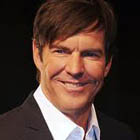
“I was made to be a perfectionist at everything I did. Everything was more important than what I wanted.” – Dennis Quaid


“If you’re the type of person who has to fulfil your dreams, you’ve gotta be resourceful to make sure you can do it. I came out to California when I was 21, thinking my New York credentials would take me all the way. I came back home a year later all dejected and a failure.” – Vin Diesel


“We all keep dreaming, and luckily, dreams really do come true.” – Katie Holmes

“Whatever art form you’re working in, it’s crucial to see it clearly, to feel it clearly, and not to worry about the results, or how someone else will see it.” – Omar Epps

“Overcome the notion that you must be regular. It robs you of the chance to be extraordinary.” – Uta Hagen


“A lot of people give up just before they’re about to make it. You know you never know when that next obstacle is going to be the last one.” – Chuck Norris

“He who has the gold makes the rules.” – Tyler Perry

“As a young man I prayed for success. Now I just pray to be worthy of it.” – Brendan Fraser


“The minute that you’re not learning I believe you’re dead.” – Jack Nicholson

“I care about the connection with the audience. Film is such a powerful medium. Movies can change the way people think.” – Nicolas Cage

“There are no regrets in life. Just lessons.”- Jennifer Aniston

“Life’s tough, but it’s tougher when you’re stupid.” – John Wayne








There is a dark cycle that most high achievers in our fast paced society are quietly trapped in.
You spend your weekdays running on adrenaline, caffeine and pressure. Then, when the weekend hits, you turn to distractions to numb the exhaustion. You drink, you smoke, you eat heavy comfort foods, you scroll endlessly, or you get high just to escape your own head. But the escape comes with a heavy price tag: splitting hangovers, wasted Sundays, and a sickening feeling in your gut that you are leaving massive potential on the table.
For years, I lived that exact cycle. But over the last three years, I aggressively audited my life. I quit the alcohol, the weed, the nicotine, and the mindless consumption.
I didn’t do it to be self-righteous. I did it because I realized those vices were just clever cover-ups for the uncomfortable reality hiding beneath the surface: I lacked true emotional control. When you strip away the distractions, you are forced to confront who you actually are.
To bridge the gap between where I was and the elite level I wanted to operate at, I studied the psychological frameworks of ancient warrior… specifically the samurai and adapted them for the modern entrepreneur. I built a system designed to maintain peak focus, effortless balance, and ruthless execution.
If you are ready to stop being reactive to the world around you and build a bulletproof presence, here are the six pillars of the modern samurai mindset.
1. Master the Art of Stillness (Say)
In a traditional samurai duel, everything is decided in a fraction of a second. If a warrior’s focus flickers for even 0.1 seconds, they lose.
In Japanese culture, we call this absolute immobility Say (stillness). Western business culture is incredibly proficient in movement—the grit, the hustle, the loud display of force. But the ultimate threat to a warrior (and an entrepreneur) is Ski—a microscopic gap in your breathing or a sudden lapse in attention that gives an opponent an opening.
In modern business, your Ski is procrastination, panic, and digital distraction. A moment of reactive anger can destroy a negotiation or kill a brilliant strategy. To master stillness, you must train your mind to sit with its own emptiness. This requires 20 to 30 minutes of deep, device-free reflection or meditation every single day. When you can sit in a room alone with your thoughts without needing to reach for your phone, you develop an emotional shock absorber. The market can crash, but your core remains entirely unmoved.
2. Practice Radical Non-Resistance (Nagas)
Nagas means to flow. In physical martial arts, it is the act of never meeting force with force; instead, you absorb your opponent’s momentum and let it slip harmlessly past you.
Imagine standing deep in a rushing river. If you lock your legs and fight the current, the water slams into you with immense pressure. You exhaust yourself just trying to stay upright. But if you lift your feet and float, you become one with the current, moving effortlessly.
The river is your startup. The current represents criticism, toxic clients, economic stress, and unforeseen setbacks. The more you emotionally resist these realities, the more rational thinking you lose. When a negative event hits you, don’t fight it emotionally. Observe it like an outsider, analyze the data, and execute the logical next step.
3. Forge a Dual-Engine Discipline
Discipline is the ultimate architect of self-worth. But true discipline requires two distinct engines: one for the mind, and one for the body. If you only train your intellect, your weapon is incomplete.
-
For the Body: Push your physical boundaries daily. Lift heavy weights, run when you don’t want to, take freezing cold showers, or sit in an intense sauna. This teaches your physiological nervous system to remain calm under extreme stress.
-
For the Mind: Learn to control your deepest biological impulses, specifically your dopamine cravings. Stop opening social media the second you feel bored.
When you conquer your own internal temptations, your energetic presence shifts completely. People will literally feel your authority, your gravity, and your calmness before you even open your mouth to speak.
4. Achieve the Mind of No-Mind (Mushin)
In high-stakes environments, the greatest enemy to execution is overthinking. The samurai called the ideal psychological state Mushin—translated literally as “the mind without mind.”
When a master swordsman enters a battle, they are not consciously planning their next movement or worrying about failure. Their mind is a mirror: it simply reflects the reality of the moment and acts automatically.
Most entrepreneurs fail to accomplish their goals because they are paralyzed by internal dialogue. They analyze a business plan for months, rewrite an email ten times, or wait for the “perfect” moment to launch. This mental chatter is just fear disguised as preparation. Mushin is the practice of closing the gap between thought and execution. When you know what needs to be done, eliminate the debate. Act immediately and let your training take over.
5. Maintain Unbroken Awareness (Zanshin)
Zanshin is the state of continuous, relaxed alertness. Even after a samurai defeated an opponent, they never dropped their guard to celebrate; they remained completely present, balanced, and prepared for the next threat.
In our current world, society suffers from a massive crisis of fragmented attention. Founders hit a major revenue milestone, get comfortable, drop their guard, and immediately get outpaced by a hungrier competitor.
By practicing Zanshin, you consciously choose to live outside the post-success slump. Pay absolute attention to your environment. Notice the body language of the people in your meetings. Listen to the subtle shifts in tone when your partners speak. When you cultivate unbroken awareness, you anticipate risks before they destroy your progress.
6. Embrace Your Battle Scars (Kintsugi)
When you choose to quit your vices and live a highly disciplined life, you will inevitably look back at your past with a degree of pain. You might think about the money you burnt, the failed businesses, or the relationships you damaged while distracting yourself.
The Japanese art of Kintsugi involves repairing broken pottery with lacquer dusted with powdered gold. Instead of hiding the fractures, the artisan illuminates them, making the repaired object significantly more valuable than it was before it broke.
Your past struggles, your bankruptcies, and the moments you fell into self-sabotage are not things to be ashamed of. They are your golden seams. A person who has never been broken cannot understand the depth of true strength. By owning your past shadows, you transform your old vulnerabilities into fierce, entrepreneurial wisdom.
The Ultimate Control
You cannot always control the battlefield of business. The economy will shift, competitors will attack, and plans will fall apart.
But you can always control the warrior. Strip away the numbing agents, master your stillness, stop resisting the natural flow of life, and ruthlessly commit to the discipline of your mind and body. The world is waiting for your presence.


There is a version of starting out that most young people know well. The hand-me-down couch that came from a friend’s parents. The mattress on a frame that wobbles. The spare air mattress rolled up in the closet for the occasional guest, slowly losing air through the night. The plan was always to upgrade later, once things were more settled, once money was less tight, once life felt less temporary.
For a lot of people, later never comes. The temporary setup becomes the permanent one by default.
The decisions you make about how you set up your first real space, including what you buy, what you skip, and what you prioritize, are early signals about how you think about value, longevity, and yourself.
The Real Cost of the Cheap Approach
There is a number that gets ignored when young people furnish apartments on the cheap: replacement cost. A sofa bought for $300 that lasts 12 months before the frame collapses or the fabric pills and stains beyond recovery costs more over five years than a $900 piece that holds up through all of it. The cheap version also costs in ways that don’t show up on a receipt, including the low-grade frustration of living in a space that feels provisional, and the effort of sourcing, buying, and moving replacement furniture every year or two.
This pattern shows up clearly in the data. The top furniture buying category for both Millennials and Gen Z in 2024 was sofas, which makes sense: a sofa is the piece that anchors how a living space feels and functions. And yet the same generations are increasingly vocal about a shift in approach. Consumer research from 2024 found that the “less is more” mindset is growing, with younger buyers favoring durability over quantity and investing in pieces built to last rather than filling a space quickly with things that won’t.
That shift is worth applying deliberately, especially when it comes to the one piece that has the most functional range in a small space: the sleeper sofa.
Why a Small Space Demands Smarter Choices
Millennials and Gen Z together make up 57% of all renters in the U.S., with Gen Z alone adding 6.7 million households to the rental market between 2019 and 2024. Most of those households are in apartments, and apartments in cities, where most young people building careers tend to concentrate, are not getting larger. They are getting smaller and more expensive.
In that context, every piece of furniture has to work harder. A sofa that only functions as a sofa is a luxury in a studio or a one-bedroom. A sofa that also converts into a real sleeping surface for an overnight guest pulls double duty in a way that makes the square footage go further.
A quality sleeper sofa is not just a piece of furniture. In a small apartment, it is a guest room. It is the solution that lets you have a friend stay from out of town without either of you suffering through a night on an air mattress on the floor.
What Intentional Looks Like in Practice
The standard version, a pull-out with a thin mattress folded over a metal bar, has a reputation for being uncomfortable to sleep on and awkward to open. That reputation is accurate for the low-end versions, which are built to hit a price point rather than to perform.
The distinction between that category and a quality sleeper sofa comes down to three things: the mattress, the mechanism, and the upholstery.
A quality pull-out mattress runs at least five inches thick and uses pocket coil or high-density foam construction rather than the thin batting that ships in budget versions. The difference is felt in about the first 30 minutes of a night’s sleep, which is when the bar running across the center of a cheap mattress makes itself known. The mechanism should extend flat and lock without requiring two people and some degree of force to operate. And the upholstery should be chosen for the reality of a piece that gets used daily, not for how it photographs.
Full-grain leather is the right call for a piece that will see this level of use. It does not trap odors or allergens the way fabric does, spills wipe clean from the surface rather than absorbing into the material, and it develops a patina over years of use that makes it look better rather than worn out. For someone in their first real apartment who is buying one sofa that needs to serve them for the next five to seven years through multiple moves and different living situations, leather’s durability advantage over fabric is the most important factor.
The Mindset Shift That Makes This Decision Easier
One of the quieter challenges of early adulthood is learning to make purchases based on long-term value rather than short-term cost. It is a muscle that takes time to develop, because every early financial constraint pushes in the opposite direction.
Spending more on fewer, better things is the more economical approach over any realistic time horizon. Nearly 24.7% of Millennials say they plan to rent indefinitely, and Gen Z is following a similar path as affordability barriers remain high. That means a quality sofa bought at 24 or 26 is not going to sit in one apartment for two years before being replaced by a house full of new furniture. It is going to move with you, through multiple apartments, through different cities, into whatever configuration your life takes for the next decade.
A piece that holds up through that is the economical choice wearing a higher price tag.
Setting the Standard Early
The decisions you make when setting up your first real space have a compounding effect on how you inhabit it. A space that is put together with intention, where the pieces were chosen because they serve a real purpose and are built to last, changes the experience of being in it every day. It signals to yourself that you are not waiting to arrive somewhere before you deserve to live well.
That is not a small thing. Motivation researchers have documented for years that environment shapes behavior, not just the other way around. The space you work in, rest in, and bring people into affects how you think and how you show up. Building that space well from the start, rather than patching it together with whatever is cheapest and closest, is itself a form of investing in the person you are becoming.
The sleeper sofa is one piece, but it represents the broader decision: to buy fewer things of real quality rather than more things that will need replacing. That choice, made early, is one most people look back on without regret.

A profound philosophy often requires a simple metaphor. The following article distills the core teachings of leadership expert Simon Sinek into five actionable rules for developing an “infinite mindset”—a perspective that prioritizes long-term resilience, deep relationships, and meaningful work over short-term burnout.
There are two ways to see the world.
Some people see the thing that they want. Other people see the thing that prevents them from getting the thing that they want.
There is a great story of two lumberjacks. Every morning, they start chopping wood at the exact same time. Every evening, they stop at the exact same time. But every day, one of the lumberjacks disappears for an hour in the middle of the day. Yet, at the end of the day, the lumberjack who took a break always chops more wood than the one who worked straight through.
After months of this, the exhausted lumberjack finally asks, “I don’t understand. Every day you disappear for an hour, and every day you chop more wood than me. Where do you go?”
The other lumberjack smiles and says, “I go home and sharpen my axe.”
If you adopt an infinite mindset, you realize that success is not about how much you can blindly grind out each day. It is about how much you can achieve over the course of a career or a lifetime. You have to take vacations. You have to turn off your phone. You have to sharpen your axe.
Here are five rules to help you find your spark, sharpen your axe, and bring your infinite mindset to life.
Rule #1: See the Bagel, Not the Line
Years ago, a friend and I ran a race in Central Park. At the finish line, a sponsor was giving away free bagels. On one side, volunteers handed out the food; on the other, a massive, snaking line of exhausted runners waited.
I said to my friend, “Let’s get a bagel.” He looked at the crowd and said, “The line’s too long.” I said, “Free bagel?” He shook his head. “I don’t want to wait in line.”
That is when I realized the divide in how people view opportunities. He could only see the line. I could only see the bagels. I walked up to the line, leaned in between two people, reached into the box, and pulled out two bagels.
No one got mad. Why? Because you can go after whatever you want in life, as long as you do not deny anyone else the ability to go after what they want. You don’t have to wait in line. You can break the rules. You can do it your way, as long as you aren’t getting in the way of others.
Rule #2: Be the Last to Speak
Nelson Mandela is universally regarded as one of the greatest leaders in modern history. When asked how he learned to lead, he credited his father, a tribal chief. Mandela remembered two things about his father’s tribal meetings: they always sat in a circle, and his father was always the last to speak.
You will be told your whole life that you need to learn to listen. But the true master skill is learning to be the last to speak.
In boardrooms across the world, leaders walk in and say, “Here is the problem, here is what I think, but I’m interested in your opinion.” By then, it is too late. The room has been biased.
Holding your opinion until everyone else has spoken accomplishes two things:
-
It gives everyone else the feeling that they have been heard and have contributed.
-
You get the immense benefit of hearing all the data and perspectives before you render your final opinion.
Do not nod in agreement or shake your head in disagreement while others talk. Sit, take it all in, ask clarifying questions, and wait your turn.
Rule #3: The Ceramic Cup is Not for You
A former Under Secretary of Defense was invited to speak at a massive conference. He stood on stage holding a cheap styrofoam cup of coffee, went off script, and shared a story.
“Last year,” he said, “I was still the Under Secretary. They flew me here in business class. A car was waiting for me at the airport. They checked me into my hotel, and the next morning, a driver brought me to the backstage entrance where someone handed me a beautiful ceramic cup of coffee.”
He took a sip from his styrofoam cup. “I am no longer the Under Secretary. I flew coach, took a taxi, checked myself in, and walked through the front doors of this venue. When I asked for coffee, someone pointed to a machine in the corner, and I poured it myself into this styrofoam cup.”
His lesson was profound: “The ceramic cup was never meant for me. It was meant for the position I held. I deserve a styrofoam cup.”
As you gain fortune, seniority, and success, people will treat you better. They will open doors and give you free things. Enjoy the perks, but remain deeply humble. Know that they are not meant for you; they are meant for your title. You will always only deserve a styrofoam cup.
Rule #4: Take Accountability (Sometimes, You Are the Problem)
In the 18th century, “purple fever” ravaged Europe and America. Women were dying within 48 hours of childbirth in horrific numbers—in some hospitals, the mortality rate was as high as 70%.
Doctors and men of science were baffled. They would conduct autopsies on the victims in the morning, and then deliver babies in the afternoon. It wasn’t until the mid-1800s that Dr. Oliver Wendell Holmes suggested the unthinkable: the doctors were the ones killing the women because they weren’t washing their hands.
The medical community ignored and mocked him for 30 years. Finally, they realized he was right. When they started washing their hands, the black death of childbirth vanished.
The lesson is harsh but necessary: sometimes, you are the problem. You cannot take credit for everything that goes right in your life if you refuse to take accountability for what goes wrong. If your entire team is struggling, maybe it isn’t them. Maybe it is your leadership.
Rule #5: Learn to Ask for Help
When a former Navy SEAL was asked what kind of person makes it through the brutal BUD/S selection process, he couldn’t answer. But he knew exactly who didn’t make it.
He said the guys with bulging muscles covered in tattoos who wanted to prove how tough they were never made it. The star college athletes who had never been tested to their core never made it.
The ones who made it were often scrawny, sometimes shivering with fear. But when they were physically and emotionally spent, when they had absolutely nothing left in the tank, they somehow found the energy to help the guy next to them.
The world is too dangerous and difficult to conquer alone. Practice asking for help when you are stuck, and immediately accept it when it is offered. When you drop the facade that you have everything under control, you will discover an army of people ready to rush in and support you.
The Bottom Line
Working hard for something we don’t care about is called stress. Working hard for something we love is called passion.
If you want to build a career defined by passion, stop waiting in line. Practice empathy, be the last to speak, ask for help, and remember to always sharpen your axe.
Checkout this video with Simon Sinek about an Infinite Mindset

Over my years of coaching high-achievers, entrepreneurs, and visionaries, I’ve seen people push themselves to the brink of burnout trying to create “abundance.” Recently, I was walking a client through a massive financial block. He had left his corporate job to go all-in on his coaching business, but despite having the skills and the drive, he was hitting a massive wall. Credit cards were maxed out, cash flow was dry, and he was completely paralyzed by procrastination.
On the surface, it looked like a standard business slump. But when we dug into the root causes underneath, we uncovered the exact limiting beliefs that hold 99% of people back from true wealth.
If you are struggling to create financial consistency, it is rarely a strategy problem. It is an internal alignment problem. Here is how to stop sabotaging yourself and finally step into the abundance you deserve.
The “Abundance” Trap: Are You Afraid to Say You Want to Be Rich?
We use safe words like “abundance” or “financial consistency” because deep down, many of us are terrified to say what we actually want: to make a massive amount of money.
If you grew up in a blue-collar household, or were conditioned by society to view wealth suspiciously, you likely carry a subconscious association that having a lot of money means you did something bad to get it. You are allowed to want to “change the world.” You are allowed to want to “help people.” But wanting to be filthy rich? That makes you feel greedy.
When you attach guilt to wealth, your nervous system registers money as a threat. You will unconsciously tighten up, self-sabotage, and create hurdles because your brain thinks protecting your identity as a “good person” is more important than achieving financial freedom.
The Truth: It is completely okay to want wealth. Money is an amplifier of who you already are. You do not need to justify your desire for financial success with a noble cause.
The Value-Love Connection: Why You Feel Undeserving
One of the most dangerous beliefs high-achievers carry is the idea that they must add value or work brutally hard to deserve good things.
Look at the real world. Does the billionaire tech founder work a million times harder than the mechanic at your local tire shop? Of course not. Financial gain is not directly proportional to physical effort. Yet, we tell ourselves, “I haven’t worked hard enough, so I don’t deserve the money.”
This stems from childhood conditioning. Somewhere along the line, you learned that you only receive love, validation, or security when you perform perfectly. You started believing that unless you are adding immense value, you are worthless. That needy, desperate energy repels clients, money, and opportunities.
When you realize that your worth is inherent—whether you show up at 100% capacity or 10% capacity—you stop operating from a place of desperate validation.
The Danger of the “Self-Help To-Do List”
As you dive into personal development, you will experience powerful epiphanies. You will realize you need to “be present,” “stand in your true value,” or “let go of attachment.”
But if you aren’t careful, your ego will turn those beautiful states of being into an exhausting new to-do list.
-
Task 1: Be fully present so I can be happy.
-
Task 2: Stand perfectly in my value so clients will hire me.
-
Task 3: Meditate so I can earn my peace.
You create massive hurdles for yourself to jump over before you are allowed to feel good. You are using self-improvement tools as a weapon to criticize yourself. If you are only practicing gratitude or presence to get a specific result, you have stripped the magic out of it.
The Delusion of Hyper-Responsibility
Many entrepreneurs fall into the trap of hyper-agency. You read that you are “100% responsible for your life,” so you take the blame for every negative thought, every slow business month, and every bad emotion.
This extreme responsibility creates suffocating pressure. If you are responsible for everything, and you aren’t where you want to be, then you must be a failure, right? Wrong.
You cannot control the thoughts that pop into your head. You cannot control the exact timing of the market. When you let go of the burden of needing to control and manage every atom of your existence, you return to a state of flow, curiosity, and playfulness—the exact state required to attract wealth.
Two Tactical Experiments to Shift Your Reality
If you want to break these patterns, do not treat these exercises as tasks you must do to “fix” yourself. Treat them as experiments.
1. Reframe the Inner Critic
You cannot silence your inner critic, but you can completely change how you relate to it. When that voice tells you that you aren’t doing enough, stop automatically agreeing with it. Experiment with different responses.
| The Inner Critic’s Voice | Your Old Automatic Reaction | Your New Experimental Response |
| “You didn’t work hard enough today.” | “You’re right, I’m a failure. I’ll work until 2 AM.” | “I see that you are scared right now.” |
| “You don’t have the skills to charge that much.” | “I should lower my prices and buy another course.” | “Thank you for the input, but we’re moving forward.” |
| “If you rest, you’ll lose everything.” | Panic, anxiety, and forcing yourself to hustle. | Complete silence and a deep breath. |
2. The 10-Minute Gratitude Shift
Sit down with your partner (or a journal) for 10 minutes a day and practice out-loud gratitude. This is not delusional optimism; this is speaking to what is actually in front of you. Savor it like a good meal.
-
“I am so grateful for the roof over my head.”
-
“I am grateful for the client who said yes today.”
-
“I am grateful I have the ability to make choices.”
When you do this consistently without attaching it to a goal, you shift your identity from someone who “doesn’t have enough” to someone who is fully provided for. And a person who knows they have enough naturally becomes a magnet for abundance.
I hope this helps. Follow me over at @iamjoelbrown on IG and we can connect there.

The Modern Samurai Mindset: 6 Rules for Unbreakable Discipline

The 1-Second Rule: How to Turn Your Product Packaging into a 24/7 Silent Salesman

How Lucy Guo Built a Billion-Dollar Tech Empire By Breaking All the Rules

How You Furnish Your First Place Says More About Your Mindset Than You Think

Why Your Business Can’t Afford to Skip the Holiday Spirit This Year

5 Ways For Startups To Succeed Making Acquisitions

77 Inspirational Quotes That Will Change Your Life

(Images) 52 Motivational Picture Quotes For An Epic Year Of Success

40 Rare Motivational and Inspirational Picture Quotes
30 Famous Quotes That Will Inspire Success In You

3 Prince EA Videos To Change Humanities Path To Greatness

(Video) What Is Success? An Entrepreneurial Story To Inspire You

(Inspirational Video) What If Today You Knew You Were Going To Take Your Last Breath?

How To Make Enough Money From A Blog To Quit Your Job – Kate McKibbin

How Finding Your Passion And Becoming An Entrepreneur Can Lead To Happiness – Chiquita Searle
-

 Success Advice2 years ago
20 Creative Ways To Make Money From Home
-

 Success Advice2 years ago
7 Habits of Highly Effective Mediocre People
-

 Creativity2 years ago
176 Inspirational Pablo Picasso Quotes on Art, Creativity and Life
-

 Life2 years ago
10 Ways Your Life is Like a Video Game
-

 Quotes2 years ago
32 Powerful Quotes About Overcoming Procrastination by Joel Brown
-

 Life2 years ago
13 Meaningful Ways to Show Someone They Matter
-

 Life2 years ago
The 5 Stages of a Quarter-Life Crisis & What You Can Do
-

 Did You Know1 year ago
7 Surprising Life Lessons Video Games Taught Me That School Never Did
7 Comments