
Entrepreneurs
Why Oprah Winfrey Is So Successful

Oprah Winfrey is a talk show host, actress, producer and philanthropist from the USA. Winfrey is most famous for her globally viewed talk show, The Oprah Winfrey Show which was the highest rated talk show of all time.
Affectionately known as ‘The Queen of All Media’ she has been ranked the wealthiest African-American of the 20th Century and the highest contributing black philanthropist in American history. Several surveys have also revealed Oprah as ‘most influential woman in the world’ over the last two decades.
The Early Days
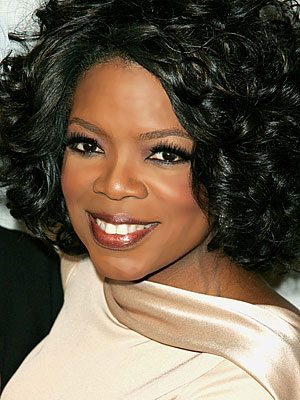 Winfrey was born in 1954, in Kosciusko, Mississippi. She suffered during her teens at the hands of her male relatives and male friends of her mother who sexually abused her. Winfrey subsequently moved to live with her father in Nashville, Tennessee where she studied at Tennessee State University and started a career in TV and Radio broadcasting.
Winfrey moved to Baltimore in 1976 where she became the host of the chat show, People Are Talking. The show was a hit with viewers and stayed that way for eight years. After this period, a Chicago TV Station hired Winfrey to host her own morning show, AM Chicago. After a few short months, Winfrey’s friendly demeanour had won her over one hundred thousand more viewers than her nearest competitor and AM Chicago went from last place to top of the ratings chart. The success took her to nationwide fame and a part in the 1985 film, The Color Purple, directed by Steven Spielberg. Winfrey was nominated for an Academy Award for Best Supporting Actress.
Oprah Winfrey’s estimated net worth is $3 Billion.
The Oprah Winfrey Show was launched in 1986 and was syndicated nationally. It was placed on 120 channels and reached an audience of 10 Million people, grossing $125 Million in its first year with Winfrey’s share being an estimated $30 Million. She shortly acquired ownership of the program from ABC, placing it under the control of her recently formed production company, Harpo Productions (Oprah spelled backwards). This allowed Winfrey to make more money for the national syndication.
Building on Success
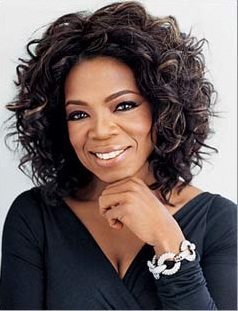 In the mid nineties talk shows were becoming more and more scandalous and sleazy, Winfrey promised to keep her show away from from tabloid style topics. Initially, her ratings fell but the respect that she earned by keeping to her word created a big upturn in popularity.
Winfrey undertook many projects with her production company, including, he highly rated 1989 TV miniseries, The Women of Brewster Place, which she also starred in. Winfrey also signed a multi-film deal with Disney. The initial project, Beloved, based on Pulitzer Prize winning novel by Toni Morrison and starring Winfrey and Danny Glover, got mixed reviews in 1998 and didn’t quite live up to expectations.
“The biggest adventure you can take is to live the life of your dreams.” – Oprah Winfrey
 It was during the mid-nineties that Winfrey became almost as well known for her weight loss efforts as she was for her talk show. She lost an estimated 90 pounds, taking her to her ideal weight of 150 pounds and ran the Marine Corps Marathon in Washington, D.C., in 1995. As a result of her success, Winfrey’s chef and trainer both published best-selling books.
“Turn your wounds into wisdom.” – Oprah Winfrey
 The increasingly influential Winfrey started to make a huge contribution to the publishing world by creating “Oprah’s Book Club” and adding it as a segment in her talk show. The segment rocketed many unknown authors to the top of best-seller lists and brought reading as a pastime back to the forefront of society.
Winfrey secured her place at the top of the media industry and one of the wealthiest people in show business with the debut of Oxygen Media in 1999, a company she co-founded that is dedicated to producing cable and Internet programming for women. In 2002, she finalized a deal with the network to air a prime-time complement to her syndicated talk show. In 2000, she released her very popular monthly, O: The Oprah Magazine and in 2004, she signed a new contract to continue The Oprah Winfrey Show through until 2011.
The Oprah Winfrey Network
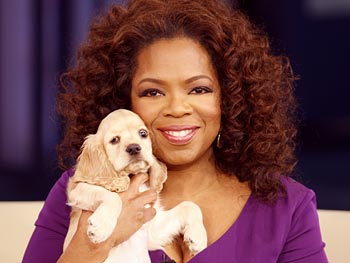 Winfrey announced, in 2009, that she would be bringing her program to an end when contract with ABC ended in 2011. She then moved to her own network the Oprah Winfrey Network, which was a joint venture with Discovery Communications. Even though the network made a questionable start financially, it made headlines in the early part of 2013 when it aired an interview that Oprah conducted with Lance Armstrong, the seven time Tour de France winner who had admitted to the use of performance enhancing drug use throughout his career.
Philanthropy
 After spending six years among the top 50 most generous Americans, Winfrey had given away an estimated $400 Million to educational causes by 2012. In 2013 she donated $12 Million to the Smithsonian’s National Museum of African American History and Culture.
Winfrey created Oprah’s Angel Network in 1998, a charity that provided grants for non-profit organizations and charitable projects from all around the world. Up until the charity’s closing in 2010, Oprah’s Angel Network raised more than $80 Million. Winfrey covered all the admin costs of the charity so that every penny raised would go to the charitable programs. The Angel Network also raised $7 Million for AIDS effected children in South Africa as well as several other causes in the region. Winfrey also gave her time and $40 Million of her money to develop the Oprah Winfrey Leadership Academy for Girls in Johannesburg.
After Hurricane Katrina, Oprah created the Oprah Angel Network Katrina Registry that contributed $11 Million to the relief efforts and Winfrey gave $10 Million of her own money.
Oprah Winfrey on Career, Life and Leadership
Conclusion
Oprah Winfrey really is one of the most inspirational women in history. Winfrey teaches us that no matter how much of a challenging start that we have in life, it has no bearing on how we finish.
Winfrey’s ability to consistently think of ways to reach more people, both through her career and her philanthropy has enabled her to become a billionaire as well as an incredibly influential public figure.
How could aiming to reach more people help you in your life?
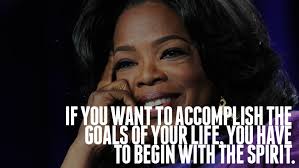
Oprah Winfrey Picture Quote










Success in entrepreneurship usually hinges on catching opportunities before they become obvious to everyone else. While grit, sharp instincts, and solid business sense still form the bedrock of any solid company, another trait has quietly taken center stage: knowing exactly when to bet on modern tech.
The top founders aren’t just blindly grabbing every shiny gadget or downloading every app the day it drops. Instead, they stay curious, quietly test emerging tools, and figure out if there’s a real competitive edge hidden inside. For them, being an early adopter isn’t about bragging rights—it’s about reshaping how work gets done.
From generative AI to spatial computing and wearables, modern tools are rewiring how founders communicate, create, research, and scale operations. Those who figure out the mechanics early move noticeably faster while spending far less time stuck in operational quicksand.
Early Adoption Is Really About Learning Early
The real secret to adopting tools early isn’t the software or hardware itself—it’s getting a head start on the learning curve.
By the time a new platform goes mainstream, thousands of businesses rush in simultaneously, scrambling to figure it out. Entrepreneurs who started playing with it months or years prior already know its quirks, strengths, limitations, and realistic use cases. They’ve already built efficient systems while everyone else is still reading the setup manual.
Look at how generative AI unfolded. The teams that jumped in right away quickly learned where AI excelled and, more importantly, where human oversight remained non-negotiable.
Early adopters tend to run every new tool through a quick mental filter:
- Can this win me back hours every week?
- Will this directly elevate my customer’s experience?
- Does this remove friction for my core team?
- Can it help us gather market intelligence faster?
- Does this open up a revenue stream that didn’t exist yesterday?
It was never about collecting tech for the sake of it. It’s about building deep domain familiarity before the rest of the market catches on.
Entrepreneurs Think in Terms of Leverage
High-performing founders are obsessed with leverage.
They want a single hour of effort to yield three hours of results. They build lean teams that can pull off the output of a 50-person department. They construct automated frameworks that keep the business spinning cleanly, even when they step away from their desks.
Technology is the ultimate force multiplier for that mindset.
Smart workflows clear away mind-numbing administrative work. AI accelerates deep research and rough drafting. Modern team hubs make distributed work feel effortless, and sharp analytics replace gut-check guesses with hard data.
Wearable technology represents a huge leap forward in this exact pursuit.
Instead of forcing you to pull out a phone or open a laptop every time you need to record or check something, wearables bring tech directly into your line of sight and sound. That’s a massive shift for active founders who spend their days moving between pitch meetings, site visits, conferences, and travel.
The Rise of Hands-Free Technology
For over a decade, smartphones have held a total monopoly on mobile productivity. But let’s be honest: constantly digging a phone out of your pocket breaks your flow, ruins face-to-face eye contact, and pulls you out of the room.
That explains why smart eyewear is suddenly having a moment.
Modern smart glasses blend classic, everyday frames with high-resolution sensors, direction-focused audio, responsive voice commands, and on-demand AI. For a busy founder, that seamless mix changes daily execution in small, subtle ways.
Picture a founder walking a busy trade show floor who wants to record a quick takeaway without staring into a screen. Or a real estate developer walking a site who can instantly ask an AI assistant for zoning rules while keeping their hands totally free.
Certain products, like AI glasses with a camera from Sunglasshut, highlight how fast wearable tech is transitioning from novelty gadgets to legitimate daily driver gear. Current luxury Meta frames available through SunglassHut pack full media capture, open-ear audio, voice controls, and direct Meta AI interaction directly into classic frames.
Not every business owner needs smart glasses on day one. But the broader lesson is clear: keep a close eye on any tool that closes the gap between having a thought and executing on it.
Capturing Ideas Before They Disappear
Great ideas arrive at inconvenient times.
A casual coffee conversation with a client sparks a entire product pivot. A quick off-hand comment at a keynote unlocks a new marketing angle. A annoying logistical bottleneck during business travel reveals a brand-new SaaS opportunity.
The real challenge isn’t having the idea—it’s capturing it before daily noise washes it away.
Traditional notes apps certainly work, but hands-free tech offers a friction-free alternative. Voice control and effortless media capture let you store context, visual proof, or raw thoughts in real time without stopping what you’re doing.
It doesn’t generate the brilliance for you. It just ensures your best thoughts actually stick around to see the light of day.
Better Technology Doesn’t Replace Better Thinking
There’s a critical line between leveraging modern tech and leaning on it as a crutch.
Smart founders know these systems are built to amplify human intelligence, not substitute for it.
An AI engine can summarize a massive legal document, spot trends, draft emails, and run simulations in seconds. But deciding which strategic path to take still takes seasoned human judgment. A wearable camera records a vital moment, but you still have to know why that moment mattered in the first place.
That’s precisely why thoughtful early adopters treat tech as an ongoing experiment rather than a silver bullet. They test a workflow, run the numbers, track performance, and keep only what truly moves the needle.
Technology Can Create New Customer Experiences
Beyond internal efficiency, early adopters constantly search for new ways technology can elevate how customers experience their brand.
We’ve watched commerce evolve from brick-and-mortar storefronts to early websites, then to custom mobile apps, social shopping, and instant chat platforms. Every single wave rewarded the businesses that adapted their customer journeys first.
Wearable tech is positioning itself as the next frontier for that shift:
- Real estate agents filming natural, immersive walkthroughs without holding bulky gear.
- Fitness creators sharing authentic, first-person training form guides.
- Field technicians and consultants pulling up real-time specs or instant language translation while navigating complex environments.
None of these individual setups are earth-shattering on their own. The actual advantage comes from creatively mapping those capabilities to your specific niche before your competition realizes it’s possible.
Being an Early Adopter Doesn’t Mean Being Reckless
There is a huge difference between being an early adopter and being a impulse buyer chasing shiny objects.
Pragmatic founders are fiercely protective of their time, focus, and capital. They don’t buy into tech hype just because tech Twitter is buzzing about it.
Instead, they run new tools through three simple reality checks:
- Does this solve a problem I’m actively dealing with? Tech shines brightest when it breaks a clear operational bottleneck. If it clearly saves hours or cleans up messy communication, it’s worth investigating.
- Does this meaningfully improve an existing process? Transformation doesn’t always have to be dramatic. Shaving 10% off a daily task compounds into massive operational savings across a full year.
- What can we learn just by testing this? Even if a tool ultimately gets shelved, the process of testing it reveals where software, consumer expectations, and markets are heading next.
That grounded mindset keeps experimentation low-risk and high-reward.
The Competitive Advantage of Curiosity
At its core, successful tech adoption is driven by raw, relentless curiosity.
Founders who stay genuinely curious spot subtle shifts in consumer habits, software capabilities, and market dynamics way before the crowd. They ask “what if?” instead of immediately writing off unfamiliar tech.
That open-mindedness matters, because massive tech shifts almost always look like silly gimmicks at first.
Smartphones were originally written off as unnecessary toys for executives. Cloud computing was distrusted over security fears. Social media was dismissed as a platform for teenager status updates. Today, AI and ambient computing are completely reshaping knowledge work.
The entrepreneurs willing to lean in and experiment today are building the exact muscle memory required to dominate tomorrow.
The Future Belongs to Adaptable Entrepreneurs
Technology will continue to evolve at a blistering, uncomfortable pace. New hardware, smarter AI models, automated platforms, and spatial tools will flood the market every single quarter.
You don’t need to adopt every single tool that crosses your feed.
What you do need is the willingness to look under the hood.
The most effective founders know that technology carries zero intrinsic value on its own—its worth lies entirely in what it empowers you to build, solve, and execute. Early adoption isn’t about bragging about new gear. It’s about cultivating the habit of asking one game-changing question:
“If this actually works, how does it change what we can build?”
That simple question is where real market leaders are made.
Entrepreneurs
What Risks Do Entrepreneurs Create When They Turn Personal Expertise into a Paid Service?


Businesses often begin when clients pay for existing expertise. A marketer becomes a consultant, a fitness enthusiast a coach, or a designer a freelancer. Payment creates duties that informal advice never carried. Clients can lose money, suffer injury, expose data, or challenge ownership.
The first task is to define what is being sold and what could go wrong. Suitable insurance for business should support this assessment, but a policy cannot repair unclear promises, weak records, or work performed outside the entrepreneur’s competence. The safest approach combines clear contracts, sound working methods, suitable insurance, and honest marketing.
Expertise Creates a Contractual Standard
Under the Consumer Rights Act 2015, services supplied to consumers must be performed with reasonable care and skill. This does not guarantee a perfect result. It means the provider should work to the standard expected from a competent person offering that service.
For example, a career coach cannot guarantee that a client will secure a £60,000 role. However, the coach should not rewrite a CV using false qualifications, miss agreed deadlines, or give advice without checking basic facts. Problems often begin when promotional language promises outcomes that the provider cannot control.
Entrepreneurs should state the service scope before starting work. A useful agreement should identify these points:
- The exact deliverables and number of revisions
- Deadlines and information the client must provide
- Fees, payment dates, cancellation terms, and refund rules
- Exclusions and limits on the service
Advice Can Cause Measurable Financial Loss
Professional indemnity insurance covers certain claims arising from negligent professional services or advice. It may help with legal defence costs and compensation, subject to the policy wording, limit, excess, and exclusions.
Consider a marketing consultant who schedules a retailer’s campaign after a sales event. The client claims that wasted advertising spend and lost sales resulted from the mistake. Even when the allegation is disputed, obtaining legal advice can cost money.
Common professional claim triggers can include:
- Incorrect advice, calculations, specifications, or instructions
- Missed deadlines that cause a client financial loss
- Accidental breaches of confidentiality
- Lost documents or corrupted client files
- Claims involving copyright or other intellectual property
Professional indemnity policies commonly respond only to claims made while cover is active. The policy normally needs to be in force when the claim is made, not only when the work occurred. Continuous cover and an appropriate retroactive date therefore matter when changing insurer or stopping trading.
Client Contact Creates Physical and Digital Risks
A knowledge business can still cause physical harm or property damage. A client may trip over equipment during a workshop, or a consultant may damage a computer at the client’s premises. Public liability insurance is designed for claims from members of the public connected with business activities.
Digital work creates another serious operational risk. Coaches, tutors, recruiters, and advisers may store addresses, health details, payment records, or confidential business files. Sending information to the wrong recipient, losing an unencrypted laptop, or suffering a ransomware attack can create a personal data breach. Reportable breaches must normally be reported to the Information Commissioner’s Office within 72 hours of the business becoming aware of them.
Cyber insurance may cover investigation, restoration, notification, and liability costs. Entrepreneurs should still use multifactor authentication, encrypted devices, restricted file access, secure backups, and a written breach response process.
Contracts Must Address Ownership and Responsibility
Intellectual property often causes expensive client disputes. In the UK, an independent creator usually owns the intellectual property in commissioned work unless the contract transfers those rights. Paying for a logo does not automatically settle questions about ownership, modification, resale, or portfolio use.
Contracts should specify whether the client receives ownership or a licence, when rights transfer, and whether materials from others are included. Entrepreneurs must also confirm that fonts, photographs, templates, software, music, and research can legally be used for the intended commercial purpose.
Business Structure Does Not Replace Protection
A sole trader has unlimited liability, meaning business debts are legally personal debts. A limited company is a separate legal entity, but incorporation does not remove every exposure. Directors can still face personal consequences for guarantees, unlawful conduct, regulatory failures, or their own negligent acts.
The trading structure, contract, and insurance policy should work together. Hiring staff introduces another important legal duty. Most UK employers must hold employers’ liability insurance of at least £5 million for employee injury or illness connected with work.
Checks before Accepting Paid Work
Before signing a client, an entrepreneur should:
- Confirm that the work matches their training and experience
- Record the agreed outcome, assumptions, and exclusions
- Check policy limits, excesses, activities, territories, and exclusions
- Avoid guarantees where results depend on outside factors
- Keep dated advice, approvals, revisions, and delivery records
Turning expertise into income can be rewarding, but payment changes the relationship. A dependable service needs more than talent. It requires defined boundaries, evidence of decisions, secure information handling, and insurance matched to the work being performed.


Having breakfast with billionaires isn’t just about the coffee; it’s a front-row seat to a masterclass in wealth creation. When you spend enough time around the top 0.001% of the economy, you quickly realize that their success isn’t just a byproduct of hard work or extreme intelligence. It’s the result of operating on a completely different framework than the rest of the world.
These aren’t secrets reserved for the elite. These are actionable strategies you can apply today to accelerate your own financial trajectory. Here are seven distinct ways billionaires think and act differently to achieve crazy high levels of success.
1. They Don’t Wait for Luck; They Engineer the Odds
Most people view luck as an on/off switch—you either get a lucky break or you don’t. Billionaires view luck as a dimmer switch. They understand that while you cannot control the lucky break itself, you are in complete control of the odds of it happening.
If you sit on your couch doom-scrolling, you have reduced the odds of a lucky encounter to zero. If you go to a networking event, pitch your business to a new investor, or launch a new product, you’ve instantly increased the odds of luck finding you.
Take Richard Branson. He frequently attributes his success to “lucky timing” and “lucky breaks.” But what people overlook is that Branson started over 400 companies and signed hundreds of artists to his record label. Most failed, but a few became wildly successful. He didn’t just get lucky; he put so many irons in the fire that mathematical probability guaranteed one of them would strike hot.
The Takeaway: Are you putting yourself out there enough to get lucky? Increase your pitch volume, product launches, and networking interactions to artificially inflate your odds of a lucky break.
2. They Invent Their Own Currencies
The middle class trades time for dollars, euros, or pounds. It is a very basic, low-level way to view currency. Billionaires create alternative currencies and use them as leverage.
- The Currency of Equity: If a founder sells 10% of their startup for $10 million, the entire company is now valued at $100 million. They can now use their remaining shares as a currency to acquire other businesses or attract top talent, without spending a dime of actual cash.
- The Currency of Reputation: A highly respected billionaire can join an advisory board, and their mere association will double the valuation of that company. They treat their name as currency and trade it for equity.
- The Currency of Distribution: If you have an email list of 600,000 engaged buyers, or 50,000 highly targeted LinkedIn followers, that is a currency. You can use that distribution power to negotiate equity stakes in other businesses.
3. They Reverse-Engineer the Future
Most entrepreneurs forward-engineer the past. They look at what they did yesterday to figure out what to do tomorrow. Billionaires reverse-engineer the future.
They project themselves three years forward and create a vivid, highly detailed picture of their company. They know their exact revenue, profit margins, team size, and intellectual property. Once that vision is locked in, they work backward:
- If this is true in 3 years, where must we be in 2 years?
- If that is true in 2 years, where must we be in 1 year?
- If that is true in 1 year, what must I do this week?
Because they have such a clear vision of the future, they become master storytellers. They can walk into a room, pitch an investor or a top-tier CEO, and say, “This is exactly where we will be in 36 months, and here is the exact role I want you to play.” They don’t care about their past; they only care about assembling the resources to meet their future.
4. They Are Master Enrollers, Not Doers
A great business is simply a collection of exceptional people aligned toward a common goal. Billionaires rarely do the actual “work” themselves because they understand that a single visionary cannot execute a 500-person vision alone.
Their full-time job is identifying, recruiting, enrolling, and aligning top-tier talent. As one billionaire noted, “A thousand good musicians cannot write a single symphony. But Beethoven wrote nine of them.” The difference between good talent and great talent is exponential.
Billionaires are constantly hunting for four types of people to enroll in their vision:
- Distribution Masters: People with massive audiences or traffic.
- Leadership Talent: Elite executives who can drive teams (CFOs, COOs).
- Elite Practitioners: The best-in-class engineers, sales reps, or artists.
- Capital Providers: Angel investors and VCs who can fund the vision.
5. They Harness the Dark Side of Motivation
Millionaires motivate their teams with carrots—vision boards, bonuses, and big goals. Billionaires know how to use the stick. They understand that while human beings are motivated by positive outcomes, they are ferociously driven by negative ones.
Billionaires intentionally create a common enemy to rally their team against.
- Richard Branson made British Airways the enemy.
- Steve Jobs famously made IBM the enemy in 1984.
Whether it is a rival company, an outdated political system, or a local competitor across the street, giving your team a tangible enemy to vanquish unlocks a level of gritty, relentless motivation that positive reinforcement simply cannot touch.
6. They Only Play Games of “Value at Scale”
A private tutor or a nurse provides immense value, but their impact is limited to the physical room they are in. The modern economy does not reward pure value; it only rewards value at scale.
Billionaires build systems that deliver value to millions of people simultaneously. There are four primary levers they use to achieve this scale:
- Intellectual Property: Patents, books, media rights, and franchise manuals.
- Distribution Channels: Owning retail chains, massive email lists, or media platforms.
- Armies of People: Training massive workforces to execute a standardized service globally.
- Software/Code: The ultimate scaler. Code written once can be accessed by billions of people instantly.
If your business relies on complex, bespoke solutions, it will hit a wall. Simple scales; complexity fails.
7. They Build to Exit
We often hear the romanticized stories of founders building their companies from the ground up, but we rarely hear the most important part of the billionaire playbook: The Exit Event.
Almost every ultra-wealthy individual built their fortune through a series of exits. They build a company, sell it, and take the cash.
But an exit provides something far more valuable than just liquidity—it provides time and consolidated learnings. When an entrepreneur sells a business, they clear the deck. They can look back at their 5-year journey, analyze their mistakes, and launch their next venture with capital, free time, and elite experience.
Many entrepreneurs hold onto their first business far too long. Your current business is based on the best thinking you had five years ago. An exit allows you to launch your next empire based on everything you know today.
Daniel Prestley the Aussie entrepreneur nails the top points of what makes the Top 0.1% do to be successful:

In 1995, a graphic design teacher named Lynda Weinman just wanted a digital sandbox. She needed a place online where her students could upload their work and play around with new tools like Photoshop and Illustrator. She bought the domain Lynda.com, put the site together, and gradually moved her teaching online.
Years later, she sold that little digital sandbox to LinkedIn for $1.5 billion.
Or look at Elon Musk, who managed to generate half a billion dollars in cash for Tesla before a single Model 3 ever rolled off the assembly line.
How do these founders pull off such massive feats? According to John Mullins, a professor at the London Business School, successful founders don’t follow the “best practices” taught in corporate boardrooms. They operate on a completely different psychological wavelength. They possess what Mullins calls a counter-conventional mindset.
If you want to build a thriving startup in today’s fiercely competitive market, you have to unlearn corporate logic. Here are the 6 rule-breaking mindsets that will completely change how you do business.
1. Say “Yes, We Can” (Even If You Don’t Know How)
Corporate strategy 101 tells companies to “stick to their knitting” and focus entirely on their core competencies. If a customer asks for a service outside that narrow scope, the corporate answer is always, “No, we don’t do that here.”
Entrepreneurs say “yes,” and figure out the “how” later.
Arnold Correia ran a highly successful event management business in Brazil. One day, a major client asked if Arnold could build a satellite uplink to broadcast training videos to 260 stores across the country. Arnold knew absolutely nothing about satellite technology. His response? “Yes, we can do that.” Later, Walmart asked if he could put screens on their sales floors to run targeted advertisements. Again, he said yes.
By refusing to be boxed in by his current skillset, Arnold reinvented his multi-million-dollar business four separate times.
The A2S Takeaway: Don’t let your current limitations cap your growth. Commit to the opportunity first, and acquire the skills second.
2. Obsess Over Problems, Not Products
Big corporations are obsessed with product tweaks. They take the blue specks out of their laundry detergent, turn them green, and call it “breakthrough innovation.”
Entrepreneurs don’t care about shiny products; they care about solving painful problems.
Jonathan Thorne invented a silver-nickel alloy for surgical forceps to stop human tissue from sticking to the metal during surgery. He originally targeted plastic surgeons, but sales were sluggish. Instead of changing his product, he looked for a worse problem. He found neurosurgeons. When you are operating on a human brain, sticky forceps are a literal life-or-death disaster. Thorne targeted this massive pain point, scaled his business rapidly, and eventually sold it to medical giant Stryker.
The A2S Takeaway: Nobody cares about your shiny new product features. They care about their own headaches. Find a bleeding-neck problem, and cure it.
3. Think Narrow, Not Broad
Corporate giants want massive total addressable markets (TAM). If a market doesn’t appeal to the masses, they won’t touch it. But true entrepreneurs know that to go big, you have to start narrow.
When Phil Knight and Bill Bowerman founded Nike, they didn’t try to make sneakers for the general public. They focused on a tiny, extremely specific niche: elite distance runners. At the time, running shoes were made for sprinters on smooth tracks, leaving marathoners to deal with sprained ankles and shin splints on dirt trails. By designing a wider, cushioned shoe exclusively for distance runners, Nike built a rabid, hyper-loyal fan base that eventually gave them the leverage to conquer the global athletic footwear market.
The A2S Takeaway: Niche down until it hurts. Dominate a small group of highly passionate users before you try to sell to the world.
4. Ask for the Cash Upfront (Ride the Float)
Big companies have billions in cash reserves to fund their R&D. Startups don’t. But instead of begging venture capitalists for money, brilliant entrepreneurs get their customers to fund their operations.
When Elon Musk took over Tesla, the plan wasn’t to take on massive debt to build a factory. Instead, they hosted a roadshow for wealthy, eco-conscious buyers who wanted the “next big thing” in their driveways. Tesla pre-sold 100 Roadsters for $100,000 each. That meant they had $10 million in cash sitting in the bank before car #1 was even built. Years later, they did the exact same thing with the Model 3, taking 500,000 deposits of $1,000 each—generating half a billion dollars in pure cash to fund their engineering and tooling.
The A2S Takeaway: Cash is the lifeblood of your startup. Can you pre-sell your idea and get paid before you build it?
5. Beg and Borrow (But Please Don’t Steal)
In business school, you are taught to carefully analyze the ROI of buying heavy assets. Entrepreneurs operate differently: they don’t buy assets if they can borrow them.
When Tristram and Rebecca Mayhew wanted to start Go Ape, a treetop adventure business in the UK, they had a major problem: they didn’t own a forest. Instead of buying land, they approached the UK Forestry Commission, which owned millions of trees and desperately wanted to increase park visitor counts. The Mayhews pitched a win-win partnership: let us use your trees, parking lots, and bathrooms, and we’ll bring you massive foot traffic. Today, Go Ape has dozens of locations globally, all because they leveraged assets that already existed.
The A2S Takeaway: You don’t need to own everything to monetize it. Partner up, leverage existing infrastructure, and keep your startup overhead near zero.
6. Don’t Ask for Permission (Just Get On With It)
In the corporate world, every new idea has to be sanitized by compliance, legal, and HR. Getting a “yes” takes months.
Entrepreneurs understand that permission is the enemy of progress. When Travis Kalanick and Garrett Camp founded Uber, they didn’t go to the San Francisco transit regulators and ask, “Excuse me, can we start a taxi company with zero actual taxis?” The regulators would have crushed them immediately to protect the local monopoly. Instead, they just launched the app. While some of Uber’s later corporate tactics crossed ethical lines, the core lesson of their launch is undeniable: when digital innovation outpaces slow, ambiguous regulations, you can’t wait for a green light.
The A2S Takeaway: If you wait for permission from the gatekeepers, you’ll be waiting forever. Act first, apologize later.
Are You Playing By The Right Rules?
To change the world—or even just your own financial future—you have to break the conventional norms. You don’t need a perfectly polished product, infinite VC funding, or permission from the establishment.
Look at the biggest roadblock in front of your business today. Which of these 6 counter-conventional mindsets can you adopt to smash right through it?
Stop waiting. Get out there and just get on with it.

I Opened the Store Before the Brand Felt Finished. That Is How Anything Sold.

I Formed the Company Before I Felt Ready. That Was the Point.

The Resilience Blueprint: What Family Breakdown Teaches Us About Moving Forward

Which Tire Financing Option Should You Choose

How Water Quality Affects Equipment Lifespan, Product Consistency, and Operating Costs in Business

5 Ways For Startups To Succeed Making Acquisitions

77 Inspirational Quotes That Will Change Your Life
57 Memorable Kobe Bryant Quotes

(Images) 52 Motivational Picture Quotes For An Epic Year Of Success

40 Rare Motivational and Inspirational Picture Quotes

3 Prince EA Videos To Change Humanities Path To Greatness

(Video) What Is Success? An Entrepreneurial Story To Inspire You

(Inspirational Video) What If Today You Knew You Were Going To Take Your Last Breath?

How To Make Enough Money From A Blog To Quit Your Job – Kate McKibbin

How Finding Your Passion And Becoming An Entrepreneur Can Lead To Happiness – Chiquita Searle
-

 Life2 years ago
13 Meaningful Ways to Show Someone They Matter
-

 Life2 years ago
The 5 Stages of a Quarter-Life Crisis & What You Can Do
-

 Did You Know1 year ago
7 Surprising Life Lessons Video Games Taught Me That School Never Did
-

 Success Advice1 year ago
Stephen Covey’s 8 Leadership Habits That Will Change How You Lead Forever
-

 Life1 year ago
How to Stop the War in Your Head and Find Peace
-

 Featured2 years ago
The Psychology of Motivation: How to Keep Moving Forward Every Day
-

 Personal Development1 year ago
The Three-Second Pause That Changes How People Perceive You
-

 Explode Your Social Media1 year ago
Want More Views? Master These 6 YouTube Growth Tactics
3 Comments