
Career
25 High-Paying Jobs Without a Degree (With Real Pay and How to Get In)
High paying jobs without a degree, ranked with 2025 BLS pay, entry routes and yearly openings, plus the moves that get you to $100K, $10K a month or $150K.


The best high paying jobs without a degree are commercial pilot ($123,220 median pay), nuclear power reactor operator ($122,890), elevator and escalator installer ($109,910), ship engineer ($109,530) and transportation, storage and distribution manager ($107,230), based on the Bureau of Labor Statistics’ May 2025 wage data. Nine occupations that only need a high school diploma or a short certificate to get in now pay a median of $100,000 or more. Most of them are learned through an apprenticeship, a license or years of experience on the job, so you pay with time and effort instead of tuition.
Below is the full list of 25 jobs with real median pay, the top 10% pay where it matters, what it takes to get in, and the honest catch with each path. Then I’ll show you how people actually get to $100,000, $120,000 ($10,000 a month) and $150,000 without a diploma on the wall.

The video is a few years old, so its salary numbers are dated. Every pay figure below comes from current BLS data (May 2025 wages).
Why I Don’t Judge a Career by the Diploma
Here’s my view, and I’ll be upfront about it: a degree is a tool, not a verdict on your future. For some careers it’s non-negotiable. You’re not becoming a surgeon or a lawyer without one. But for a huge part of the economy, what you get paid for is a skill someone needs badly, proof you can do it, and the reliability to show up when it counts.
Look at who builds real wealth in the trades and in sales and you’ll find plenty of people who learned a skill, got very good at it and then either moved into management or started their own shop. The electrician who becomes the contractor. The sales rep who becomes the sales manager. The mechanic who opens a second bay. None of that runs through a lecture hall.
I’m not anti-college. The data still says degree holders earn more on average, and I’d never tell you to ignore that. What I’m against is the idea that skipping a degree means settling. The median wage for all US jobs was $50,980 in 2025, according to the BLS occupational projections table. Every job on the list below beats that, most of them by tens of thousands of dollars.
25 High-Paying Jobs Without a Degree (2025 BLS Pay Data)
This table uses the BLS Employment Projections data released August 27, 2026: median annual wage for May 2025, the typical education needed to get in, projected growth from 2025 to 2035 and average openings per year. “Certificate” means a postsecondary nondegree award, like flight school or a trade program, not a college degree. I left out a few tiny fields (gambling managers, postmasters, theatrical makeup artists) where there are only a few hundred openings a year nationwide.
| # | Job | Median pay (May 2025) | Entry education | Growth 2025-35 | Openings per year |
|---|---|---|---|---|---|
| 1 | Commercial pilot | $123,220 | Certificate (flight training) | +5.2% | 5,200 |
| 2 | Nuclear power reactor operator | $122,890 | High school | -5.9% | 400 |
| 3 | Elevator and escalator installer and repairer | $109,910 | High school + apprenticeship | +5.7% | 1,900 |
| 4 | Ship engineer | $109,530 | Certificate | +2.7% | 900 |
| 5 | Transportation, storage and distribution manager | $107,230 | High school + 5 years’ experience | +6.1% | 18,300 |
| 6 | Power distributor and dispatcher | $106,730 | High school | +1.2% | 700 |
| 7 | First-line supervisor of police and detectives | $106,040 | High school + experience | +3.3% | 10,600 |
| 8 | Powerhouse, substation and relay repairer | $103,020 | Certificate | +9.7% | 1,800 |
| 9 | Power plant operator | $102,040 | High school | -5.1% | 2,300 |
| 10 | Petroleum pump system and refinery operator | $96,710 | High school | -1.9% | 2,700 |
| 11 | Electrical power-line installer and repairer | $95,320 | High school | +10.3% | 10,900 |
| 12 | Detective and criminal investigator | $93,790 | High school + experience | +0.2% | 7,800 |
| 13 | Captain, mate or pilot of water vessels | $92,460 | Certificate | +4.0% | 3,800 |
| 14 | Transportation inspector | $92,100 | High school | +2.2% | 2,300 |
| 15 | Supervisor of non-retail sales workers | $87,520 | High school + experience | +0.5% | 21,700 |
| 16 | Subway and streetcar operator | $86,380 | High school | +3.7% | 900 |
| 17 | Avionics technician | $82,280 | Certificate | +9.4% | 1,700 |
| 18 | Locomotive engineer | $81,410 | High school + experience | +0.5% | 2,000 |
| 19 | Construction trades supervisor | $79,920 | High school + 5 years’ experience | +5.0% | 67,000 |
| 20 | Aircraft mechanic and service technician | $79,870 | Certificate | +5.4% | 11,400 |
| 21 | Boilermaker | $76,410 | High school + apprenticeship | -1.8% | 700 |
| 22 | Police and sheriff’s patrol officer | $76,210 | High school | +3.5% | 51,500 |
| 23 | Construction and building inspector | $74,690 | High school + 5 years’ experience | 0.0% | 14,800 |
| 24 | Real estate broker | $73,220 | High school + experience | +0.8% | 7,800 |
| 25 | Wholesale and manufacturing sales representative | $72,080 | High school | -0.9% | 99,800 |
Two things jump out at me. First, look at the openings column. A job that pays $122,890 is great, but nuclear reactor operators only see about 400 openings a year. Wholesale sales reps see almost 100,000. Second, look at how many rows say “experience.” A lot of the best pay on this list is the second job in a career, not the first.
The Top 10 Explained: What the Work Is and How You Get In
1. Commercial pilot: $123,220
Commercial pilots fly charter flights, aerial tours, crop dusting and firefighting missions. You need flight training and an FAA commercial pilot certificate, not a degree. The catch is cost: flight hours are expensive, and the BLS notes that some employers prefer a degree. Airline pilots earn far more ($232,140 median) but typically need a bachelor’s degree. The top 10% of commercial pilots earned more than $266,620.
2. Nuclear power reactor operator: $122,890
You run the controls of a nuclear reactor. A high school diploma gets you in the door, then years of long-term training and an operator license from the Nuclear Regulatory Commission. Pay is elite. Openings are rare and employment is projected to shrink 5.9% by 2035, so this is a path for people willing to move to where the plants are.
3. Elevator and escalator installer and repairer: $109,910
This is my favourite example on the whole list, because nobody grows up dreaming of it. According to the BLS Occupational Outlook Handbook, it typically starts with a 4-year apprenticeship, often union-sponsored, and you’re paid while you learn. The top 10% earned more than $158,890. Most states require a license.
4. Ship engineer: $109,530
Ship engineers run and maintain the engines, boilers and electrical systems on vessels. Entry is through a Coast Guard-approved training program and a Merchant Mariner Credential from the US Coast Guard. Expect long stretches away from home. That trade-off is exactly why it pays.
5. Transportation, storage and distribution manager: $107,230
Logistics managers run warehouses, fleets and supply chains. BLS lists a high school diploma plus 5 or more years of related experience as the typical entry, which tells you the path: start on the floor, learn the operation, get promoted. The top 10% earned more than $194,900, according to the OOH. With 18,300 openings a year, it’s one of the most realistic six-figure routes here.
6. Power distributor and dispatcher: $106,730
Dispatchers control the flow of electricity across the grid from a control room. You get in with a high school diploma and long-term on-the-job training. Expect rotating 8- or 12-hour shifts, days and nights, because the grid never sleeps.
7. First-line supervisor of police and detectives: $106,040
Sergeants and lieutenants. BLS says the education needed to become a police officer ranges from a high school diploma to a college degree depending on the agency, and most officers must graduate from their agency’s academy and usually be at least 21. The six-figure pay comes after you’ve proven yourself on patrol.
8. Powerhouse, substation and relay repairer: $103,020
These technicians keep generating stations and substations running. A technical certificate and on-the-job training are typical, and employment is projected to grow 9.7%, one of the faster rates on the list.
9. Power plant operator: $102,040
Operators run the equipment that generates electricity. High school entry, long training. Like reactor operators, the field is projected to shrink, so the openings mostly come from retirements.
10. Petroleum pump system and refinery operator: $96,710
You monitor and control the systems that process crude oil. High school entry and on-the-job training. It’s demanding work in industrial plants, and employment is projected to dip slightly by 2035.
The Exception Everyone Lists: Air Traffic Controller
You’ll see air traffic controller on almost every list like this, with a median of $148,080 in May 2025. I’ve kept it out of the main table because BLS lists an associate’s degree as the typical entry. But the FAA’s own qualification page accepts one year of progressively responsible work experience instead of a degree. You must be a US citizen, under 31 when you apply, and pass a medical exam, a security check and the FAA’s pre-employment tests. The FAA says fewer than 10% of applicants meet the requirements and are accepted into training. If you’re under 31, it’s the highest-paying door on this page.
The Big Trades: Lower Median, Huge Demand and a Six-Figure Ceiling
Electricians, plumbers and HVAC techs don’t crack the top 25 on median pay. I still think they’re some of the smartest bets on this page, for one reason: volume. There are tens of thousands of openings every year, and the best earners clear six figures.
| Job | Median pay | Top 10% earn more than | Openings per year | How you get in |
|---|---|---|---|---|
| Electrician | $63,190 | $108,510 | 72,700 | Apprenticeship, state license |
| Plumber, pipefitter, steamfitter | $63,800 | $108,420 | 42,000 | Apprenticeship, license |
| HVAC mechanic and installer | $61,010 | $95,210 | 40,600 | Trade certificate, on-the-job training |
| Wind turbine technician | $64,120 | $92,460 | 1,500 | Trade certificate |
| Insurance sales agent | $62,280 | $138,140 | 43,100 | High school, state license |
| Flight attendant | $63,580 | $136,430 | 18,500 | High school, airline training |
Sources: BLS Occupational Outlook Handbook pages for electricians, plumbers, HVAC mechanics, wind turbine technicians, insurance sales agents and flight attendants, May 2025 wages.
Electrician employment is projected to grow 9% from 2025 to 2035, and HVAC 11%, both much faster than average. Wind turbine technicians are projected to grow 30%, though from a small base. And remember the trades are also the easiest jobs on this list to turn into a business. A licensed electrician who learns to sell and hire isn’t capped by any wage table.
How to Make $100,000 a Year Without a Degree
Here’s the honest math. Only nine no-degree occupations have a median of $100,000 or more. So for most people, six figures without a degree comes from one of five moves, not from picking the “right” job title.
- Pick a field where the median is already close. Elevator installers, power-line workers, power plant operators and logistics managers either sit above $100,000 or within reach of it.
- Get into the top 10% of a big field. Top-decile electricians and plumbers earn over $108,000. That usually means a master license, a specialty (industrial, controls, commercial) and a willingness to work overtime.
- Get paid on results. Sales has no ceiling built into it. The top 10% of wholesale sales reps earned more than $137,550, and top insurance agents more than $138,140. You need nerve, not a diploma.
- Move up into supervision. Look at how many rows in the table say “plus experience.” Construction supervisors, sales supervisors and police sergeants all earn far more than the people they used to work beside.
- Go where the pay is. Shift work, remote sites, ships, rigs and plants pay a premium because most people don’t want them. Being willing to go is a skill.
My take: the fifth one is the most underrated. People will spend four years and tens of thousands of dollars on a degree but won’t move two states for a job that pays more than a degree would.
What Job Makes $10,000 a Month Without a Degree?
$10,000 a month is $120,000 a year before tax. On median pay alone, only commercial pilots ($123,220) and nuclear reactor operators ($122,890) clear it, plus air traffic controllers if you qualify through work experience. But plenty of people reach it as top earners: the top 10% of elevator installers (over $158,890), transportation and distribution managers (over $194,900), wholesale sales reps (over $137,550) and insurance sales agents (over $138,140) all pass $10K a month.
How to Make $150,000 a Year Without a Degree
At $150,000, you’re past the median of every job on this list, and even above the $148,080 median for air traffic controllers. So you’re looking at top earners, owners or both. The top 10% of commercial pilots earned more than $266,620, and top transportation managers more than $194,900. Beyond that, the route I see most often is ownership: a contractor running crews, a broker running agents, a sales leader with a book of business. If you want to explore that path, my list of small business ideas shows startup costs and time to first dollar for each.
Apprenticeships: The Paycheck-While-You-Learn Shortcut
If I were 18 and unsure, this is where I’d look first. A registered apprenticeship pays you while you train, and you finish with a credential instead of a loan. According to the US Department of Labor’s Apprenticeship.gov, the average starting salary after completing an apprenticeship is $86,000, 93% of apprentices keep their job after completing, and graduates earn $300,000 or more over their lifetime compared with peers who didn’t do one. Over 800,000 people are apprentices every year.
Elevator installers, electricians, plumbers, boilermakers and power-line workers all commonly come up through apprenticeships. Apply to several at once. Union and employer programs often have aptitude tests and waitlists, so the earlier you start, the better.
How to Get Hired Without a Degree
- Get the credential the job actually asks for. A CDL, an FAA certificate, a state license, a trade certificate. Read the BLS “How to Become One” tab for any job on this list and do exactly that.
- Show proof, not promises. A logbook of flight hours, a portfolio of jobs, a sales record with numbers. Proof beats a piece of paper every time.
- Start one level below where you want to be. Warehouse associate to logistics manager. Apprentice to journeyman to master. Rep to sales manager. The table rewards patience.
- Be the reliable one. In trades and operations, showing up on time, sober and ready is half the job. People get promoted for it.
- Keep learning on purpose. Every specialty, cert or license you add is a pay raise you can negotiate.
The Honest Catch With High-Paying Jobs Without a Degree
I’d be doing you a disservice if I made this sound easy. Most of these jobs are physical, shift-based or dangerous. Many require you to pass drug tests, background checks or medical exams. Some fields, like power plant and nuclear reactor operations, are projected to shrink. And median pay means half the people in the job earn less than that number.
The flip side: you don’t start with debt, you start earning years earlier and you can stack skills into a business. If you’re stuck in a job that looks fine on paper but feels like a dead end, read my piece on how to get out of a quarter life crisis before you decide anything. The answer isn’t always a new job. Sometimes it’s a new skill.
Highest Paid Jobs Overall (and Why Most Need a Degree)
If you search “highest paid jobs,” you’ll see doctors dominate. In the same BLS data, pediatric surgeons ($559,030), cardiologists ($496,010) and radiologists ($420,860) top the median wage table, and every one of the top 20 needs a doctoral, professional or master’s degree. Airline pilots ($232,140) are the first non-medical job, and they typically need a bachelor’s. That’s the honest trade: the very top of the pay table runs through school. Just below it, the no-degree paths above get you to six figures with no student loans.
My Rule: Get Paid for a Skill Somebody Can’t Do Without
When people ask me whether they need a degree, I ask them a different question: what problem will someone pay you to solve? The elevator has to work. The grid has to stay on. The freight has to move. The deal has to close. Get really good at solving one of those problems, prove it, and the pay follows. The diploma was never the point. The skill was.
Frequently Asked Questions
What career makes the most money without a degree?
Commercial pilot has the highest median pay of any no-degree job in BLS data, at $123,220 in May 2025, just ahead of nuclear power reactor operator at $122,890. Air traffic controllers earn more ($148,080), and the FAA accepts one year of work experience instead of a degree.
How can I make $100,000 a year with no degree?
Choose a field where the median is near six figures, like elevator installer, power-line worker or logistics manager. Or reach the top 10% of a big trade, move into supervision, or take commission sales. Overtime, licenses and owning a business add more.
What job makes $10,000 a month without a degree?
$10,000 a month is $120,000 a year. Commercial pilots and nuclear reactor operators clear it at median pay. Top earners in elevator repair, logistics management, wholesale sales and insurance sales also pass it.
How do you make $150,000 a year without a degree?
No no-degree job on this list has a median that high, so you need to be a top earner or an owner. Top commercial pilots, logistics managers and sales leaders pass $150,000, and so do many contractors who run their own crews.
What are the best jobs without a degree?
The best combine strong pay with lots of openings. Logistics managers, power-line installers, construction supervisors, electricians, plumbers and sales reps all pair solid pay with thousands of openings a year, according to BLS projections for 2025 to 2035.
Are trade apprenticeships worth it?
For most people, yes. The Department of Labor reports an $86,000 average starting salary after completion and a 93% job retention rate, and you’re paid while you train instead of borrowing for tuition.












Career
How to Quit a Job Professionally (Without Burning the Bridge You’ll Need Later)
A checklist for how to quit a job, a word-for-word resignation script, letter and email templates, plus how to handle a counteroffer or leave right now.

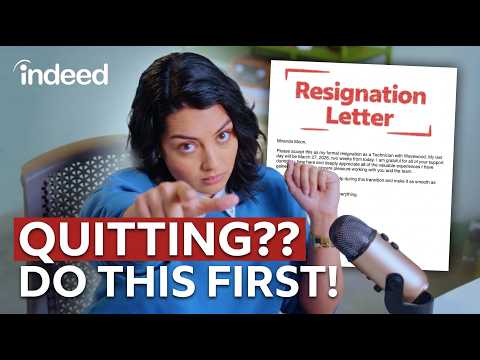
How to quit a job professionally: line up what’s next, tell your manager in person (or on a video call) before anyone else, give two weeks’ notice if you safely can, then confirm it in a short written resignation letter. Keep the reason brief and positive, offer a clean handover, and don’t complain on the way out. Before you say a word, know what happens to your final paycheck, unused PTO, health insurance and 401(k) match, because those rules change by state and by plan.
That’s the short version. Below you’ll get the checklist to run before you resign, a word-for-word script for the conversation, copy-and-paste resignation letter and email templates, how to handle a counteroffer, and what to do if you need to leave right now.
Why How You Leave Matters More Than Why
When you run a business, you remember how people left. Not the exact date. Not the reason on the letter. You remember whether they handed over cleanly or left a mess, whether they told you first or you heard it from someone in the kitchen, whether they spent their last two weeks helping or coasting.
That memory is the reference call that happens three years from now. It’s the former boss who becomes a client, an investor or the person who introduces you to your next big break. Careers are smaller than they look. Industries are smaller still.
Quitting is normal. The Bureau of Labor Statistics counted 3.4 million quits in the US in September 2026 alone, a quits rate of 2.1% (JOLTS, released November 3, 2026). You’re not doing anything strange. You’re doing something millions of people do every month. The difference is whether you do it in a way that keeps doors open.
My view is simple: you’re allowed to leave any job. You’re not allowed to burn the bridge on the way out if you can help it, because you will want to walk back across it one day.
What to Do Before You Quit Your Job
Most bad resignations go wrong before the conversation even starts. Run this checklist first.
- Get the new offer in writing. A signed offer letter, with the start date, pay and any conditions (background check, references, drug test) cleared. A verbal “you’ve got it” is not an offer.
- Read your own paperwork. Check your employment contract or offer letter for a required notice period, plus any non-compete, non-solicitation or confidentiality terms. Most US jobs are at-will, but a contract can change that.
- Check your money dates. When does your bonus pay out? When does your next tranche of equity or 401(k) match vest? Leaving two weeks before a vesting date can cost you real money.
- Know your PTO rule. Some states require employers to pay out earned vacation when you leave. Others leave it to company policy. Look it up for your state and read your handbook.
- Plan the health insurance gap. Ask HR when your coverage ends (often the last day of the month, but not always) and when your new plan starts.
- Save your personal stuff, not theirs. Personal contacts, your own pay stubs, performance reviews and benefits documents. Don’t download client lists, code or company files. That’s how people get sued.
- Have a runway if there’s no next job. Unemployment benefits are generally for people who are out of work through no fault of their own, as each state defines it, so quitting usually means you can’t count on them.
One more question before you resign: have you actually told your boss what would make you stay? If the problem is money and you’ve never asked, learn how to ask for a raise first. Plenty of people quit over pay they never requested. If you’ve asked and the answer was a vague “maybe next year,” then you have your answer.
How to Quit a Job in 7 Steps
- Decide, then stop wobbling. Make the call privately before you say anything. Don’t hint, don’t test the waters with coworkers, and don’t let your boss hear rumours first.
- Book a short private meeting with your direct manager. In person or on video. Not HR first, not your work friend first, not a Slack message.
- Say it in the first 30 seconds. “I’ve decided to resign. My last day will be [date].” Then a one-line reason and a thank you.
- Send the written resignation the same day. A short letter or email that confirms your last day. That’s the record HR needs.
- Build the handover document. Open projects, status, key contacts, logins to transfer (through proper channels), recurring tasks and where files live.
- Work the notice period like it matters. Because it does. This is what people remember.
- Leave well. Return equipment, confirm final pay and benefits in writing, thank the people who helped you, and connect with them on LinkedIn.
How Much Notice Should You Give?
In the US, two weeks is the custom, not usually the law. Employment is presumed to be at-will in every state except Montana, which means, as the National Conference of State Legislatures puts it, an employee is generally free to leave a job at any time, for any reason, without legal consequences. A written contract or union agreement can change that, so check yours. Outside the US, notice periods are often set by contract or national law, and a month or more is common.
| Your situation | Notice I’d give |
|---|---|
| Most hourly or salaried roles | Two weeks |
| Manager, senior or hard-to-replace role | Three to four weeks, if your new employer can wait |
| Contract specifies a notice period | Whatever the contract says |
| You’ve been there under a month | As much as you can, and an honest apology |
| Unsafe, abusive or unpaid situation | Little or none; protect yourself first |
Be ready for one thing: your employer can accept your resignation and ask you to leave that same day. Some companies do it with anyone going to a competitor. If that happens, stay calm and professional. It’s usually policy, not personal. California’s Labor Commissioner even explains this exact scenario: if your employer ends things early after you give notice, you generally aren’t owed wages for the days you didn’t work, but all your earned wages become due immediately. So have your money set up to handle your last day arriving early.
The Resignation Conversation: A Word-for-Word Script
Short beats clever. The longer you talk, the more likely you are to over-explain, apologise or get talked into something.
“Thanks for making time. I’ll get straight to it. I’ve decided to resign, and my last day will be Friday the 4th.
This wasn’t an easy decision. I’ve learned a lot here, especially [one specific thing], and I’m grateful for it. I’ve accepted a role that’s the right next step for me.
I want to make the handover as smooth as possible. I’ll put together a document with everything I’m working on by Wednesday, and I’m happy to help train whoever picks it up. What would be most useful to you over the next two weeks?”
Then stop. Let them react. A few follow-ups you might get:
- “Where are you going?” You can share it or not. “I’d rather keep that private until I’ve started, but I’m happy to tell you then” is fine.
- “Why are you leaving?” Keep it forward-looking: “It’s a bigger role in the direction I want to grow.” Save detailed feedback for the exit interview, and even then keep it constructive.
- “Is there anything that would change your mind?” If the answer is no, say it kindly and clearly: “I appreciate that, but I’ve made my decision.”
What not to say: anything about your coworkers, how bad the place is, how much more you’re getting paid, or “I’m sorry.” You don’t need to apologise for making a career decision.
Resignation Letter Template
Keep it to a few lines. This is a record, not a farewell speech. Print it, or attach it as a PDF to your email.
[Date]
Dear [Manager’s name],
Please accept this letter as formal notice of my resignation from my position as [job title] at [company]. My last day of work will be [date].
Thank you for the opportunities I’ve had here, especially [one specific thing]. I’ll do everything I can to make the transition smooth, including documenting my current work and helping train my replacement.
Sincerely,
[Your name]
Resignation Email Template
Send this right after the conversation, never instead of it (unless you work fully remote with a manager you’ve never met in person, and even then, have a call first).
Subject: Resignation – [Your name]
Hi [Manager’s name],
Thanks for talking with me today. As discussed, I’m resigning from my role as [job title], and my last day will be [date].
I’ll share a handover document by [day] covering my open projects, key contacts and recurring tasks. Please let me know who should receive it and anything else you’d like me to prioritise before I go.
I’ve really valued working with you and the team.
Best,
[Your name]
Copy HR only if your company’s process asks for it, or once your manager has had a chance to tell them.
How to Politely Quit a Job Immediately
Sometimes two weeks isn’t realistic. Your health is falling apart, you’re being harassed, you’re not being paid, or the job isn’t safe. In those cases, protect yourself first. A reference is worth a lot. It isn’t worth your safety or your sanity.
If you have to leave with little or no notice, you can still do it politely:
“Hi [Manager’s name], I need to let you know that I’m resigning effective immediately. I know this isn’t the notice I’d normally give, and I’m sorry for the disruption. Due to personal circumstances, I’m not able to continue. I’ve attached notes on my open work and I’m happy to answer questions by email this week.”
You don’t owe a detailed explanation. Return company property quickly, and ask in writing how and when you’ll receive your final pay. If the job made you quit because of something illegal (unpaid wages, discrimination, retaliation), keep copies of your evidence and talk to your state labor department or an employment lawyer before you sign anything.
And if you just started? Quitting a job after a few days or weeks happens more often than people admit. Tell them as early as possible, be honest that it isn’t the right fit, and don’t drag it out. A quick, clean exit is kinder than staying two miserable months.
What to Do If They Make a Counteroffer
Here’s my honest opinion from the side of the desk that makes counteroffers: most of the time, say no.
A counteroffer usually fixes the money and nothing else. The reason you started looking (the boss, the ceiling, the boredom, the lack of respect) is still there on Monday. And your manager now knows you were willing to leave, which can quietly change how they plan around you.
Ask yourself one question: why did it take a resignation for them to pay me what I’m worth? If there’s a good answer (a budget cycle you missed, a manager who’s genuinely leaving, a promotion that was already in motion), a counteroffer can be worth considering. Get it in writing, with the new title and pay, before you turn down the other offer. If there’s no good answer, thank them, and keep your word to the company that hired you.
What you shouldn’t do is resign just to fish for a counteroffer. If you want more money, ask for it directly while you still plan to stay.
Final Pay, PTO, Health Insurance and Your 401(k)
This is the part most “how to quit” guides skip, and it’s the part that costs people money.
- Final paycheck. The US Department of Labor says federal law doesn’t require employers to give your final paycheck immediately, but some states do. California is one of the strictest. If you give at least 72 hours’ notice, you’re generally owed all wages, including accrued vacation, on your last day; quit without that notice and it’s due within 72 hours. Other states simply use the next regular payday. Check your state labor department’s site.
- Unused PTO. Whether it gets paid out depends on your state and your company policy. Ask HR before your last day, and get the answer in writing.
- Health insurance. If your employer has 20 or more employees, COBRA usually lets you keep the same group coverage for up to 18 months, but you typically pay the full premium plus 2%. According to the Department of Labor’s COBRA FAQ, you have 60 days to elect it, coverage can be retroactive, and you then get 45 days to make the first payment. You also have 60 days after losing job-based coverage to pick a Marketplace plan at HealthCare.gov, which may cost less.
- 401(k). The IRS is clear that money you put in from your own paycheck is always 100% yours. Employer contributions follow the plan’s vesting schedule, and unvested amounts can be forfeited when you leave. Look up your vesting date before you choose your last day.
- Equity and bonuses. Stock options usually have a limited window to exercise after you leave, and your grant agreement sets the actual deadline. Read it before you pick your last day. Bonuses usually require you to be employed on the payout date.
References, Exit Interviews and Your Last Two Weeks
Your notice period is an audition for your reputation. People who checked out mentally the moment they resigned are remembered for it.
- Write the handover document you wish you’d been given. Projects, status, next steps, contacts, deadlines, where everything lives.
- Ask for references before you leave. While your work is fresh, ask your manager or a senior colleague if they’d be a reference, and get their personal email.
- Keep the exit interview useful, not emotional. One or two specific, fixable points. You’re not settling scores. Anything you say can travel.
- Say goodbye properly. A short, warm farewell message to your team. No grievances, no hints about what’s “really” going on.
- Don’t announce on social media until you’ve left and your new employer is ready for you to share.
Should I Quit My Job If It Makes Me Depressed?
This one deserves care. A job can absolutely be a big part of why you feel low: chronic stress, a toxic manager, impossible hours. Leaving can be the right call. But depression often travels with you, so a new job alone doesn’t always fix it.
If work is wrecking your mental health, talk to a doctor or a licensed therapist, ideally before you make the decision. Ask HR whether your company has an employee assistance program. And if you’re in crisis or thinking about harming yourself, in the US you can call or text 988, the Suicide and Crisis Lifeline, any time, free and confidential. Your health comes before any notice period.
Quitting to Start Something of Your Own
A lot of people reading Addicted2Success aren’t quitting for another job. They’re quitting to build something. Years ago I wrote about the reasons you might quit your job and follow your passion, and I still believe in that leap. But the mechanics in this article matter even more for you.
Your old employer might become your first client. Your old manager might be the first person to refer you work. Your coworkers are your first network. Founders who left cleanly get those calls. Founders who left angry don’t. Check your non-compete and non-solicit terms before you go after old clients, and build your runway before you hand in the letter, not after.
My Rule: Leave Like You’ll Need Them Again
Because you probably will. Tell your boss first. Keep it short. Give real notice when you can. Hand over like a pro. Know your money before you go. Then walk out with your head up and your reputation intact. Quitting the right way is one of the most underrated career skills there is.
Frequently Asked Questions
How do you politely quit a job immediately?
Tell your manager directly, by call or meeting if you can, that you’re resigning effective immediately for personal reasons. Apologise for the short notice, share notes on your open work, return company property and ask in writing how your final pay will be handled.
Should I quit my job if it makes me depressed?
It may be the right move, but talk to a doctor or therapist first, since depression doesn’t always lift with a new job. Check whether your employer offers an assistance program. If you’re in crisis in the US, call or text 988 any time.
Is it bad to just quit a job without notice?
In most US at-will jobs it’s legal, unless a contract requires notice. It can cost you a reference, rehire eligibility and goodwill, so give two weeks when you safely can. Leaving immediately is reasonable when the job is unsafe, abusive or not paying you.
What should I do before quitting my job?
Get your new offer in writing, read your contract for notice and non-compete terms, and check your bonus, vesting, PTO payout and health insurance end dates. Save personal records (not company files) and build a cash runway if you don’t have another job lined up.
How do I quit my job professionally?
Tell your manager first in a short private conversation, confirm your last day in a brief resignation letter or email, give two weeks’ notice where possible, offer a written handover, and stay positive through your last day. Never criticise the company on the way out.
Do you legally have to give two weeks’ notice?
Usually not in the US. Employment is presumed at-will in every state except Montana, so you can generally leave at any time. A written employment contract or union agreement can require notice, so check yours before you resign.
Career
How to Ask for a Raise: The Script, the Number and the Timing That Get a Yes
How to ask for a raise in 2026: what number to ask for against 3.5% raise budgets, when to ask, a word-for-word script, what not to say and what to do after a no.

How to ask for a raise: book a dedicated meeting, bring a specific number backed by market data and your results, say it once, then stop talking. Ask when your boss still has budget to move (before raises are set, not after), and anchor on a precise figure tied to the value you’ve added, not on what you need or what a coworker makes. If the answer is no, leave with a written plan, a date and the exact results that would make it a yes.
That’s the whole game. The rest of this article is the detail most guides skip: how big a number is realistic in 2026, the word-for-word script, what not to say, and what to do when you hear “there’s no budget.”

Why I’m Writing This From the Other Side of the Desk
I run a business. I pay people. So here’s the part nobody tells you: most bosses aren’t sitting there plotting to underpay you. They’re busy. They’re juggling a budget, a dozen problems and their own boss. If you don’t raise your pay, there’s a good chance nobody will, not because they don’t value you, but because silence looks like you’re happy.
The people I’d say yes to fastest aren’t the loudest ones. They’re the ones who make it easy to say yes. They show up with proof, a number and a plan. They make the decision feel safe. That’s what this article is going to help you do.
And the odds are better than you think. In Payscale’s Raise Anatomy research (June 2018, more than 160,000 respondents), only 37% of workers had ever asked their current employer for a raise, but 70% of those who asked got some increase. 39% got the full amount they requested. The biggest risk isn’t asking. It’s never asking.
How Much of a Raise Should You Ask For?
Start with what normal looks like, so you know what you’re pushing against. Employers set a pool of money for raises every year, and in the US that pool has been remarkably flat:
- Mercer’s QuickPulse survey (July 2026, 1,001 US employers) projects an average merit budget of 3.2% for 2027 and a total salary increase budget of 3.5%.
- WTW (August 2026) projects 3.4% for 2027, after actual 2026 increases of 3.5%, and says budgets have stayed in the 3% to 4% band except in deep recessions or hiring frenzies.
So a “standard” raise sits around 3% to 4%. That’s the number your boss is quietly comparing you to. If you want more, you need a reason that sits outside the normal merit cycle. Here’s how I’d size the ask:
| Your situation | Realistic ask | What has to back it up |
|---|---|---|
| Solid year, same role, paid at market | 4% to 6% | Clear results above your job description |
| Strong year with measurable wins | 7% to 10% | Revenue, savings or outcomes with numbers attached |
| Paid below market for your role | The gap to market (can be 10% to 20%) | Three or more salary benchmarks for your title, level and city |
| You’re already doing a bigger job | The pay for that bigger job, plus the title | A list of responsibilities you’ve absorbed and since when |
| You have a written outside offer | Match or close to it | Only if you’d genuinely take the offer |
These ranges are my working guide, not a law. Your industry matters too: Mercer’s 2027 projections run from 2.9% merit budgets in consumer goods up to the high 3s in high tech and banking.
Use a precise number, not a round one
Don’t ask for “around $90,000.” Ask for $91,500. A 2013 Columbia Business School study, Precise Offers Are Potent Anchors by Malia Mason, Daniel Ames and colleagues, found people adjust less from precise first offers than round ones because a precise number sounds like you’ve done your homework. The researchers also warn that a precise number can backfire if it looks like a gimmick, so it has to come from real research. Build your number from data, then say it plainly.
When to Ask for a Raise
Timing matters more than most people think, and it’s mostly about the budget calendar, not the day of the week.
- Before the budget is locked. Most companies set next year’s raise pool months ahead. Mercer noted that in July 2026, 87% of the employers it surveyed still had preliminary budgets. If your review is in March, start the conversation in the fall. By review day, the money’s often already spoken for.
- Right after a win. You closed the deal, shipped the project, saved the account. Your value is fresh in everyone’s memory. Ask within a few weeks, not six months later.
- When your job has grown. If you’ve absorbed a departed colleague’s work or started managing people, the case is strongest while that change is obvious.
- Not in the middle of a crisis. Layoffs, a lost client, a bad quarter. Wait until things settle, but don’t let “bad timing” become a permanent excuse.
Is it better to ask on a Friday or a Monday?
I haven’t seen solid research that proves one weekday wins, so ignore anyone who claims it. My view: avoid Monday morning, when your boss is buried in the week’s fires, and avoid Friday afternoon, when their head is already out the door. A Tuesday to Thursday slot, mid-morning or after lunch, in a meeting you booked on purpose, beats either.
How to Ask for a Raise in 7 Steps
- Write your results down. Make a one-page “impact sheet”: three to five wins with numbers. Revenue you brought in, money you saved, hours you cut, customers you kept, people you trained. If it isn’t measured, estimate honestly and say it’s an estimate.
- Price yourself. Pull at least three salary benchmarks for your exact title, level and location from sources like the Bureau of Labor Statistics, Glassdoor, Levels.fyi or industry pay surveys. Check job ads too, since a growing number of US states now require employers to post pay ranges.
- Pick your number and your floor. Your number is the precise figure you’ll say out loud. Your floor is the lowest you’d accept today without starting a job search. Never say the floor.
- Book the meeting. Don’t ambush your boss in the hallway or tack it onto a status update. Ask for 20 to 30 minutes, ideally in person or on video, and say what it’s about so they aren’t blindsided.
- Rehearse it out loud. Say your opening and your number until it feels boring. The number is where most people flinch, mumble or apologize.
- Make the ask, then stop talking. State the number and let the silence sit. The person who fills the silence is usually the one who gives ground.
- Get the next step in writing. Whatever happens, send a short follow-up email the same day that confirms what was agreed and when you’ll hear back.
The Script: Exactly What to Say When Asking for a Raise
Adapt the words to your voice. Don’t read it off your phone. But the structure works because it’s about value, not need.
The email to book the meeting
Hi [Name], could we grab 30 minutes next week to talk about my role and compensation? I’d like to walk you through what I’ve delivered this year and where I want to take it. Does Tuesday or Wednesday morning work?
The conversation
Open: “Thanks for making time. I want to talk about my compensation, and I want to make it an easy conversation, so I’ve brought specifics.”
Evidence: “Over the last 12 months I [win 1 with a number], [win 2 with a number] and took on [new responsibility]. That’s work above my current role.”
Market: “I looked at what this role pays. For [title] at my level in [city], the range I found is [range], and I’m currently at [salary].”
The ask: “Based on that, I’m asking for a base salary of [precise number].”
Then stop.
If they need time, that’s normal: “That makes sense. When do you think you’ll have an answer? Is there anyone else I should share this with?”
The follow-up email
Thanks for today, [Name]. To recap: I asked for a base salary of [number], based on [two-line summary of results and market data]. You said you’d [action] and come back to me by [date]. I’ve attached my one-page summary. Appreciate you taking it seriously.
That last email matters. It gives your boss something to forward to HR or their own boss, and it turns a friendly chat into a record.
What Not to Say When Asking for a Raise
These are the lines I’d cut, because every one of them makes it harder for your boss to say yes:
- “I need more money because my rent went up.” Your costs are real, but they’re not the company’s reason to pay you. Talk value, not need.
- “Jess makes more than me.” Even if it’s true, it puts your boss on the defensive. Use market data instead.
- “I’ve been here five years.” Time served isn’t a result. What you did in those years is.
- “Sorry to bring this up…” Don’t apologize for asking to be paid fairly. It tells them you don’t believe your own case.
- “Give me a raise or I’m leaving.” Only say it if you mean it and have an offer in hand. A bluff that gets called costs you more than the raise.
- “Whatever you think is fair.” That hands the number to the person with the smallest budget. Say yours.
What to Do If Your Boss Says No
A no today isn’t the end. It’s information. In the same Payscale research, the most common reason given for denying a raise was budget (49%), yet only 22% of the employees who heard it believed it. A third got no reason at all. Don’t leave the room with nothing. Ask:
“I understand. Help me get there. What specifically would I need to deliver for this to be a yes, and can we put a date on revisiting it, say in 90 days?”
Then push on the other levers if base pay is truly frozen:
- A one-time bonus or spot award
- A title change now with the pay review locked in for a set date
- Extra paid time off or a flexible schedule
- A training budget, a course or a certification the company pays for
- Equity, profit share or a commission on what you bring in
Get whatever you agree in writing. Then do the work and go back on the date. If the goalposts move twice, you have your answer about that company.
When the Real Raise Is Somewhere Else
Sometimes the honest math says leave. The Atlanta Fed’s Wage Growth Tracker showed median wage growth of 4.7% for job switchers against 3.4% for job stayers in September 2026 (three-month averages). That gap isn’t huge, but it compounds, and it’s the market telling you something about what loyalty is worth.
I’m not telling you to jump at the first offer. I’m telling you to know your options before you need them. If the job looks great on paper but you feel stuck, underpaid and quietly resentful, read how to get out of a quarter life crisis before you make a move you can’t undo.
And whatever you decide, get better at negotiating in general. Years ago I wrote about how to become an unbeatable negotiator, and the same rules apply in a raise meeting: preparation beats charm, and the person who’s willing to walk away has the most power in the room.
My Rule: Make It Easy to Say Yes
When someone sits across from an owner with proof, a clear number and a plan for what happens next, it doesn’t feel like being cornered. It feels like dealing with another owner, someone who thinks about the business the way they do. That’s the person you want to be in that room. You’re not begging. You’re making a business case for a better deal, and a good boss respects that.
Frequently Asked Questions
How do I effectively ask for a salary raise?
Book a dedicated meeting, bring three to five measurable results and at least three market salary benchmarks, ask for a precise number, then stay quiet. Follow up the same day by email to confirm what was agreed and when you’ll get an answer.
Is asking for a 20% raise too much?
For the same role, usually yes, since US raise budgets for 2027 average about 3.5% (Mercer, July 2026). A 20% ask is reasonable when you’re paid 20% below market, you’re already doing a bigger job or you hold an outside offer. Bring proof.
What not to say when asking for a raise?
Skip personal financial reasons, comparisons to named coworkers, “I’ve been here X years,” apologies, bluffed ultimatums and “whatever you think is fair.” Each one shifts the conversation away from the value you deliver and makes yes harder.
Is it better to ask for a raise on a Friday or Monday?
Neither has solid research behind it. Monday mornings are usually hectic and Friday afternoons distracted, so a pre-booked Tuesday to Thursday meeting tends to get more focused attention. Budget timing matters far more than the weekday.
How much of a raise should I ask for?
A strong year in the same role usually supports 4% to 10%, against typical budgets of 3% to 4%. If you’re underpaid versus the market, ask for the gap to market. Base the number on salary data and your results, not on what you need.
What should I do if my boss says no to a raise?
Ask what you’d need to deliver for a yes, agree a date to revisit (around 90 days), and get it in writing. If base pay is frozen, negotiate a bonus, title, time off or training budget. If the target keeps moving, start looking elsewhere.


Medical assistants handle patient intake, clinical procedures, documentation, and office coordination. Flexible online classes let learners build these skills without leaving work or family obligations behind. Effective programs combine live instruction, daily practice, and clear exam preparation. Students also need a plan for hands-on experience, because clinical confidence grows through repeated practice. The right structure connects study time with the practical demands of a medical assistant role in a clinic.
Why Flexibility Matters
Choosing training requires more than checking whether lessons appear online. Students considering online classes for medical assistant positions should compare schedules, instructor access, practice requirements, exam preparation, and career support. An online program gives working adults a regular study routine. Live sessions and daily assignments expose weak areas before testing, while skills practice connects classroom knowledge with patient care.
Flexible scheduling helps learners protect study time. Live classes can be twice each week for 90 minutes, for instance, and daily coursework adds a practice habit. Students can review assignments after class instead of waiting for a weekly lecture. This routine suits people balancing employment, caregiving, or another course while keeping progress visible.
Build Knowledge in Stages
Clear milestones reduce wasted study time. Early lessons cover healthcare systems, medical terminology, anatomy, and physiology. Later units move into patient care coordination, patient education, medical law, and workplace communication. A staged curriculum lets learners master the language before they study procedures that depend on accurate clinical vocabulary.
Practice Clinical Skills at Home
Online instruction works best when learners practice instead of watching demonstrations passively. A clinical kit supports practice with a thermometer, stethoscope, blood pressure cuff, phlebotomy supplies, sharps container, and related materials. Students can rehearse measurement technique, equipment handling, and venipuncture steps before entering a clinical setting. Instructors correct errors during live sessions.
Hands-on study should include the tasks a medical assistant performs across clinical and administrative settings. Training covers injections, phlebotomy, EKG procedures, patient education, and care coordination. OSHA and HIPAA training, plus medical law and ethics, place each task within its professional requirements. Communication practice helps learners explain instructions clearly and document patient information accurately.
Prepare for Certification
Certification preparation gives online study a measurable endpoint. Mock exams show whether a student recalls terminology, applies safety rules, and recognizes appropriate clinical responses. Reviewing missed questions turns practice results into a focused study plan.
Exam readiness also depends on consistent review. Students should reserve a weekly block for terminology, procedures, and practice questions. Short sessions after live classes help retain details, while longer weekend reviews expose gaps across several topics. Instructors can use mock-exam results to direct attention toward weak content instead of repeating mastered lessons.
Connect Training With Workplace Experience
Certification is one step toward workplace readiness, but clinical exposure adds a different type of practice. Having externship support can help eligible students pursue in-person clinical hours after passing the exam.
Those hours place classroom skills in real patient interactions. Learners practice communication, infection-control habits, documentation, and procedure support under clinical supervision. The experience also helps them identify which tasks require more repetition before job interviews. Students who cannot pursue an externship can still use online coursework and a clinical kit for structured preparation.
Career support helps graduates describe practice clearly, prepare for interviews, and find openings that match their location, training, and goals after certification.
Before enrolling, applicants should check class times, daily workload, clinical eligibility, certification preparation, and post-course support. They should confirm state requirements because duties and externship rules differ by location.
Flexible online training works best when its structure matches the work itself. Medical assistants need factual knowledge, careful technique, patient communication, and dependable documentation. Live instruction, daily assignments, home practice, mock exams, and optional clinical hours address those needs in sequence. Students gain more from the format when they track errors and ask precise questions.
Conclusion
Building medical assistant skills online requires a schedule that protects practice time, not simply a collection of recorded lessons. Live classes, daily coursework, clinical equipment, mock exams, and optional externship support create a clear progression toward certification and employment. Prospective students should compare class times with their weekly obligations, review state-specific requirements, and confirm the available clinical pathway before enrolling. That checklist turns flexibility into a practical plan for entering patient care.

Facing a criminal trial can be overwhelming. Whether you are dealing with charges yourself or helping someone who is, it is important to prepare well. Understanding the trial process and what to do before it starts can greatly affect the outcome. A plan can ease stress and help you stay focused during this tough time.
You must gather evidence and learn about courtroom behaviour. Every detail matters in your preparation. With the right approach, you can face this experience with confidence. Let’s look at how to prepare successfully for a criminal trial.
Understanding the Basics
First, it is important to know the basic steps of a criminal trial. Trials usually start with jury selection, then move on to opening statements, witness testimonies, and closing arguments. Each step gives you a chance to present your case, challenge evidence, and convince the jury. Learning about these steps is critical for good preparation.
Know your charges and the possible consequences. Talk to your lawyer to understand the legal details of your case. Knowing the charges can help reduce your anxiety and allow you to focus on strategies to build a strong defence.
The Role of a Criminal Lawyer
A good criminal lawyer Hamilton is essential during the trial process. They understand legal matters and can help you navigate the criminal justice system. Your lawyer will gather evidence, interview witnesses, and develop a strong defence strategy for your case.
From the beginning, your lawyer will help find helpful evidence and negotiate plea deals that may benefit you. Having an experienced advocate by your side can make a big difference in your preparation and the outcome of the trial.
Gathering Evidence
Evidence is crucial in any criminal case. Start by collecting all important documents, messages, or materials related to your case, like emails, receipts, or recordings. Also, list potential witnesses who can support your claims or provide key testimony. The more organized and thorough your evidence, the stronger your defence will be.
Keep your evidence safe and share it with your lawyer as soon as possible. They will know what is most important and how to present it effectively. This step is about building a clear, fact-based story, so pay close attention to details and make sure you include everything.
Preparing Witnesses
If you have witnesses who can help your case, prepare them for trial. Meet with your lawyer to talk about the questions they might face and the key points they should focus on when they testify. Witnesses should feel confident and understand their role in the process. Helping them understand the process and what to say can strengthen the defence.
Encourage them to stay calm, composed, and clear in their answers. Remind them that honesty matters, as their credibility can greatly influence how the jury views the case.
Understanding Courtroom Decorum
Knowing courtroom etiquette is a key part of trial preparation. Dress appropriately. It shows respect for the court. Understanding basic courtroom behaviour can also help reduce nerves. Stand when you speak to the judge, speak clearly, and don’t interrupt others while they are talking.
Your lawyer will guide you through the process, but it helps to learn common practices beforehand. Knowing what to expect can ease your nerves and help you present yourself well.
Practice Testimonies
Role-playing can help you prepare. Set aside time to go through questions and answers with your lawyer or a trusted friend. This practice can help you anticipate what questions you might get and feel more comfortable answering. The more you practice, the more natural and convincing your responses will be.
By simulating the trial environment, you’re not just preparing for questions. You’re building confidence. Feeling at ease with your answers can significantly improve your performance during the actual trial.
Staying Positive and Focused
The lead-up to a trial can be stressful. It’s normal to feel scared or uncertain. Taking care of yourself during this time is very important. Take breaks, get enough sleep, and eat well. Spend time with supportive friends or family who can encourage you.
Focusing on your preparation with your criminal lawyer, rather than worrying about what might happen, can help you stay positive. Keeping a proactive attitude will better prepare you to handle any challenges that come your way.
The trial process is complicated, but with good preparation, knowledge, and support, you can manage it more easily. Building a strong relationship with your lawyer and staying organized can help you succeed. The value of preparation and the positive effects it can have on your courtroom experience really stand out.

Accounts Receivable Turnover: The Ratio That Shows How Fast Customers Really Pay You

Turning Financial Data Into a Growth Strategy

Why High-Performing Leaders Treat Workplace First Aid as a Core Business Skill

How to Build a Competitive Advantage Through Better Search Visibility

Business Acquisition Loans: How Buyers Actually Finance a Small Business (SBA 7(a), Seller Notes, Equity)
5 Ways For Startups To Succeed Making Acquisitions

77 Inspirational Quotes That Will Change Your Life

57 Memorable Kobe Bryant Quotes

Motivational Picture Quotes: 52 Images to Inspire a Successful Year

40 Rare Motivational and Inspirational Picture Quotes
3 Prince EA Videos To Change Humanities Path To Greatness
(Video) What Is Success? An Entrepreneurial Story To Inspire You
(Inspirational Video) What If Today You Knew You Were Going To Take Your Last Breath?
How To Make Enough Money From A Blog To Quit Your Job – Kate McKibbin
How Finding Your Passion And Becoming An Entrepreneur Can Lead To Happiness – Chiquita Searle
-

 Did You Know1 year ago
7 Surprising Life Lessons Video Games Taught Me That School Never Did
-

 Life2 years ago
The 5 Stages of a Quarter-Life Crisis & What You Can Do
-

 Success Advice1 year ago
Stephen Covey’s 8 Leadership Habits That Will Change How You Lead Forever
-

 Life1 year ago
How to Stop the War in Your Head and Find Peace
-

 Featured2 years ago
The Psychology of Motivation: How to Keep Moving Forward Every Day
-

 Personal Development2 years ago
The Three-Second Pause That Changes How People Perceive You
-

 Explode Your Social Media1 year ago
Want More Views? Master These 6 YouTube Growth Tactics
-

 Change Your Mindset1 year ago
You Become What You Absorb: How Input Shapes Your Life