
Success Advice
10 Things That Every Entrepreneur Can Learn From Sacha Baron Cohen


This Cambridge graduate is mostly known as a stand-up comedian and an actor who created and made four very distinct characters famous: Ali G, Borat, Bruno and Admiral General Aladeen. During his work, Sacha Baron Cohen met a lot of critique and controversy, calling him racist, politically incorrect and outrageous.
The public knows Sacha Baron Cohen as his alter egos. But away from the cameras, he is a husband and a father to two daughters and a wise entrepreneur. In fact, much can be learned from this man.
Sacha Baron Cohen’s Success:
Be Honest
Sacha Baron Cohen is a truly honest man. He did create noise and controversy by being who he is, but there is much to be learned about the true power of honesty.
Many of the entrepreneurs today operate dishonestly, in an effort to mask the dirt that they have. A web of lies hold no place in a man’s success. If you want to be truly successful in business, you have to be straight and be true to yourself, and to the people you will be working with.
Be Inspiring
Many people viewed his work as inappropriate. When he took on roles, Sacha took the roles seriously, often confusing people and forgetting that he is Sacha Baron Cohen and not Ali G, not Bruno, not Borat and not the Admiral. In his awesome portrayals, Sacha channels a personality and with his work, he has touched lives. He did put himself in the spotlight and opened himself to be poked and blamed, but he did it in an effort to send a message.
Entrepreneurs are supposed to be inspiring. A good man in business is one who can be a good leader. He should be a man who can touch people’s lives and inspire them to make a difference.
Be Bold
If anyone knows how to be bold, it’s Sacha. He does not mind it if he is making noise. He does not mind it if he is making news. When he does something, he makes sure that he is noticed, because it is true: what point is it to make an effort when no one is able to see what you are doing? The same thing holds true in business. When you do something you should not do it just for the sake of having something to do; you do things because you want to show everyone that you are capable.
Great marketing and promotion plays an important key to your businesses success, in this day and age we have to be more bold to get the point across and stand out from the crowd.
Be Risky
Risks do not come with warranties and Baron Cohen knew that. He knew that when he made his statements in public; he knew that when he paraded himself for the world to see. He knew that his actions could have negative repercussions, but he believed in what he was doing, so he took the risk and saw things true.
Business is not exactly a safe trade. There are known dangers to taking risks and they could be very dangerous, but sometimes there risks that are worth taking. No one knows what will happen in the end. You have to open the door and jump out, to find out; and you have to take the risk and see what happens, to know if everything is going to be worth it. Sometimes, there are risks that are worth great things, but you will never find out about it, unless you take that step.
Be a Winner
Sacha Baron Cohen is a multi-awarded actor and writer. He may have made eyebrows rise with what he decided to do, with his career, but when he did something he committed to it; and his efforts were rewarded. He is multi-awarded because he never settles for second best. When he does something, he gives it his all — and he was recognized for it.
This is a very important character that entrepreneurs should learn from him. Everyone has the right and the opportunity to be great and you should aspire for greatness at all times. You should not be the type of person that settles for mediocre. You should not be the type of person that claims his victory — because he knows he deserves nothing less.
Be Innovative
People do the same thing. People dress the same way, following fads and copying idols and icons. People find comfort in conforming to what is normal because it is easier that way. This never applied to Sacha Baron Cohen, who always went against the grain. He was never afraid to try new things; in fact, he always thought it best to challenge himself.
Innovation is a good trait in business, where there is much similarity around you. Everyone is offering the same thing; everyone is copying each other. How different are you from those who exist with you? What edge do you have with your competitors? Entrepreneurs should never be afraid to be innovative because brilliant ideas make great breakthroughs.
Be Committed
Many a times, when Sacha appeared in public, he was mistaken for the character he was portraying. When he was invited for an interview in television and radio, he dresses up and acts as the character he is currently playing. When Sacha puts his mind to something, he commits and he does not falter.
Every businessman should know and understand the power of commitment. It is the strongest force that you can have that will withstand all the dangers amidst you. If you are 100% committed, no failure can bring you down and no obstacle can make you fall.
Be Responsible
Despite what he has ran against, in his long career, you will never hear any news of Sacha Baron Cohen ever running from controversies and criticisms. If he had to make confrontations, he would do it. If he had to speak in public, he would not cower.
Sacha takes responsibilities for his actions, and every entrepreneur should do the same, because there is no nobility to pointing fingers and laying blame.
Be Thorough
Before Sacha portrayed any role, he takes time to study each person; the background, the culture, the history. He did this because he knows that he cannot be inconsistent, so he worked hard and he researched hard.
In business, you also have to be thorough. You cannot cut corners; you cannot settle with the little that you have. If you want to do things right, you will prepare for it because mistakes that come in the end, root from the beginning; and if you start it right, then you will have a prosperous ending.
Sacha Baron Cohen is a simple man, who lives and breathes his work, whether you are for or against his style you have to admit he has truly left a mark in society, today.
Article By Joel Brown of Addicted2Success.com





Success Advice
Why Do People Procrastinate? 204 Poll Votes Say It’s Not Laziness
Why do people procrastinate is answered here with two of my X polls and the research behind them, covering five real causes and a quick way to find your own.

People procrastinate to escape an uncomfortable feeling tied to a task, such as fear of failure, stress, self-doubt or boredom, not because they’re lazy. Putting the task off brings instant relief, and that relief teaches the brain to delay again next time.
So why do people procrastinate when they know it’ll cost them? I put that exact question to my audience on X twice, with different answer options each time. Together the two polls drew 204 votes. “Because I’m lazy” was one of the options, and four out of five voters picked something else.
This TED-Ed lesson explains the relief loop better than any five-minute video I’ve seen, so it’s worth a watch before we get into the causes.
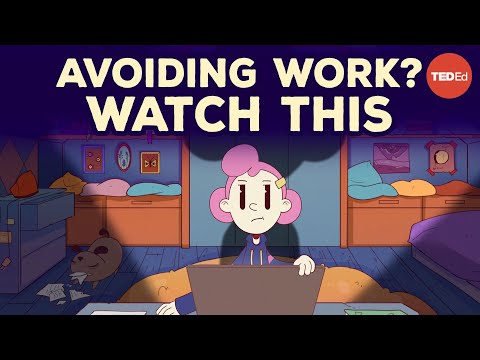
What did 204 poll votes say about why we procrastinate?
They said fear and stress, far more than laziness. Both polls asked “Why do you think you procrastinate?” They’re self-selected X polls from my own account, so they show what my audience believes about itself rather than a scientific sample. Dates weren’t recorded when we captured them, and both were captured before they closed, so the totals are the votes counted at that point.
| Poll | Answer options and share of votes | Votes |
|---|---|---|
| Poll A: “Why do you think you procrastinate?” | Fear of Failure 32%, Imposter Syndrome 26%, Low Self Esteem 24%, Perfectionism 18% | 92 |
| Poll B: “Why do you think you procrastinate?” | Because I Stress 35%, Because I am Uninspired 32%, Because I’m Lazy 20%, Because I Lack Clarity 13% | 112 |
Poll A didn’t even offer laziness, and every single option was a fear or a belief about yourself. Poll B did offer it, and it came third. Stress and feeling uninspired together took 67%.
Is procrastination just laziness?
No. Laziness means you don’t want to put in effort. Procrastinators usually do want to, which is why they feel so bad about it. Psychologist Fuschia Sirois, one of the leading researchers on this, told the American Psychological Association that procrastination is a problem of emotion regulation, not laziness or poor time management. We’re not avoiding the task. We’re avoiding the negative feeling attached to it.
Sirois and Tim Pychyl describe it as short-term mood repair: you feel better now, and your future self pays the bill. That’s why the “lazy” label is so unhelpful. Calling yourself lazy adds shame, and shame is one more feeling to run from.
Cause 1: Fear of failure
Fear of failure was the top answer in Poll A at 32%. When the outcome matters to you, starting feels risky, because trying and falling short would say something about you. Waiting gives you an excuse.
Stanford’s Center for Teaching and Learning explains this through self-worth theory: if you believe your performance shows your ability and your ability shows your worth, procrastination becomes self-protection. If it goes badly, you can blame the rush. It’s a quiet deal you make with yourself, and it keeps you from ever finding out what you’re capable of.
Cause 2: Stress and overwhelm
Stress was the biggest answer in Poll B at 35%. When your plate is already full, a new task doesn’t look like one more thing. It looks like the thing that breaks you, so your brain pushes it away.
I’ve said it in my own videos: “stress is fear of loss of control.” When you can’t see how a task will turn out, delaying it feels like a way to hold on to control a little longer.
This is the cause people misread most often. From the outside it looks like avoidance. From the inside, it’s someone running on empty. Piers Steel’s meta-analysis in Psychological Bulletin, built on 691 correlations, found that task aversiveness, how unpleasant a task feels, is one of the strongest and most consistent predictors of procrastination. Stress makes almost everything feel more aversive.
Cause 3: Feeling uninspired
Thirty-two percent of Poll B said they procrastinate because they’re uninspired. That’s not a character flaw. It’s usually a sign the task isn’t connected to anything you care about, or the payoff is so far away it doesn’t feel real. Steel’s review found that distant rewards are another strong predictor of delay.
I wrote this on X in July 2026: “The reason you keep needing motivation is because you’re committed to a life you don’t actually want.” Sometimes being uninspired is information. It’s worth asking whether the task is the problem or the direction is.
Cause 4: Imposter syndrome and low self-esteem
Put together, imposter syndrome (26%) and low self-esteem (24%) made up half of Poll A. Both come down to the same belief: “I’m not the kind of person who can pull this off.” If you don’t believe you can do something well, starting feels pointless.
John Assaraf said it straight when he came on my podcast: “procrastination by the way is done because of low self-esteem. Because if you knew how to get something done, you could do it highly effectively and on time and you were loving it, you’d freaking do it.” He added that most people procrastinate “because they feel doubtful” or worry “that if they don’t do it perfectly, somebody’s going to judge them.” He explained the deeper pull back to your comfort zone as the thermostat effect, and it’s one of the best explanations of self-sabotage I’ve heard.
Steel’s research backs him up: low self-efficacy, not believing you can succeed, was another of the strong predictors.
Cause 5: Perfectionism and lack of clarity
Perfectionism took 18% of Poll A and lack of clarity took 13% of Poll B. They look different, but they work the same way. Perfectionism says, “Don’t start until you can do it flawlessly.” Lack of clarity says, “Don’t start until you know exactly what to do.” Both keep you waiting for a moment that never arrives.
I posted this in July 2024: “Perfectionism leads to quitting when a single element is out of place. Focus on persistence over flawlessness.” When the target is fuzzy or impossibly high, the safest move your brain can find is to not begin at all.
Why does procrastinating feel good and then terrible?
Because the relief comes first and the cost comes later. The second you close the tab or push the task to tomorrow, the anxious feeling drops. Your brain notices that drop and files it away as a win, so the next time the same task shows up, it reaches for the same escape.
The bill arrives later as guilt, a tighter deadline and a bigger version of the same fear. That’s the loop Sirois and Pychyl describe, and it’s why “I work better under pressure” is usually a story people tell after the fact. The pressure didn’t help. It just finally outweighed the fear.
Breaking the loop doesn’t take a personality transplant. It takes catching the moment of relief, noticing what you just escaped, and choosing a smaller step instead of a full retreat.
How do you find your own reason for procrastinating?
Ask one honest question about the task you’re avoiding right now: what am I afraid will happen if I start? Your answer usually points to one of the five causes above.
- If the answer is “it won’t be good enough,” it’s fear of failure or perfectionism.
- If it’s “I can’t take one more thing,” it’s stress.
- If it’s “who cares,” it’s feeling uninspired.
- If it’s “I’m not qualified,” it’s imposter syndrome or self-esteem.
- If it’s “I don’t know where to begin,” it’s clarity.
Once you know the cause, the fix gets a lot more specific. I put together a step-by-step guide on how to stop procrastinating that matches each of these feelings with something you can do in the next ten minutes.
Frequently Asked Questions
What is the main reason people procrastinate?
Most research points to avoiding negative emotions tied to a task. In my two X polls (204 votes), the biggest answers were stress (35%) and fear of failure (32%).
Is procrastination a sign of anxiety?
It can be. Anxiety makes tasks feel threatening, and delaying them brings quick relief. If anxiety is affecting your daily life for weeks, talk to a doctor or licensed therapist.
Why do I procrastinate even when I want to do something?
Because caring raises the stakes. The more a task matters, the stronger the fear of doing it badly, which makes delay feel safer in the moment.
Why do smart people procrastinate?
Smart people often tie their worth to performing well. Stanford’s teaching center notes that procrastinating gives them an excuse if the result disappoints, which protects their self-image.
Is procrastination a choice?
Researchers define it as a voluntary, unnecessary delay. It’s a choice in the moment, but it’s driven by feelings, so changing it means dealing with those feelings, not just forcing yourself harder.
Success Advice
How to Stop People-Pleasing When the Real Problem Is Feeling “Not Enough”
How to stop people-pleasing with two daily habits from my conversation with Marisa Peer, plus a simple test for whether criticism should even get in.

How to stop people-pleasing starts with the belief underneath the habit: you don’t feel like you’re enough, so you keep trying to earn connection and dodge rejection. Therapist Marisa Peer never used the words “people-pleasing” when I interviewed her, but that’s the pattern I kept hearing. You work twice as hard to be liked, then still feel like a fake when someone actually likes you back.
I first came across Marisa at a Mindvalley A-Fest talk, then had her on the Addicted to Success podcast. The conversation is below. If you’d rather read, I’ve pulled out the parts I still use, and how I read them against people-pleasing.

What is the root cause of people-pleasing?
The root cause, as I read her work, is a survival pattern. Your mind is built to find connection and avoid rejection, and when you believe “I’m not enough,” pleasing people feels like the safest way to stay in the tribe.
Marisa said the most interesting thing about the mind is that it doesn’t care whether what you tell it is good or bad, true or false. “It just lets it in.” A lot of us think the mind’s job is to make us happy. She was blunt about that. “It really isn’t. It’s to make you survive.”
Later she put the survival job in even plainer terms. When you were born, she said, you had two great needs: “find connection and avoid rejection.” In a tribe, rejection could finish you. Today you can live alone, get your food delivered, and never see a soul. The body hasn’t caught up. It still treats a “no,” an ignored message, or a cool look in a meeting like danger.
Then she named the belief she sees under almost every client, from models and actors to CEOs and billionaires: “They never feel enough.” They want more money, more success, more accolades, more attention, “because I just don’t feel I’m enough.” That’s why people-pleasing is so sticky. If the real fear is that you’re not enough, every yes is an attempt to buy belonging. Every no feels like you might get cut off.
What are the characteristics of a people pleaser?
A people pleaser works overtime to be accepted, then doubts the love or praise they actually get. That’s my label, not hers. The patterns she described are easy to recognize if you live this way.
You shrink from attention even though, as she pointed out, you arrived on the planet wanting it. You can’t ask for a raise, chair a meeting, or walk up and say hello, because the question in your head is, “What are they thinking of me?” Her answer was, “Who cares? What you think of you matters.” And then the line I still come back to: “When you think you’re interesting and nice and warm and compelling, everyone else does as well. And when you think you’re not and try to fake it, people pick up that you don’t really believe in yourself.”
It shows up in relationships too. She said once you feel unlovable, you can find someone who loves you and still think, “I’ve fooled you. One day you’ll find out the truth and you’ll dump me.” Those people, she said, “bring about the ending super fast.” That’s people-pleasing in a close relationship: you over-give, then sabotage the thing you wanted, because you don’t believe you were allowed to have it.
It also shows up in how you wait for other people to tell you that you did a good job, and in how quickly you agree with criticism. I’ll come back to both, because those are the parts you can actually practice.
Why do I feel like I’m not good enough?
You feel like you’re not good enough because that belief got in early, usually through comparison, and your mind kept it. Marisa’s view is that almost everyone is carrying some version of it, including people the rest of us put on a pedestal.
She talked about parents who say, “This is the pretty one, and this is the smart one,” or schools that pit kids against each other and only mark achievement, never effort. Her own daughter once pointed to a classmate and said she could write her name in a box, and Phaedra couldn’t. The other girl’s name was Amy. Hers was Phaedra. The school had turned a longer name into a verdict.
I see the same thing when I sit with high achievers one-on-one. The world puts them on a pedestal, and in the room they struggle with the same feeling everybody else does. Marisa’s point was that we all need at least one person to believe we’re enough. If you didn’t get that, you can spend your life trying to get the whole world to make up for it. If this is the loop you can’t shake, I also recommend reading about the “I’m not enough” mentality. The work below is about what that belief makes you do to other people, and to yourself, when you’re trying to stay liked.
How do you stop seeking validation from other people?
You build a self-praise habit, because other people’s praise will never be enough if you don’t believe it. Marisa was direct: “Nothing on the planet will grow your self-esteem like self-praise, not the praise of other people.”
Her reason is practical. When a shop assistant says you look great in that color, your brain knows there’s a commission in it. When you praise yourself, “it just thinks it must be true because you say it a lot.” It doesn’t have to be dramatic. “I’m a great person. I’m kind. I let someone in front of me in the queue. I did a great job at work.” The words you most wanted to hear when you were little are a good place to start.
This matters even more if you work for yourself. Years ago, she said, you went to work and looked to a boss for “Well done. Good job.” If you’re building a business, “you might have to go for two years before anyone says, ‘Great job.'” I know that stretch. You can ship work for months and hear nothing. “If you can’t build up your own praise muscle,” she said, “then you just won’t make it.”
She used that muscle to finish her first book. She sat at the computer and told herself it was amazing, even though the first chapters later looked amateur to her. “If I’d said that in the beginning… I could never have finished it.” Then she sent it to a publisher, and they did love it. “First of all, it’s what you say, but very quickly it becomes who you are.” Your mind will object at first. Keep saying it until you run out of objections.
Why don’t affirmations work, and what should you say instead?
Affirmations often fail because your mind objects to them. Marisa doesn’t even call them affirmations. She uses what she calls statements of truth, and the one that doesn’t get an argument is “I am enough.”
I’ve seen clients with a hundred flashcards who still feel worse, because the words don’t match their life. Marisa had the same warning. If you tell yourself you’re a rock star while you live in a shared apartment and drive a 12-year-old car, your mind says, “No, you’re not.” She told me about a client who had a wall quote saying every day should be a beautiful walk through the park. “That’s not true,” Marisa said. If the park is rainy, you’ve given yourself a silly thing to live up to.
“When you say, ‘I’m enough,’ your mind never objects to that because it’s true.” She has people write it on their mirrors, their wallpaper, and their screensaver, and set phone alerts first thing in the morning and later at night. She still has that alert on her own phone. She says it in the shower and while she’s cleaning her teeth, because those are the minutes when nothing else is competing for the sentence. “I’m enough. I’m good enough. I’m lovable enough. I’ve always been enough, and I always will be enough.”
She likes songs like “This girl is on fire” or “I’m titanium” before she walks on stage. “As long as you’ve got ‘I am enough’ as your core belief, then the other ones are just gravy.” That’s the shift out of people-pleasing. “When you know you’re enough, you don’t have to prove yourself. You don’t have to put on an act.” You still go to the gym and work hard, “but you don’t battle with yourself and feel like a fake that’s trying to fool the whole world.”
How do you stop taking criticism so personally?
You run it through her PPP test: if it isn’t permanent, personal, and all-pervasive, it doesn’t get to run you. “If something’s going to hurt you, it has to cover the three Ps.”
Take a difficult boss. “That isn’t personal. He’s probably mean to everyone. It isn’t permanent, because one day he won’t be your boss.” And it isn’t all-pervasive, because when you’re at home having dinner, he isn’t in the room. “Problems cannot get you unless they’re permanent, personal, and all-pervasive, and they very, very rarely are.” I liked that, and I also know what I said to her at the time: a lot of people carry the boss in their head anyway. That’s the part you have to stop feeding.
The same test applies to the critic in your own mouth. “Your brain doesn’t care. It will let that in.” If you say, “I’m rubbish, I’m useless, I stank up the place,” the mind files it as fact. If you say, “I made a mistake today, but I learned from that mistake, and I won’t do that again,” the mistake becomes part of your education. She quoted Napoleon: “A man who never made a mistake never made anything.”
The line I want people to keep is this: “You can’t choose what people say, but you can certainly choose how you feel about it.” And the sharper one: “The only person who can really, really reject you is you. Nobody can reject you unless you agree with every single thing they say.” If rejection is the tripwire that turns you into a pleaser, this sits alongside practical advice on dealing with rejection. Her three daily moves were simple. “Up the praise, minimize the criticism, and write I’m enough all over your house, and that will change your life.”
How do you start saying no without feeling like a bad person?
You say no from “I’m enough,” not from a script. The usual boundary advice still helps, but it collapses if you’re only saying no while secretly bargaining for approval.
Pause before you say yes. If the yes is about being liked, that’s useful information. Give a short no without a long speech. Over-explaining is often another way of pleasing. Let someone be disappointed without rushing to fix their mood. At work, practice one smaller no first, like a meeting that doesn’t need you, or a favor that isn’t yours.
Marisa’s backing for that is the “enough” belief, not a boundary worksheet. When you know you’re enough, you can ask for a raise, chair a meeting, or walk up and talk to someone. You don’t have to fake confidence and hope nobody notices. You still work hard, and you also take time out, go to the gym, and eat better food, “because you know that you deserve all of that and more.” Saying no gets easier when you’re not using every yes to prove you belong.
What does it mean to be the parent you never had?
It means you start saying the words you waited for someone else to say, and you say them to yourself until they go in. “It’s never too late to be the parent you never had,” Marisa told me.
She works with a lot of people who grew up without a father who showed up, or with a parent who couldn’t be bothered. A child, she said, only has one explanation: “He doesn’t love me because I’m not lovable enough.” That story can follow you into every yes you shouldn’t give as an adult. You keep trying to be good enough for someone who isn’t even in the room anymore.
Her instruction is to go back and say what you most wanted to hear. “You’re a good son. You’re interesting. You deserve a great dad.” Then keep saying it. “Just because your dad didn’t think you were worth anything, that has nothing to do with who you are or why you’re here.” I like how she framed the mind itself: “Your mind should be your best friend. It should be your cheerleader.” If it’s been a critic for twenty years, this is how you retrain it.
Is confidence the same as arrogance?
No. Confidence is specific and reassuring. Arrogance is a performance. People-pleasers often shrink because they’re scared of looking arrogant if they own what they’re good at.
Marisa loves that Muhammad Ali said, “I’m the greatest,” before it was true, and then it became true. She told me about a flight that hit horrible turbulence. The pilot came on and said he was the most experienced British Airways pilot on that route, and this was just a little detour. Nobody thought, “How arrogant.” They thought, “Thank goodness.” “His confidence was so reassuring.”
You want the same thing from a doctor, a teacher, or a chef. “We love people telling us we’re the best without arrogance.” The people who are actually good, she said, can tell you their skill set without claiming they also do everything else. That’s permission to stop watering yourself down so nobody in the room feels threatened. Her line at the end of that stretch is the one I wrote down: “Belief without talent will take you way further than talent without belief, but when you have both, then you’re unstoppable.”
When I asked for her last 30-second speech to the world, she didn’t give a pitch. She said she spent the first 25 years of her life wishing she could be anyone else, and now she’d be glad she’d been herself, “really happy that I’ve left a legacy behind of how people can feel enough.” That’s the work. You can find more of it at marisapeer.com.
Frequently asked questions about how to stop people-pleasing
What is the root cause of people-pleasing?
A survival need to stay connected and avoid rejection, sitting on the belief “I’m not enough.” Marisa Peer describes those as the mind’s old jobs. People-pleasing is what it looks like when you try to buy belonging with yeses.
What are the characteristics of a people pleaser?
You over-give, avoid attention, and struggle to ask for what you want. You doubt praise when it comes, wait for other people to validate you, and take criticism as proof that you were never enough.
How do you stop people-pleasing?
Practice daily self-praise, repeat “I am enough” as a statement of truth, and use the PPP test so criticism doesn’t run you. Then start with one honest no, instead of collecting more tips you’ll never use.
Why do I feel like I’m not good enough?
The belief usually starts with comparison, and the mind keeps it because it treats your self-talk as fact. Marisa’s point is that the feeling is common, even among high achievers, and it can be retrained.
How do you stop seeking validation?
Praise yourself on purpose, especially if you work alone and can go a long time without a “great job.” Other people’s compliments help less than you think, because you already suspect they have a motive.
Is people-pleasing an ADHD thing?
This interview doesn’t address ADHD, and I’m not going to diagnose anyone from a habit. People-pleasing can show up for a lot of reasons. The useful work here is still the “enough” belief, self-praise, and cleaner boundaries.
Success Advice
Employee Burnout Statistics: Original Poll Data From 49 X Polls (2026)
Employee burnout statistics from my own X polls, with each exact question, date, vote count and a raw CSV you can download, check and cite.

Employee burnout statistics from my own audience: 80.4% of the people who answered my latest X poll are burned out at least a little right now. When I asked “Are you burned out right now?” (97 votes, 22 to 23 November 2026), 46.4% said “Yes, badly” and 34.0% said “A little.” Only 3.1% said “Never.”
That lines up with what my followers told me before. When I asked what they need to fix most, 29% said “overcome tiredness” and 19% said “stop feeling overwhelmed” (89 votes, 4 March 2024). When I asked why they feel less productive, 31% said “I’m genuinely tired” (51 votes, 5 March 2024). In a separate poll with no recorded date, 23% of 125 voters said “feeling burntout” is what’s blocking their goals.
This page is original data, not a roundup. Every number below comes from polls I ran on my own X account (@IamJoelBrown, now @Joelbrown), with the question word for word, the date where we could confirm it, the vote count and a link to the live post where it still exists. I’m not going to dress it up as a scientific study. It’s what my audience told me, across more than 4,000 votes, when I asked them straight.
Here’s why I care. Tired people don’t lack dreams. They lack fuel. And you can’t pour from an empty cup, no matter how many motivational quotes you read. So I keep asking my audience where it hurts, and I publish what they say.
What do the 9 dated X polls show about burnout, energy and stress?
The short answer: most of my audience is running low. In the newest poll, 80.4% said they’re burned out at least a little, and the 2024 polls show tiredness and overwhelm again and again, even when I didn’t ask about burnout directly. These 9 polls are the ones we could put a date on, newest first. Eight have an exact calendar date and a live X post you can check yourself. One (the 2024 goals poll) can only be placed between late 2023 and 2024, so I’ve labeled it that way instead of guessing a day. Together they hold 811 votes (one of those counts was captured mid-poll).
| Date | Question | Top answer | Total votes | Source |
|---|---|---|---|---|
| 22 Nov 2026 | Are you burned out right now? | Yes, badly (46.4%) | 97 | Live post |
| 18 Apr 2024 | What do you struggle with the most in business? | Getting Leads (34%) | 111 | Live post |
| 5 Apr 2024 | What is it about your health that you would like to improve the most? | Energy levels (33%) | 119 | Live post |
| 28 Mar 2024 | If you could achieve one of these things instantly what would it be? | Lose Weight (48%) | 89 | Live post |
| 24 Mar 2024 | If you could learn how to level up in one area and make a great living out of it which area would it be? | Coaching (35%) | 80 | Live post |
| 5 Mar 2024 | When you feel less productive what do you think the real reason is? | I’m just not motivated (69%) | 51 | Live post |
| 4 Mar 2024 | Which do you feel you need to do the most? | Stop feeling frustrated (31%) | 89 | Live post |
| 1 Mar 2024 | If you could get one thing right in your life, which one would it be? | Better Habits (40%) | 77 | Live post |
| Late 2023 to 2024 (day not recorded) | What’s your main goal for 2024? | Learn New Skills (31%) | 98 | Screenshot only |
Dates are in Pacific time. Each X poll ran for 24 hours. For the eight polls that are still live, the vote counts per option come straight from the live post, so they’re exact.
80.4% are burned out at least a little right now
Most of my audience is. 78 of 97 voters (80.4%) said they are burned out at least a little. 45 said “Yes, badly” (46.4%), 33 said “A little” (34.0%), 16 said “Not really” (16.5%) and 3 said “Never” (3.1%). This is the newest poll on the page and the only one that asked about burnout head-on. Almost half the room picked the worst option. That should stop you in your tracks.
- Question: “Are you burned out right now?”
- Date: 22 November 2026, 4:10 PM PT (closed 23 November 2026, 4:10 PM PT)
- Total votes: 97 (final)
- Results: Yes, badly 46.4% (45 votes); A little 34.0% (33 votes); Not really 16.5% (16 votes); Never 3.1% (3 votes)
- Source: See the live poll on X
29% want to overcome tiredness, and 19% want to stop feeling overwhelmed
Almost half of the 89 people who voted picked an energy problem: tiredness (29%) or overwhelm (19%). The single biggest answer was “stop feeling frustrated” at 31%, and 21% wanted to get out of a rut. That’s the burnout picture in one poll.
- Question: “Which do you feel you need to do the most?”
- Date: 4 March 2024
- Total votes: 89 (final)
- Results: Stop feeling overwhelmed 19% (17 votes); Overcome tiredness 29% (26 votes); Quickly get out of a rut 21% (19 votes); Stop feeling frustrated 31% (27 votes)
- Source: See the live poll on X
31% say they feel less productive because they are genuinely tired
Roughly one in three of 51 voters said low productivity comes from real tiredness, not attitude. The other 69% said “I’m just not motivated.” I find that split honest. Most people blame motivation first. But a third are telling you their tank is empty, and no pep talk fixes an empty tank. Rest does.
- Question: “When you feel less productive what do you think the real reason is?”
- Date: 5 March 2024
- Total votes: 51 (final)
- Results: I’m genuinely tired 31% (16 votes); I’m just not motivated 69% (35 votes)
- Source: See the live poll on X
If the tiredness numbers above sound like you, the A2S piece on the hidden culprits of burnout is a good next read.
33% most want to improve their energy levels
Energy was the top health goal among 119 voters at 33%, ahead of eating habits (26%), sleep (23%) and focus (18%). Put energy and sleep together and more than half the room is talking about running low.
- Question: “What is it about your health that you would like to improve the most?”
- Date: 5 April 2024
- Total votes: 119 (final)
- Results: Eating habits 26% (31 votes); Energy levels 33% (39 votes); Sleep 23% (27 votes); Focus 18% (22 votes)
- Source: See the live poll on X
30% named work-life balance as their main goal for 2024
Work-life balance came within one point of the top answer. Learning new skills got 31%, work-life balance 30%, quitting a bad habit 22% and changing career or business 17%. The 98 votes were captured while the poll still had 16 hours left, so treat that count as in progress, not final. I couldn’t recover the post itself, so there’s no link and no exact day.
- Question: “What’s your main goal for 2024?”
- Date: Late 2023 through 2024 (exact day not recorded)
- Total votes: 98 (count captured while the poll was still open)
- Results: Learn New Skills 31%; Work-Life Balance 30%; Change Career/Biz 17%; Quit a Bad Habit 22%
- Source: No live post found (screenshot only)
Content creation, leads and sales split business struggles almost evenly
There was no clear winner among 111 voters: getting leads 34%, content creation 33%, sales 33%. Every part of the business felt heavy at about the same rate. When everything is a struggle at once, that’s often a capacity problem, not a skills problem.
- Question: “What do you struggle with the most in business?”
- Date: 18 April 2024
- Total votes: 111 (final)
- Results: Content Creation 33% (37 votes); Getting Leads 34% (38 votes); Sales 33% (36 votes)
- Source: See the live poll on X
40% said better habits is the one thing they would get right
Better habits won with 40% of 77 votes, ahead of living in my purpose (30%), a stronger mindset (18%) and getting lucky more often (12%). People know the fix is daily and boring. Luck came last, and I love that.
- Question: “If you could get one thing right in your life, which one would it be?”
- Date: 1 March 2024
- Total votes: 77 (final)
- Results: Get Lucky More Often 12% (9 votes); Have a Stronger Mindset 18% (14 votes); Live in My Purpose 30% (23 votes); Better Habits 40% (31 votes)
- Source: See the live poll on X
35% would pick coaching as the area to level up and earn a living from
Coaching led the final count with 28 of 80 votes (35%). Publishing a book got 26 (32.5%), speaking on stages 24 (30%) and copywriting 2 (2.5%). The screenshot was taken mid-poll at 71 votes (Coaching 37%, Speaking on Stages 30%, Publishing a Book 32%, Copywriting 1%), so I’ve used the final live count here and worked the percentages from it.
- Question: “If you could learn how to level up in one area and make a great living out of it which area would it be?”
- Date: 24 March 2024
- Total votes: 80 (final)
- Results: Coaching 35% (28 votes); Speaking on Stages 30% (24 votes); Publishing a Book 32.5% (26 votes); Copywriting 2.5% (2 votes)
- Source: See the live poll on X
48% would choose to lose weight if they could achieve one thing instantly
Losing weight took 48% of 89 votes, building muscle 36% and body confidence 16%. Not a burnout question, but it shows how much of this audience’s energy is tied up in how they feel in their own body.
- Question: “If you could achieve one of these things instantly what would it be?”
- Date: 28 March 2024
- Total votes: 89 (final)
- Results: Body Confidence 16% (14 votes); Build muscle 36% (32 votes); Lose Weight 48% (43 votes)
- Source: See the live poll on X
Earlier polls (date not recorded)
These 40 X polls are real, but their post dates are not recorded. I deleted many of them over the years, and we couldn’t recover a date or a live link, so the date for every poll in this section is marked “not recorded.” The figures are transcribed from screenshots, exactly as X displayed them, spelling included (“Burntout”, “Esteen”, “Accountablity”). Many screenshots were taken while the poll was still open, so those vote counts are a snapshot, not the final tally. The status column tells you which.
Which undated polls ask about burnout, stress, tiredness and overwhelm?
Burnout shows up by name in one poll: 23% of 125 voters said “feeling burntout” is what blocks their goals and habits. Tiredness was the top emotional struggle in another poll at 36% of 75 votes, with overwhelm at 25%. Date: not recorded for every poll in this table.
| Question | Results (as shown on X) | Votes on card | Status when captured |
|---|---|---|---|
| What do you believe is blocking you from achieving big goals and sticking to powerful habits in your life right now? | Feeling Burntout 23%; Feeling Distracted 28%; Feeling Overwhelmed 23%; Overthinking 26% | 125 | Open, 6 hours 11 minutes left |
| What do you emotionally/mentally struggle with the most? | Tiredness 36%; Overwhelm 25%; Sad 16%; Lack of Clarity 23% | 75 | Open, 21 hours 1 minute left |
| What would you like to improve on? | Increased Focus 32%; Achieve Big Goals 16%; Avoid Burnout 11%; Become More Disciplined 41% | 38 | Open, 23 hours 33 minutes left |
| What do you think is stopping you from being more disciplined and more successful? | Social Media Distraction 32%; Mental Health Struggles 24%; No Accountablity Support 14%; No Clear Strategy 30% | 63 | Open, 20 hours 36 minutes left |
In that first table you’ll see “overthinking” got 26% in the same poll where burnout got 23%. The two feed each other. If that’s your loop, read how to stop overthinking and start there.
Which undated polls show stress as something people want to fix?
Stress keeps coming up as a thing to fix, not just a feeling. “Learn how to stress less” got 31% of 51 votes, and “reduced stress” was the second pick at 31% when I asked what one upgrade God could grant you. Date: not recorded for every poll in this table.
| Question | Results (as shown on X) | Votes on card | Status when captured |
|---|---|---|---|
| What would you love to learn how to do? | Improve my daily habits 41%; Learn how to stress less 31%; Achieve big goals 16%; Create a clear strategy 12% | 51 | Open, 21 hours 51 minutes left |
| What would you love to learn how to do? | Manage my time better 23%; Improve my daily habits 38%; Cut down on social media 4%; Learn how to stress less 35% | 26 | Open, 23 hours 13 minutes left |
| If God granted you only one instant upgrade/power in your life what would you choose? | Increased Productivity 23%; Improved Reputation 0%; Reduced Stress 31%; Greater Opportunities 46% | 52 | Open, 23 hours 3 minutes left |
| If you could learn and improve in one of these areas, which one would it be? | Lowering My Stress Levels 18%; Discovering My Purpose 30%; Achieving Big Goals 29%; Increasing My Focus 23% | 97 | Open, 12 hours 48 minutes left |
| If you could upgrade your mindset in an instant, what is the most beneficial thing for you to up-level in? | Become more focused 17%; Become more resilient 18%; Become more relaxed 20%; Become more disciplined 45% | 65 | Open, 21 hours 17 minutes left |
| If you could instantly upgrade one area of your mindset overnight which one would it be? | Become more resilient 8%; Overcome procrastination 40%; Discover my purpose 32%; Increased focus 20% | 65 | Open, 22 hours 6 minutes left |
| If you could improve one area of your life what would it be? | Focus 11%; Energy 22%; Stress 16%; Discipline 51% | 45 | Open, 23 hours 53 minutes left |
| When you procrastinate what is the strongest feeling you experience? | Regret 34%; Relief 5%; Guilt 22%; Anxiety 39% | 121 | Open, 21 hours left |
What do the undated procrastination and discipline polls show?
Stress and fear drive procrastination more than laziness. “Because I stress” led one poll at 35% of 112 votes, while “because I’m lazy” got 20%. In another, fear of failure led at 32%. Date: not recorded for every poll in this table.
| Question | Results (as shown on X) | Votes on card | Status when captured |
|---|---|---|---|
| Why do you think you procrastinate? | Fear of Failure 32%; Perfectionism 18%; Low Self Esteen 24%; Imposter Syndrome 26% | 92 | Open, 5 hours 25 minutes left |
| Why do you think you procrastinate? | Because I’m Lazy 20%; Because I Lack Clarity 13%; Because I Stress 35%; Because I am Uninspired 32% | 112 | Open, 20 hours 57 minutes left |
| What do you feel are your biggest obstacles when it comes to achieving your goals? | Lack of Clarity 19%; No Motivation 30%; Fear of Failure 25%; Poor Time Management 26% | 121 | Open, 3 hours 20 minutes left |
| What do you believe would make you more disciplined? | Clear Goals 18%; Better Habits 50%; Time Management Skills 15%; Organization Tools 17% | 34 | Open, 23 hours 38 minutes left |
| What’s your biggest frustration right now? | Stuck in a dead end job 15%; Not in my full potential 73%; Not enough freedom 12% | 33 | Open, 19 hours 11 minutes left |
| What is your biggest fear? | Fear of wasted potential 54%; Fear of losing control 6%; Not being good enough 27%; Being stuck 13% | 63 | Open, 9 hours 59 minutes left |
What did people want to learn and improve in the undated polls?
Wealth and better daily habits came up most. Wealth took 49% in one development poll, and “better daily habits” won 46% of 80 votes in another. Date: not recorded for every poll in this table.
| Question | Results (as shown on X) | Votes on card | Status when captured |
|---|---|---|---|
| Which topics are you most interested to learn about this year? | Overcome Procrastination 19%; Discover Your Purpose 15%; Wealth Creation 39%; Improving Daily Habits 27% | 80 | Final |
| What area would you like to develop more in? | Productivity 17%; Business 20%; Wealth 49%; Faith/Spirituality 14% | 35 | Open, 23 hours 35 minutes left |
| If you could instantly upgrade your mind with new wisdom what would you want it to be filled with? | How to manage money 21%; How to become healthy 37%; How to be more organized 25%; How to be charismatic 17% | 75 | Open, 13 hours 57 minutes left |
| What topics are you most interested in learning about to improve your life? | Financial Management 37%; Emotional Intelligence 18%; Health & Wellness 26%; Entrepreneurship 19% | 38 | Open, 17 hours 1 minute left |
| Which area of personal development would you like to improve in the most? | Productivity 19%; Purpose 26%; Habits 29%; Money Mindset 26% | 42 | Open, 16 hours 21 minutes left |
| My book I’m writing is about adapting to the rapidly crazy times we are in. What words in the subtitle do you like and are drawn to wanting to learn? | Adapt to change 18%; Become more resilient 36%; Increase your focus 21%; Have more clarity 25% | 33 | Open, 19 hours 17 minutes left |
Which undated polls asked about goals, vision and wealth?
Achieving big goals and building wealth led these. “Achieve Big Goals” won 42% of 33 votes in one poll, and “Wealth Building” took 40% in another. Date: not recorded for every poll in this table.
| Question | Results (as shown on X) | Votes on card | Status when captured |
|---|---|---|---|
| What would you love to learn how to do? | Increase My Focus 30%; Achieve Big Goals 42%; Double My Confidence 18%; Craft a Powerful Vision 10% | 33 | Open, 22 hours 43 minutes left |
| If you could create one of these things, which one would excite you the most and would be most beneficial for you? | Create an exciting Vision 57%; Set new goals 14%; Create a workout plan 14%; Create a diet plan 15% | 21 | Open, 23 hours 9 minutes left |
| Which are do you want to learn and improve in the most? | Wealth Building 40%; Managing Finances 20%; Developing Other Skills 33%; Sales 7% | 15 | Open, 23 hours 28 minutes left |
| If you could instantly level up in one of these areas in your life, which one would it be? | A Stronger Mind 17%; More Wealth 40%; Better Habits 28%; More Confidence 15% | 58 | Open, 22 hours 48 minutes left |
| If you could achieve this one dream within the space of 90 days with 100% success which one would it be? | Craft & Live in My Vision 16%; Launch a Business 19%; Improve My Health 53%; Double my Focus 12% | 32 | Open, 21 hours 43 minutes left |
| If you could learn and improve in one of these areas, which one would it be? | Achieving big goals 18%; Better daily habits 46%; Discovering my purpose 16%; Increasing my focus 20% | 80 | Open, 19 hours 59 minutes left |
What do the undated business, health and coaching polls show?
Getting fitter led the biggest health poll at 35% of 162 final votes, and skill development dominated the online academy poll at 71%. Date: not recorded for every poll in this table.
| Question | Results (as shown on X) | Votes on card | Status when captured |
|---|---|---|---|
| Which area of business are you struggling with the most? | Content Creation 26%; Sales 26%; Scaling 22%; Running Ads 26% | 23 | Open, 22 hours 45 minutes left |
| If you could level up in one area of your health what would it be? | Get fitter 35%; Optimize my brain 30%; Better sleep/recovery 15%; Lose weight 20% | 162 | Final |
| What motivates you to join an online academy? | Personal Satisfaction 10%; Skill Development 71%; Networking 7%; Certification or Credit 12% | 41 | Open, 22 hours 47 minutes left |
| How do you prefer to consume educational content? | Pre-Recorde Video Classes 38%; Reading Materials (PDF’s) 26%; Audio Recordings 3%; LIVE online workshops 33% | 34 | Open, 21 hours 19 minutes left |
| What is your preferred duration for a coaching program? | Less than 3 months 35%; 3–6 months 35%; 6–12 months 6%; Ongoing with no end date 24% | 49 | Open, 12 hours 16 minutes left |
| If you had a coach help you create clarity and focus for your life with a game plan to achieve your goals, what timeframe suits you for crafting and executing a game plan? | 30 Days 17%; 60 Days 24%; 90 Days 32%; 6 Months 27% | 41 | Open, 13 hours 3 minutes left |
What did the undated fear and world-events polls show?
Government control was the top fear in the largest poll on this page: 48% of 688 final votes. In the Agenda 2030 poll with 359 final votes, 43% picked “my kids future.” Date: not recorded for every poll in this table.
| Question | Results (as shown on X) | Votes on card | Status when captured |
|---|---|---|---|
| What do you fear most? | Economic collapse 32%; Losing your job 15%; Friends rejecting you 5%; Government control 48% | 688 | Final |
| When it comes to this world wide planned agenda that’s rolling out right now (Agenda 2030) what are you most concerned about? | Where to put my money 18%; Leaving my 9-5 14%; My kids future 43%; Where I should live 25% | 359 | Final |
| What do you fear most about the future? | Economic Instability 11%; World War 15%; Governmental Control 39%; My children’s future 35% | 101 | Open, 22 hours 49 minutes left |
| What are you most concerned about when it comes to the New World Order (Agenda 2030) plans? | Social Credit System 13%; Economic Collapse 18%; Government Control 38%; My Kids Future 31% | 56 | Open, 13 hours 22 minutes left |
Is there any non-X poll in the data?
Yes, one. It’s an Instagram story poll, kept separate and not counted in the X totals. Its question wasn’t shown on the results screen and its date is not recorded. Instagram showed the vote counts per option, so these are exact: Become More Resilient 12% (11 votes); Overcome Procrastination 41% (37 votes); Discover My Purpose 32% (29 votes); Increased Focus 15% (14 votes). Total: 91 votes.
How was this burnout data collected? (Methodology)
Every poll here is an X (Twitter) poll I posted to my followers on @IamJoelBrown (the same account is now @Joelbrown), except one Instagram story poll that is labeled separately. That’s 49 X polls with 4,185 votes counted, plus 91 Instagram votes. Some counts were captured while polls were still open, so not every count is final.
- Who answered: people who follow me and chose to vote. Respondents are self-selected, so this is not a scientific or representative sample of all employees.
- Dates and sample sizes: the 9 dated polls are listed in the table above with their date and total votes. Eight have exact dates confirmed from the live X post (22 November 2026, plus 1 March to 18 April 2024, Pacific time). One is a range (late 2023 through 2024). The other 40 X polls have no recorded date.
- Percentages: X shows rounded whole-number percentages, and I report them exactly as displayed. For the November 2026 burnout poll, the percentages are worked from the exact final counts to one decimal. For the 24 March 2024 coaching poll, the screenshot was mid-poll, so I worked the percentages from the final live counts instead.
- Votes per option: for the eight polls that are still live, the per-option counts come from the live post and are exact. For the Instagram poll they were shown on screen and are exact. For every other poll, X showed only percentages and a total, so the per-option votes in the CSV are derived as percent x total, rounded. Those are approximate and may not add up exactly to the total. The CSV marks each row as exact or derived.
- Open polls: where a screenshot was taken before the poll closed, the vote count is what the card showed at that moment, and the status column says how long was left.
- Nothing estimated: no date was guessed. Where we couldn’t confirm a date, it says “not recorded.”
Can I download the raw burnout poll data?
Yes. Download the raw data (CSV). It lists every poll, one row per option, with the question, option, percent, votes, date (or “not recorded”) and source link, plus columns for total votes, whether the vote count is exact or derived, and the poll status.
How does this compare with the official definition of burnout?
The World Health Organization treats burnout as a workplace issue, not a medical condition. In ICD-11 it is “a syndrome conceptualized as resulting from chronic workplace stress that has not been successfully managed,” marked by exhaustion, mental distance or cynicism about your job, and reduced professional efficacy (WHO, 28 May 2019). That’s outside data, separate from my polls. But look at what my audience picked: tiredness, overwhelm, frustration, being stuck. Same three signals.
Why Perfectionists Burn Out Faster (What I’ve Seen Coaching)
When 46.4% of the people in my latest poll said “Yes, badly” and 80.4% said they were burned out at least a little, I recognized a pattern I’ve seen in coaching, and in myself. I have been an obsessive idealist, the perfectionist type. You start a goal with this dopamine rush, this novelty that feels incredible. Then, right around the 80 or 90 percent mark, that rush wears off. The thought creeps in: “Man, was this even worth it?”
There’s also this idealization that takes place. You idealize how you think it’s going to be. Then you face challenges you didn’t expect, and you start to wonder whether you’re actually turning the vision into reality, or whether it was just a pipe dream. That can leave you disappointed and unmotivated. And then there’s a fear of completion. You get to the top of the mountain and feel like, “Man, is this it? Is this all it is?” Or you finish and wonder, “Am I good enough? Was that the best that I could do?” That thinking is a trap.
The other piece is energy. Obsessive idealists work and work and work, don’t know how to slow down, and hit mental fatigue, usually because they don’t take breaks. I personally have had adrenal fatigue as a former obsessive idealist, and I had to be very careful with that. That’s my own experience, not a diagnosis for anyone else.
What helps is breaking those six-hour sprints into spurts of one-hour work, then getting some water, some fresh air, or a real break. Get out of your head and back into your body. Revisit your why, why the goal mattered in the first place, instead of only idealizing how the result is going to feel. Set milestones and celebrate the wins, even when the feeling isn’t what you thought it would be. Give yourself a little variety so the work doesn’t go stale, and get some accountability so you don’t run that loop alone.
Employee burnout statistics FAQ
How many people in these polls said they feel burned out?
In my November 2026 X poll, 80.4% of 97 voters (78 people) said they are burned out at least a little: 46.4% badly and 34.0% a little. In an undated poll, 23% of 125 voters said “feeling burntout” blocks their goals. In 2024 polls, 29% of 89 voters wanted to overcome tiredness (4 March 2024), and 31% of 51 said they’re genuinely tired (5 March 2024).
How was this burnout data collected?
Through X polls posted to Joel Brown’s followers on @IamJoelBrown (now @Joelbrown), plus one separately labeled Instagram story poll. Voters chose to take part, so it’s self-selected and not a scientific sample.
Are these employee burnout statistics scientific?
No. They are audience polls, not a random survey. They show what ambitious people who follow Addicted2Success said when asked, with sample sizes and dates listed so you can judge the weight of each number.
Can I cite these burnout statistics?
Yes. Cite the specific poll, its date (or “date not recorded”) and its sample size, and link to this page. Where a live X post exists, you can link that too.
How should I cite this page?
Use: Brown, J. (2026). Employee Burnout Statistics: Original Poll Data From 49 X Polls. Addicted2Success. Link to the page URL.
Suggested citation: Joel Brown, “Employee Burnout Statistics: Original Poll Data From 49 X Polls,” Addicted2Success, 2026, addicted2success.com/success-advice/employee-burnout-statistics/
Success Advice
How Do You Make a Good First Impression in 9 Seconds? Sally Hogshead on Why “Different Is Better Than Better”
How to make a good first impression in 9 seconds, with Sally Hogshead’s four questions for naming your difference and the hiring mistake founders keep making.

How to make a good first impression comes down to one move: give the other person something of value in the first few seconds, and make it something only you could give them. Sally Hogshead says the average attention span is about 9 seconds, so a polite handshake and a nice smile won’t carry you. People remember you for the thing that makes you different, not for being a slightly better version of everyone else.
I had Sally on the Addicted to Success podcast years ago, and the episode is below. If you’d rather read, I’ve pulled out everything that matters, plus what she’s sharpened since.

Before we spoke, I’d listened to the audiobook of How the World Sees You in my car and at the gym, start to finish. I don’t usually do that. I cut and chop through most books. When I told her, she laughed and said that if she’d held my attention through part one, we were off to a good start. That line stuck with me, because it’s the whole game. If you can’t hold someone for nine seconds, nothing you say after that counts.
How long does it take to make a first impression?
It takes seconds, not minutes. Sally works from the idea that the average attention span is only 9 seconds, “the same as a goldfish,” and she builds her advice around it. Research backs the speed even more brutally. In a 2006 Princeton study, Janine Willis and Alexander Todorov found that people’s judgments of a stranger’s face after a 100-millisecond exposure lined up closely with judgments made with no time limit at all. More time mostly made people more confident in the call they’d already made.
One fair note: the goldfish comparison itself has been questioned. The BBC’s “Busting the attention span myth” traced the popular figure and couldn’t find solid research behind it. I still like Sally’s point, because the lesson doesn’t change. Whether it’s nine seconds or a tenth of one, you don’t get a warm-up lap.
What is the 7-second rule or the 7-11 rule?
The 7-second rule says people form a first impression of you within about seven seconds. The 7-11 rule is a popular variation that claims people make 11 judgments about you in your first seven seconds. Both are rules of thumb you’ll see repeated in sales and interview advice, and I couldn’t find a study behind those exact numbers. Treat them as a reminder, not a statistic. The direction is right, though: the Princeton work above shows impressions form even faster than seven seconds.
How do you make a good first impression in business?
You front-load value. When I asked Sally for three things people can do to make a better impression and get noticed in their next venture, she gave me a short, practical list:
- Treat your listener like a goldfish. Her words: imagine the person is going to “swim away to their iPhone” or mentally swim off to their to-do list if you don’t add value immediately. In a sales call, that means your opening line is the outcome you deliver, not your backstory.
- Lead with your specialty. She says the high performers she studies “aren’t trying to be all things to all people.” They double down on a few qualities of their personality. So in an introduction, say the one thing you’re most likely to over-deliver on, first.
- Add value or don’t show up. This was the line that hit me hardest: “Every time you communicate, you’re either adding value or taking up space.” Her advice is not to send an email just to send an email, or introduce yourself just to introduce yourself. If you ask for someone’s attention and give nothing back, you become, as she put it, “almost the equivalent of human spam.”
That third point applies to content too. When I started Addicted2Success, I could get away with taking a video someone else put out, trimming it down and posting it. Within a few years I couldn’t do that at all. I had to make my own creative content or it simply wouldn’t get shared. The first nine seconds of a post, a video or a headline are a first impression, and the only ones that land are the ones that feel like your fingerprint.
Why does being memorable matter more than being liked?
Because people pay for what captivates them, not for what’s merely pleasant. Sally told me about a study from her research where a group of women were shown two pairs of sunglasses that were identical “down to the last screw.” The only difference was that one pair had a Chanel logo. According to Sally, the women were willing to pay four times more for the pair with the logo. Same utility, four times the perceived value.
Her point is that people have qualities that act like that logo. The accountant who can make numbers fall neatly into line. The designer who can see what nobody else can. “You don’t have to change who you are,” she said. “You just have to become more of who you are.” When you do, clients will drive across town, pay more and work around your schedule.
This is where she gave me the line that became the title of this article: “Different is better than better.” If you’re trying to stand out from your competition, being a little better than them is a weak position. Being clearly different is a strong one. Or, in her shorter version, “Stand out or don’t bother.”
What did she say the big brands get right?
They compete on difference, not similarity. From her years as a creative director on brands like Coca-Cola, Nike, Target and Mini Cooper, Sally gave me three lessons. First, focus on how you’re different, not how you’re similar. Second, your difference can be small and simple; you might be a little more methodical, more flexible or more energizing, and you can build a whole brand around that. Third, once you own a difference, you can charge more, because “what you do is a commodity, but who you are is unique.”
How do you make people remember you, not just like you?
You name your difference and connect it to a specific person in a specific moment. Sally has sharpened this a lot since our conversation. On a recent episode of Ryan Berman’s The Courageous Podcast, she told a story about two bottles on a pharmacy shelf. One is brown, square, utilitarian hydrogen peroxide for 79 cents. Right next to it is Boo-Boo Bubbles, in chubby light blue packaging with little sunshine faces, for $5. Same formula. A chemist couldn’t tell them apart. Sally calls it a “600% price increase simply for the positioning.”
Boo-Boo Bubbles wins because it’s built for one moment: a little kid falls off a trike and a parent doesn’t want to pull out a bottle that reeks of hospital. Sally turns that into four questions you can ask about yourself:
- Name the difference. For Sally, it’s being passionately creative. For me, it’s results.
- Who specifically needs it? Not a vague target audience. Boo-Boo Bubbles is for parents of young kids.
- What’s the specific scenario? The scraped knee. For you, maybe it’s the founder the week before a fundraise, or the team that keeps missing deadlines.
- What happens if people are deprived of it? This is the one she says gets her heart in her throat. If the world loses out when you hide your difference, that’s your fuel to show it.
Run your next pitch, intro email or About page through those four questions and you’ll have a first impression that’s built to be remembered.
Why should you be ready for hate mail?
Because a clear point of view repels the wrong people, and that’s useful. Sally uses ice cream to explain it. She keeps vanilla stocked for her blended family of eight kids because it’s a crowd pleaser. She likes pistachio, and she says only 11% of Americans prefer pistachio to vanilla. “Pistachio has a point of view. Pistachio gets hate mail.” But the people who want pistachio will stand in line and pay more for it.
She lived this with her own name. Her website once read: a hogshead is a barrel that holds 62 gallons, so what’s your last name, smartass? Some prospects told her they couldn’t take someone with “smartass” on their website to their boss. Her reaction was relief, because it filtered out clients she’d never do great work with anyway. A first impression that’s polarizing on purpose saves you months with the wrong people.
How does the world see you, and why isn’t that the same as how you see yourself?
Most personality tests measure how you see the world. Sally’s measures how the world sees you at your best. She pointed out that Myers-Briggs, StrengthsFinder and DiSC are built on psychology and describe how you look outward. Her Fascination Advantage assessment, she says, is the first one built on marketing. It asks what kind of first impression you make and how your communication is perceived by others.
I took it myself and came out as the Victor. Sally described what anyone who listens to me already knows: respected, competitive, results-oriented, and allergic to doing things half-assed or mediocre. Her archetype is the Catalyst: passionate, innovative, social and energizing, more into brainstorming than results. I thought the read on me was accurate, and it gave me a better sense of how others experience me in a room.
That outside-in view is exactly what matters for a first impression, because the first impression lives in the other person’s head, not yours. If you want to see your own, the assessment is at howtofascinate.com. Sally says more than a million professionals have now taken it. It’s also a solid starting point if you want to build a personal brand around who you actually are instead of who you think you should be.
Am I boring, or am I just hiding what makes me interesting?
If you’re asking “am I boring,” the honest answer is probably that you’re filtered, not dull. The last thing I asked Sally was what her final 30-second speech to the world would be. She said everyone is born with qualities that captivate people, and then finished with this: “You don’t learn how to be fascinating. You unlearn how to be boring.”
Boring usually looks like sanding yourself down to fit the room. Sally says her research with 1,000 people found that 73% would rather be better than different, because that’s how we were raised. Better feels safe. Different feels exposed. But better keeps you in the vanilla aisle with everyone else.
So if you feel forgettable in conversations, don’t add a new trick. Notice which quality you keep hiding: the opinion you swallow, the humor you tone down, the intensity you apologize for. That’s usually the thing people would remember.
Why do female founders water themselves down, and what should they do instead?
They try to match the listener instead of leading with their own advantage. I asked Sally whether she saw differences between male and female entrepreneurs across the half a million people she’d measured at the time. She said her data shows women tend to communicate face to face, descriptively and by getting emotionally in sync with their listener, which gives them an edge in in-person meetings and first impressions. Men, she said, lean toward information and authority. Neither is better.
The problem she sees is that a lot of female founders water themselves down in their marketing and introductions, reshaping themselves to fit whoever they’re talking to. That costs them authenticity and makes them less likely to succeed. Her fix is the same for everyone: attract the clients who’ll love who you are, pay you more for it, keep coming back and refer you.
What’s the biggest hiring mistake first impressions cause?
Hiring your clone. Sally told me that out of the half a million people her team had measured then, more than 100,000 were entrepreneurs, and over 12,000 owned their own business or ran a small company as CEO. The biggest mistake she saw on teams was founders trying to replicate themselves. They meet someone in an interview, feel chemistry, sense a commonality and hire them.
Then you end up with two big-picture people and nobody on the details, or two people who love change and hate executing. She said she and I would both need someone meticulous on follow-through, because neither a Victor nor a Catalyst is built for that. At the time I was hiring interns, and I told Sally I wanted them to take the assessment too, so we could see how we’d work together as a team. Rapport in an interview is nice. A complementary strength is what you need.
How do you get braver about showing your difference?
Run small experiments instead of making one big, reckless leap. Sally says she thinks of it like a dandelion: take about 10% more risk each time, scatter a few seeds and see which ones land. A talk, an article, an interview, an uncomfortable conversation. One of them will give you what she calls “a very clear blinking neon sign.”
The Fascinate test itself started that way. Sally says it was a small, free experiment to support a book launch, and around 2010, 30,000 people took it in about three months, so many that the website kept crashing. That side test became her life’s work. As she put it, “Having the best idea means nothing if nobody notices.”
A 9-second first impression checklist
Use this before your next pitch, sales call, interview or post:
- First sentence: does it give the other person value, or does it ask for their attention?
- Your difference: can you say it in one plain phrase, like “results” or “passionately creative”?
- The person: do you know specifically who needs that difference?
- The moment: have you named the scenario where they need it?
- The cost: can you say what they lose without you?
- Your filter: are you willing to lose the people who’d prefer vanilla?
If you can tick all six, you’re not hoping to make a good first impression. You’ve designed one.
Frequently Asked Questions
How do you make a good first impression?
Give value in the first few seconds and lead with what makes you different. Sally Hogshead’s advice is to front-load value, focus on your specialty, and remember that every interaction either adds value or takes up space.
How long does it take to make a first impression?
Seconds. A 2006 Princeton study found people judge traits like trustworthiness and competence from a face after just 100 milliseconds, and longer exposure mostly made them more confident in the same judgment.
What is the 7-11 rule for first impressions?
It’s a popular rule of thumb claiming people make 11 judgments about you in your first seven seconds. There’s no clear study behind the exact numbers, but research shows impressions do form that fast or faster.
Am I boring or just quiet?
Quiet isn’t boring. Boring is hiding the qualities that make you different. Sally Hogshead puts it this way: “You don’t learn how to be fascinating. You unlearn how to be boring.”
What is the Fascination Advantage assessment?
It’s Sally Hogshead’s personality assessment that measures how others see you at your best, rather than how you see the world. It assigns you an archetype, such as the Victor or the Catalyst.

How to Stop Being Lazy (When It’s Not Actually Laziness)

Why Do People Procrastinate? 204 Poll Votes Say It’s Not Laziness

Are Opportunity Zone Tax Benefits Worth It After You Sell Your Business? (2027 Rules)

How to Read a Peptide Certificate of Analysis: Purity, Mass and Identity Explained

How to Stop People-Pleasing When the Real Problem Is Feeling “Not Enough”
5 Ways For Startups To Succeed Making Acquisitions

77 Inspirational Quotes That Will Change Your Life

57 Kobe Bryant Quotes on Mamba Mentality, Winning and Hard Work (2026)

Motivational Picture Quotes: 52 Images to Inspire a Successful Year

40 Rare Motivational and Inspirational Picture Quotes
3 Prince EA Videos To Change Humanities Path To Greatness
(Video) What Is Success? An Entrepreneurial Story To Inspire You
(Inspirational Video) What If Today You Knew You Were Going To Take Your Last Breath?
How To Make Enough Money From A Blog To Quit Your Job – Kate McKibbin
How Finding Your Passion And Becoming An Entrepreneur Can Lead To Happiness – Chiquita Searle
-

 Did You Know1 year ago
7 Surprising Life Lessons Video Games Taught Me That School Never Did
-

 Life2 years ago
The 5 Stages of a Quarter-Life Crisis & What You Can Do
-

 Success Advice1 year ago
Stephen Covey’s 8 Leadership Habits That Will Change How You Lead Forever
-

 Life1 year ago
How to Stop the War in Your Head and Find Peace
-

 Featured2 years ago
The Psychology of Motivation: How to Keep Moving Forward Every Day
-

 Personal Development2 years ago
The Three-Second Pause That Changes How People Perceive You
-

 Explode Your Social Media1 year ago
Want More Views? Master These 6 YouTube Growth Tactics
-

 Change Your Mindset1 year ago
You Become What You Absorb: How Input Shapes Your Life


4 Comments