
Business
The Hidden Money Pit in Your Operations (and How to Use It)
See how smart asset management software is quietly saving businesses thousands in wasted time, stock, and maintenance.

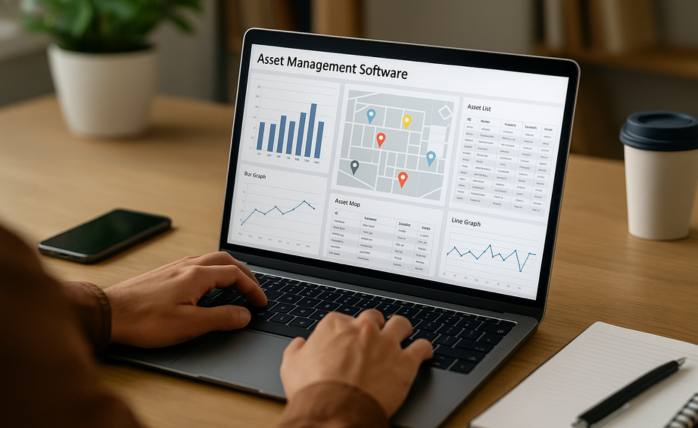
Trimming unnecessary expenses and minimizing resources is a general practice in running a business effectively. Asset management software can help you achieve those goals.
This technology aids organizations in operating more efficiently while slashing costs considerably. A look into its advantages can shed more light on the same.
Streamlining Inventory Management
With asset management software, your inventory is tracked automatically, and all business resources are optimized. Even traditional approaches are based on manual entries, which are error-prone and ultimately time-consuming.
These automated systems also help users get up-to-date information, minimizing discrepancies and preventing any kind of shortage of critical supplies. Maintaining proper inventory levels helps a business avoid overstocking and understocking, which result in losses.
Improving Asset Utilization
Another principle for reducing costs is to use the resources available in the best way possible. If equipment is partially used, asset management software can track usage patterns.
Through alternative dispositions of a variety of assets, companies can focus on what, if any, really creates value. This not only reduces the costs associated with maintenance but also ensures that capital is spent on the assets that are in full working condition.
Reducing Maintenance Costs
Preventive maintenance is the solution to reduce unexpected breakdowns and repair costs. Asset management software organizes periodic maintenance inspections and allows equipment to function better.
This means fewer replacements and longer asset lifespans through a more proactive approach, and it also reduces emergency repair costs, usually greater than planned maintenance.
Enhancing Decision-Making
Making informed decisions is the key to cost-effective operations. With asset management software, you get detailed reporting and analytics that give you the whole picture regarding your asset performance and costs.
Tracking helps decision-makers catch trends and make changes to work more efficiently. Not only can businesses avoid unnecessary purchases, but with accurate data, they can know what will be relevant a quarter ahead, shaping their strategy according to business needs.
Boosting Employee Productivity
Regardless, managing asset management will lessen the hours the employees spend looking for tools and equipment.
Sharing resources so that no matter what job responsibility or function someone may have, they can share that resource and focus on their core tasks increases productivity.
This reduces labor costs and enhances the entire business workflow. Staff have more time to spend on strategy and less on administration.
Facilitating Compliance and Risk Management
Regulatory compliance is typically based on a set of standards that must be adhered to and documentation that must be maintained. Using asset management software ensures proper organisation and storage of the essential documentation, complying with industry regulations.
Implementing compliance automation solutions also minimizes the risk of violations, allowing businesses to save on painstaking fines and legal troubles.
Optimizing Procurement Processes
Asset Management software can help optimize purchase costs. It also offers a perspective on current stock and future demand to aid purchasing decisions.
Organizations can significantly reduce procurement expenses by avoiding duplicate purchases and negotiating better terms with suppliers.
Simplifying Remote Asset Management
As we know, the environment and climate are changing more digitally, and the need for asset management from afar will always reflect a necessity. Asset management software allows companies to track and manage assets across multiple locations.
It is a critical capability for a company operating from multiple sites or remotely. Organisations can cut back on operating costs and optimise their resource allocation by making sure that all assets are accounted for and utilised efficiently.
Enhancing Security Measures
Asset theft and unauthorized usage are prohibitive, which is why cost control is important here. In addition to tracking, the best asset management software has security features that track usage and access.
A person can keep track of who uses what and when, preventing misuse of assets while making sure they are used appropriately. This assurance provides higher chances of not losing items again and also helps cut costs incurred in replacing stolen or damaged goods.
Conclusion
Good asset management software is a complete solution to optimizing operational costs. Businesses will save big by streamlining processes, optimizing resource consumption, and making informed decisions.
But these benefits aren’t just financial; they help lead to long-term efficiency and sustainability. When cost control continues to dominate, asset management software has become a good tool for organizations to get value for money.


Business
Desk Job Survival: Why Your Office Chair Is Quietly Wrecking Your Posture (and How to Fix It)

Picture this. It’s 3pm, you’ve been at your desk since morning, and you suddenly realise you’re kind of folded over your keyboard like a wilting houseplant. Sound familiar?
Most people who work at a desk don’t think much about how they sit. Why would they? A chair is a chair. You plonk yourself down, you get to work, and you don’t give it a second thought until your lower back starts complaining somewhere around Thursday afternoon.
But here’s the thing. That chair might be doing more damage than a decade of skipped gym sessions.
The Slow Creep of Bad Posture
Bad posture doesn’t happen all at once. It sneaks up on you.
One day you’re sitting tall and confident. Fast forward a few months of hunching toward a screen, and your shoulders have crept forward, your neck’s poking out like a curious turtle, and your spine has taken on a shape it was never meant to hold.
The tricky part is that your body adapts. Muscles get used to being short and tight. Others get weak from doing nothing. And before long, sitting badly actually feels more comfortable than sitting well, which is kind of a cruel joke when you think about it.
Ever noticed how you can’t seem to sit up straight for more than a few minutes without it feeling like hard work? That’s not laziness. That’s your body telling you it’s been trained into a shape it doesn’t love.
Your Chair Is Probably Part of the Problem
Look, a lot of office chairs just aren’t built for real bodies doing real work.
The cheap ones with no lumbar support? They practically encourage slouching. The seat’s too deep, so you either perch on the edge or slide back and let your lower back curve the wrong way. The armrests are either missing or set at some random height that makes your shoulders hunch up toward your ears.
And don’t get started on chairs that don’t adjust. Everyone’s built differently. A chair that suits a six foot four bloke is going to be all wrong for someone shorter, and vice versa. When the chair can’t move to fit you, you end up contorting to fit it. That’s backwards.
The truth is, your body spends roughly eight hours a day in this thing. Maybe more. If it’s not supporting you properly, those hours add up fast.
What Good Support Actually Looks Like
So what makes a chair genuinely good for your posture?
A few things matter more than the rest. You want proper lumbar support that fills the natural curve of your lower back. You want a seat you can raise or lower so your feet sit flat and your knees land at roughly a right angle. And you want a backrest that moves with you when you lean, rather than one that keeps you frozen upright like you’re at a job interview all day.
Armrests help too, when they’re set right. They take the load off your shoulders and neck, which is exactly where most desk workers carry their tension.
The other day someone mentioned they’d swapped their old chair for a properly adjustable one and the difference in their afternoon energy was almost weird. Less fidgeting. Fewer headaches. Turns out sitting well frees up a surprising amount of brainpower you didn’t know you were spending on discomfort.
If you’re in the market for something that won’t quietly punish your spine, decent office chairs are worth every dollar. Think of it less as furniture and more as a piece of gear you actually use all day.
Small Habits That Make a Big Difference
A good chair is half the battle. The rest is on you, and it’s simpler than you’d think.
Get up and move every half hour or so. Even a quick stretch or a lap to the kettle resets things, which is the same idea as getting the work done from the house without the day disappearing.
Keep your screen at eye level so you’re not craning down. And check in with yourself now and then. Are your shoulders creeping up? Are you slumping again? Just noticing is the first step.
Your posture didn’t fall apart overnight, and it won’t fix itself overnight either. But start with where you sit, add a few better habits, and give it a bit of time.
Future you, the one without the sore neck and grumpy lower back, will be pretty grateful you did.

How Mapping Software Helps Marketing Teams Compare Sales Territories, Store Locations, and Campaign Results
Open three browser tabs. One holds the territory revenue report, one holds store performance, one holds last quarter’s campaign results. Each looks fine on its own. Nothing in any of them tells a marketing team that the campaign that lifted response 20% ran in a region with no store to convert the demand, or that two locations a mile apart have been splitting the same buyers for a year. The information needed to catch both was sitting in the three tabs the whole time. It stayed hidden because the data was kept in three places that never touched.
A map is where they touch. Territories, store points, and campaign results share one thing, a location, and once all three are drawn on the same geography, the gaps and overlaps between them stop hiding in separate spreadsheets.
Three Datasets, One Geography
A spreadsheet organizes data by row. A map organizes it by place, and place is the one key these three datasets have in common. A sales territory is a shape on the ground. A store is a point. A campaign result belongs to the ZIP codes it reached. Put on separate reports, they never line up, because a row in one table has no way to know what row in another table sits next to it in the real world.
Drawn together, the alignment becomes the analysis. A team can see the territory boundary, the stores inside and outside it, and the campaign response across the same area in a single view. The question moves from what each report says on its own to what the three of them say when laid on top of each other.
The Shared Map Layer
Comparison needs a common surface, and that is what sales territory management software provides when it holds territories, store points, and campaign data as separate layers on one base map. A marketing team toggles a layer on or off, shades it by whatever metric matters, and reads three datasets against each other without exporting anything into a fourth spreadsheet. The layers stay distinct, but they finally share a frame.
That shared frame is what makes correlation visible. A region can be colored by campaign lift while store points overlay it and territory lines frame the whole thing, and the eye catches the mismatch, the high-lift area with no store, faster than any join between three tables would surface it.
Store Overlap and Cannibalization
Two stores placed too close split the same demand instead of adding to it. On a map, that overlap is measurable rather than suspected. Retail teams model the trade area of each location, the ground its buyers actually come from, and when two trade areas overlap by more than 30% to 40%, the second store can cannibalize the first rather than grow the brand. A report that shows both stores hitting revenue targets hides this completely, because transferred revenue still counts as revenue.
Footfall data sharpens the picture. Movement patterns reveal where a store’s buyers really originate, which often differs from the tidy radius a planner would draw by hand. Laid over territory lines and campaign zones, the real trade area shows if a location is pulling new demand or feeding on a neighbor, and if the campaign meant to grow it reached the right ground at all.
Campaign Lift by Region
One national campaign number rolls the best and worst markets into a single figure that flatters both. Break the results out by region on a map and the winners and losers pull apart. It works the way geographic lift testing does, measuring regions that got the campaign against similar regions that did not, a control group in all but name, so the true lift is isolated from markets that would have moved anyway.
Read against store and territory layers, that regional lift answers questions a flat report cannot. A campaign that spiked response in a territory with no nearby store points to demand the company is failing to serve. A campaign that moved nothing in a market full of stores points to a weak message, since distribution was not the missing piece. The same map that shows the lift shows the reason it did or did not convert.
Cross-Layer Correlations
The value of the overlay is the pattern that only appears when the layers meet. Campaign response mapped against store locations and territory revenue can reveal that a brand’s strongest lift comes from suburban markets at the edge of its coverage, or that its best-performing stores sit in territories the campaign barely touched. No single report contains these facts. They emerge from the correlation between the reports, and the map is the only place that relationship is visible.
Timing adds another layer. Campaign performance broken out by geography and hour can show that a promotion worked in urban markets at midday and fell flat in the same markets at night, which tells a marketing team when to run the next flight and where.
From Overlay to Decision
Seeing the pattern is the first half. Acting on it is the second. A team that spots a high-lift, no-store region has a case for a new location or a shipping offer. A team that finds two cannibalizing stores has a reason to move one territory’s boundary or rebalance the local campaign. The overlay turns three disconnected reports into a short list of specific, grounded moves, each one tied to a place a manager can point at.
This is the difference between measuring campaigns and steering them. Separate dashboards report what happened in three parallel streams. A shared map shows how the streams interact, which is what the decisions actually turn on.
The 30% Overlap Threshold
The sharpest single test in all of this is the trade area overlap figure. When two stores share more than 30% to 40% of their buyers, the newer one is moving revenue across the street and calling it expansion. A marketing team that can see that number on a map stops crediting a location for sales it took from its neighbor. Every layer added to the map turns another guess into something measurable, and the team that compares all three layers in one view decides on what the ground shows while its competitors are still reconciling tabs.


We’ve all heard the old saying, “It’s better to beg for forgiveness than ask for permission.”
That advice, often attributed to Rear Admiral Grace Hopper, has been repeated in conference rooms for decades. It’s easy to see why, Hopper was a pioneering computer scientist who challenged conventional thinking throughout her career.
Taken literally, though, the advice is terrible. Ignore ethics, compliance, or the rules that protect your business, and you’ll quickly find yourself in trouble.
Whether or not Hopper actually coined the phrase, the real lesson to take away from it isn’t about simply ignoring the rules. It’s about recognizing when bureaucracy has become a substitute for judgment. Sometimes the biggest obstacle to innovation isn’t a lack of ideas. It’s waiting for someone else to approve them.
But you don’t have to take my word for it. A recent Harvard Business Review article highlights research showing that effective leaders don’t view every instance of rule-breaking as misconduct. Instead, they seek to understand the intent behind it, distinguishing between reckless violations and thoughtful challenges that improve the organization.
After more than four decades leading teams and organizations, I’ve found there really are rules for breaking the rules that help distinguish thoughtful initiative from unnecessary risk. Here are the ones I’ve learned.
Rule #1: Know the Rules Before You Break Them
Before you challenge a rule, understand why it exists. Every policy, process, or approval step was created for a reason. Some protect the business, others solved a problem at a particular point in time, and there are some “rules” that became norms simply because “that’s the way we’ve always done it.”
Legal, ethical, financial, and safety guardrails exist to protect the company and should never be treated lightly. But if a process exists primarily because no one has questioned it in years, it may be worth asking whether there’s a better way. Once you understand the rules, you can decide whether it’s worth challenging one.
You can’t thoughtfully challenge a rule until you understand the problem it was designed to solve.
Rule #2: Earn the Right to Take Risks
Before you break any rules, you need to earn the trust to exercise good judgment. Do your job really well, then go above and beyond. Don’t neglect your actual responsibilities in the name of innovation.
I remember a field leader I worked with for years who was notorious for breaking the rules, but he did it in an elegant way. The difference was that he did everything else exceptionally well. He had built up credibility.
You earn the right to push boundaries by consistently delivering. Don’t skip the basics because you have a better idea. Execute the base program first, then build something better on top of it.
If you ignore your responsibilities because you’re chasing your own ideas, you’ll get in trouble twice.
Rule #3: Be Responsible
Take calculated risks, not reckless ones. What would you do if you owned the business? An owner would ask: How can we make this better? Is there a faster way to test this? What’s the downside if I’m wrong? An owner isn’t betting the company on a single idea.
Keep experiments small enough that failure isn’t a significant financial loss. If the worst-case scenario is easily fixable, go for it. If it causes permanent damage to systems, customer relationships, or the business itself, ask first.
For example, maybe a testing process takes six months and requires eight layers of approval. Instead, you run a quick, low-risk test. If it fails, you stop. If it shows promise, you can go back and say, “I know I didn’t follow the normal process, but here’s what we learned.”
Rule #4: Let the Results Speak for Themselves
Earlier in my career when I was a field leader, I watched a manufacturer’s representative introduce a new premium pen to one of our stores. The merchandising plan was straightforward: stock the product on the sales floor and let customers discover it.
It was a great pen, but it seemed to me that people needed to experience it to understand what set it apart. So instead of following the standard merchandising plan, we created a simple display at checkout with a sample pen customers could try while they waited in line. It was a small, inexpensive experiment that didn’t put the business at risk or require a major investment.
The idea resonated with customers, and the results were strong enough that it eventually expanded beyond that one store and became a part of the chainwide merchandising plan. Once the results were there, it became much easier to build support for expanding the program.
Of course, not every experiment succeeds. When it doesn’t, own the decision, explain your reasoning, learn from it, and move on. This goes back to the importance of credibility – people are far more willing to forgive a thoughtful experiment than a careless mistake.
Conclusion
Maybe Grace Hopper’s famous advice needs a footnote. It’s better to beg for forgiveness than ask for permission… provided you’ve earned the trust, exercised good judgment, and are willing to own the outcome.
The rules for breaking the rules are simple. Know the difference between guardrails and bureaucracy. Earn credibility through consistent execution. Take responsible risks. Let the results speak for themselves.
That’s the difference between recklessness and leadership. The goal isn’t to break the rules. It’s to make the business better.

Managing employee performance is a critical aspect of organizational success. A well-structured performance management system not only enhances productivity but also fosters employee engagement and satisfaction. With the expertise and support of Axcet HR Solutions, organizations can implement effective strategies to improve performance tracking, employee development, and workplace alignment.
This article explores key strategies for developing effective performance management systems that drive sustainable growth and help businesses build a more motivated, productive workforce.
Challenges in Traditional Performance Management Systems
Many organizations struggle with traditional performance management systems. A Gallup survey revealed that only 2% of Chief Human Resources Officers (CHROs) believe their performance management system effectively inspires employees to improve. This indicates a significant disconnect between existing systems and employee motivation.
The shortcomings of traditional systems often stem from their inflexibility and reliance on outdated practices, such as annual reviews and rigid rating scales. Employees often perceive annual performance evaluations as perfunctory or even irrelevant to their day-to-day responsibilities. As work environments grow increasingly dynamic, these infrequent assessments can fail to capture employees’ ongoing efforts and evolving skill sets, ultimately stifling creativity and innovation.
Furthermore, the typical “top-down” nature of these systems often overlooks accountability at all levels and misses opportunities for inclusive growth. Another main challenge with traditional systems lies in the lack of constructive communication. Feedback is provided retrospectively, long after projects are finished or milestones missed, which can cause frustration and make it difficult for employees to correct course promptly. This reactive, rather than proactive, approach limits the positive impact performance reviews might otherwise have on employee learning and development.
Implementing Continuous Feedback Mechanisms
Transitioning from annual reviews to continuous feedback can significantly enhance employee performance. Regular check-ins and real-time feedback help employees stay aligned with organizational goals and address issues promptly. This approach fosters a culture of open communication and continuous improvement. Continuous feedback mechanisms create an environment in which employees can make immediate adjustments to their work, learn from both successes and failures, and build stronger relationships with managers and peers.
Effective feedback should be specific, actionable, and balanced, highlighting both strengths and opportunities for growth. Managers should invest in training to deliver honest, constructive feedback, using both qualitative and quantitative data to provide a more holistic evaluation. Peer feedback can also be integrated to supplement supervisor input. Platforms that encourage 360-degree feedback allow employees to receive perspectives from colleagues at all levels, broadening the context for professional growth. These regular interactions, when conducted with empathy and respect, can foster trust and psychological safety, two essential elements of a high-performing workplace culture.
Aligning Individual Goals with Organizational Objectives
Effective performance management systems ensure that individual employee goals are aligned with the broader organizational objectives. This alignment provides employees with a clear understanding of how their work contributes to the company’s success, thereby increasing engagement and motivation. Employers should work with employees to set clear, measurable, and achievable goals that reflect overall business objectives, such as increasing customer satisfaction, driving revenue growth, or achieving sustainability targets.
Implementing tools such as Objectives and Key Results (OKRs) or SMART goals can help operationalize this alignment, providing clarity around priorities while maintaining flexibility as organizational needs evolve. When employees understand the strategic importance of their work, they are more likely to take ownership, remain committed, and invest discretionary effort.
Regularly revisiting these goals ensures continued relevance and allows for adjustment in response to changing market conditions or company strategy. This dynamic approach not only supports individual success but also reinforces a unified direction for the entire organization.
Integrating ESG Practices into Performance Management
Incorporating Environmental, Social, and Governance (ESG) practices into performance management can improve employee performance and well-being. A study of private higher education institutions found that ESG practices positively impact employee outcomes, underscoring the importance of sustainable practices in organizational strategy. As public awareness around sustainability and social responsibility grows, employees increasingly seek out workplaces that reflect their values.
Embedding ESG criteria into performance frameworks can redefine what “success” means, shifting from purely financial performance to a more holistic approach that also prioritizes ethical conduct, environmental stewardship, diversity, and community engagement. Organizations can accomplish this by making ESG-related objectives part of regular performance assessments, linking rewards or recognition to sustainable behaviors, and transparently communicating their impact. By doing so, companies not only attract and retain top talent but also build reputational capital and long-term resilience.
Leveraging Technology and Data Analytics
Utilizing technology and data analytics can optimize performance management processes. Advanced software solutions enable real-time tracking of performance metrics, facilitate continuous feedback, and provide actionable insights. This data-driven approach allows organizations to make informed decisions and tailor development plans to individual employee needs. Performance management platforms can automate administrative tasks, reducing the burden on HR teams and increasing efficiency.
Artificial intelligence-powered analytics can identify hidden patterns and predict future trends, empowering leaders to proactively address potential issues. Personalized dashboards, goal-tracking widgets, and instant recognition features improve transparency and maintain high employee motivation. Moreover, technology fosters inclusivity by enabling remote and hybrid teams to participate seamlessly in performance management processes. Cloud-based solutions provide secure access to relevant data, enabling more equitable and consistent evaluations regardless of employees’ locations.
Case Study: Amazon’s Revamped Performance Review System
Amazon’s recent overhaul of its performance review system illustrates a shift towards more stringent, structured evaluations. By incorporating adherence to the company’s Leadership Principles into employee assessments, Amazon aims to align individual performance with organizational values and objectives. The revamped system includes regular “Connections” surveys that allow employees to share feedback and engage in meaningful dialogue about their work experiences. Performance is tracked against a comprehensive set of leadership principles, making evaluations more transparent and consistent across teams.
This data is used to identify high-potential employees for career advancement and to offer targeted development resources to those who need improvement. Importantly, Amazon’s system provides mechanisms for appeals and additional coaching, emphasizing a growth mindset and a commitment to employee development rather than punitive measures. This reflects a broader industry trend toward individualized support, transparency, and accountability, in which companies recognize the value of nurturing employee potential to achieve long-term business success.
Conclusion
Developing an effective employee performance management system requires shifting from traditional methods to more dynamic, integrated approaches. By implementing continuous feedback mechanisms, aligning individual goals with organizational objectives, integrating ESG practices, and leveraging technology, organizations can foster a culture of continuous improvement and sustainable growth.
Looking ahead, the future of performance management will demand even greater agility, empathy, and innovation. As workplaces continue to evolve in response to global trends and new technologies, organizations that prioritize employee experience and holistic development will gain a competitive edge. Providing resources for professional growth, encouraging experimentation, and recognizing diverse contributions will ensure that talent stays motivated and that businesses remain resilient and prepared for whatever lies ahead.
In essence, the journey towards effective performance management is an ongoing endeavor, one best navigated through adaptability, inclusivity, and a resolute focus on both individual and collective success.

How to Get Your Startup Noticed Without a Big Ad Budget

How Seasonal Trends Affect the Fall Real Estate Market

Stop Acting Like a Creator: How to Get Real Clients on Social Media

A Guide to Inheritance Tax Thresholds and How They Affect Your Estate as an Entrepreneur

Enclomiphene and Sex Drive: What Men Should Understand about the Connection
5 Ways For Startups To Succeed Making Acquisitions

77 Inspirational Quotes That Will Change Your Life
57 Memorable Kobe Bryant Quotes

(Images) 52 Motivational Picture Quotes For An Epic Year Of Success

40 Rare Motivational and Inspirational Picture Quotes
3 Prince EA Videos To Change Humanities Path To Greatness
(Video) What Is Success? An Entrepreneurial Story To Inspire You
(Inspirational Video) What If Today You Knew You Were Going To Take Your Last Breath?
How To Make Enough Money From A Blog To Quit Your Job – Kate McKibbin
How Finding Your Passion And Becoming An Entrepreneur Can Lead To Happiness – Chiquita Searle
-

 Life2 years ago
The 5 Stages of a Quarter-Life Crisis & What You Can Do
-

 Did You Know1 year ago
7 Surprising Life Lessons Video Games Taught Me That School Never Did
-

 Success Advice1 year ago
Stephen Covey’s 8 Leadership Habits That Will Change How You Lead Forever
-

 Life1 year ago
How to Stop the War in Your Head and Find Peace
-

 Featured2 years ago
The Psychology of Motivation: How to Keep Moving Forward Every Day
-

 Personal Development1 year ago
The Three-Second Pause That Changes How People Perceive You
-

 Explode Your Social Media1 year ago
Want More Views? Master These 6 YouTube Growth Tactics
-

 Change Your Mindset1 year ago
You Become What You Absorb: How Input Shapes Your Life