
Change Your Mindset
80 Inspirational Quotes About Purpose to Fuel Your Passion


If you’re seeking inspiration and motivation to discover your purpose in life, look no further than these purpose quotes. Finding your purpose can be a challenging and daunting task, but it’s a crucial step towards living a fulfilling life. These quotes provide wisdom and insight into the importance of purpose and how to pursue it.
Whether you’re feeling lost or searching for direction, these purpose quotes can provide clarity and guidance. From famous philosophers and authors to modern-day thought leaders, these quotes offer a diverse range of perspectives on purpose.
Take some time to reflect on these purpose quotes and consider how they resonate with your own journey. Remember that discovering your purpose is a personal and unique experience, but these quotes can serve as a source of encouragement and inspiration along the way.
So, if you’re ready to unlock the power of purpose in your life, start by exploring these insightful purpose quotes. With determination, focus, and a positive mindset, you can discover your purpose and live the life you’ve always dreamed of.
Here are 80 Inspirational Quotes about Purpose
1. “The purpose of life is to live it, to taste experience to the utmost, to reach out eagerly and without fear for newer and richer experience.” – Eleanor Roosevelt
2. “The meaning of life is to find your gift. The purpose of life is to give it away.” – Pablo Picasso
3. “The only way to do great work is to love what you do. If you haven’t found it yet, keep looking. Don’t settle. As with all matters of the heart, you’ll know when you find it.” – Steve Jobs
4. “Your purpose is not just a job or a career, it’s a calling from God that inspires you to make a difference in the world.” – Joel Brown
5. “Success is not the key to happiness. Happiness is the key to success. If you love what you are doing, you will be successful.” – Albert Schweitzer
6. “The purpose of life is to contribute in some way to making things better.” – Robert F. Kennedy
7. “Don’t ask yourself what the world needs. Ask yourself what makes you come alive and then go do that. Because what the world needs is people who have come alive.” – Howard Thurman
8. “Your purpose in life is to use your unique gifts and talents to make a positive impact on the world around you.” – Sir Ken Robinson
9. “Life is not a problem to be solved, but a reality to be experienced.” – Soren Kierkegaard
10. “The purpose of life is to be happy. It is to be useful, to be honorable, to be compassionate, to have it make some difference that you have lived and lived well.” – Ralph Waldo Emerson
11. “Don’t wait for the perfect moment, take the moment and make it perfect.” – Unknown
12. “Believe in yourself and all that you are. Know that there is something inside you that is greater than any obstacle.” – Christian D. Larson
13. “Your purpose in life is to use your gifts and passions to help others, and in doing so, find joy and fulfillment for yourself.” – Unknown
14. “Success is not final, failure is not fatal: It is the courage to continue that counts.” – Winston Churchill
15. “The purpose of life is to find your voice and inspire others to find theirs.” – Stephen Covey
16. “Life is a journey, and if you fall in love with the journey, you will be in love forever.” – Peter Hagerty
17. “Your purpose in life is to create something that outlasts you.” – Matthew McConaughey
18. “The future belongs to those who believe in the beauty of their dreams.” – Eleanor Roosevelt
19. “The purpose of life is to find your own way, and to find your own path, and to follow it.” – Unknown
20. “The best way to predict your future is to create it.” – Abraham Lincoln
21. “Life is not about waiting for the storm to pass, it’s about learning to dance in the rain.” – Vivian Greene
22. “The purpose of life is to make your heart sing and your soul dance.” – Unknown
23. “You are never too old to set another goal or to dream a new dream.” – C.S. Lewis
24. “The purpose of life is to be a light to others, to show them the way, and to help them find their own path.” – Unknown
25. “Success is stumbling from failure to failure with no loss of enthusiasm.” – Winston Churchill
26. “Don’t watch the clock; do what it does. Keep going.” – Sam Levenson
27. “The purpose of life is to find your passion and pursue it. – Unknown
28. “You were born with a purpose. You have something to offer the world that no one else can.” – Marie Forleo
29. “Purpose is the reason you journey. Passion is the fire that lights your way.” – Ryan Blair
30. “The purpose of life is not to be happy. It is to be useful, to be honorable, to be compassionate, to have it make some difference that you have lived and lived well.” – Ralph Waldo Emerson
31. “The meaning of life is to give life meaning.” – Ken Hudgins
32. “The purpose of life is to be useful, to be honorable, to be compassionate, to have it make some difference that you have lived and lived well.” – Ralph Waldo Emerson
33. “Your purpose in life is to find your voice and give it a voice.” – Stephen Covey
34. “The only way to do great work is to love what you do. If you haven’t found it yet, keep looking. Don’t settle.” – Steve Jobs
35. “Your purpose in life is to find your own path, and to follow it, no matter what anyone else says.” – Unknown
36. “When you find your purpose, everything else falls into place.” – Frida
37. “Your purpose is not to impress others, but to express yourself.” – Unknown
38. “The purpose of life is to live it, to taste experience to the utmost, to reach out eagerly and without fear for newer and richer experience.” – Eleanor Roosevelt
39. “Find your purpose, and then give your whole heart to it.” – Unknown
40. “You have a purpose in life. Don’t let anyone else tell you otherwise.” – Unknown
41. “Purpose is the reason you are here. Passion is what makes you stay.” – Michael Jordan
42. “The purpose of life is to create, to give, to love, and to leave a legacy.” – Unknown
43. “The purpose of life is not to be perfect, but to be authentic.” – Unknown
44. “Your purpose is to live the life that is right for you, not the life that others expect of you.” – Kobe Bryant
45. “Your purpose in life is to make a positive difference in the world, no matter how small.” – Richard Branson
46. “The purpose of life is to find truth, and to live it, no matter what.” – Joel Brown
47. “Your purpose in life is to create a life that you love, and to share that love with others.” – Unknown
48. “Your purpose in life is not to be successful, but to live a meaningful life that aligns with your values and passions.” – Unknown
49. “Finding your purpose is a journey, not a destination.” – Unknown
50. “The purpose of life is to use your gifts and talents to make the world a better place.” – Dwayne Johnson
51. “The purpose of life is to be yourself, and to express yourself fully in the world.” – Unknown
52. “Your purpose in life is to live with intention, to pursue your passions, and to make a positive impact on the world.” – Unknown
53. “Your purpose in life is not just to exist, but to thrive and to do so with some passion, some compassion, some humor, and some style.” – Maya Angelou
54. “The purpose of life is to grow, to learn, to evolve, and to become the best version of yourself.” – Unknown
55. “Your purpose in life is to live a life that is true to yourself, and that inspires others to do the same.” – Unknown
56. “The purpose of life is to find joy in the journey, and to create a life that brings you happiness and fulfillment.” – Dwight Howard
57. “Your purpose in life is to make a difference in the lives of others, to be of service, and to contribute to the greater good.” – Myles Munroe
58. “The purpose of life is to discover your own path, and to have the courage to follow it, no matter where it leads.” – Jay Shetty
59. “Your purpose in life is to be the best version of yourself, and to inspire others to do the same.” – Unknown
60. “The purpose of life is to create something that will outlast us, to leave a positive impact on the world, and to make a difference in the lives of others.” – Elon Musk
61. “Your purpose in life is to embrace your unique gifts and talents, and to use them to create a life that is truly your own.” – Unknown
62. “The purpose of life is to seek out new experiences, to learn, to grow, and to find meaning in every moment.” – Unknown
63. “The greatest tragedy in life is not death, but a life without a purpose.” – Myles Munroe
64. “Chase the vision, not the money; the money will end up following you.” – Tony Hsieh, CEO of Zappos
65. “A business that makes nothing but money is a poor business.” – Henry Ford, founder of Ford Motor Company
66. “You can’t have a million-dollar dream with a minimum-wage work ethic.” – Stephen C. Hogan, author and entrepreneur
67. “When you have a strong enough why, you can tolerate any how.” – Tony Robbins
68. “Purpose is not a destination, it’s a journey. It’s not something you find, it’s something you create.” – Evan Carmichael
69. “If you are not passionate about it, forget it.” – Jerry Greenfield, co-founder of Ben & Jerry’s
70. “You were made by God and for God, and until you understand that, life will never make sense.” – Rick Warren
Here are some of my most shared quotes about purpose:
1. “Without purpose, you’re like a ship without a rudder, drifting into the abyss, never reaching your destination.” – Joel Brown
2. “Purpose is the compass that will guide you on your journey to greatness.” – Joel Brown
3. “Purpose is not just a destination, it’s a journey, a process of self-discovery and growth.” – Joel Brown
4. “The most successful people in the world have a clear sense of purpose, a burning desire to achieve their dreams.” – Joel Brown
5. “Your purpose is your passion, the thing that makes you come alive and gives your life meaning.” – Joel Brown
6. “Purpose gives you the courage to take risks, to try new things, to step outside of your comfort zone.” – Joel Brown
7. “The key to unlocking your full potential is to discover your God given purpose, and then pursue it with all your heart.” – Joel Brown
8. “When you have a strong sense of purpose, you can overcome any obstacle and achieve anything you set your mind to.” – Joel Brown
9. “Your purpose is not just about what you do, it’s about who you are and what you stand for.” – Joel Brown
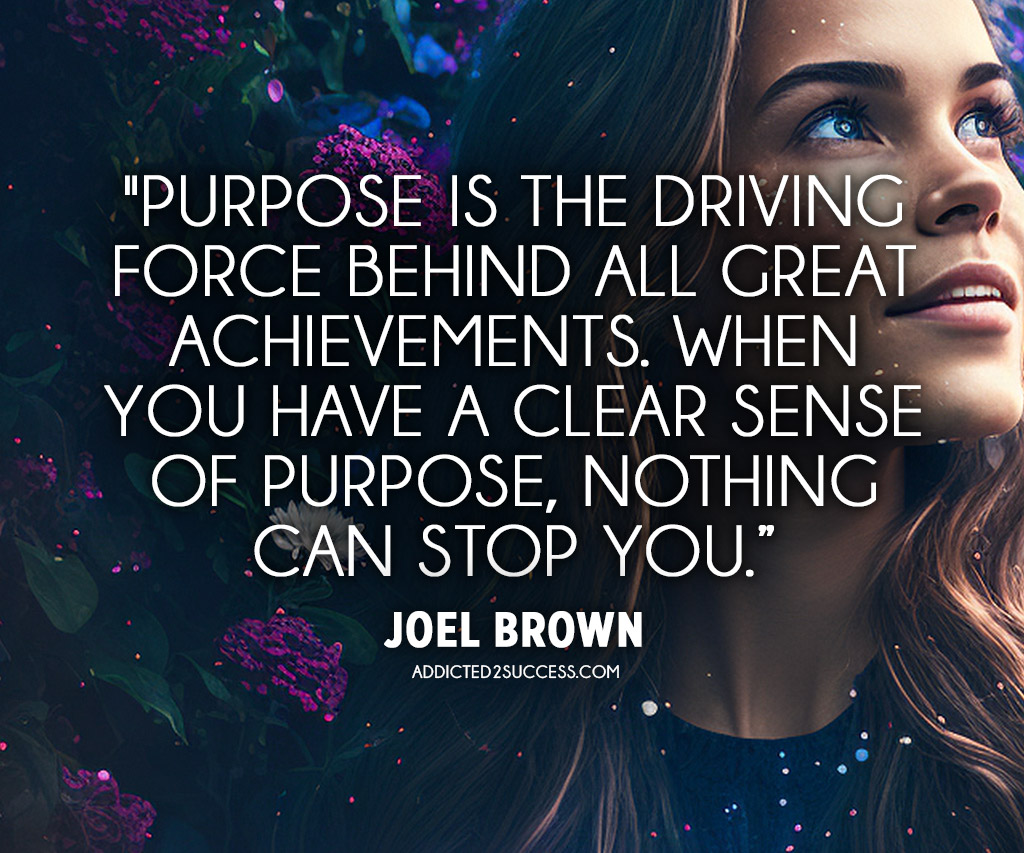
10. “Purpose is the driving force behind all great achievements. When you have a clear sense of purpose, nothing can stop you.” – Joel Brown
Read more success & entrepreneurship lessons from the founder of Addicted2Success Joel Brown
Which quote is your favorite quote about Purpose? Leave a comment below.













Life rarely follows the script we write for ourselves. Whether you’re an entrepreneur scaling a business, a professional navigating career transitions, or someone managing unexpected setbacks, resilience has become one of the most valuable skills you can develop. The ability to bounce back from adversity, learn from failure, and keep moving forward separates those who achieve their goals from those who get stuck in the aftermath of disappointment.
Resilience isn’t something you’re born with or without. It’s a skill that can be learned, practiced, and strengthened over time. For entrepreneurs and business professionals, building this capacity is essential because the path to success is rarely linear. You’ll face rejection, financial pressure, failed launches, and moments of self-doubt. Understanding how to navigate these challenges without losing sight of your vision is what separates sustainable success from burnout. If you find yourself in a situation where unexpected circumstances have derailed your plans, resources like those available when you contact a personal injury lawyer in the Boynton Beach area can help address specific legal or liability concerns, allowing you to refocus on recovery and moving forward.
Understanding What Resilience Really Means
Resilience is often misunderstood as simply “toughening up” or pushing through pain without feeling it. That’s not accurate. True resilience involves acknowledging difficulty, processing emotions, and then choosing to move forward with intention and purpose. It’s the difference between suppressing your feelings and working through them productively.
For entrepreneurs, resilience means understanding that failure is data, not destiny. When a business strategy doesn’t work, a product launch underperforms, or a key partnership falls through, resilient leaders extract lessons rather than spiral into shame. They ask themselves what went wrong, what they can control, and what adjustments are needed for the next attempt. This mindset shift transforms setbacks from sources of shame into sources of wisdom.
The most successful people across industries share this trait. They’ve experienced significant failures, but they didn’t let those failures define their trajectory. Instead, they used them as stepping stones. Building this capacity requires intentional practice and a willingness to reframe how you think about adversity.
The Role of Community and Support Systems
One of the biggest myths about resilience is that it’s a solo endeavor. The strongest, most resilient people aren’t those who handle everything alone. They’re the ones who know how to ask for help, build support networks, and lean on others when needed.
For business owners and professionals, this might mean joining mastermind groups, finding a mentor, or simply maintaining close relationships with people who understand your challenges. When you’re facing a difficult period, having people who can offer perspective, encouragement, or practical advice makes an enormous difference. These relationships provide both emotional support and actionable guidance.
Community also normalizes struggle. When you connect with others who’ve faced similar challenges, you realize that setbacks aren’t personal failures but part of the human experience. This realization alone can be transformative. It reduces the shame and isolation that often accompany difficulty and opens the door to collaboration and shared problem-solving.
Developing Mental Flexibility and Adaptability
Resilience requires the ability to adapt your approach when circumstances change. Rigid thinking is the enemy of resilience. When Plan A doesn’t work, resilient people don’t collapse. They evaluate Plan B, Plan C, and beyond.
This mental flexibility is particularly important in business, where market conditions shift, technology evolves, and consumer preferences change. Entrepreneurs who thrive are those who can pivot quickly, test new approaches, and scale what works. They don’t become emotionally attached to specific strategies. Instead, they remain attached to their core vision while staying flexible about the path to get there.
Developing this skill involves practicing perspective-taking. When you encounter an obstacle, try asking yourself: “What else could this mean?” or “What opportunities might this create?” This isn’t about toxic positivity. It’s about genuinely exploring alternative interpretations and possibilities. Over time, this practice rewires your brain to naturally consider multiple angles rather than getting stuck in a single narrative.
Physical Health as a Foundation for Resilience
You can’t build mental and emotional resilience on a foundation of physical neglect. Sleep, exercise, and nutrition directly impact your ability to handle stress and bounce back from difficulty. When you’re exhausted, malnourished, or sedentary, everything feels harder. Your emotional regulation suffers, your thinking becomes clouded, and your motivation plummets.
For busy entrepreneurs and professionals, this is often the first area that gets sacrificed. When things get tough, sleep becomes optional and exercise gets postponed. But this is exactly when these practices matter most. Consistent physical care acts as a buffer against the negative effects of stress and provides the energy and mental clarity needed to navigate challenges effectively.
This doesn’t require extreme measures. It means prioritizing seven to eight hours of sleep, moving your body regularly, and eating foods that fuel rather than drain you. These fundamentals create the physical capacity to handle adversity without falling apart.
Learning From Setbacks Without Getting Stuck
The difference between people who build resilience and those who don’t often comes down to how they process setbacks. Resilient people have developed a practice of extracting lessons from difficulty without dwelling in it indefinitely.
This involves creating space to reflect on what happened, understanding the contributing factors, and identifying what you’d do differently next time. Then, crucially, you move on. You don’t ruminate endlessly or replay the failure in your mind. You’ve learned what you needed to learn, and now you’re focused on the next chapter.
This process requires self-compassion. You can be honest about mistakes without being harsh with yourself. You can acknowledge that something didn’t work without concluding that you’re a failure. This distinction is essential. Many talented people sabotage their own resilience by turning setbacks into evidence of personal inadequacy rather than simply treating them as outcomes that didn’t match expectations.
Conclusion
Resilience is the capacity to move through difficulty and come out stronger on the other side. It’s not about never falling down. It’s about having the skills, support systems, and mindset to get back up. For entrepreneurs and professionals committed to long-term success, building this capacity is as important as developing technical skills or business acumen. Start by strengthening one area: your support network, your physical health, your mental flexibility, or your approach to learning from failure. Each of these builds on the others, and together they create the foundation for a resilient life and career.

You can want a thing with your whole chest and still starve it.
You set the goal. You mean it. Then you stall, pick a fight, miss the easy follow-up, stay up too late, or research one more week. From the outside it looks like laziness. From the inside it feels like weather. You watch yourself do it and still cannot name why.
That is self-sabotage. Not a mysterious curse. Not proof you are unserious. It is when your behavior stops matching the life you say you want, usually to protect you from a feeling you have not agreed to face.
You probably even ask yourself sometimes: “Why do I self sabotage?“.. I know I have before.
Carl Jung put the whole problem in one line: until you make the unconscious conscious, it will direct your life and you will call it fate.
What self-sabotage actually is
Psychology writers have defined it as destroying your own best intentions. Useful, but incomplete.
The more accurate version for a high performer is this:
You want the outcome.
You also want to avoid what the outcome might cost you.
Those two wants run at the same time. The second one usually wins, because humans work harder not to lose something than to gain something.
The cost is rarely the work itself. It is visibility. Responsibility. Being judged. Being left. Being found average. Being the person who finally has no excuse.
So you create a story that lets you fail on your terms.
You stay out instead of preparing, then say the timing was wrong.
You pick a fight when the relationship gets close, then say it was never going to work.
You delay the offer, the launch, the conversation, then call it strategy.
That is not random. That is control. Sinking the ship yourself hurts less than watching someone else do it.
The loop that nets you out to zero
Most people do not sabotage in one dramatic collapse. They do it in a loop that returns them to zero.
Trigger. A deadline. A win. A compliment. Silence from someone you care about. Success getting close enough to feel real.
Escape. Scroll. Plan instead of ship. Train for the wrong thing. Drink. Clean the house. Start a new system. Pick the fight.
Relief. It works. That is why you keep it. The discomfort drops for an hour.
Shame. You know who you are capable of being. You just were not that person. The gap becomes the next trigger.
This is why a good week can vanish in one night. Diet, money, marriage, content, pipeline — same math. Green progress, red undo, back to even. If you only fight the escape, you miss the trigger. If you only fight the shame, you miss that shame is now fueling the next round.
High performers get a special version of the trigger: things going well. A new client. A relationship that is actually kind. A body of work that might get seen. The nervous system reads “more exposure” as danger, even when your mouth is asking for it.
Why smart people do this
You do not need a new personality. You need a better diagnosis.
Your actions are matching an old belief.
If the playlist in your head is “I don’t finish things” or “I don’t deserve this,” your behavior will try to prove the playlist right. Consistency feels safer than being wrong about yourself.
You would rather control the loss.
Procrastination and over-control often sit on the same fear. If I never really try, failure is incomplete. Incomplete failure is easier to live with than a clean attempt that still falls short.
You do not trust yourself with the next level.
Not “I can’t do the work.” More like “I can’t handle what the work will ask of me.” More eyes. More decisions. More people depending on you. The goal is attractive. The identity required by the goal is not.
You want two things that cannot both stay.
A business and total anonymity.
A relationship and total freedom.
Money and zero rejection.
Growth and zero discomfort.
That is a competing commitment. One foot on the gas, one on the brake. You will call it a discipline problem because discipline is less humiliating to admit than fear.
The familiar feels like safety.
Under stress the brain overvalues what it already knows. Old habits are not chosen because they work. They are chosen because they are known. That is why you go back to the same stall when the pressure rises.
An old survival strategy is still on the clock.
Some of this started as intelligence. People-pleasing kept the peace. Silence kept you from being shamed. Quitting first kept you from being left. The child who learned that was not stupid. The adult still running that program will sabotage a raise, a boundary, a breakup, a launch — because risk once meant harm.
You do not have to use “inner child” language if it makes you roll your eyes. Call it the part of you that still thinks the present is the past. Same problem.
Stop hunting for a forever fix
Anybody who promises to “eliminate self-sabotage forever in 30 minutes” is selling relief. The pattern can lose its grip. It does not vanish because you understood it once.
You interrupt it the same way you build anything else that lasts: see it, tell the truth about what it is protecting, then keep small promises until your system believes you.
1. Name the win you keep undoing
Be specific. Not “I sabotage my life.”
- I do not publish.
- I pick fights when things get good.
- I spend the margin I just made.
- I over-research and under-ship.
- I say yes when I mean no.
Write the last three times it happened. What was going well right before? What feeling showed up in the body first — tightness, heat, fog, urgency? The feeling is the trigger. The behavior is the painkiller.
2. Write the competing commitment
Two columns.
I want: the goal.
I also don’t want to lose: safety, image, privacy, the excuse, the identity of the hungry underdog, the right to disappear.
Stay there until the second column gets honest. “I’m afraid I’ll be seen and found average” is more useful than “I need a better planner.”
The brake is usually in column two.
3. Ask what success would cost you
This is the question people skip because it sounds ungrateful.
If this works, what gets heavier?
Who might judge you?
What would you have to sustain?
What version of you would have to die?
A lot of sabotage is not fear of failure. It is fear of a life you do not yet trust yourself to hold.
You do not beat that by chanting that the next level will be easy. You beat it by deciding you can be a beginner in public, visible without being finished, responsible without being flawless.
4. Keep your word on something small enough to be undeniable
Self-trust is the quiet engine under all of this.
If you do not keep the small agreements, you will not believe the large ones. Then every goal feels like a performance you are going to blow, so you blow it early.
Pick three avoided actions that actually serve the goal. Do them today. Not ten. Three. Then repeat tomorrow.
Forgive the old betrayals without making them a personality. You were working with the awareness you had. That sentence is not an excuse to keep the pattern. It is how you stop using yesterday as evidence that you cannot be trusted today.
5. Change the room before you lecture the man in the mirror
Some of this is psychology. Some of it is the fridge, the phone, the job, the group chat.
If the sugar is in the house, you will meet it at 11 p.m.
If the app is on the home screen, you will meet it when the work gets sharp.
If the room you work in rewards the old identity, the old identity will keep clocking in.
Inner work matters. So does removing the easy door.
6. Do it before you feel ready
Waiting to feel confident is one of the cleanest disguises sabotage wears.
You do not need to feel like a closer to make the call. You do not need to feel inspired to ship the draft. Feeling ready is often the prize you get after the reps, not the ticket in.
Do it scared. Do it tired. Do it without the speech. The work is the proof. The proof is what lowers the shame. Lower shame means fewer triggers. That is how the loop starts to starve.
What this is not
This is not a claim that every stall is trauma. Sometimes you are tired. Sometimes the goal is wrong. Sometimes you need sleep, a better offer, or a different environment.
It is also not a moral verdict. Shame is already in the loop. Adding more does not make you disciplined. It makes you due for another escape.
And it is not something you outgrow by becoming more intense. Intensity without honesty just gives the pattern better tools.
The turn
You are not being punished. You are being shown a split.
One part of you wants the life.
One part of you wants to stay unexposed.
Both think they are helping.
The work is to stop calling the second part fate. Look at it. Decide what it is allowed to protect and what it is no longer allowed to run. Then take the next honest action while it is still talking.
That is how self-sabotage loses the steering wheel. Not in a speech. In a man who can want the thing and still walk toward it when the old protection strategy starts to panic.
I also recorded a video for you on how to stop being indecisive as this leads you to self sabotage and stop you from making money:

For people in Nashville considering recovery, treatment can involve much more than addressing one immediate problem. Substance use can affect physical health, emotional well-being, relationships, daily routines, sleep, nutrition, and the ability to manage stress. A holistic approach recognizes these connections rather than viewing recovery through a single lens.
This does not mean replacing medical care or evidence-based therapy with wellness trends. Instead, holistic recovery can combine professional treatment with supportive practices that help individuals rebuild healthier patterns across different areas of life.
From mindfulness and movement to nutrition and social connection, a broader approach can help make recovery about building a sustainable life rather than simply leaving an unhealthy behavior behind.
Combine Clinical Treatment With Whole-Person Support
Effective recovery begins with understanding the individual’s circumstances. Substance use patterns, mental health, physical condition, family relationships, living environment, and previous treatment experiences can all influence what type of support is appropriate.
For individuals looking for structured treatment alongside broader wellness approaches, APEX Recovery Nashville provides access to programs that combine evidence-based treatment with holistic therapies. Its treatment options serving the Nashville area include different levels of care and approaches such as cognitive behavioral therapy, dialectical behavior therapy, mindfulness, art therapy, and trauma-informed care.
The important principle is integration. Meditation or yoga should not be expected to perform the work of clinical treatment, just as therapy does not eliminate the importance of physical well-being. Different forms of support can address different aspects of recovery.
Rebuild Physical Health Gradually
Recovery can provide an opportunity to reconnect with physical health, particularly when previous routines have become inconsistent.
Movement is one useful starting point. Walking, stretching, yoga, strength training, or recreational activities can introduce structure while providing healthy ways to use time. Exercise plans should reflect individual fitness, medical circumstances, and professional recommendations rather than beginning with unrealistic expectations.
The temptation to overhaul every habit immediately can create unnecessary pressure. Sustainable improvement usually develops through manageable changes repeated consistently.
Basic healthcare should also remain part of the picture. Routine appointments can help individuals address physical concerns that may have been neglected.
Holistic recovery is not about achieving perfect health overnight. It is about gradually developing routines that make caring for the body an ordinary part of everyday life.
Give Nutrition a Practical Role
Nutrition is sometimes presented in wellness culture as though one diet can solve nearly every problem. Recovery requires a more realistic approach.
Regular, balanced meals can help reintroduce predictable structure to the day. Depending on individual needs, meals can include vegetables, fruits, whole grains, appropriate protein sources, and healthy fats while providing sufficient energy.
Hydration deserves attention too.
People with medical conditions, dietary restrictions, or nutritional deficiencies may need individualized professional advice rather than generic meal plans.
The broader goal is consistency. Learning to shop for food, prepare simple meals, and eat at reasonably regular times can become part of rebuilding independent daily routines.
Food can also have a social dimension. Preparing or sharing meals with supportive people can create connection without making every gathering revolve around old habits.
Nutrition supports recovery most effectively when it becomes sustainable rather than restrictive.
Make Sleep Part of Recovery
Sleep and emotional well-being can influence one another, making rest an important part of holistic health.
Establishing consistent sleeping and waking times may help create structure. A comfortable bedroom, manageable temperature, reduced nighttime noise, and fewer unnecessary distractions can also support a healthier routine.
Evening habits deserve consideration.
Scrolling through a phone until early morning or maintaining an irregular schedule can make consistent rest harder. A simple wind-down routine can provide a clearer transition between daytime responsibilities and bedtime.
Persistent sleep problems should be discussed with an appropriate healthcare professional rather than automatically treated with supplements or internet remedies.
Recovery can already involve significant physical and emotional adjustment. Making adequate rest a priority gives the body and mind an opportunity to recover from everyday demands while supporting the routines being developed elsewhere.
Develop Healthier Responses to Stress
Removing substances does not remove stressful situations.
Work problems, relationship conflicts, financial pressures, grief, and ordinary frustrations still exist, which makes developing healthier coping strategies an important part of recovery.
Different techniques work for different people. Some find mindfulness or meditation useful, while others prefer exercise, creative activities, journaling, breathing exercises, or spending time outdoors.
Holistic treatment programs often incorporate mindfulness and other complementary practices alongside conventional treatment rather than using them as substitutes for it. The purpose is not to eliminate uncomfortable emotions.
Instead, individuals can learn to recognize stress and respond without automatically returning to old patterns. Practicing coping strategies while professional support is available can also make those techniques more familiar when challenging situations eventually occur outside treatment.
Strengthen Meaningful Social Connections
Recovery rarely happens entirely alone.
Supportive relationships can provide encouragement, accountability, companionship, and practical assistance during difficult periods. At the same time, recovery may require reconsidering relationships strongly connected with previous substance use.
Building a healthier social environment takes time.
Group therapy and peer support can introduce connections with people who understand some of the challenges involved. Family involvement may also be useful when appropriate and professionally guided.
Outside formal treatment, connection can develop through hobbies, volunteering, exercise, community activities, or simply spending regular time with supportive friends and relatives.
Quality matters more than having an enormous social circle.
A few dependable relationships can provide considerably more support than many connections built around unhealthy routines. Holistic wellness recognizes social health as part of overall well-being rather than treating relationships as separate from recovery.
Rediscover Interests and Personal Identity
Substance use can gradually consume time and attention that once belonged to hobbies, ambitions, relationships, or personal interests.
Recovery creates room to rediscover those parts of life.
Creative activities can be particularly valuable for some individuals. Painting, music, writing, woodworking, gardening, cooking, and similar pursuits provide constructive ways to spend time while offering opportunities for expression and accomplishment.
Others may find meaning through education, career development, spirituality, volunteering, or physical challenges.
There is no requirement to discover a profound new passion immediately.
Sometimes recovery begins with simply trying activities and noticing what feels enjoyable or meaningful. Treatment approaches incorporating art therapy and mindfulness reflect the broader idea that emotional expression and self-awareness can complement clinical recovery work.
Building an identity around interests and values can help make life beyond treatment feel fuller.
Build Wellness Habits That Last Beyond Treatment
Structured treatment can provide a supportive environment, but eventually recovery must continue within everyday life.
That transition makes sustainability important.
A wellness routine should be realistic enough to survive busy workdays, family responsibilities, financial limitations, and periods of low motivation. Someone who creates a complicated schedule requiring hours of daily self-care may struggle to maintain it once ordinary responsibilities return.
Focus instead on a few dependable foundations.
Regular sleep, reasonable nutrition, movement, therapy or other continuing professional care when appropriate, supportive relationships, and practical stress-management strategies can provide structure without making wellness another full-time job.
Continuing care may involve outpatient treatment, peer support, counseling, medication management, or other services based on individual needs. The Nashville-area treatment options include multiple levels of care, including residential, partial hospitalization, intensive outpatient, and outpatient services, reflecting how recovery support can change over time.
Holistic wellness ultimately works best when it remains grounded in reality. Recovery is not about becoming perfectly calm, fit, productive, or emotionally unaffected by life’s difficulties. It is about developing healthier ways to respond to those difficulties.
Professional treatment can provide the clinical foundation, while nutrition, movement, sleep, mindfulness, relationships, and meaningful activities can strengthen everyday well-being. Together, these elements can help individuals build a recovery experience focused not only on what they are moving away from, but also on the healthier and more sustainable life they are working toward.

Social skills influence how children enter play, answer questions, share materials, follow group routines, and express discomfort. Applied Behavior Analysis, or ABA, teaches these behaviors through observable goals, repeated practice, timely feedback, and positive reinforcement. Instruction often begins in a quiet setting before moving into family routines, classrooms, playgrounds, and community activities. Consistent teaching helps children communicate needs, manage interactions, and take part in ordinary activities with greater independence.
Building Skills Through Real Situations
Families seeking ABA therapy in Park Ridge, IL, often need care that connects clinical instruction with home, school, and community routines. A thorough assessment examines communication, peer contact, responses to change, play behavior, and participation in shared tasks. The clinical team can then select measurable goals, such as greeting another person, waiting briefly, requesting assistance, or answering a basic question during familiar interactions. Practical targets make progress easier to observe and apply into daily routines.
Teaching Communication With Purpose
Communication supports nearly every social exchange. A therapist may teach speech, gestures, picture use, or communication-device responses, depending on the child’s abilities and needs. Practice can include requesting a turn, answering “who” or “what” questions, gaining attention appropriately, and ending an interaction.
Each skill receives a clear cue and repeated opportunities. Useful attempts receive immediate feedback, allowing the child to connect an effective response with a successful outcome.
Practicing Turn-Taking and Sharing
Turn-taking involves several behaviors that children may need to learn separately. A child must notice another person, remain near the activity, wait, and respond when participation becomes available. ABA instruction can divide this sequence into smaller steps.
Structured Practice
Blocks, puzzles, bubbles, and simple board activities create predictable chances to share materials. A therapist may begin with a brief waiting period, then gradually extend it. Visual cards, timers, and spoken reminders provide temporary support while the routine becomes familiar.
Progress can be measured by completed turns, waiting duration, and the number of prompts required during each activity.
Supporting Peer Interaction
Many children benefit from direct instruction before peer contact becomes comfortable. Therapists can model greetings, joining a game, inviting another child to participate, and responding to a classmate’s idea. Role-play allows rehearsal before those behaviors occur with siblings, classmates, or neighborhood peers.
Sessions may include cooperative play, imitation exercises, and short conversation exchanges. Goals remain functional, such as staying in shared play for five minutes or answering three comments from another child.
Strengthening Flexibility During Routines
Daily activities rarely follow an identical pattern. A substitute teacher, canceled outing, crowded store, or different meal may cause distress. Therapy can prepare children for these events through gradual exposure, visual schedules, and clear explanations.
A child might first accept a minor change during a preferred game. Later, that response can transfer to dressing, transportation, classroom assignments, or family errands. Reinforcement supports flexible behavior without dismissing genuine discomfort.
Generalizing Skills Beyond Therapy
A social behavior has more value when a child can use it with different people, materials, locations, and instructions. Therapists therefore vary practice conditions rather than relying on one repeated script.
Home and Community Practice
Caregivers may rehearse greetings during errands, while waiting for food to be prepared, or when requesting help with a household task. Teachers can reinforce similar responses during group lessons. Shared wording helps children recognize expectations across adults and locations.
Data from these settings can reveal whether a skill remains effective outside the clinic. If progress slows, the team can adjust prompts, reinforcement, timing, or task difficulty.
Partnering With Families
Family participation connects clinical goals with actual routines. Caregivers can describe morning preparation, sibling play, meals, homework, transportation, and public activities. Those observations help therapists choose targets that matter to the child and household.
Training may address prompt use, reinforcement, visual schedules, and responses to challenging behavior. Short practice periods often fit more easily into busy routines than lengthy exercises. Regular communication also helps adults recognize gradual gains that may otherwise receive little attention.
Measuring Meaningful Progress
Reliable measurement keeps social goals concrete. A team may record how often a child initiates contact, follows a direction, waits, answers, or remains engaged. Prompt levels can show whether independence is increasing.
Progress does not require perfect performance in every setting. A child may first greet a parent, then a therapist, and later a classmate. Each successful transfer provides evidence that learning is becoming functional.
Conclusion
ABA therapy can help children develop social behaviors that support friendships, classroom participation, family routines, and community involvement. Effective instruction uses practical goals, repeated opportunities, careful observation, and caregiver participation. Requesting help, waiting, sharing, coping with frustration, and joining play can develop through small, measurable steps. Consistent guidance gives children more chances to communicate clearly, participate safely, and build positive relationships throughout daily life.

Microlearning: The Journey from Brief Knowledge to Enormous Learning Results

Using an Excavator Loan to Grow Your Civil or Landscaping Business

After a Car Crash: A Practical Checklist for Health, Evidence, and Insurance

AI marketing tools for a small business, and what the owner still has to type

When Tasks Lived in Slack and My Head: The Real Cure for Founder Burnout
5 Ways For Startups To Succeed Making Acquisitions

77 Inspirational Quotes That Will Change Your Life
57 Memorable Kobe Bryant Quotes

(Images) 52 Motivational Picture Quotes For An Epic Year Of Success

40 Rare Motivational and Inspirational Picture Quotes
3 Prince EA Videos To Change Humanities Path To Greatness
(Video) What Is Success? An Entrepreneurial Story To Inspire You
(Inspirational Video) What If Today You Knew You Were Going To Take Your Last Breath?
How To Make Enough Money From A Blog To Quit Your Job – Kate McKibbin
How Finding Your Passion And Becoming An Entrepreneur Can Lead To Happiness – Chiquita Searle
-

 Life2 years ago
The 5 Stages of a Quarter-Life Crisis & What You Can Do
-

 Did You Know1 year ago
7 Surprising Life Lessons Video Games Taught Me That School Never Did
-

 Success Advice1 year ago
Stephen Covey’s 8 Leadership Habits That Will Change How You Lead Forever
-

 Life1 year ago
How to Stop the War in Your Head and Find Peace
-

 Featured2 years ago
The Psychology of Motivation: How to Keep Moving Forward Every Day
-

 Personal Development1 year ago
The Three-Second Pause That Changes How People Perceive You
-

 Explode Your Social Media1 year ago
Want More Views? Master These 6 YouTube Growth Tactics
-

 Change Your Mindset1 year ago
You Become What You Absorb: How Input Shapes Your Life