
Entrepreneurs
The Top 10 Dare Devil Entrepreneurs Who Embrace Risk

To become truly great in business, you have to take risks. Risk is also something most people are afraid of and as a result, they shy away from building a successful business in order to avoid it. However, risk taking is also the reason most billionaires came to become some of the richest people on the planet.
Do you consider yourself to be a risk taker? Do you evade or embrace risk as a part of your life?
Well this article will take a look at 10 of the biggest risk takers in business.
Perhaps one day you can borrow a leaf from these dare-devil entrepreneurs and become a major success.
10 Highly Successful Risk Takers In Business
1. Donald Trump
 With his monster TV show The Apprentice, a sprawling business empire and a billion dollar fortune, Donald Trump appears to be on top of the world. What you may not know is that it was not always this way. As a matter of fact, there used to be a time when he was facing personal bankruptcy with personal debts of $900 million. Donald Trump’s business also declared bankruptcy with debts of about $3.5 billion.
However, he had cleared his personal debt within a period of 4 years, greatly reduced his business debt and even merged some of his business interests into a publicly held company, all in a short period of time. Trump is living proof that risk takers can win big in business and lose big as well. As a matter of fact, Trumps success was due to his willingness to take huge risks.
2. Bill Gates
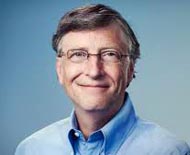 The billionaire Bill Gates took a great amount of risks while founding Microsoft. He had to drop out of college in order to help create Microsoft. He took a huge risk, starting his business based on his vision that the personal computer would be a useful tool in every office and home.
Bill Gates was prepared to travel in the wilderness of the unknown and would do anything to win. He even went up against Steve Jobs and was not threatened to copy or borrow ideas from other great innovators and tech companies. This paid off in the end when his company became a tech giant worth billions of dollars.
3. Henry Ford
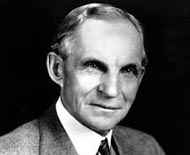 The world famous inventor of the automobile was very imaginative and willing to take risks. He slashed prices so steeply that he risked taking losses yet he managed to meet the crushing demand for Model T’s.
In order to satisfy consumer wants, Ford had to take it to the next level with a do or die attitude. Henry Ford even cut down the working hours and increased minimum wages for his workers so that they could work for a longer period of time before quitting. A very risky move that could be considered a mistake to most but was a strong reason why Henry Ford was able to conquer the automobile world.
4. J. Paul Getty
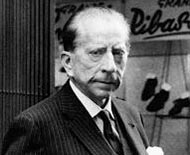 Known for his many failed marriages and his capacity for bearing risk, this billionaire oil baron is one of the most successful business people in our history.
J. Paul Getty founded and controlled Getty Oil Company in addition to 200 other companies. He left some of his wealth to the Getty Foundation which he created while still alive.
5. Larry Ellison
 The founder of Oracle and one of the richest people in the world, Larry Ellison’s net worth is somewhere around $50 billion.
Much of his success has been attributed to taking huge risks. Larry Ellison would promise people non-existent features, only to go back to his developers and demand them to build the products. He would also hire staff unqualified for their position only to train them later with manuals and books.
6. Richard Branson
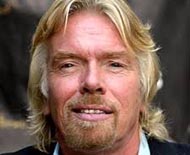 The founder of Virgin airways and the 4th richest man in the United Kingdom, Richard Branson’s success has been attributed to taking huge risks in business. With Virgin Records, Branson grew his label by signing controversial acts of the time. He took this risk in order to raise some eyebrows and establish his label in a crowded industry.
At one point, Richard Branson had 125 law suits against his empire, for weird and oddly pathetic reasons. He knows that there are going to be haters out there when you are doing big things, but that doesn’t stop him, he loves the thrill of a risk.
7. Warren Buffett
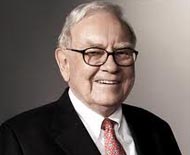 As an investor, Warren Buffett has never been afraid of taking risks and making mistakes along the way. It is his readiness to take huge risks that have contributed to his astounding success.
Warren Buffett understands that stocks and shares are a huge game of risks, but he knows the investment of risk taking experience over time minimises his investment risks for the future, and so nowadays he tries his luck investing in various different industries with a huge measure of success.
Right now Warren Buffett is extending out side of investments and branding companies with his Berkshire Hathaway name. Something he has never really done before.
8. Jeff Bezos
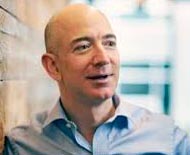 Founder and CEO of Amazon.com, Jeff Bezos’ success has been hugely due to the risks he has been taking all throughout his career. Recently, he bought The Washington Post, a struggling new operation and looks to turn it around into a revenue generating business.
Jeff Bezos started his first company from a garage in 1995 and by 1998 he was in charge of a $22.1 Billion market presence.
9. Elon Musk
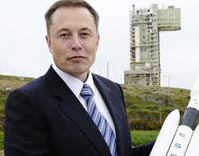 Elon Musk, co-founded PayPal, he created America’s first viable fully electric car company Tesla Motors, started the nation’s biggest solar energy supplier, and rolled the dice with NASA to launch his space exploration company SpaceX all in the space of 15 short years.
Elon has managed to solidify Tesla Motors in a high risk, high cost industry. He faced the critics and haters when he funded his own SpaceX mission to Mars and was on the verge of company collapse when he played Russian Roulette between funding both failing companies Tesla & SpaceX, not knowing if both companies will fall apart or not. Elon Musk is known as this generations well known biggest risk taker.
Elon Musk’s Net-worth is estimated to be $6.4 Billion and growing.
10. John D. Rockefeller
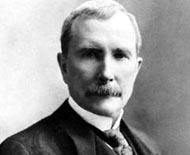 Owning the world’s largest oil supply known as Standard Oil, John D is the wealthiest person that ever lived. A strategic risk taker, John never settled and was always looking for greater things. He would give up good for great and this lead to his huge success. He knew that with the right intentions, anything could be achieved. He was a humble person who left behind a great legacy.
John D. Rockefeller is well known for taking positive calculated risks in every business venture that he got into. So as you can see, taking risks comes with huge success.
The very things that we stand to lose when we take risks are the very same ones that we stand to gain. The dare devil entrepreneurs that are listed above were able to become successful billionaires because they were ready and willing to take risks. If they had stayed in their comfort zones, they probably wouldn’t have made it to the financial heights that they accomplished. In business, great success comes with taking great risks and trusting your instincts that everything will turn out quite right.
You never know what you can accomplish until you do something that you have never attempted.
Taking the risks gives you the opportunity to step into some of the biggest you could ever imagine.











Having breakfast with billionaires isn’t just about the coffee; it’s a front-row seat to a masterclass in wealth creation. When you spend enough time around the top 0.001% of the economy, you quickly realize that their success isn’t just a byproduct of hard work or extreme intelligence. It’s the result of operating on a completely different framework than the rest of the world.
These aren’t secrets reserved for the elite. These are actionable strategies you can apply today to accelerate your own financial trajectory. Here are seven distinct ways billionaires think and act differently to achieve crazy high levels of success.
1. They Don’t Wait for Luck; They Engineer the Odds
Most people view luck as an on/off switch—you either get a lucky break or you don’t. Billionaires view luck as a dimmer switch. They understand that while you cannot control the lucky break itself, you are in complete control of the odds of it happening.
If you sit on your couch doom-scrolling, you have reduced the odds of a lucky encounter to zero. If you go to a networking event, pitch your business to a new investor, or launch a new product, you’ve instantly increased the odds of luck finding you.
Take Richard Branson. He frequently attributes his success to “lucky timing” and “lucky breaks.” But what people overlook is that Branson started over 400 companies and signed hundreds of artists to his record label. Most failed, but a few became wildly successful. He didn’t just get lucky; he put so many irons in the fire that mathematical probability guaranteed one of them would strike hot.
The Takeaway: Are you putting yourself out there enough to get lucky? Increase your pitch volume, product launches, and networking interactions to artificially inflate your odds of a lucky break.
2. They Invent Their Own Currencies
The middle class trades time for dollars, euros, or pounds. It is a very basic, low-level way to view currency. Billionaires create alternative currencies and use them as leverage.
- The Currency of Equity: If a founder sells 10% of their startup for $10 million, the entire company is now valued at $100 million. They can now use their remaining shares as a currency to acquire other businesses or attract top talent, without spending a dime of actual cash.
- The Currency of Reputation: A highly respected billionaire can join an advisory board, and their mere association will double the valuation of that company. They treat their name as currency and trade it for equity.
- The Currency of Distribution: If you have an email list of 600,000 engaged buyers, or 50,000 highly targeted LinkedIn followers, that is a currency. You can use that distribution power to negotiate equity stakes in other businesses.
3. They Reverse-Engineer the Future
Most entrepreneurs forward-engineer the past. They look at what they did yesterday to figure out what to do tomorrow. Billionaires reverse-engineer the future.
They project themselves three years forward and create a vivid, highly detailed picture of their company. They know their exact revenue, profit margins, team size, and intellectual property. Once that vision is locked in, they work backward:
- If this is true in 3 years, where must we be in 2 years?
- If that is true in 2 years, where must we be in 1 year?
- If that is true in 1 year, what must I do this week?
Because they have such a clear vision of the future, they become master storytellers. They can walk into a room, pitch an investor or a top-tier CEO, and say, “This is exactly where we will be in 36 months, and here is the exact role I want you to play.” They don’t care about their past; they only care about assembling the resources to meet their future.
4. They Are Master Enrollers, Not Doers
A great business is simply a collection of exceptional people aligned toward a common goal. Billionaires rarely do the actual “work” themselves because they understand that a single visionary cannot execute a 500-person vision alone.
Their full-time job is identifying, recruiting, enrolling, and aligning top-tier talent. As one billionaire noted, “A thousand good musicians cannot write a single symphony. But Beethoven wrote nine of them.” The difference between good talent and great talent is exponential.
Billionaires are constantly hunting for four types of people to enroll in their vision:
- Distribution Masters: People with massive audiences or traffic.
- Leadership Talent: Elite executives who can drive teams (CFOs, COOs).
- Elite Practitioners: The best-in-class engineers, sales reps, or artists.
- Capital Providers: Angel investors and VCs who can fund the vision.
5. They Harness the Dark Side of Motivation
Millionaires motivate their teams with carrots—vision boards, bonuses, and big goals. Billionaires know how to use the stick. They understand that while human beings are motivated by positive outcomes, they are ferociously driven by negative ones.
Billionaires intentionally create a common enemy to rally their team against.
- Richard Branson made British Airways the enemy.
- Steve Jobs famously made IBM the enemy in 1984.
Whether it is a rival company, an outdated political system, or a local competitor across the street, giving your team a tangible enemy to vanquish unlocks a level of gritty, relentless motivation that positive reinforcement simply cannot touch.
6. They Only Play Games of “Value at Scale”
A private tutor or a nurse provides immense value, but their impact is limited to the physical room they are in. The modern economy does not reward pure value; it only rewards value at scale.
Billionaires build systems that deliver value to millions of people simultaneously. There are four primary levers they use to achieve this scale:
- Intellectual Property: Patents, books, media rights, and franchise manuals.
- Distribution Channels: Owning retail chains, massive email lists, or media platforms.
- Armies of People: Training massive workforces to execute a standardized service globally.
- Software/Code: The ultimate scaler. Code written once can be accessed by billions of people instantly.
If your business relies on complex, bespoke solutions, it will hit a wall. Simple scales; complexity fails.
7. They Build to Exit
We often hear the romanticized stories of founders building their companies from the ground up, but we rarely hear the most important part of the billionaire playbook: The Exit Event.
Almost every ultra-wealthy individual built their fortune through a series of exits. They build a company, sell it, and take the cash.
But an exit provides something far more valuable than just liquidity—it provides time and consolidated learnings. When an entrepreneur sells a business, they clear the deck. They can look back at their 5-year journey, analyze their mistakes, and launch their next venture with capital, free time, and elite experience.
Many entrepreneurs hold onto their first business far too long. Your current business is based on the best thinking you had five years ago. An exit allows you to launch your next empire based on everything you know today.
Daniel Prestley the Aussie entrepreneur nails the top points of what makes the Top 0.1% do to be successful:

In 1995, a graphic design teacher named Lynda Weinman just wanted a digital sandbox. She needed a place online where her students could upload their work and play around with new tools like Photoshop and Illustrator. She bought the domain Lynda.com, put the site together, and gradually moved her teaching online.
Years later, she sold that little digital sandbox to LinkedIn for $1.5 billion.
Or look at Elon Musk, who managed to generate half a billion dollars in cash for Tesla before a single Model 3 ever rolled off the assembly line.
How do these founders pull off such massive feats? According to John Mullins, a professor at the London Business School, successful founders don’t follow the “best practices” taught in corporate boardrooms. They operate on a completely different psychological wavelength. They possess what Mullins calls a counter-conventional mindset.
If you want to build a thriving startup in today’s fiercely competitive market, you have to unlearn corporate logic. Here are the 6 rule-breaking mindsets that will completely change how you do business.
1. Say “Yes, We Can” (Even If You Don’t Know How)
Corporate strategy 101 tells companies to “stick to their knitting” and focus entirely on their core competencies. If a customer asks for a service outside that narrow scope, the corporate answer is always, “No, we don’t do that here.”
Entrepreneurs say “yes,” and figure out the “how” later.
Arnold Correia ran a highly successful event management business in Brazil. One day, a major client asked if Arnold could build a satellite uplink to broadcast training videos to 260 stores across the country. Arnold knew absolutely nothing about satellite technology. His response? “Yes, we can do that.” Later, Walmart asked if he could put screens on their sales floors to run targeted advertisements. Again, he said yes.
By refusing to be boxed in by his current skillset, Arnold reinvented his multi-million-dollar business four separate times.
The A2S Takeaway: Don’t let your current limitations cap your growth. Commit to the opportunity first, and acquire the skills second.
2. Obsess Over Problems, Not Products
Big corporations are obsessed with product tweaks. They take the blue specks out of their laundry detergent, turn them green, and call it “breakthrough innovation.”
Entrepreneurs don’t care about shiny products; they care about solving painful problems.
Jonathan Thorne invented a silver-nickel alloy for surgical forceps to stop human tissue from sticking to the metal during surgery. He originally targeted plastic surgeons, but sales were sluggish. Instead of changing his product, he looked for a worse problem. He found neurosurgeons. When you are operating on a human brain, sticky forceps are a literal life-or-death disaster. Thorne targeted this massive pain point, scaled his business rapidly, and eventually sold it to medical giant Stryker.
The A2S Takeaway: Nobody cares about your shiny new product features. They care about their own headaches. Find a bleeding-neck problem, and cure it.
3. Think Narrow, Not Broad
Corporate giants want massive total addressable markets (TAM). If a market doesn’t appeal to the masses, they won’t touch it. But true entrepreneurs know that to go big, you have to start narrow.
When Phil Knight and Bill Bowerman founded Nike, they didn’t try to make sneakers for the general public. They focused on a tiny, extremely specific niche: elite distance runners. At the time, running shoes were made for sprinters on smooth tracks, leaving marathoners to deal with sprained ankles and shin splints on dirt trails. By designing a wider, cushioned shoe exclusively for distance runners, Nike built a rabid, hyper-loyal fan base that eventually gave them the leverage to conquer the global athletic footwear market.
The A2S Takeaway: Niche down until it hurts. Dominate a small group of highly passionate users before you try to sell to the world.
4. Ask for the Cash Upfront (Ride the Float)
Big companies have billions in cash reserves to fund their R&D. Startups don’t. But instead of begging venture capitalists for money, brilliant entrepreneurs get their customers to fund their operations.
When Elon Musk took over Tesla, the plan wasn’t to take on massive debt to build a factory. Instead, they hosted a roadshow for wealthy, eco-conscious buyers who wanted the “next big thing” in their driveways. Tesla pre-sold 100 Roadsters for $100,000 each. That meant they had $10 million in cash sitting in the bank before car #1 was even built. Years later, they did the exact same thing with the Model 3, taking 500,000 deposits of $1,000 each—generating half a billion dollars in pure cash to fund their engineering and tooling.
The A2S Takeaway: Cash is the lifeblood of your startup. Can you pre-sell your idea and get paid before you build it?
5. Beg and Borrow (But Please Don’t Steal)
In business school, you are taught to carefully analyze the ROI of buying heavy assets. Entrepreneurs operate differently: they don’t buy assets if they can borrow them.
When Tristram and Rebecca Mayhew wanted to start Go Ape, a treetop adventure business in the UK, they had a major problem: they didn’t own a forest. Instead of buying land, they approached the UK Forestry Commission, which owned millions of trees and desperately wanted to increase park visitor counts. The Mayhews pitched a win-win partnership: let us use your trees, parking lots, and bathrooms, and we’ll bring you massive foot traffic. Today, Go Ape has dozens of locations globally, all because they leveraged assets that already existed.
The A2S Takeaway: You don’t need to own everything to monetize it. Partner up, leverage existing infrastructure, and keep your startup overhead near zero.
6. Don’t Ask for Permission (Just Get On With It)
In the corporate world, every new idea has to be sanitized by compliance, legal, and HR. Getting a “yes” takes months.
Entrepreneurs understand that permission is the enemy of progress. When Travis Kalanick and Garrett Camp founded Uber, they didn’t go to the San Francisco transit regulators and ask, “Excuse me, can we start a taxi company with zero actual taxis?” The regulators would have crushed them immediately to protect the local monopoly. Instead, they just launched the app. While some of Uber’s later corporate tactics crossed ethical lines, the core lesson of their launch is undeniable: when digital innovation outpaces slow, ambiguous regulations, you can’t wait for a green light.
The A2S Takeaway: If you wait for permission from the gatekeepers, you’ll be waiting forever. Act first, apologize later.
Are You Playing By The Right Rules?
To change the world—or even just your own financial future—you have to break the conventional norms. You don’t need a perfectly polished product, infinite VC funding, or permission from the establishment.
Look at the biggest roadblock in front of your business today. Which of these 6 counter-conventional mindsets can you adopt to smash right through it?
Stop waiting. Get out there and just get on with it.

At an age when most people are just trying to figure out their career path, Lucy Guo unseated Taylor Swift as the world’s youngest self-made female billionaire.
She co-founded Scale AI (recently valued at a staggering $25 billion), launched the creator monetization platform Passes, and became a relentless angel investor with a portfolio of over 100 companies. But her path wasn’t paved with perfect grades and safe corporate ladders. It was paved with rebellion.
Guo got suspended in kindergarten for telling the teacher the curriculum was dumb. She dropped out of Carnegie Mellon University with only four classes left to graduate. She walked away from millions of dollars in unvested equity at Snapchat. Every time society told her to play it safe, she did the exact opposite.
If you want to scale a massive business and operate at the top 1% of the tech world, here is the unfiltered playbook from one of the most prolific founders of our generation.
1. Optimize for Learning Over Stability
Most people make career decisions based on risk and salary. Guo makes decisions based on a single metric: Am I maximizing my learning?
When she was a year away from graduating with a computer science degree from Carnegie Mellon, she realized she was learning more practical skills at weekend hackathons than in the classroom. So, she dropped out to dive headfirst into the startup world. Everyone—her parents, her friends, even strangers—called her an idiot.
Later, she walked away from a highly lucrative position at Snapchat to build her own company. To the outside world, these look like massive, irresponsible risks. To Guo, the math was simple: if a decision guarantees you will acquire highly valuable new knowledge, it is not a risk. Your knowledge will always be worth money.
2. The “Three-Task” Founder Routine
It is incredibly easy for founders to get distracted by busywork. Guo subscribes to the famous Y Combinator philosophy that a founder should only be doing three things:
-
Working out
-
Talking to customers
-
Building the product
Her daily routine is brutally efficient. She wakes up at 5:30 AM, rolls out of bed, and immediately goes to a grueling fitness class. She bought her house specifically because it was a 5-minute walk from the gym and a 5-minute walk from the office, entirely eliminating her commute.
By refusing to sit still—cutting out TikTok scrolling, TV, and aimless internet browsing—she funnels all of her energy into execution. Working out tests your discipline; if you can force yourself to train when you feel terrible, you will have the energy to dominate your industry for the rest of the day.
3. Ship at 90% (The Innovation Rule)
When Guo worked at Snapchat, she learned a massive lesson from CEO Evan Spiegel about product development: stop agonizing over user research and just get the product into the wild.
If you spend three years going back and forth on a design trying to make it perfect, you will lose. The market moves too fast, and frankly, consumers rarely know what they actually want until they can touch it.
The rule is simple: Get it to 90% and ship it. Spend two weeks designing it, launch it, and see if it gets traction. People will eagerly use a buggy product with a terrible user interface if it actually solves their problem. If it gets traction, double down and fix the bugs. If it falls flat, you only wasted two weeks instead of two years.
4. Never Outgrow the “Grunt Work”
As companies scale, many founders retreat to their corner offices and stop doing Individual Contributor (IC) work. Guo believes this is a fatal leadership flaw.
You cannot effectively judge your team’s performance if you refuse to do the job yourself. When Scale AI landed a massive new pilot customer, Guo didn’t just delegate the work—she sat in the war room alongside her engineers, manually labeling data to ensure it was perfect. If a creator finds a bug at 2:00 AM on Passes, she and her team are awake fixing it.
As a leader, nothing is below you. If you aren’t willing to jump into the trenches and handle customer support tickets yourself, you have no right to critique how your reps are handling them.
5. Hire for Grit Over Pure Genius
When building a team, pure intelligence is heavily overrated if it isn’t backed by relentless hard work.
You can hire the smartest engineer on the planet, but if they refuse to put in the effort when things get difficult, they will have zero impact on the company. Guo explicitly hires for grit. Startup culture requires a 24/7 mentality. You don’t necessarily have to work every weekend, but when the building is on fire, the team needs to know you will show up and grab a bucket.
6. Stop Complaining and Start Cheerleading
When asked what advice she would give her 20-year-old self, Guo’s answer had nothing to do with code, venture capital, or marketing.
“I would stop complaining about some of the people I work with and just start really getting to know them better and uplifting them.”
Toxic, gossipy work environments drive away top talent. The most profitable and innovative companies are built in positive environments where the leader acts as the ultimate cheerleader.
Surround yourself with wildly positive people, focus intensely on the upside, and relentlessly uplift the people building your vision. When you protect your energy and support your team, the financial success becomes a natural byproduct.
Here’s a great interview with Lucy Guo:

If you have watched the hit TV show Billions, you know the character Dr. Wendy Rhoades. She is the brilliant in-house performance psychologist who helps ultra-wealthy hedge fund managers and cutthroat founders unlock extreme performance, navigate crises, and destroy their mental blocks.
But Wendy Rhoades isn’t just a fictional character trope. The Wall Street Journal recently compared the fictional Wendy to a very real person: Dr. Julie Gurner.
Dr. Gurner is one of the most sought-after executive performance coaches in the country. With a background in adult psychopathology and forensics—including a stint working in a Supermax prison—she now spends her days in the trenches with CEOs, billionaire founders, and elite operators. She helps the top 0.01% reach the next level psychologically.
In a recent interview, Dr. Gurner shared the exact traits, mindsets, and peak performance psychology strategies that separate the ultra-successful from everyone else. Here is how you can apply them to your own life.
1. The Defining Trait of the Top 0.01%: Audacity
When looking at the ultra-successful, one trait stands out above the rest: Audacity.
Audacity is the refusal to follow the “imaginary rules” that govern most people’s lives. Society teaches us certain boundaries: you cannot apply for that job unless you have exactly five years of experience, a small startup cannot pitch a major bank, or you do not belong in certain rooms because of your background.
According to Dr. Gurner, the top 0.01% operate with an almost complete unawareness of these artificial limits.
“They don’t follow the rules that everyone else seems to follow that are actually very artificial,” Gurner explains. “That audacity to go for these larger things… is really how they skip steps that everyone else is still trudging through. We’re all going on the crowded path, and they just find this little dirt road to get to outcomes we are eight years away from.”
How to Apply It: Adopt the disposition of “What if it goes right?” instead of “What if it goes wrong?” We chronically overestimate the true risk of failure. In reality, most failures are temporary and quickly forgotten by the public. Take the side path. Shoot the uncomfortably large shot.
2. The Repetitive Reflex: Stop Trying to Fix Your Weaknesses
There is a common misconception (the halo effect) that high performers are exceptional at everything. In reality, they are usually only great at one or two things—but they lean into those strengths relentlessly.
Dr. Gurner points to Elon Musk as a public example. Musk is a visionary company builder and resource gatherer, but he famously relies on operators like Gwynne Shotwell at SpaceX to handle the granular day-to-day operations, NASA contracts, and internal management.
“If you start as above-average on something and put force behind it, the separation between you and everyone else is dramatic,” Gurner notes. “But if you focus all your time on the things you are below average at, maybe you’ll bring them up to average. That’s not where you get escape velocity.”
How to Apply It: Identify your unique, outlier strengths. Double down on them. Stop judging yourself for the things you are bad at, and either delegate them, outsource them, or partner with someone who thrives in those areas (the “spreadsheet person”).
3. Stop Suppressing Negative Emotion: Use It as Fuel
The modern wellness world is currently obsessed with stoicism—the idea that you should remain perfectly tempered, suppress extreme emotions, and remain unaffected by the world.
Dr. Gurner pushes back hard against this, arguing that suppressing intense emotion is a massive waste of energy.
“If you have anger or rage, why would you suppress that?” she asks. “You are killing a source of energy that you could channel into something absolutely phenomenal. There are so many wonderful companies and careers built on spite, anger, and ‘I’m going to show you’ energy.”
Humans are meant to experience a full spectrum of emotions. If you have been wronged, you can choose to let that anger destroy you, or you can use it to work 80-hour weeks, build an empire, and make your life phenomenal.
How to Apply It: Do not let negative emotions turn you into a toxic person to those around you, but absolutely use the internal fire of a perceived slight or past failure to fuel your daily actions.
4. Be Quirky, Not Humble
If you want to reach the highest levels of success, “be humble” is often terrible advice.
Humility is frequently confused with modesty or self-deprecation. If you constantly devalue your contributions, the people who desperately need your specific skills will never find you. Knowing what you are great at, and proudly sharing it with the world, does not make you arrogant—it makes you useful.
Furthermore, do not sand down your edges to fit into a corporate mold.
“Everyone is pushing toward conformity, and it is the wrong path,” Gurner says. “If you push to fit in with everyone else, and then you’re mad that your outcomes aren’t different, there’s a reason for that. We remember people because of their quirks.”
How to Apply It: Own what you are great at loudly. Lean into your strange hobbies and unique personality traits. The friction of your “weirdness” is exactly what makes you memorable and separates you from the conformist pack.
5. Reframe Obstacles as Challenges
At the end of the day, Dr. Gurner says her main job as a psychologist is simply to help high-achievers get out of their own way. We all know what the optimal decisions in our lives are, but we invent excuses and barriers to avoid doing the hard work.
The simplest, most scalable tool to fix this is reframing.
“How you frame everything is how you approach it,” Gurner explains. “When you see an obstacle or a problem, reframe it into a challenge. Think, ‘How could I productively think about this that is equally true?’ We get so tunneled in that we don’t see other ways of thinking about the same challenge that could get us amped up to tackle it.”
The Bottom Line: Don’t Ignore the Haunting Agitation
Many people walk around with “haunting agitation”—a nagging voice whispering that they could be doing more, living bigger, and fulfilling a dream they abandoned long ago.
Do not let that whisper become a scream of regret later in life.
The difference between those who achieve outlier success and those who don’t is simply a willingness to make sacrifices. Map out the life you want, figure out exactly what it costs (both financially and in terms of effort), and have the audacity to go get it.
Checkout this incredible interview with Dr Julie Gurner

The Rules for Breaking the Rules

Developing Effective Employee Performance Management Systems

Choosing an Office Chair to Help With Leg Circulation

How to Build Confidence without Comparing Yourself to Others

SmartyMe App on my home screen: Why it earned its spot

5 Ways For Startups To Succeed Making Acquisitions

77 Inspirational Quotes That Will Change Your Life

(Images) 52 Motivational Picture Quotes For An Epic Year Of Success
57 Memorable Kobe Bryant Quotes

40 Rare Motivational and Inspirational Picture Quotes

3 Prince EA Videos To Change Humanities Path To Greatness

(Video) What Is Success? An Entrepreneurial Story To Inspire You

(Inspirational Video) What If Today You Knew You Were Going To Take Your Last Breath?

How To Make Enough Money From A Blog To Quit Your Job – Kate McKibbin

How Finding Your Passion And Becoming An Entrepreneur Can Lead To Happiness – Chiquita Searle
-

 Success Advice2 years ago
20 Creative Ways To Make Money From Home
-

 Success Advice2 years ago
7 Habits of Highly Effective Mediocre People
-

 Creativity2 years ago
176 Inspirational Pablo Picasso Quotes on Art, Creativity and Life
-

 Life2 years ago
10 Ways Your Life is Like a Video Game
-

 Life2 years ago
13 Meaningful Ways to Show Someone They Matter
-

 Life2 years ago
The 5 Stages of a Quarter-Life Crisis & What You Can Do
-

 Did You Know1 year ago
7 Surprising Life Lessons Video Games Taught Me That School Never Did
-

 Success Advice1 year ago
Stephen Covey’s 8 Leadership Habits That Will Change How You Lead Forever
10 Comments