
Creativity
Why AI Won’t Kill Human Creativity (And How Artists Can Survive)


As an artist, the cycle is brutally familiar: you grind for years, figure out a working model, finally catch your breath… and then a new technology emerges, breaks everything, and forces you to rebuild from scratch.
Today, that disruptive force is Artificial Intelligence. The internet is flooded with AI-generated content, sparking massive controversy. Generative models have scraped the data of millions of artists without consent, credit, or compensation.
If you are a creator, it is entirely normal to feel a deep, burning anger right now. But beneath that anger, you might also feel a strange, conflicting sense of excitement. AI represents a massive technological leap, and historically, artists are drawn to new tools that expand human expression.
To understand where the creator economy is heading, we have to look backward. History shows us that while new technology always disrupts the status quo, it never destroys the fundamental human need for art.
🕰️ History Repeating: When Technology “Threatens” Art
Every major technological advancement in the arts has been met with existential dread. When a new medium arrives, society initially tries to use it to simply simulate the old medium—often poorly. It is only when risk-taking artists experiment with the new technology that true innovation happens.
1. The Camera vs. Theater
When the cinematograph was invented in 1895, early filmmakers didn’t know what to do with it. They simply set up wide-angle lenses and filmed stage plays. It was two-dimensional, silent, in black-and-white, and frankly, boring compared to live theater.
It wasn’t until pioneers like Georges Méliès (with 1902’s A Trip to the Moon) invented the “cut,” special effects, and narrative pacing that cinema became its own distinct art form, rather than just a cheap imitation of a play.
2. The Recording Ban vs. The Studio
In the 1930s, the musicians’ union actually orchestrated a massive, years-long strike against recording technology. They called it “canned music,” fearing it would destroy the live performance industry (and to be fair, it did cost many musicians their jobs).
Early recordings just involved a live band playing into a microphone. But a few decades later, artists like The Beatles released Revolver. They used the recording studio itself as a new canvas—looping tape, playing sounds backward, and layering audio to create art that could never be replicated live.
3. The Synthesizer Panic
When the Novachord (the first commercial synthesizer) debuted in 1939, the musicians’ union tried to ban it, terrified it would replace entire orchestras. Today, synthesizers are the backbone of modern music, used by everyone from Stevie Wonder to Daft Punk. The synthesizer didn’t kill music; it birthed entirely new genres.
📉 The “Slop” Phase of AI
Right now, we are in the early, messy phase of AI. Just like early filmmakers filming plays, we are using AI to generate images that look hand-drawn, or videos that look like they were shot on a camera.
This is the “slop” phase. It is a lazy period following the introduction of a new medium where we try to reproduce existing things that humans simply do better. The technology will inevitably catch up and evolve into its own distinct medium, but right now, it feels chaotic.
The Fair Use Fallacy
The anger from the creative community is justified. AI companies claim “fair use” for scraping creator data, yet they are simultaneously signing multi-million dollar licensing deals with massive publishers and media conglomerates.
If it is legally “fair use,” why are they paying the big corporations? And if they are paying the corporations, why aren’t they paying the independent illustrators, writers, and musicians whose life’s work built the hundreds of billions of dollars in value these models now hold?
When we plan for humanity’s future, we must plan for society’s artists.
🎢 The Infinite Sine Wave of the Creator Economy
For digital creators, building a sustainable career means riding an “infinite sine wave.” You master the YouTube algorithm, and then the platform changes it. You build a massive iTunes following, and then Spotify takes over. You master horizontal video, and then TikTok forces the world to go vertical.
The models break, and you have to rebuild. The AI revolution is just the latest, steepest dip in this infinite cycle. It will break economic models, but change does not mean death.
🛡️ Why Human Art Will Survive
If AI can instantly generate a song, a painting, or a film, what is the point of human creativity? Why should we keep making things?
Here is why human art is completely irreplaceable:
- Art is Risk: Great artists don’t just playback existing patterns. They push the boundaries of what is acceptable. They put themselves on the line and risk ridicule. Watching a human take a massive, authentic risk is compelling. An LLM cannot take a risk, because it has nothing to lose.
- Art is Scarcity: As creator Karen X. Cheng says, “Art is scarcity. Art is not what’s easy to make, it’s what’s hard.” When a new visual trick is hard to pull off, we are mesmerized. When it becomes an automatic filter on an app, it becomes boring. Humans are drawn to ingenuity, patience, and the struggle of creation.
- Art is Connection: We don’t just consume art for the sensory input; we consume it to connect with another conscious being. When you listen to Kendrick Lamar, you aren’t just enjoying the beat; you are connecting with his lived experience, his story, and his pain. AI can mimic the sound, but it cannot replicate the soul.
🚀 Actionable Bonus: How Creators Can Future-Proof Their Careers Today
If you want to survive the AI wave, you cannot compete with machines on speed or volume. You must lean heavily into your humanity.
- Stop Making “Content” and Start Making “Art”: Purely informational content (e.g., “How to unclog a toilet”) will be easily replaced by AI. Double down on personality-driven, deeply emotional, and narrative-heavy work that only you can tell.
- Cultivate Direct Community: Do not rely solely on algorithmic platforms. Build owned audiences through email newsletters, private communities (like Discord or Patreon), and live events.
- Show Your Process: The final product can be faked by AI, but the messy, frustrating, beautiful human process of creation cannot. Document your journey.
We are about to go through a massive shift. But everything that makes anything matter exists because something alive made it. Humans will be creating, risking, and connecting for a long, long time.
Here is a powerful talk by Jack the CEO of Patreon who talks about the creator in the wave of AI:








Creativity
The Hidden Blueprint of Creative Success: Why “Feeling Lost” is Actually Your Biggest Advantage

If you are an artist, creator, or entrepreneur who feels completely lost right now—struggling with which direction to go, what to focus on, or how to turn your passion into a sustainable career—you are not alone.
In fact, you are exactly where you need to be.
The biggest lie sold to creators today is that success is a straight line. We see the overnight virality, the sold-out arenas, and the massive business exits, but we rarely see the messy, chaotic, and often painfully slow process that happened behind closed doors.
If you are looking for fuel for your work, this is the ultimate breakdown of how to build a creative career that actually stands the test of time, drawing on the hidden wisdom of some of the most successful artists of our generation.
1. Stop Wrapping Your Ego in Social Media Metrics
The modern creator is obsessed with the algorithm. We drop a snippet of a song, an idea for a business, or a piece of art onto Instagram, wait to see how the crowd reacts, and let that crowdsourced opinion dictate our worth.
Tyler, the Creator has a profoundly different, practitioner-based mindset regarding social media:
“I don’t give a f** what someone else is complaining about because I have my own life and I’m okay with being fully selfish with what the f*** I got going on… you just building a resume, like that’s okay.”*
You do not have to have an unhealthy relationship with social media. You can step out of the psycho-drama of feeling “toxic” or “shameful” about self-promotion. View social media purely as a tool. People are distracted. They are feeding their dogs, scrolling through emails, and dealing with a million other drops on a Friday. It is your job to selfishly and consistently put your work out there without attaching your identity to the metrics.
Do not let low numbers dictate your creativity. The Ramones flopped a thousand times. Hall & Oates didn’t pop until their fourth album. Create selfishly, and use the platforms simply as a resume.
2. Respect the Private Creative Process
We live in an era where everyone feels the need to constantly broadcast their process. But there is immense power in pulling away to actually build something of value.
In an interview with Rosalía, she revealed that she took the entirety of 2021 and completely blocked the world out just to mix her record.
“I don’t feel I’m late if I’m going on my own rhythm… I didn’t want to make an album just because now is the time to make an album. I don’t work like that.”
When you see a finished creative product, you are looking at the tip of the iceberg. You do not see the years of refinement beneath the surface. Success requires maturity. It requires knowing when you are not ready to release something, and having the discipline to hold it back until it meets your internal standard, regardless of what the market is demanding.
3. Create Solely for Yourself (The Authenticity Hack)
During the pandemic lockdowns, artist Loyle Carner realized something profound: if all the external rewards of his music—the shows, the travel, meeting girls, the money—were stripped away, would he still make music?
He surprised himself by realizing he would. This led him to create his purest album yet, an album completely unburdened by the thoughts of what other people might think.
“I just wanted to express a 360 of myself… the beauty and the ugliness at times. I always used to try and put my best foot forward and be squeaky clean… but that’s not the 360.”
When you focus on internal motivation rather than external validation, you unlock a new dimension of honesty in your work. And in a world flooded with generic content, raw honesty is the ultimate differentiator.
4. Embrace Radical Open-Mindedness (The Pharrell Rule)
One of the most dangerous traps for an established creator is getting locked into a single identity. In a conversation between Pharrell Williams and RM (from BTS), Pharrell pointed out how often artists are terrified to step outside their designated “lane.”
Pharrell noted that he will often pitch a unique sound to an artist, and they will reject it, claiming it’s “too different.” But the greats are the ones willing to jump out the window and try it anyway. RM echoed this by sharing his ultimate creative compass:
“I make decisions based off a feeling. I don’t make them based off of convention… it’s just whatever it feels like it needs.”
If you want to maintain a long career, you must cultivate the skill of radical open-mindedness. Bending genres, merging different styles, and making choices based on raw feeling rather than industry convention is how you avoid becoming a cliché of your former self.
5. The “Preparation + Opportunity” Formula
FKA Twigs operates by a simple motto: Preparation + Opportunity = Success.
“The preparation for this tour has been like years… so I’m just not stressing cuz I know that I know it all.”
Many creators suffer from massive anxiety and imposter syndrome when presenting their work. The cure for this is turning the energy of your nervousness into preparation. Adopt a “Beginner’s Mind.” Focus intensely on learning your craft behind the scenes so that when the opportunity finally arrives, your recall is sharp, your skills are tight, and you can take real risks because you are no longer just “doing” the work—you are living it.
6. Sobriety and Mental Health as a Force Multiplier
If you want to make your best work across a long career, you must fiercely protect your mental health. Rapper Danny Brown learned this the hard way, realizing that trying to force the creative process while drinking and battling personal demons only resulted in wasted weekends and subpar work.
Once he got sober, he was able to knock out seven incredible songs in a single day.
“It’s just different now being all sober and I guess it’s easier to be honest cuz I was just making it harder on myself… just having somebody to talk to man is the best thing you can have.”
This isn’t just a wellness message; it is a practical career strategy. Treating your mental health with respect acts as a massive force multiplier for your output. It removes the unnecessary friction, allows you to tap into your purest ideas, and most importantly, allows you to actually enjoy the process.
7. The Winding Road Never Stops
The creator of Chicken Shop Date, Amelia Dimoldenberg, faced a massive setback when one of her best producers quit to start her own agency. She was devastated until her father gave her a profound piece of advice:
“The best people will always leave… because they are ambitious. And that’s okay, because you’ll find someone else.”
You have to remove the awkwardness and pressure from your creative journey. People will leave. You will start projects and abandon them. You will fail publicly.
If you look at success linearly, trying to smash straight through an obstacle seems like the most efficient route. But the reality of a creative career looks like a long, hard, roundabout path that takes ten times longer. You might not know if you are heading in the right direction, but you are learning and failing all the way through. That winding road is exactly what builds the unique skill sets that will eventually make your career undeniable.
Stop worrying about when you will get there. Just focus on putting in the reps, mastering your craft, and trusting the winding process. After all, as the legendary painter David Hockney proves—still innovating and painting deep into his 80s—true creatives never really stop developing.
Do these new additions give the article the exact unique flavor you were looking for, or would you like me to inject some specific examples from your own creative journey as well?
Here’s a great video by Creative Minds that breaks this down well:
Creativity
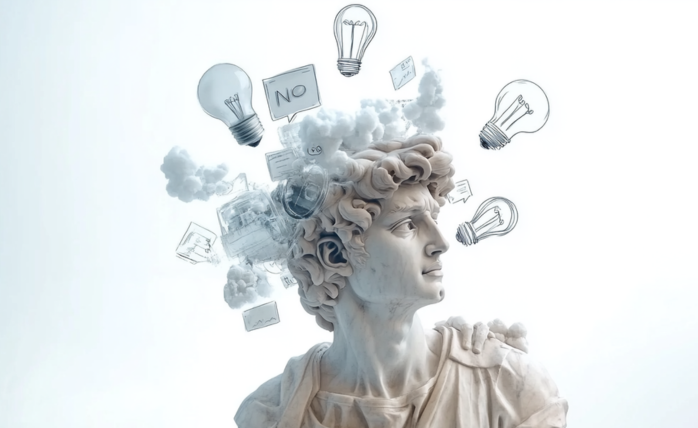
The Young Man’s Guide to Creativity: 10 Daily Habits to Improve Your Creative Mind
10 daily habits you can put into practice right now to improve your creativity

When I was 22 years old, I became a Top Writer on Medium.
It’s not an easy path. I lived in the Philippines and had never received a penny after writing over 100 digital articles. But I treated it like practice. If I couldn’t get other people to read my work for free, why would they trust me? (more…)

Hey there, art lovers and curious minds! Are you ready to dive deep into the colorful, chaotic, and brilliant world of Pablo Picasso?
I’ve gathered 93 of Pablo Picasso’s most inspiring quotes that reveal the genius behind the masterpieces.
Picasso wasn’t just about Cubism and crazy creativity; his words offer a treasure trove of wisdom on life, art, and everything in between.
Whether you’re an artist looking for a spark, or just someone who loves a good quote, you’re in the right place.
Get ready to see the world through Picasso’s eyes and let his words inspire your next big idea.
A good way to use these: read through the list once, pick the one that fits the project in front of you, and write it at the top of your notebook or sketchpad. Come back to it when you feel stuck, and let it remind you to start working before you feel ready.
We also fact-checked the list. Duplicates are gone, and a handful of lines that are widely shared as “Picasso quotes” but actually came from someone else are explained at the end.
Here are the most inspirational Pablo Picasso quotes
Picasso Quotes: Art, Truth and Imagination
1. “Art is not the application of a canon of beauty but what the instinct and the brain can conceive beyond any canon.”
2. “Art is a lie that makes us realize the truth.”
3. “Everything you can imagine is real.”
4. “The purpose of art is washing the dust of daily life off our souls.”
5. “Colors, like features, follow the changes of the emotions.”
6. “Art is the elimination of the unnecessary.”
7. “There are painters who transform the sun into a yellow spot, but there are others who with the help of their art and their intelligence, transform a yellow spot into the sun.”
8. “In art, there is only one thing that counts: the thing you cannot explain.”
9. “Art is the most effective mode of communication that exists.”
10. “Art is the most beautiful of all lies.”
11. “Art is never chaste. It ought to be forbidden to ignorant innocents, never allowed into contact with those not sufficiently prepared. Yes, art is dangerous.”
12. “The world today doesn’t make sense, so why should I paint pictures that do?”
13. “What is a face, really? Its own photo? Its make-up? Or is it a face?”
Picasso Quotes: Creativity, Action and Purpose
14. “Inspiration exists, but it has to find you working.”
15. “The chief enemy of creativity is ‘good’ sense.”
16. “Every act of creation is first an act of destruction.”
17. “The urge to destroy is also a creative urge.”
18. “It is your work in life that is the ultimate seduction.”
19. “Only put off until tomorrow what you are willing to die having left undone.”
20. “Never permit a dichotomy to rule your life, a dichotomy in which you hate what you do so you can have pleasure in your spare time. Look for a situation in which your work will give you as much happiness as your spare time.”
21. “One must act in painting as in life, directly.”
22. “What one does is what counts and not what one had the intention of doing.”
23. “I am always doing that which I cannot do, in order that I may learn how to do it.”
24. “I do not seek. I find.”
25. “I’d like to live as a poor man with lots of money.”
26. “My mother said to me, ‘If you are a soldier, you will become a general. If you are a monk, you will become the Pope.’ Instead, I was a painter, and became Picasso.”
Picasso Quotes: Life, Aging and Growth
27. “Every child is an artist. The problem is how to remain an artist once we grow up.”
28. “It takes a long time to become young.”
29. “The older you get, the stronger the wind gets – and it’s always in your face.”
30. “The first half of life is learning to be an adult—the second half is learning to be a child.”
31. “It took me four years to paint like Raphael, but a lifetime to paint like a child.”

32. “We don’t grow older, we grow riper.”
33. “What might be taken for a precocious genius is the genius of childhood. When the child grows up, it disappears without a trace. It may happen that this boy will become a real painter someday, or even a great painter. But then he will have to begin everything again, from zero.”
34. “Love is the greatest refreshment in life.”
35. “We have a misfortune that our minds have wings, but our bodies do not.”
36. “Everything is a miracle. It is a miracle that one does not dissolve in one’s bath like a lump of sugar.”
37. “When I die, it will be a shipwreck, and as when a huge ship sinks, many people all around will be sucked down with it.”
38. “Computers are useless. They can only give you answers.”
39. “Every positive value has its price in negative terms… the genius of Einstein leads to Hiroshima.”
Picasso Quotes: Originality, Copying and Craft
40. “To copy others is necessary, but to copy oneself is pathetic.”
41. “Success is dangerous. One begins to copy oneself. And to copy oneself is more dangerous than to copy others. It leads to sterility.”
42. “There is no abstract art. You must always start with something. Afterward, you can remove all traces of reality.”
43. “It is not what the artist does that counts, but what he is.”
44. “It’s not what you paint but how you paint it.”
45. “I don’t paint things. I only paint the difference between things.”
46. “I paint as if some blind man was looking over my shoulder.”
47. “I paint objects as I think them, not as I see them.”
48. “Painting is a blind man’s profession. He paints not what he sees, but what he feels, what he tells himself about what he has seen.”
49. “If only we could pull out our brain and use only our eyes.”
50. “To draw, you must close your eyes and sing.”
51. “I am the child who is born out of the incestuous marriage of art and money.”
52. “Give me a museum, and I’ll fill it.”
Picasso Quotes: Art, Lies and Truth
53. “Museums are just a lot of lies, and the people who make art their business are mostly impostors.”
54. “You mustn’t always believe what I say. Questions tempt you to tell lies, particularly when there is no answer.”
55. “What do you think an artist is? An imbecile who has only eyes if he is a painter, or ears if he is a musician?”
56. “We must be vigilant, even against our own subconscious thoughts.”
57. “I do not believe I have ever painted a dream.”
58. “Give me a forum, and I’ll give you a controversy.”
59. “The one thing the world will never have enough of is the outrageous.”
60. “When art critics get together, they talk about Form and Structure and Meaning. When artists get together, they talk about where you can buy cheap turpentine.”
61. “It is not up to the painter to define the symbols. Otherwise, it would be better if he wrote them out in so many words! The public who look at the picture must interpret the symbols as they understand them.”
62. “When we discovered Cubism, we did not have the aim of discovering Cubism. We only wanted to express what was in us.”

63. “I attempt to observe nature, always. I am intent on resemblance, and resemblance more real than the real, attaining the surreal.”
64. “For my part I always aim at likeness.… For me surreality is nothing else, never has been anything else, than that deep likeness far beyond the shapes and colors of immediate appearance.”
65. “I don’t believe in accidents. There are only encounters in history. There are no accidents.”
Picasso Quotes: Work, Ideas and the Creative Process
66. “I begin with an idea and then it becomes something else.”
67. “You have to have an idea of what you are going to do, but it should be a vague idea.”
68. “An idea is a point of departure and no more. As soon as you elaborate, it becomes transformed by thought.”
69. “To finish a work? To finish a picture? What nonsense! To finish it means to be through with it, to kill it, to rid it of its soul, to give it its final blow: the most unfortunate and hard blow.”
70. “I never do a painting as a work of art. All of them are researches.”
71. “I search incessantly and there is a logical sequence in all this research.”
72. “I have only one thought: work.”
73. “When I work I relax; doing nothing or entertaining visitors makes me tired.”
74. “I paint just as I breathe.”
75. “The one thing I know is that I paint because I need to, and I paint whatever passes through my head without any other consideration.”
76. “The more I paint, the more I like everything.”
77. “Painting is just another way of keeping a diary.”
78. “Where do I get this power of creating and forming? I don’t know.”
Picasso Quotes: Mistakes, Technique and Lasting Wisdom
79. “You must not be afraid of making mistakes. Mistakes are never a crime in art.”
80. “There is no such thing as a mistake in art.”
81. “The more technique you have, the less you have to worry about it. The more technique there is, the less there is.”
82. “You must forget all your theories, all your ideas before the subject. What part of these is really your own will be expressed in your expression.”
83. “A picture used to be a sum of additions. In my case, a picture is a sum of destructions.”
84. “One does a whole painting for one peach and people think just the opposite – that particular peach is but a detail.”
85. “Why do two colors, put one next to the other, sing? Can one really explain this? No. Just as one can never learn how to paint.”
86. “Give me some mud and I will paint you a picture of a woman.”
87. “A work of art is the trace of a magnificent struggle.”
88. “Sculpture is the best comment that a painter can make on painting.”
89. “Sculpture is the art of the intelligence.”
90. “What is necessary to paint well? The importance of an artist is to be able to survive as an artist.”
91. “It took me a lifetime.”
92. “If I paint a wild horse, you might not see the horse… but surely you will see the wildness!”
93. “The artist is a receptacle for emotions that come from all over the place: from the sky, from the earth, from a scrap of paper, from a passing shape, from a spider’s web.”

Quotes Picasso Never Said: Famous Misattributions Fact-Checked
Some of the most shared “Picasso quotes” online were never said by him. We left them out of the list above. Here is where the famous ones really come from:
- “Good artists copy, great artists steal.” There is no record of Picasso saying it. Steve Jobs popularized the Picasso credit, but the closest documented source is T.S. Eliot, who wrote in The Sacred Wood (1920): “Immature poets imitate; mature poets steal.”
- “The meaning of life is to find your gift. The purpose of life is to give it away.” Not Picasso. The earliest strong match is psychiatrist David Viscott’s 1993 book Finding Your Strength in Difficult Times: “The purpose of life is to discover your gift. The work of life is to develop it. The meaning of life is to give your gift away.”
- “Give me a place to stand, and I will move the world.” This is the ancient Greek mathematician Archimedes talking about the lever. It is sometimes shared as a garbled “Give me a lamp…” and credited to Picasso.
- “Art is the most intense mode of individualism that the world has known.” Oscar Wilde wrote this in his 1891 essay The Soul of Man Under Socialism.
- “I am only a public entertainer who has understood his time.” This “confession” and others like it come from Giovanni Papini’s Il Libro Nero (1951), a book of made-up interviews. They are not Picasso’s words.
Sources: Quote Investigator, T.S. Eliot’s The Sacred Wood, Oscar Wilde’s The Soul of Man Under Socialism and Artsy’s “Four Famous Quotes Artists Never Actually Said.”
Which of these Pablo Picasso Quotes did you find to be the most inspirational?

A Sustainable Approach to Eating Well During a Busy Workweek

The Entrepreneur’s Guide to Getting Time Back Without Doing Everything Yourself

Before You Build: A Practical Guide to Validating Your Next Business Idea

Why Thoughtful Celebrations Matter When You’re Building a Business

The Small Operational Details That Shape a Better Business Environment
5 Ways For Startups To Succeed Making Acquisitions

77 Inspirational Quotes That Will Change Your Life
57 Memorable Kobe Bryant Quotes

Motivational Picture Quotes: 52 Images to Inspire a Successful Year

40 Rare Motivational and Inspirational Picture Quotes
3 Prince EA Videos To Change Humanities Path To Greatness
(Video) What Is Success? An Entrepreneurial Story To Inspire You
(Inspirational Video) What If Today You Knew You Were Going To Take Your Last Breath?
How To Make Enough Money From A Blog To Quit Your Job – Kate McKibbin
How Finding Your Passion And Becoming An Entrepreneur Can Lead To Happiness – Chiquita Searle
-

 Did You Know1 year ago
7 Surprising Life Lessons Video Games Taught Me That School Never Did
-

 Life2 years ago
The 5 Stages of a Quarter-Life Crisis & What You Can Do
-

 Success Advice1 year ago
Stephen Covey’s 8 Leadership Habits That Will Change How You Lead Forever
-

 Featured2 years ago
The Psychology of Motivation: How to Keep Moving Forward Every Day
-

 Life1 year ago
How to Stop the War in Your Head and Find Peace
-

 Personal Development1 year ago
The Three-Second Pause That Changes How People Perceive You
-

 Explode Your Social Media1 year ago
Want More Views? Master These 6 YouTube Growth Tactics
-

 Change Your Mindset1 year ago
You Become What You Absorb: How Input Shapes Your Life