
Entrepreneurs
The Success of Reed Hastings


It has been understanding the value of consistent focus that has led to Reed Hastings’ success.
Reed Hastings’ estimated net worth is $940 Million.
After honing a laser like focus in his early years, Reed Hastings has gone on to become the founder and CEO of an entertainment company that defines an age. Netflix.
Reed Hastings’ Early Years
 After leaving Bowdoin College Hastings decided to join the Peace Corps. He describes a feeling of adventure and a desire to serve as his motivation. This quest for service led him to teach mathematics at a school in Swaziland for two years between 1983 and 1985. It was during his time in the Peace Corps that Hastings discovered and developed his entrepreneurial spirit. He believed that once you have made your way across Africa with ten dollars to your name, starting a business didn’t seem like such a daunting task.
On his return from the Peace Corps, Hastings went to Stanford University where he graduated with a Master’s Degree in Computer Science in 1988.
Reed’s First Company
 In 1991 Hastings left his first job at Adaptive Technology to start his first company Pure Software, a company that produced troubleshooting software. As the company began to grow faster and faster Hastings found running the business very challenging. This came as a result of a lack of managerial experience. He was in over his head and didn’t know what to do, even trying to fire himself twice but his board wouldn’t allow it. As his confidence decreased his desire to ‘jump ship’ grew but his board declined and he eventually learned the ropes of being an effective CEO. The company was good at what it did, with revenue doubling every year but Hastings highlights his transformation from engineer to CEO as occurring when Morgan Stanley took the company public in 1995.
Pure Software merged with Atria Software in 1996 and there were integration issues between the two companies with Hastings deciding to leave his new position of ‘Chief Technical Officer’ in 1997. It was at this point he decided to spend two years thinking about avoiding the same types of problems during his next startup.
“I’ve worked very hard, but my life’s always been fun.” – Reed Hastings
The Birth of Netflix
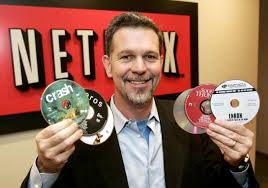 In 1997 Reed Hastings Co-Founded Netflix along with Marc Randolph. Netflix began life as a fixed rate film rental by mail service to customers in the USA. Through its Headquarters in California Netflix has built a following of 44 Million subscribers.
Hastings describes having the idea for Netflix when he had a large late fee for a film that he had rented. He owed the store $40 and he didn’t want to tell his wife about it and he couldn’t believe that he was was going to be dishonest to his wife over a silly late fee. That same day Hastings had an idea when he was at the gym. He realized that gym’s had a much better business model because you could pay your monthly fee and work out however many times you pleased.
Hastings accepts that it may seem obvious to have unlimited due dates and no late fees now but at the time they had no idea whether or not customers would create and use an online queue.
A New Business Culture
 The challenges that Hastings faced during the growth of Pure Software led him to be very careful when developing Netflix. He wanted to build a company that would grow rapidly to become an entertainment juggernaut but he also wanted to build a company that did this whilst maintaining its entrepreneurial spirit.
This became a reality and as Netflix grew, the company began to get recognised for its new management strategies as a result of what Hastings calls a ‘Freedom and Responsibility’ culture. Netflix is known for paying salaries that are much higher than normal so as to attract the very best employees. This is coupled with the fact that employees can choose how much of their remuneration they want in cash or stock.
Hastings doesn’t even have a set office space because he likes to move around headquarters meeting different people, finding spare tables when he needs to sit down and deal with personal emails. A further testament to his desire to be a part of positive business culture.
“Most entrepreneurial ideas will sound crazy, stupid and uneconomic, and then they’ll turn out to be right.” – Reed Hastings
The Present Day
The structure, functionality, people and overall reach of Reed Hastings’ Netflix is truly remarkable. With its 44 million subscribers watching more than 1 billion hours a month on over 1,000 different devices Hastings and Netflix has to ensure that this demand is met. They do this through custom video servers that are placed all around the globe. As soon as a subscriber clicks to stream a movie, Netflix calculates (in a fraction of a second) which server is the closest to the customer, it then chooses from dozens of versions of the video file that is best suited to that customers device.
It is this split second, tailored service that Hastings and Netflix continue to focus on with Hastings believing that we are amidst a revolution (that is becoming inevitable) where every television will have WiFi and Netflix built in as standard.
Conclusion
Reed Hastings is an absolute master of learning from his mistakes, focus and business culture. We can all learn from how Hastings took his time starting a new company before he had evaluated the challenges he had in his previous one.
No matter what the future holds for the inspiring, proactive Reed Hastings one thing is for sure, he will be focused!
We can learn from this focus so we can turn our own visions into reality in the same way that Reed Hastings has built Netflix.
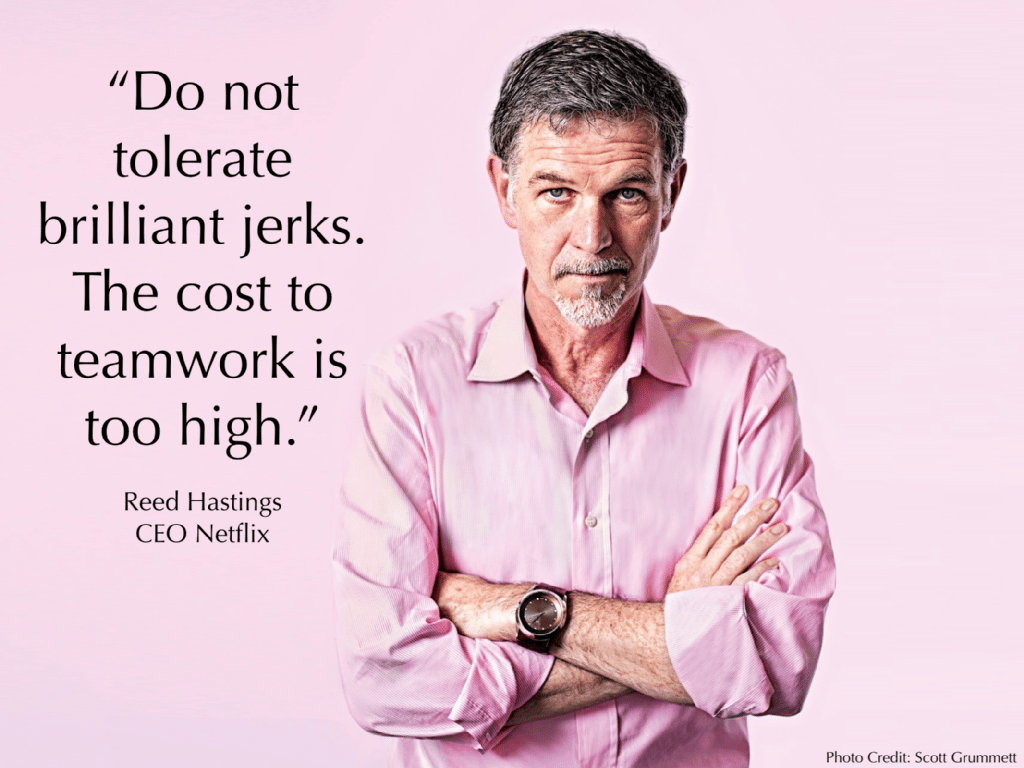
Reed Hastings Picture Quote














Entrepreneurs
The Silent Killer of Entrepreneurial Dreams (And How to Make Sure It Never Takes Yours Down)


You started with fire in your belly. The vision was crystal clear. But somewhere along the way the doubts crept in. The “what if I’m wrong” thoughts. The comparison to everyone else’s highlight reel. The quiet voice that says maybe you should just play it safe and get a real job.
That voice is the silent killer. Not cash flow problems. Not bad hires. Not even market shifts. It’s self-doubt that quietly talks most entrepreneurs out of their biggest breakthroughs.
I’ve been in rooms with founders who’ve raised millions and still battle it daily. The difference between those who push through and those who fold isn’t talent or luck. It’s how they handle the internal noise.
The game-changer is learning to treat doubt as a signal, not a stop sign.
Every time that voice gets loud, it usually means you’re on the edge of something important. Growth lives right outside your comfort zone. The entrepreneurs who scale don’t silence the doubt—they thank it for showing up and then take the next step anyway.
Here’s how to make that practical.
Keep a “proof file.”
Every win, every positive customer note, every metric that moved in the right direction. When doubt hits, open it. Evidence beats emotion every single time. Most founders are terrible at remembering their own wins. They move the goalpost so fast that yesterday’s victory feels ordinary by today. A simple document or folder where you collect proof changes the internal conversation. It becomes harder to believe the doubt when you have a running list of times you were wrong about your own limits.
Surround yourself with people who are playing a bigger game.
Isolation breeds doubt. A strong peer group normalizes the struggle and reminds you you’re not crazy. The entrepreneurial path is full of invisible landmines. Having people who’ve stepped on a few of them—and lived to tell the tale… makes the journey feel less lonely and more possible. Find masterminds, find mentors, find founders a few steps ahead of you who are willing to be honest about the hard parts.
Reframe failure as data.
Every setback is just information about what to do differently next time. The fastest learners treat mistakes like tuition, not tragedy. This doesn’t mean you celebrate failure or become reckless. It means you extract the lesson quickly and move forward without carrying the emotional weight longer than necessary. The founders who win long-term are the ones who fail fast, learn faster, and keep their identity separate from any single outcome.
Get brutally clear on your “why.”
Not the surface-level money or freedom story. The deep one that still lights you up even when the work sucks. Reconnect with it daily. When doubt shows up, it’s often because you’ve lost sight of the deeper reason you started. Spend time with that reason. Write it down. Say it out loud. Let it remind you that the discomfort is temporary and the mission is bigger than the fear.
And finally, give yourself permission to be in process.
Most entrepreneurs compare their chapter one to someone else’s chapter ten. They see the polished results and forget the messy middle that every successful founder had to walk through. Your story isn’t over. It’s not even close. The doubt you feel today might be the exact thing that forces you to get clearer, stronger, and more intentional than you’ve ever been.
The path of entrepreneurship was never meant to feel safe. That’s the whole point. It forces you to become the kind of person who can handle bigger problems and bigger wins. Doubt will show up. It always does. But it doesn’t get to drive.
You do.
Entrepreneurs
The One Brutal Mistake That Keeps Most Entrepreneurs Stuck at Six Figures (And the Fix That Unlocks Seven)

You built something real. Customers are coming in. Revenue is growing. But no matter how hard you grind, it feels like you’re hitting an invisible ceiling. The business owns you more than you own it, and scaling feels like a distant dream instead of the next logical step.
I’ve seen it destroy too many sharp founders. They’re doing everything “right”—working longer hours, chasing every opportunity, saying yes to every client. And yet the growth stalls while their stress skyrockets.
The mistake isn’t effort. It’s identity.
Most entrepreneurs still see themselves as the indispensable hero who has to touch every single part of the business. They built it with their own hands, so they believe only they can run it at the highest level. That belief is exactly what caps them at six figures.
The shift that changes everything is deciding you are now the leader of a system, not the worker inside it.
You stop being the best operator and start becoming the best owner. That means ruthlessly auditing where your time is spent and handing off everything that doesn’t move the needle on growth. Yes, it feels scary. Yes, it feels like you’re losing control. But the entrepreneurs who break through are the ones who trust the process more than their ego.
Here’s what that actually looks like in practice.
First, identify your $10,000-an-hour activities
The ones only you can do that truly grow the company. Everything else gets documented, delegated, or deleted. Most founders I know are shocked when they finally track their time for two weeks straight. They discover they’re spending 60-70% of their week on things that could be handled by someone else at a fraction of the cost. The ego loves to whisper that “no one can do it as well as me.” That voice is expensive. It costs you leverage, it costs you time with your family, and it costs you the mental bandwidth to actually think strategically about the future of the business.
Second, build repeatable systems for the rest.
Not fancy software. Simple checklists, processes, and people who own outcomes. Your team stops waiting for your approval on every little thing. This is where most entrepreneurs get stuck—they hire help but never actually transfer ownership. They create bottlenecks because every decision still funnels back to them. The fix is to document the process once, train someone thoroughly, then step back and let them own it. Yes, there will be mistakes in the beginning. That’s the cost of building something that can eventually run without you. Every mistake becomes a better system.
Third, measure what matters.
Revenue per employee. Customer acquisition cost. Lifetime value. Stop celebrating busywork and start obsessing over leverage. I’ve watched founders go from celebrating “we’re so busy” to celebrating “we added three new team members and revenue per person went up 40%.” That’s the shift. When you start measuring the right things, your decisions change. You stop hiring to offload tasks and start hiring to multiply output.
The hard truth is that most entrepreneurs never make this transition.
They stay the bottleneck in their own business. They become the ceiling. And the business grows to the exact size that one person can manage with heroic effort… then it plateaus. The ones who break through are willing to feel uncomfortable for a season so they can build something that actually scales.
You didn’t start this journey to trade one boss for another… especially when that boss is you. Let go of the need to be the smartest person in every room. Your job now is to build something bigger than yourself. The ceiling isn’t real. It’s just the point where your old identity stops serving you. The question is whether you’re willing to let that old version of you die so a new one can lead.
Business
Scaling a Business? Here’s What Usually Goes Wrong
Before you hire, expand, or chase bigger revenue, here’s what every founder needs to fix to scale without losing control, culture, or quality.


Growing a business is the dream. But scaling one? Honestly, that is a completely different reality. (more…)
Business
Why Most Financial Plans Fall Apart (And How to Fix It)
Most financial plans fail due to poor risk management, lack of strategy, and emotional decisions – here’s how structured advisory keeps you on track.

Advisory services are redefined into a mandate for individuals and corporates seeking enhanced financial planning capabilities. (more…)

The Health Planning Habits That Support Long-Term Success

The Silent Killer of Entrepreneurial Dreams (And How to Make Sure It Never Takes Yours Down)

Long-Term Success Includes Preparing for Financial Freedom

The One Brutal Mistake That Keeps Most Entrepreneurs Stuck at Six Figures (And the Fix That Unlocks Seven)

How to Stay Motivated When Nothing Feels Exciting Anymore (The Strategy Nobody Talks About)

5 Ways For Startups To Succeed Making Acquisitions

77 Inspirational Quotes That Will Change Your Life

(Images) 52 Motivational Picture Quotes For An Epic Year Of Success

40 Rare Motivational and Inspirational Picture Quotes
30 Famous Quotes That Will Inspire Success In You

3 Prince EA Videos To Change Humanities Path To Greatness

(Video) What Is Success? An Entrepreneurial Story To Inspire You

(Inspirational Video) What If Today You Knew You Were Going To Take Your Last Breath?

How To Make Enough Money From A Blog To Quit Your Job – Kate McKibbin

How Finding Your Passion And Becoming An Entrepreneur Can Lead To Happiness – Chiquita Searle
-

 Success Advice2 years ago
20 Creative Ways To Make Money From Home
-

 Success Advice2 years ago
7 Habits of Highly Effective Mediocre People
-

 Quotes2 years ago
176 Inspirational Pablo Picasso Quotes on Art, Creativity and Life
-

 Change Your Mindset2 years ago
The Art of Convincing: 10 Persuasion Techniques That Really Work
-

 Life2 years ago
10 Ways Your Life is Like a Video Game
-

 Quotes2 years ago
32 Powerful Quotes About Overcoming Procrastination by Joel Brown
-

 Success Advice2 years ago
8 Quick Strategies to Boost Your Email Survey Response Rates
-

 Life2 years ago
13 Meaningful Ways to Show Someone They Matter