
Success Advice
Do You Have To Be Ruthless To Be Unbelievably Successful?

I had a discussion a couple of weeks ago with a group of friends, where the question of “Do you have to be ruthless to be successful?” was raised.
Just before writing this article I personally believed that you don’t have to be ruthless at all, but you may have to step over or around some people along the way to get to your end goal. It just depends on what you do in the process to get there. I also thought about it a little deeper and began to think, well, what does it really mean to be ruthless? And do successful people who have faced the battles and adversities in the business world see this definition in a different light?
Let’s check it out…..
The definition of Ruthless is:
ruth·less
ˈro͞oTHləs/
adjective
Some synonyms of ruthless are “cold-hearted”, “merciless”, “pitiless” or “manipulator”. Do successful people look at manipulation differently to those who are unsuccessful?
In a survey run by “Business Brilliant” author Lewis Schiff, 9 out of 10 self-made millionaires agreed that “it’s important in negotiations to exploit the weaknesses in others.” Only 1 in 4 middle-class people took the same view.
What about being taken advantage of?
1 in 3 middle-class people agreed that “in negotiations, I expect people to try and take advantage of me.” 2 out of 3 self-made millionaires, on the other hand, expect others to try taking advantage.
This extends to their behavior, too. Half of the middle-class people in one survey agreed that “when making business decisions, it’s important to consider how the other side will view me.” On the other hand, only 2 in 10 self-made millionaires agreed with the same proposition.
Now, here’s the interesting thing. This same survey also broke down respondents by how rich they were. After all, there’s a difference multimillionaires and simple millionaires in their bank accounts — and it also looks like there’s a difference in their thinking.
97 percent of self-made multimillionaires believe that “in business dealings, it’s not my responsibility to ‘look out’ for the other person’s interest.” On the other hand, only 85 percent of self-made millionaires agree… and among the middle class? A mere 25 percent.
Now, we could go on and on with this. Questions about Machiavellianism, gaining advantages over others, and the like all produced similar results. This does not, however, mean that successful people are actively out to screw others. They understand better than anyone that reciprocation and sticking to their word is key to building trust and long-term relationships — the most profitable kind, after all.
Still, it is possible to be successful without being ruthless. After all, even among multimillionaires, there were a few percent (very few) who did not agree with ruthlessness in business dealings. Looking at some well-known examples, we can see there’s clearly a range of personalities at work. The degree to which ruthlessness is necessary for success varies.
 Businessmen like Donald Trump occupy one side of the scale. They make careers — and images — out of their ruthlessness. “Be brutal,” Trump has said:
“Be tough, and just go get them.”
Why is this? For one thing, real estate is a notoriously ruthless business. There is a finite supply of valuable land. Indeed, the limited supply of land is what allows men like Trump to make their millions. With the “you must lose for me to win” aspect so clearly visible, it’s no surprise that a Trump attitude rises to the top.
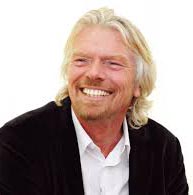 Then we have the Richard Branson’s of the world. In a column for Entrepreneur Magazine titled “Nice Guys Can Finish First,” Branson explains he finds it counterproductive to be ruthless. When people feel they’ve done well dealing with you, they tend to come back, and give you more business later.
Sure, some people have observed that even Branson has a ruthless streak, which he chalks up to having to make “tough calls.” But just as important is a look at what Branson does — his Virgin empire is highly innovative, and customer service- and image-oriented. Branson makes his money by creating a positive atmosphere where creativity thrives… a far cry from Trump’s land deals.
But…. there is one thing to keep in mind..
Even when looking at ‘nice guys‘ like Branson. While Branson is less aggressive at the negotiating table, he’s still competitive, and highly determined. Where he ‘looks out’ for the other person’s interest, he’s still doing it to help himself. He wants the other person to come back and do business again in the future.
Therefore, rather than saying you have to be ruthless to be successful, it might be more accurate to say you have to be energetic and extremely determined. Unless you’re in real estate, it seems like the ruthlessness (which is indeed a very common component of success) isn’t about aggression or ‘screwing over’ the other guy. Rather, it’s a by-product of going after your business goals with single-minded determination.
People who are ruthless for the sake of being ruthless tend to leave behind a trail of burned bridges, and sometimes end up in court (or even in prison). Both Trump and Branson have survived dozens, probably hundreds of lawsuits against them.
On the other hand, there are plenty of successful people who make the “tough calls” without necessarily hurting others. That’s what Netflix Chief Talent Officer Patty McCord did when she fired a third of the company’s 120 employees so the company could keep going — yet she still hears from many of them, and considers them good friends.
What is your opinion on being ruthless to get to the top? Please share your views in the comment section below.












Did You Know
This Move Can Help You Keep More of Your Income
What if keeping more of your income wasn’t about earning more, but choosing a smarter place to live?


Living more cheaply often makes the biggest difference when money is tight. If rent feels too heavy or bills climb faster than expected, changing where you live might help a lot. (more…)
Business
How to Build a Brand That Actually Connects (For Businesses of Any Size)
Brand growth in 2026 isn’t about shouting louder; it’s about clarity, consistency, and human connection that customers genuinely trust.

In the middle of a busy workday, it’s easy to view brand building as a luxury. Honestly, we often treat it like a coat of paint we apply after the house is built. But as we navigate the landscape of 2026, it’s become clear that branding is actually the foundation. (more…)
Business
High Stakes Leadership Habits That Work in Any Business
When volatility is normal and pressure is constant, energy sector leadership reveals the habits that help entrepreneurs build trust, adapt fast, and execute with long-term focus.


Oil and gas leaders operate in a world where mistakes can prove to be very costly. Here, timelines are tight and risks are as real as can be. As a result of all this, the sector offers useful lessons for entrepreneurs and business owners. (more…)
Shift Your Mindset
SEO Secrets That Separate Struggling Hustlers from Thriving Winners
Zero-click searches and AI Overviews are crushing old tactics – the brands building unshakable SEO authority are pulling ahead fast.

One guy pours endless hours into blog posts, tweaking meta tags, begging for links – traffic flatlines. Another quietly builds something solid, updates once a quarter with fresh proof, gets cited in AI answers… and suddenly leads roll in without him lifting a finger for ads. (more…)

This Move Can Help You Keep More of Your Income

How Business Owners Can Digitally Transform Their Foundation

How to Evaluate Stocks Like a Pro (Even If You’re Just Starting)

How to Build a Brand That Actually Connects (For Businesses of Any Size)

High Stakes Leadership Habits That Work in Any Business

5 Ways For Startups To Succeed Making Acquisitions

77 Inspirational Quotes That Will Change Your Life

(Images) 52 Motivational Picture Quotes For An Epic Year Of Success

40 Rare Motivational and Inspirational Picture Quotes
30 Famous Quotes That Will Inspire Success In You

3 Prince EA Videos To Change Humanities Path To Greatness

(Video) What Is Success? An Entrepreneurial Story To Inspire You

(Inspirational Video) What If Today You Knew You Were Going To Take Your Last Breath?

How To Make Enough Money From A Blog To Quit Your Job – Kate McKibbin

How Finding Your Passion And Becoming An Entrepreneur Can Lead To Happiness – Chiquita Searle

-

 Business4 weeks ago
The Salary Shift Giving UK Employers An Unexpected Edge
-

 Business3 weeks ago
Why Entrepreneurs Should Care About AI Automation Testing
-

 Business4 weeks ago
Why Smart FMCG Entrepreneurs Outsource What They Can’t Automate
-

 Business3 weeks ago
What Every Business Owner Should Know Before Investing in API Integration
-

 Did You Know4 weeks ago
The SEO Traps Even Experienced Marketers Fall Into
-

 Business3 weeks ago
Why Smart Entrepreneurs Are Quietly Buying Gold and Silver
-

 Business2 weeks ago
How Smart Brands Use Instagram Data to Outperform Competitors
-

 Business3 weeks ago
The Paradox of Modern Work: Can Tech Make Us More Human?
16 Comments