
Startups
The Top 10 New & Exciting Startups In India

Mobile technology and online networks allow businesses to reach out to a global market place, but entrepreneurial startups are still traditionally thought of as a primarily western phenomenon. However, a number of market studies and reports have shown that in recent years India has become the center of a “startup boom“. High end IT products and mobile technology are the main focus of business ventures, with places like Mumbai and Bangalore seeing the majority of interest.
The following are 10 of the newest and most exciting startups in India.
The Top 10 New Indian Startups
1) Vaultize
 Startups in India are beginning to expand beyond the internet and towards cloud based technology. Vaultize is just one of the many cloud based software startups that have recently emerged in the country, and its focus is on data protection. While the key concept of Vaultize, a cloud data backup system, is not revolutionary, the product does have several innovative extra features. These include a private cloud option, disaster storage protection, and customizable data access options.
2) Justunfollow
 Twitter users often follow a large number of people when they first join the site but quickly become frustrated at the hundreds of “not so exciting” tweets they are bombarded with. Justunfollow is software that enables twitter users to quickly and easily organize their twitter account and prevent any unwanted updates.
JustUnfollow is useful for both personal users who want to clear out their account and business owners who need to manage several accounts at the same time.
3) Saverr
 Saverr, originally named CashItBack, is part of the brand Loyalty Commerce Pvt Ltd. It is a loyalty incentivizing portal that gives visitors rewards for making transactions with certain websites. Saverr is already partners with hundreds of online gaming sites and ecommerce stores, and it links their users with incentives like coupons and cash back deals.
This startup from India has proven to be successful and growing very quickly in it’s field.
4) Mswipe
 Mswipe was launched by Matrix Partners India. It allows ecommerce stores to accept credit card payments via smartphones. Deployed in late 2012, the product has become an early market leader, and is now primarily responsible for most of India’s current cost effective mobile sales infrastructure. The Mswipe system covers over 200 towns and cities all across the country.
5) Harness
 Harness is a cloud based learning startup from India. ‘Touch on cloud’, the company’s main product, is an operating system that is ideally suited to a learning environment. It hands back control of the classroom to the teacher by engaging students with creative content, interconnect collaboration, and automatic evaluations. It also quickly produces useful reports on activity and results for the teacher.
Harness works across all major platforms and even allows students to make good use of their own devices.
6) Diabeto
 Diabeto is one of the most innovative healthcare technology startups in india that develops health improving technology which is interconnected with web and mobile applications. Their flagship product is a diabetes monitoring app which allows suffers to keep track of their blood glucose results easily.
The device is plugged into the patient’s glucometer (compatible with all leading brands) and transmits readings to a user friendly app or web account. It makes managing and monitoring the condition a much simpler process.
7) MyTopTeacher
 MyTopTeacher is a fun and interactive teacher rating website, and it is interlinked with key social networks like Facebook and Twitter. It allows children, students, and parents to rate classroom teachers, college professors, or even private tutors.
It is useful for anyone who wants to research a certain school or teacher, anyone who wants to give feedback to their tutor, or any teacher who wants to know what their students think.
8) Plustxt
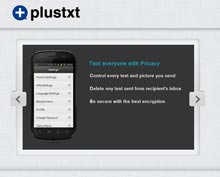 Plustxt is a company set up by Pratyush Prasanna who originally worked at both Microsoft and Xerox before transferring his skills to his own mobile messaging startup.
The service already works on Android and iPhone and is soon being launched on Windows, Java, and Blackberry. The app gives the user complete control over every aspect of their phone, allowing them to password protect specific conversations and numbers, block certain contacts, and keep online pictures private.
9) DataWeave
 DataWeave, developed by a company based in Bangalore, is software which enables businesses of all shapes and sizes to collect, monitor, and process useful data from the web. It is used by companies primarily as a way to intelligently monitor prices or open government data.
10) Amagi Media Labs
 This media startup based in Bangalore, India has developed a process of targeting TV ads to specific geographic locations. Amagi allows TV networks to shows viewers different ads depending on their area, even if they are watching a non-regional TV channel.
Though Television advertising is generally considered a traditional advertising platform, targeting adverts on TV is a relatively unexplored area that has meant big business for the company in just a short time frame.
Article By Joel Brown | Addicted2Success.com















The company’s task list used to live in three places:
A pinned message in a Slack channel that nobody scrolled back to. A rambling Apple Note on my phone that only I could see. And the version I kept in my own head… which was always more detailed than the other two, and almost always inaccurate by 5:00 PM.
A client would request a small scope change on a Thursday afternoon call. I would say yes, type a quick summary into a team Slack channel alongside a dozen other open discussions, and assume someone would pick it up.
Sometimes someone did. Other times, the request got swallowed by an unrelated conversation about an invoice or a software bug. Three weeks later, the client would follow up asking where their deliverable was, and I would suddenly remember the conversation at 11:00 PM while trying to fall asleep.
I would fire off a late-night Slack message to the team that sounded like an accusation.. even though I was the person who dropped the ball in the first place.
The team adapted to the chaos. Nobody pushed back, and nothing suffered a catastrophic crash.
And that was the dangerous part. When a system fails loudly, you are forced to fix it. When it fails quietly through constant minor leaks, you just work an extra hour each evening and convince yourself you’re being a dedicated founder.
Answering With a Story Instead of a List
During that season, I could give you a rough, poetic description of what the company was doing. What I couldn’t give you.. without opening four browser tabs and interrupting two team members.. was a clear answer to three basic questions:
- What is currently past due?
- What is stuck because it’s waiting on an executive decision from me?
- What did we promise a client last week that we have already forgotten?
A rough, intuitive sense of work is fine when you’re running a solo shop from a coffee table. It completely falls apart the moment you bring other people into the room. We saw an early version of this friction in what to set up before you pay your first employee, where one person can still just barely hold the entire operational state in their skull.
Once you add three, five, or ten people, that habit doesn’t scale—it just gets louder.
More channels. More “hey, quick question” DMs. More work assigned to whoever happened to be looking at their screen when a message landed. The entire company’s delivery schedule became dependent on my personal memory, and my memory was bankrupt.
The Single-Home Rule
The fix did not involve a two-day retreat, a consultant, or a hundred-page operations manual.
It was a single, stubborn rule: If a task is not in the system, it does not exist.
We chose ClickUp. Not because it has better features than everything else on the market, but because it could hold a task, assign one single owner, and stamp a non-negotiable due date without demanding that I become a full-time software administrator. Tools like Asana or Monday handle the exact same job for other teams.
The software brand mattered far less than the death of our three-place system. The work stopped depending on whether I remembered to check a personal note.
THE OPERATIONAL ARCHITECTURE SHIFT
┌──────────────────────────────────────┐ ┌──────────────────────────────────────┐
│ THE THREE-PLACE MESS │ │ THE SINGLE-HOME SYSTEM │
├──────────────────────────────────────┤ ├──────────────────────────────────────┤
│ • Pinned Slack messages nobody reads │ │ • One tool (ClickUp / Asana) │
│ • Private phone notes only you see │ ───> │ • Exactly one assigned owner │
│ • Founder memory (always incomplete) │ │ • Clear, visible due date │
│ • Delivery dates answered with stories│ │ • Status answered with a clear list │
└──────────────────────────────────────┘ └──────────────────────────────────────┘
The first two weeks were irritating. Tasks were filed in the wrong folders. Team members still posted informal project updates in Slack and waited for someone else to log them. I had to repeat the same sentence like a broken record during every check-in: “If it isn’t in the tool, it isn’t happening.”
By the third week, conversations started getting noticeably shorter.
When a client asked for an adjustment on a call, the reply shifted from “Let me look into that and get back to you” to “It’s already scheduled in the queue for next Tuesday.” I stopped having to mentally reconstruct the entire operational week before answering a simple status question.
What Visibility Actually Uncovers
The major breakthrough was not the software. It was the decision that company work must have a single home. The software simply made that standard visible.
Once our tasks were laid out in plain daylight, problems that had been hiding in chat threads for six months became impossible to ignore:
- The Chronic Fire-Drill Client: The account that constantly demanded same-day emergency turnarounds had their chaos laid bare in black and white.
- The Zombie Tasks: Tasks that had been sitting untouched for fourteen days because they had two co-owners—which meant nobody actually owned them.
- The Runaway Meetings: Recurring internal calls that produced four new speculative ideas and closed zero open items.
Those dysfunctions had been draining our margins the entire time. They just had nowhere to show up before. When tasks live in chat messages, a stalled project looks like a lively conversation. When tasks live in a structured queue, a stalled project looks like an overdue ticket with someone’s face next to it.
The Real Source of Founder Burnout
For a long time, I assumed the fatigue of running a business was tied to workload volume. It wasn’t.
As we explored in why task management systems are the antidote to workplace burnout, the real exhaustion comes from constant background reconstruction.
It’s the quiet, relentless tax of keeping mental tabs on five different deliverables while trying to review a contract, eat dinner with your family, or pitch a prospective account. Your brain is running a background tracking program 24 hours a day, waiting for the shoe to drop.
Once that mental reconstruction stops, the actual work feels dramatically smaller. The company doesn’t need fewer tasks; it needs a brain that doesn’t belong to the founder.
If you lead an organization that still runs on chat threads, good intentions, and founder memory, skip the grand software presentations. You do not need a tour of a new dashboard. You just need to shut down the three places where work currently hides, give the team one shared home for tasks, and enforce the rule until it sticks.
If you’ve lived through this messy operational shift and can tell the story without trying to sell an affiliate link in the opening sentence, our Write for Us page is open.
The original pinned Slack message is still sitting in our general channel. Nobody has clicked on it in over a year. That’s how you know the system is finally working.
How many separate places.. Slack DMs, phone notes, or your own head.. are you currently relying on to track what your business is supposed to deliver this week?


Many founders assume visibility is something you buy. Run ads and boost posts, then wait for the phone to ring. That works right up until the budget runs out, and then the traffic stops the same day the spending does. I have worked in search marketing for 15 years, and I have watched a lot of companies learn this the hard way.
There is a slower route that keeps paying you back. It rests on two things: being easy to find and being worth talking about. None of it requires a big check. It does require patience and consistency, which, if you have started a company, you already know something about. Here are six moves that compound.
1. Decide what you want to be known for
Before you post anything, pick the one problem you solve better than anyone else and describe it the same way everywhere: your website, your LinkedIn headline, your pitch to a reporter, your answer when someone at a dinner asks what you do. If you cannot say it in one sentence, your customers will not be able to either. Write that sentence down before you touch your website.
Clarity is a growth tactic. People cannot recommend you if they cannot explain you. A bakery known as “the place with the sourdough” gets more word of mouth than one that sells a little of everything, because the first one is easy to pass along.
2. Make your website easy for search engines to understand
Many buying decisions start with a search. If your site is slow or vague about what you do, you are invisible at the exact moment someone is looking for you.
You do not need to become a technical expert. Google’s own SEO Starter Guide covers the basics in plain language, from descriptive page titles and clear headings to content written for people rather than algorithms. Spend one weekend fixing these and you will have a foundation that every later effort sits on.
3. Publish the answers your customers keep asking for
Look through your inbox and your sales calls. Which questions come up again and again? Each one is an article waiting to be written. Use the same words your customers use, not the jargon your team uses internally.
A plumber who explains when a leaking water heater can be repaired and when it needs replacing is doing more than blogging. He shows up in search for a question homeowners ask in a panic, and he earns their trust before the first phone call. Answer one real question a week and within a year you will have about fifty pages working for you while you sleep.
4. Earn mentions from sites people already trust
This is where patience pays the most. When a respected publication or industry association links to you, it sends two signals. Readers see that someone credible vouches for you, and search engines treat the link as a vote of confidence.
It helps to think about variety rather than volume. At Page One Power, where I work, we have audited thousands of link profiles, and the same pattern keeps showing up: most sites rely on one or two kinds of links, when a healthy profile mixes industry listings, community mentions, press coverage and expert contributions. For a young company, that means spreading your effort across a few kinds of recognition instead of chasing one.
The approach that works is old-fashioned. Create something worth citing, such as original data from your customers or a genuinely useful guide. Then tell the people who would care about it. Pitch a local reporter, or join the association in your field and get listed in its member directory. Each of these takes effort, and each keeps working for years.
5. Show up where your customers already gather
You do not need to be on every platform. You need to be on the one or two where your customers already spend time, and you need to be helpful there.
That might be a Facebook group for local business owners or a Slack community in your niche. Answer questions without pitching and share what you have learned. Over time people notice who keeps showing up with good answers, and that reputation follows you back to your site.
Picture a bookkeeper who spends twenty minutes a day answering tax questions in a local business group and never once links to her services. Give it a few months and members start tagging her whenever a new question comes up. That kind of trust is hard to buy and easy to earn, as long as you keep showing up.
6. Track what works and do more of it
Free marketing still costs you something, and that is your time, so measure it. Ask every new customer where they heard about you, and check which pages on your site bring in visitors. The U.S. Small Business Administration’s guide to marketing and sales is a practical starting point for setting goals and tracking results, even if you have never written a marketing plan.
A pattern will show up quickly. Maybe one article brings in more leads than all your social posts combined, or one partner sends more referrals than every directory listing. Double down on what works and let the rest go. In my experience, this is the step small companies skip most often, and it is the one that tells you where your next hour should go.
The long game wins
Paid ads work like renting a billboard. When the lease ends, the sign comes down. What you earn through reputation and search visibility works more like owning the building, and every month of effort adds to its value.
It is slower at the start, which is exactly why most of your competitors will not bother. Pick the one move above you can start this week, then keep going. The founders who get noticed are not always the loudest. More often, they are the ones still answering questions and publishing useful work a year after they started.


The global beverage market is among the most competitive consumer categories, with multinational companies, well-funded challenger brands and a steady stream of new entrants all competing for limited shelf space and consumer attention.
Still, each year a small number of new brands succeed by identifying an underserved customer, delivering a distinctive product and managing their finances with discipline.
This article outlines the principal steps involved in establishing a beverage company in 2026, from defining the concept and validating demand to securing production, building a brand and reaching the first customers.
1. Define a Clear Market Position
A broad category such as “healthy soda” does not constitute a market position. A more precise proposition, for example a low-sugar ginger soda for adults who no longer drink alcohol but still want a sophisticated option at dinner, gives retailers, investors and consumers a clear reason to pay attention. Founders should assess where demand is currently growing, including:
- Functional beverages for hydration, focus or sleep
- Lower-sugar refreshment with short ingredient lists
- Non-alcoholic alternatives for social occasions
- Premium ready-to-drink coffee and tea
- Regional flavors overlooked by larger brands
The concept should be tested with at least ten potential customers outside the founder’s personal network. If they cannot accurately repeat the proposition, it requires refinement.
2. Validate Demand Before Committing Capital
Small-batch samples should be developed and compared in blind taste tests against two or three existing competitors. A review of retail shelves in the intended sales channels will clarify prevailing price bands and gaps in the assortment.
A simple landing page offering email registration or pre-orders provides more reliable evidence of interest than a survey. The objective is not certainty, but a low-cost indication of whether the concept has sufficient market pull.
3. Establish the Financial and Legal Foundation
Beverage businesses operate on narrow margins, high volumes and complex logistics. Founders should calculate the cost of goods, freight and the margins taken by distributors and retailers, setting the retail price first and working backward from it. The startup budget should account for:
- Formulation and minimum production runs
- Packaging and design
- Insurance, legal and trademark costs
- Marketing and product samples
- Working capital, particularly for inventory and freight
A legal entity should be formed and the brand name cleared through a trademark search before significant investment is made. Labeling, facility and ingredient regulations vary by jurisdiction, and products containing alcohol, hemp derivatives or novel ingredients face additional requirements. Health-related claims such as “immunity” or “detox” carry regulatory risk, and most retailers require product liability insurance.
4. Develop the Formula and Select a Production Model
A recipe that performs well in a home kitchen may not remain stable at commercial scale. A qualified beverage formulator or food scientist can establish a consistent and cost-effective formula, conduct shelf-life testing and assist with accurate labeling.
Most new brands engage a contract packer rather than construct a facility, which avoids heavy capital expenditure but introduces minimum order quantities and reduced control. Several co-packers should be evaluated, with attention to references and food safety certifications.
Operating an independent facility becomes appropriate only when volume and cash flow justify investment in filling lines, automated bottle capping machines, labeling equipment and storage. The first production run should remain modest, limited to one or two flavors that can be sold well before their expiry dates.
5. Build the Brand and Establish Distribution
Packaging functions as the primary advertisement on the shelf, and shoppers typically give it only a few seconds. The name should be short, memorable and legally available; the visual identity should be legible from a distance; and the container format should reflect the intended price point and sustainability goals.
Sales efforts are best concentrated where decisions are made quickly, such as independent grocers, cafés, gyms and restaurants, supplemented by a direct-to-consumer website where shipping costs can be modeled realistically.
Establishing a strong presence in a single city before expanding builds recognition and repeat purchase, and sampling and community partnerships remain effective introductions.
6. Manage Cash and Avoid Common Errors
Cash constraints, rather than poor ideas, are the most frequent cause of failure among beverage startups. Inventory ties up capital, retailers pay on extended terms, and promotions and spoilage reduce margin. The same pressure shows up in how CPG brands manage cash flow, where the order of who gets paid and when decides whether the next production run happens.
Conservative forecasting and accurate bookkeeping are essential, as is close monitoring of velocity (units sold per store per week) and repeat purchase rate, the two measures that most influence retailer and investor decisions. Common errors include:
- Launching too many flavors simultaneously
- Setting prices too low to sustain margins
- Underestimating freight costs
- Omitting a thorough label review
- Investing in branding before the product has proven itself
Final Thoughts
Establishing a beverage company in 2026 is demanding, but it remains achievable for founders who combine a distinctive concept with disciplined execution. A clear market position, a product that consumers wish to purchase again, careful cash management and steady, store-by-store expansion are the foundations of a durable brand. The single most important indicator of success is whether customers buy the product a second time.
This article is general information, not legal, financial or regulatory advice. Rules and costs vary by location, so consult qualified professionals.

Most remote founders will drop thousands on a laptop, a big monitor, a premium chair and maybe a standing desk converter. That’s the easy part. Then the whole lot ends up crammed into a spare bedroom with bare walls and a wobbly table, and by 2pm they can’t work out why their brain has packed it in.
Here’s the thing: if a founder is running a company from that room, it’s their headquarters. Compare the thought that goes into designing a proper company office with the care that goes into the room where the CEO makes every hiring call, every investor pitch, every product decision and every fire drill. These are the mistakes that keep showing up, and how to fix them before another quarter disappears into the fog.
Don’t Ignore How the Room Sounds
A remote CEO will agonise over the webcam, the ring light, the desk background and the microphone, but if the room itself sounds like a tiled bathroom then none of that gear will matter. Hard walls bounce sound around and every echo will muddy the voice on calls. The team and investors can both hear it, and most founders have stopped noticing because they’ve been in the same reverb for months.
The fix is absorption. Echo exists because sound has nothing soft to land on, so the more of those bare surfaces get covered, the tighter the room sounds. A few acoustic panels for walls placed behind and beside the desk will deal with the worst reflections, and there’s no need to treat every surface to hear the difference on the next call. The concentration benefit matters just as much as the audio quality, because a room that doesn’t rattle with every sound is far easier to think in during long strategy sessions.
Is the Desk Facing the Right Direction?
A surprising number of remote CEOs will face a wall all day. They’re convinced it helps them focus, but all it actually does is box them in and drain their energy across a full working day. Facing towards the room, or angling the desk towards a window, works far better, because natural light from the side will reduce eye strain and keep the circadian rhythm in check, which directly affects how well they sleep and how sharp their decisions are the following morning.
Monitor placement matters too. If the screen is placed directly in front of a window, every video call turns into squinting or a silhouette, and the glare will wear the eyes down by mid-afternoon. Light should come from the side, not from behind the screen and not from behind the person. Get that right and a CEO will look better on calls, carry less fatigue by the end of the day, and stop reaching for the headache tablets at four o’clock.
Does the Space Have Optimal Separation?
If the office doubles as a guest room, a storage cupboard, a laundry folding station or the spot where the kids do homework, the founder doesn’t really have an office. It’s just a desk in a room that belongs to everyone else for the other sixteen hours of the day. That blurred boundary between work and home will chip away at their focus every single day, whether they realise it or not.
Even a basic room divider or a door that closes can create the mental separation needed to switch on properly in the morning and, just as importantly, switch off in the evening. If dedicating a whole room isn’t possible, the workspace should at least look and function differently from the rest of the house. A distinct setup that the CEO walks towards, sits down at and leaves at the end of the day gives the brain the cue it needs to treat the space seriously.
Treat the Office Like It Matters, Because It Really Does
A home office isn’t somewhere a founder just ended up by accident. It’s the place where they make hiring calls, close deals, map out the company’s direction and handle every crisis that lands in their lap. If the room they run the business from got the same level of thought as the business itself, most of these problems would have been fixed months ago.
Sorting the acoustics means sounding like a professional on calls, not someone working from a hallway. Fixing the lighting keeps energy levels up past lunchtime. Rethinking the layout makes the room work with the day instead of against it, and drawing proper boundaries around the space tells the brain when it’s on and when it’s done. These are crucial operational upgrades, and the difference in performance will show up faster than you expect.

Top 7 All-in-One Business Management Platforms for Modern Teams

What Makes a Creative Advertising Agency in Melbourne Worth the Investment

How to Compare Franchise Opportunities Across America Before You Buy

What to Expect in an RPL Competency Conversation With Your Assessor

Microlearning: The Journey from Brief Knowledge to Enormous Learning Results
5 Ways For Startups To Succeed Making Acquisitions

77 Inspirational Quotes That Will Change Your Life
57 Memorable Kobe Bryant Quotes

(Images) 52 Motivational Picture Quotes For An Epic Year Of Success

40 Rare Motivational and Inspirational Picture Quotes
3 Prince EA Videos To Change Humanities Path To Greatness
(Video) What Is Success? An Entrepreneurial Story To Inspire You
(Inspirational Video) What If Today You Knew You Were Going To Take Your Last Breath?
How To Make Enough Money From A Blog To Quit Your Job – Kate McKibbin
How Finding Your Passion And Becoming An Entrepreneur Can Lead To Happiness – Chiquita Searle
-

 Life2 years ago
The 5 Stages of a Quarter-Life Crisis & What You Can Do
-

 Did You Know1 year ago
7 Surprising Life Lessons Video Games Taught Me That School Never Did
-

 Success Advice1 year ago
Stephen Covey’s 8 Leadership Habits That Will Change How You Lead Forever
-

 Life1 year ago
How to Stop the War in Your Head and Find Peace
-

 Featured2 years ago
The Psychology of Motivation: How to Keep Moving Forward Every Day
-

 Personal Development1 year ago
The Three-Second Pause That Changes How People Perceive You
-

 Explode Your Social Media1 year ago
Want More Views? Master These 6 YouTube Growth Tactics
-

 Change Your Mindset1 year ago
You Become What You Absorb: How Input Shapes Your Life
4 Comments