
Explode Your Social Media
How the Top YouTube Brands Print Over $1M/Month (And How You Can Too)

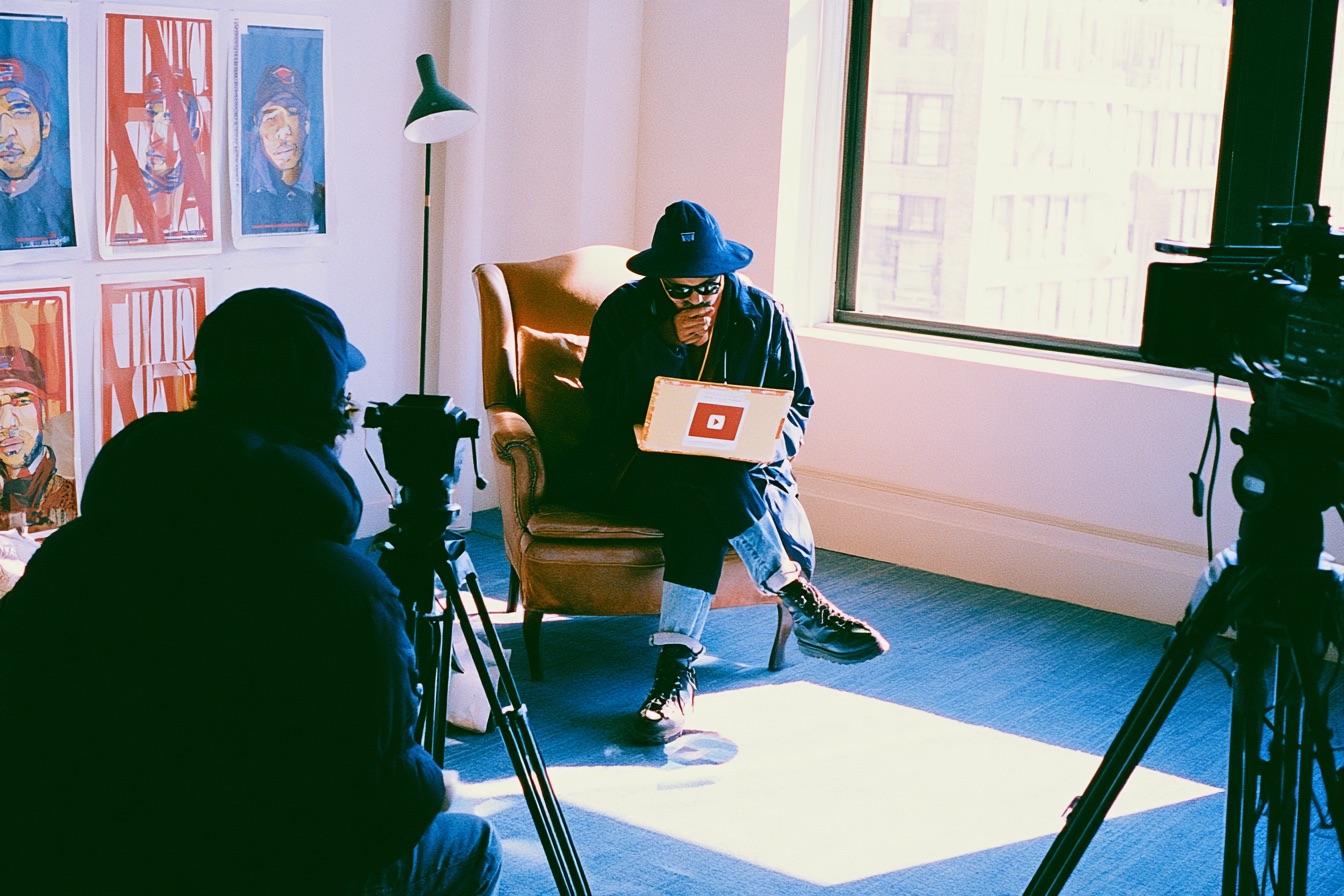
YouTube is no longer just a platform for viral entertainment; it’s an absolute cash-printing machine for business owners who know how to play the game. After generating over $35 million on YouTube for myself and my clients, I’ve reverse-engineered the exact strategies that the biggest names in the information and coaching space are using to generate over $1 million every single month.
Whether you are running a B2B consulting firm, a high-ticket coaching program, or a direct-to-consumer digital product, the playbook is hiding in plain sight. Let’s do a deep dive into the strategies of Iman Gadzhi, Alex Hormozi, Jeremy Haynes, and others, and extract the exact frameworks you can apply to your own channel today.
1. The “Live Revenue Event” Funnel (Iman Gadzhi)
Iman Gadzhi generates between $5 to $8 million a month, and he does it despite a recent decline in his overall YouTube views. How? By abandoning the traditional Evergreen VSL (Video Sales Letter) and shifting to Live Revenue Events.
Here is how his event funnel works:
- The Schedule: Iman runs 3 to 4 live, multi-day events every year. He doesn’t sell his flagship offers year-round; he only sells them during these specific windows, creating massive scarcity and pent-up demand.
- The Promo (4 Weeks Out): He starts dropping high-production trailer videos on his main channel, hyping up the event. He schedules the YouTube Live weeks in advance so the algorithm constantly reminds his subscribers that it’s coming.
- The Nurture: When users register, they are pushed into WhatsApp groups for daily value, hype, and reminders. He even sells sub-$100 “VIP Tickets” to these events, which completely liquidates his front-end ad spend.
- The Event Structure:
- Day 1: High-level overview of the concept (e.g., How to make money with digital products). No pitching.
- Day 2: Deep dive into Step 1. Pitch Offer #1.
- Day 3: Deep dive into Step 2. Pitch Offer #2.
- Day 4 & 5: Case studies, guest speakers, and trust-building.
- Day 6: Final overview and the massive closing pitch.
The Takeaway: If you have an engaged audience, stop trying to sell them a $2,000 product in a 10-minute video. Build an event, create an experience, and stack the scarcity.
2. The “Long-Form Clipping” Strategy (Alex Hormozi)
Alex Hormozi is famous for top-of-funnel, broad business content. But recently, his main channel views started to level out due to “face fatigue.” His solution was brilliant: The “More Mozi” Channel.
Before this, the industry standard was to clip long-form videos into 60-second TikToks and YouTube Shorts. Hormozi realized that his high-ticket buyers (advanced business owners) weren’t scrolling Shorts; they were watching long-form YouTube.
- The Strategy: He takes his live streams and podcasts, cuts them into highly specific, 3-to-5-minute problem-solving videos, and uploads them to a secondary channel up to 20 times a day.
- The SEO Play: Because the videos are titled with specific problems (e.g., “How to fix client retention in a plumbing business”), the YouTube algorithm serves them directly to the business owners searching for those exact solutions.
The Takeaway: Don’t just clip for Shorts. Clip your best advice into 5-minute, highly searchable long-form videos to dominate specific niches without cluttering your main channel.
3. The “Anti-Sales” VSL Strategy (Taki Moore)
Taki Moore is pulling in $1.6 million a month selling a coaching program to other coaches, and his strategy is the exact opposite of the aggressive “hustle-bro” marketers. He runs an Anti-Sales Strategy.
- The Vibe: Taki films all his videos outside. He uses minimalist text, draws diagrams to explain concepts, and positions himself as the relaxed, anti-hustle guru.
- The Gap Creation: Taki rarely uses a hard Call-to-Action (CTA). Instead, he explains a concept by showing where a client was, where they are now, and makes it clear that the bridge between the two was paying him. He creates a massive psychological “gap” in the viewer’s mind.
- The Only CTA: His only call to action is to DM him on Instagram. Once in the DMs, his setters qualify the lead and move them to a close.
The Takeaway: You don’t need to scream at your audience to buy your course. Educate them so effectively that they realize they cannot cross the gap without your help.
4. The “Challenge Video” Format (Codie Sanchez)
Codie Sanchez teaches people how to buy “boring businesses” (like laundromats and car washes) and makes over $3 million a month. Her secret weapon for explosive growth? Challenge Videos.
If Codie made a video titled, “How much money a vending machine makes,” it might get 50,000 views. Instead, she titles it, “I Bought 3 Vending Machines & The Earnings Shocked Me,” and documents the entire physical process of buying the machines, stocking them, and counting the cash. That video got 2.1 million views.
The Takeaway: Don’t just tell your audience what to do; show them. Challenge videos prove your expertise in real-time and provide high-retention entertainment, which is exactly what the YouTube algorithm wants to push to millions of people.
5. Using YouTube for Talent Acquisition (Daniel Isles & Ryan Pineda)
Daniel Isles runs an agency that helps businesses go viral. He makes over $3 million a month, primarily through paid ads. So why does he run a massive YouTube channel if it’s not his main sales driver? Talent Acquisition.
As your business scales past the 7-figure mark, your biggest bottleneck stops being leads and starts being A-player talent. Daniel uses his YouTube channel to post high-level sales and operations content. Top-tier sales reps and operators watch his videos, realize he is running a massive operation, and apply to work for him.
The Takeaway: A massive YouTube channel acts as a magnetic moat. It attracts high-level partnerships, elite employees, and industry respect that you simply cannot buy with Facebook ads.
How to Implement This For Your Business
If you want to start scaling your YouTube channel to the $1M/month mark, you need to structure your content into three distinct pillars:
- Top of Funnel (Broad/Entertainment): Content designed purely to get clicks and bring new eyeballs into your ecosystem (e.g., News updates, broad mindset shifts, or challenge videos).
- Middle of Funnel (Problem Solving): Highly specific, actionable content that solves a direct pain point for your ideal client. This proves your competence.
- Bottom of Funnel (Trust & Case Studies): Deep-dive videos, client interviews, and raw vlogs that build a deep parasocial relationship and destroy any buying objections.
Stop relying purely on rented ad space. Build an organic asset on YouTube, and watch your acquisition costs plummet while your revenue exponentially compounds.
Follow me Joel Brown for more success advice at @iamjoelbrown on Instagram.











For years, the standard advice for anyone trying to grow a business online was to act like a YouTube or TikTok clown.
You were told to scream at the camera in the first two seconds. Wave your hands wildly. Drop sudden sound effects. The whole game was to make your video so loud and entertaining that even people who didn’t care at all about your work would freeze and stare.
A lot of business owners did exactly that. And what happened?
They got thousands of views, but almost zero paying customers.
Think of it like a math tutor walking into a noisy school cafeteria and doing a backflip off a table. Everyone stops eating and stares. People clap and cheer. But when the tutor finishes the stunt, nobody actually hires them to help with algebra homework. They just watched the show and went back to their lunch.
Your social media feed has been doing the exact same thing. Big view counts make people feel popular, but empty applause doesn’t pay the bills.
The Big Shift: Apps Aren’t Just Stages Anymore
Here is the good news: the internet finally grew up.
Social media apps aren’t just looking for loud stunts anymore. In the past, the computers running these apps were kind of dumb. They only noticed if a big crowd gathered around a post. If people were commenting and clicking, the app just threw that video in front of everybody on the planet, whether it mattered to them or not.
Today, the apps have smart AI built right into them. When you post a video, the computer actually listens to the words coming out of your mouth. It reads the text on your screen. It figures out what you are talking about within seconds.
Instead of an entertainment stage, think of the app as a matchmaker.
Its entire job is to take your video and hand-deliver it to the exact person who is dealing with that problem right now.
OLD WAY: Shout loudly at a huge crowd → 100,000 views → Zero buyers
NEW WAY: Describe one real problem → 1,000 views → Three people who actually hire you
You don’t need a million teenagers to watch your clip. You just need the three or four people who actually need your help to see it.
The 3-Step Formula to Reach Real Buyers
If you want the app’s computer brain to work for you instead of against you, stop trying to be clever. You just have to follow three simple steps every time you talk:
1. Name the Person and the Broken Thing Right Away
Don’t start with generic advice like “Here are three great productivity tips for busy people!” That means nothing to anyone.
Instead, spend the first five seconds calling out the exact person and their exact headache:
- “If you run a local bakery and your flour supplier keeps doubling your delivery fees…”
- “If you own a small landscaping crew and your mowers keep breaking down mid-job…”
This does two great things at once:
- The wrong people scroll past: That’s completely fine! You don’t need random people watching.
- The right person freezes: The person who actually has that problem thinks, “Wait, they are talking directly to me.”
- The app knows where to send it: The computer listens to your sentence, understands the topic, and starts looking for other accounts that care about landscaping or baking.
2. Explain Why the Normal Fix Fails
Most people with a big problem have already tried the obvious advice, and it didn’t work.
If you tell someone with a broken engine to “just check the oil,” they will roll their eyes. But if you explain why the standard trick fails when the weather gets cold, they realize you actually know what you’re doing.
You don’t have to brag or wave a diploma around. When you explain someone’s headache better than they can explain it themselves, they automatically trust you.
3. Give Away the Real Answer
A lot of old-school marketers try to play sneaky games. They tell you about a problem, and then they say: “DM me ‘SECRETS’ to buy my $500 guide to see the answer!”
Nobody likes that. It feels pushy and cheap.
Instead, just explain how to fix the problem right there in the video. Show the actual steps.
The people who have no money will take your advice, try it out, and be grateful. But the people who have a budget—the busy shop owners and managers—will think: “This person really knows their stuff. I don’t have time to do this myself, so I’m just going to hire them to handle it for me.”
Good Videos Don’t Die in a Day Anymore
There used to be an annoying rule on social media: if your post didn’t blow up by dinner time, it was dead forever. You had to wake up the next morning and start all over again.
Because the apps now index and organize content by topic, your videos keep working for you for months.
If you make a great 60-second video in March explaining how to fix a specific scheduling mistake, that video can sit quietly on your page. When a business owner in July gets fed up and starts searching for help with scheduling, the app will pull up your March video and drop it right into their feed.
MARCH: You post a clear video about a specific fix.
APRIL: It quietly helps a few people.
JULY: A business owner hits that exact wall, finds your video, and hires you.
When you make a habit of posting simple, helpful explanations, you are building a personal library. Over time, that library works like a team of helpful assistants who tell people about your business 24 hours a day.
This is the same shift Gary Vee has been talking about — we are no longer in pure social media. We are in interest media, where the platform serves content based on what people actually care about right now, not just who they follow.
Drop the Costume and Just Talk
You do not need a fancy production studio, an expensive camera, or a hired marketing team to do this.
You just need to sit down and talk like a normal human being. Use the exact same words you would use if a friend or a customer walked into your office and asked, “Hey, what do I do about this?”
- Say what’s broken.
- Explain why the cheap fix didn’t work.
- Show how you actually solve it.
If you stripped out every piece of generic, boring advice you’ve ever heard, what is the single biggest problem you know how to fix for someone right now?
Pick that one thing, speak directly to the person who has it, and let the computers do the heavy lifting.
The founders who keep chasing broad viral content usually end up in the wrong lane. The ones who make money are the ones who stay specific. That is the point in why only one lane of social media actually makes you money — the broad stuff brings the wrong people, and the specific stuff brings the ones who can pay.
If you could sit down today and give one solid piece of advice to your absolute favorite customer, what is the exact problem you would help them solve?
Here’s a great video by Daniel Priestly on how to know what to do next in the new world of social media


You spent hours on your Instagram profile. Great photos. Solid bio. Everything looked right. Then silence.
People landed on your page. Saw the follower count. Left immediately. Did not scroll through your posts. Did not read your captions. Just that small number and gone.
That is the cold-start problem in action. People judge by numbers first. Content comes second.
Every big account went through this. The ones with millions started exactly where you are now. The difference is not luck. The difference is what they did next.
Why Those First 1,000 Followers Take Forever
Those first thousand followers demand more effort than the next ten thousand combined. Here’s why:
- People judge profiles within seconds. Follower count catches their eye first. Then they decide to stay or leave.
- A profile with 200 followers looks fresh. A profile with 2,000 looks seasoned. The photos might be identical. The perception is completely different.
- Instagram also treats smaller accounts differently. Lower reach. Minimal Explore visibility. Less algorithmic support. The platform favors accounts with existing momentum. New ones get squeezed out.
That’s the reality.
The system tilts against you early on. You cannot change how it works. You can only navigate around it.
Build a Profile That Makes People Stop
Follower counts come later. Get the next fundamentals right first:
- Your bio needs specificity. “Living my best life” says nothing. “Entrepreneur and traveler” means little. Try this instead. “I help freelancers land their first three clients.” That tells people exactly what you do.
- Your profile photo sets the tone. Not a professional headshot. Just clear, well-lit, and friendly. People decide whether to trust you from that tiny circle.
- Your feed should feel cohesive. Not identical posts. But they should belong together. Random, mismatched images create confusion.
- Post ten to fifteen pieces before pushing for followers. Three posts look abandoned. Nobody follows someone who might vanish tomorrow.
Create Credibility Without a Big Audience
Credibility does not require a massive following. Try these approaches instead:
- Ask people you know. Friends, family, colleagues. Their early follows make your profile look active.
- Partner with creators at your level. Shout-outs. Collabs. Both audiences discover both accounts.
- Comment thoughtfully in your niche. Answer questions. Share what you know. People pay attention to useful voices.
- Point your existing audience from other platforms to Instagram. LinkedIn. Twitter. YouTube. They already follow you elsewhere.
- Stick to a schedule. Sporadic posts create doubt. Regular updates build trust.
Some creators take a different route. They buy Instagram followers from SocialWick to get that initial visibility. Then they focus on real engagement through content and community. That combination can speed things up when organic growth drags.
Why Follower Count Does Not Tell the Whole Story
Numbers attract attention. But attention fades fast without substance:
- Engagement matters more than raw numbers. Check the ratios. 10,000 followers with 50 likes per post? Something does not add up. 2,000 followers with 200 likes? That profile has real pull.
- Analyze the comments. Generic ones like “nice post” or emoji spam suggest low-quality followers. Detailed comments that reference your content indicate real interest.
- Saves and shares carry more weight than likes. When someone saves a post, they are telling the algorithm your content has value. Shares expose your profile to new audiences.
- Watch your reach and profile visits. Follower count goes up, but profile visits drop? That tells you something. People are not curious enough to click through.
A thousand engaged followers beat ten thousand random ones every time. The ones who care will interact. They will share your posts. They might even become customers.
What Different Engagement Signals Mean
Each type of engagement tells a different story about your audience and content.
| Signal | What It Shows | Why It Matters |
| Followers | Long-term interest | Indicates how many people want to see your content regularly |
| Likes | Immediate approval | Shows people found your content valuable or entertaining |
| Comments | Active participation | Reflects genuine investment and conversation around your content |
| Saves | Perceived value | Signals that people consider your content worth returning to |
| Shares | Strong endorsement | Expands your reach to new audiences through others’ trust |
| Profile visits | Curiosity | Measures how many people are intrigued enough to check your page |
That’s what each signal means in isolation. But here is where things get interesting: these signals don’t work alone. They work together.
A profile with high likes but low saves might have entertaining content that people forget. A profile with high saves but low comments might have useful content that people consume quietly. The strongest profiles show strength across multiple signals. That combination tells visitors this account delivers consistent value.
Turn Initial Visibility Into Sustainable Growth
Getting those first followers is just step one. Keeping them and attracting more requires ongoing work:
- Keep publishing content that serves your audience. Posting for the sake of posting does not work. Each piece should provide value, entertainment, or education.
- Study your analytics. Which posts perform best? What time do your followers engage most? What formats get the most saves? Use that data to guide your content.
- Develop content pillars. These are the three to five themes you consistently cover. They give your profile structure and help people understand what to expect. Consistent themes build authority faster than random topics.
- Engage with accounts in your target audience. Find people you want following you and comment on their posts. Send thoughtful direct messages. Build relationships. Many people will reciprocate by checking out your profile.
- Convert profile visitors into followers. Every person who lands on your page should see a reason to follow. Clear bio. Consistent content. Strong visual identity. If people cannot figure out what you offer in five seconds, they will leave.
- Build genuine relationships. Real followers stick around. They amplify your content through shares and word of mouth. Inorganic followers tend to disappear quickly.
Bottom Line
Starting from zero is difficult. There is no way around that. But it is not impossible. The accounts you admire today all started where you are now. They faced the same empty room. The same low numbers. The same frustration.
What separated them was not luck. It was persistence. They kept posting. They kept engaging. They kept refining their approach. Visibility helps. Whether through organic efforts or strategic support, getting those first followers reduces the friction. But visibility alone means nothing without content that delivers.
People follow accounts that provide value. Consistent value. Reliable value. Show up every day with something useful, entertaining, or inspiring. That is what turns visitors into followers.
The journey from zero to something meaningful takes time. There are days when nothing seems to work. Those days pass. The ones who keep going eventually break through.
So start today. Fix your profile. Post consistently. Engage with others. Consider every option available to generate momentum. Then focus on the content and connection that makes people stay.
That is how you go from zero to a real audience.

If you have ever searched for a shortcut to Instagram growth, you have seen the same handful of names repeated across every listicle. The question most guides skip is which service actually helps a real account, and which one just sends numbers that vanish inside a week. This comparison puts Famety next to the most-cited alternatives so you can make the call on your own terms.
What “helping your Instagram” really means in 2026
Instagram’s ranking system, described by the Meta Engineering team in the 2023 algorithm breakdown, weights save rate, share rate, and watch time far more than raw follower count. That means a service is only useful if it lifts the signals the algorithm actually reads.
The best growth partners deliver three things: real accounts, gradual delivery, and retention that lasts beyond 30 days. Anything else is a decoration that fades before the next audit.
Famety at a glance
Famety focuses on packages that ship gradually and stay on the account. It sells famety likes and followers alongside views and comments for Instagram, TikTok, YouTube, and X. Delivery is throttled by default, refill policies cover the first 30 days, and the service supports Apple Pay, Google Pay, and card payments.
Pros
- Gradual delivery reduces the chance of an Instagram flag
- 30-day refill guarantee on qualifying packages
- Real profile sources rather than empty avatars
- Support responds within a few hours based on user reports
Cons
- Not the cheapest option per 1,000 followers
- Custom targeting by country is limited compared with enterprise SMM panels
Buzzoid
Buzzoid ranks first for many “buy Instagram followers” queries because it has been around long enough to accumulate backlinks from titles like Hootsuite’s follower experiment. It offers Instant, Premium, and Active packages with a checkout flow that is simple to the point of being sparse.
Pros
- Fast checkout, no account required for small orders
- Premium and Active tiers include profile pictures
- Multiple international payment options
Cons
- Instant packages show heavier drop-off in third-party tests
- Support is email only, no live chat on the free tier
Twicsy
Twicsy is the sister brand behind an enormous backlink footprint including 60,000+ referring pages. It emphasizes speed and a large catalog of country-targeted followers.
Pros
- Country-targeted packages for the US, UK, Germany, and more
- Refill window listed clearly on each product page
- Reliable delivery speed for most tiers
Cons
- Interface leans heavily on urgency and countdown timers
- Higher drop-off rate on the cheapest packages according to independent tests by Media Mister
Poprey
Poprey focuses on Instagram likes and followers with a lightweight checkout that appeals to creators who need a quick boost on a single post.
Pros
- Simple per-post pricing for likes
- Clean interface, easy to test with a small order
- Strong reputation on developer-forum backlinks
Cons
- Support hours are limited
- No native mobile app or dashboard for repeat buyers
SocialWick
SocialWick markets itself as a market leader and covers every major platform in one dashboard.
Pros
- Widest platform coverage in one place
- Bulk discounts for agencies
Cons
- Cheaper tiers show noticeable drop-off in 7-day retention tests
- Confusing package structure for first-time buyers
Head-to-head comparison
|
Criterion |
Famety |
Buzzoid |
Twicsy |
Poprey |
SocialWick |
|
Real accounts |
Yes |
Premium tier |
Premium tier |
Yes |
Premium tier |
|
Gradual delivery |
Default |
Optional |
Optional |
Optional |
Optional |
|
Refill guarantee |
30 days |
30 days |
30 days |
30 days |
Varies |
|
Country targeting |
Limited |
Yes |
Yes |
No |
Yes |
|
Support channels |
Chat + email |
|
Chat + email |
|
Chat + email |
|
Payment options |
Wide |
Wide |
Wide |
Standard |
Wide |
How to test any growth service in 90 seconds
Before you commit real budget, run this test:
- Buy the smallest package on the site.
- Watch delivery: it should not all land in the first 60 seconds.
- Check retention at day 7, day 14, and day 30.
- Look at engagement on your next organic post. Real accounts leave residual engagement.
- Submit a support ticket asking about country origin. Response quality tells you almost everything.
Which service fits which situation
You just launched a business account. Famety’s gradual delivery keeps you off Instagram’s spam radar while you build the content library.
You need a single post to look busy for a launch. Poprey handles per-post like packages cleanly.
You need country-targeted followers for a local business. Twicsy or SocialWick handle geo targeting more granularly.
You are running an agency. SocialWick’s bulk pricing is the pragmatic option if you can absorb the retention risk on cheaper tiers.
What the data says about retention
Media Mister’s internal 2024 retention tests (summarized in their buyer’s guide) put the 30-day retention rate for reputable services in a range of 78% to 92%. Below 70% you are paying for numbers that will not survive the month. Above 90% you are almost always paying for hand-curated real accounts, which cost more but stay.
Famety currently sits in the upper band on the packages tested. That matches user reports across independent review platforms like Trustpilot and F6S.
The verdict
There is no single “best” service because the right answer depends on whether you want speed, retention, geo targeting, or a per-post lift. Famety is the most balanced pick for a business account that wants growth without red flags. Buzzoid and Twicsy stay competitive because of speed and brand recognition. Poprey shines for per-post likes. SocialWick is the agency workhorse.
If your account is under 10,000 followers and you want to avoid flags, start with famety likes and followers at their smallest gradual-delivery tier and scale from there.
FAQ
Is Famety safe to use on a business account? Yes. Gradual delivery and real profile sources reduce the chance of Instagram taking action.
How long does it take to see results? Small packages land within a few hours. Larger packages spread over 24 to 72 hours to look natural.
Will bought followers hurt my engagement rate? Only if they arrive too quickly or come from empty accounts. Real, throttled delivery avoids both issues.
Which service is cheapest? Buzzoid and Twicsy often win on headline price, but total cost after drop-off refills can be higher than Famety.
Can Instagram detect purchased followers? It can detect abnormal patterns like 5,000 followers in one hour on a new account. It cannot easily detect real accounts arriving gradually.
Sources
- Meta Engineering, Instagram recommendation algorithm: https://engineering.fb.com/2023/06/23/data-infrastructure/instagram-recommendation-algorithm/
- Hootsuite buy Instagram followers experiment: https://blog.hootsuite.com/buy-instagram-followers-experiment/
- Media Mister buyer guide: https://www.mediamister.com/blog/buy-instagram-followers/
- Trustpilot company reviews: https://www.trustpilot.com/
- F6S SaaS directory: https://www.f6s.com/

Viral reach can introduce a TikTok creator to a large audience, but it does not automatically establish expertise, trust, or long-term relevance. A creator who repeatedly explains one subject well may build a stronger relationship with a smaller but more relevant audience than someone whose biggest videos attract millions of viewers from unrelated interests.
This distinction has become increasingly important as TikTok serves not only as an entertainment platform but also as a place where users discover products, learn skills, compare opinions, and follow specialists within specific communities. Julia Spong, TikTok Content & UGC Advisor at Trollishly, has explored similar patterns through research examining audience relevance, creator credibility, and the difference between visibility and deeper account interest.
Viral Reach Creates Attention, Not Automatic Authority
Viral reach can make a creator highly visible, but authority develops only when viewers repeatedly see useful knowledge, clear experience, and a recognizable perspective. One successful video may create awareness, while expertise usually needs to be demonstrated across multiple pieces of content.
This creates an important distinction:
|
Viral Reach |
Niche Expertise |
|
Can happen from one video |
Develops across repeated content |
|
Creates broad awareness |
Creates recognizable knowledge |
|
May attract mixed audiences |
Usually attracts a more specific audience |
|
Can be temporary |
Can remain relevant over time |
|
Shows distribution success |
Shows subject consistency |
A cooking creator may go viral because of a funny kitchen accident, but viewers who discover the account through that moment may have little interest in recipe education. Another creator might receive fewer views while consistently explaining baking techniques to people who actively want that information. The first account may have larger temporary reach. The second may be easier for viewers to recognize as a useful source.
A Clear Niche Makes Creator Expertise Easier to Understand
A clear niche helps viewers identify what a creator knows and why they should return. The creator does not need to repeat one narrow topic in every video, but the subjects should usually connect to a recognizable area of expertise or audience need.
For example, a TikTok marketing creator could cover:
- Content hooks
- Profile optimization
- Creator analytics
- Brand partnerships
- Audience behavior
- UGC strategy
- Content examples
These topics are different, but they serve a connected audience. The same principle applies across other categories. A fitness creator could discuss training, recovery, exercise form, progress tracking, and nutrition basics. A small-business creator might discuss pricing, packaging, customer service, marketing tests, and daily operations.
Niche expertise becomes visible when viewers can move between several videos and still understand the creator’s role.
Relevant Audiences Can Be More Valuable Than Larger Audiences
A relevant audience can be more valuable than a larger but poorly matched audience because the right viewers are more likely to understand the topic, explore related content, and remain interested in what the creator publishes next. This is also one of the ideas explored in Trollishly’s research on TikTok audience relevance. The research argues that audience quality cannot be understood from view volume alone and that actions such as profile visits, saves, shares, returning interest, and follows can provide additional context.
Consider two possible outcomes:
|
Video A |
Video B |
|
500,000 broad views |
70,000 niche-relevant views |
|
Few detailed comments |
Many specific questions |
|
Limited profile curiosity |
Strong profile interest |
|
Viewers came from a trend |
Viewers came for the topic |
|
Weak interest in later posts |
Better relevance to future content |
The larger video is not necessarily unsuccessful. Its value simply serves a different purpose.
Creators who want authority within a niche need to consider whether the people discovering them are actually interested in the subjects they plan to continue discussing.
Expertise Becomes Stronger When Creators Show Proof
Niche expertise becomes more credible when creators demonstrate how they know what they are talking about. Examples, comparisons, demonstrations, case studies, and real experience can turn a general claim into something viewers can evaluate. A creator saying “This strategy works” provides little context. Showing the process, explaining the conditions, and discussing what happened provides significantly more information.
|
General Claim |
Stronger Expert Content |
|
“This is the best strategy.” |
Compares different approaches |
|
“This always works.” |
Explains when and why it works |
|
“Avoid this mistake.” |
Demonstrates the consequence |
|
“This improved results.” |
Shows before-and-after context |
|
“You should do this.” |
Explains who the advice fits |
Expertise also becomes more believable when creators acknowledge uncertainty or limitations. Someone who understands a subject deeply is often better positioned to explain when advice does not apply. Absolute certainty can sound impressive, but context often sounds more knowledgeable.
Repetition Does Not Have to Make Niche Content Boring
Creators can repeatedly demonstrate expertise without publishing the same video by changing the format, depth, example, perspective, or audience level. Topic consistency and creative repetition are not the same thing.
One subject can become multiple useful formats:
- Beginner explanation
- Advanced breakdown
- Common mistakes
- Real example
- Myth versus reality
- Case study
- Before and after
- Viewer question
- Comparison
- Updated opinion
For example, a creator specializing in TikTok profiles could discuss bios one week, pinned videos the next, then profile conversion, common mistakes, creator examples, and account positioning. The expertise remains recognizable even though the content changes. This type of variety can also reduce the pressure to constantly chase unrelated trends simply to create something new.
Profile Consistency Reinforces Niche Authority
A TikTok profile reinforces niche authority when the bio, pinned content, recent posts, and creator positioning support the same expertise viewers encountered in the original video. A strong individual post can create curiosity, but the wider profile helps viewers decide whether the creator consistently understands the subject. When someone arrives on a profile after watching a useful video, they may look for evidence that the account offers more of the same value.
That evidence can include:
- Several connected recent videos
- Strong pinned educational content
- A clear bio
- Repeated examples of expertise
- Consistent creator perspective
- Relevant audience discussions
Visible account presence can also contribute to first impressions. Creators may choose to strengthen TikTok followers aligned with their audience goals, but follower numbers alone cannot establish authority. The profile still needs to demonstrate why those viewers should care about the creator’s content.
Niche Expertise Can Make Brand Partnerships More Credible
Niche expertise can make brand partnerships more credible because viewers can understand why a particular creator is discussing a particular product. The stronger the connection between creator, audience, and product category, the easier it becomes for a recommendation to feel contextually appropriate. A fitness creator reviewing training equipment makes intuitive sense. A skincare specialist testing a beauty product has a clear reason to discuss the category. A small-business creator demonstrating accounting software can explain how the tool fits a real workflow. For brands, this suggests that creator selection should involve more than follower count.
Useful questions include:
- Does the creator regularly discuss this category?
- Does the audience care about the relevant problem?
- Can the creator demonstrate genuine experience?
- Does the recommendation fit naturally into existing content?
- Does the creator have enough knowledge to explain limitations?
A smaller niche creator may sometimes produce more believable branded content than a much larger account whose audience has little connection to the product.
Julia Spong’s Research Supports a More Contextual View of TikTok Reach
Julia Spong’s work for Trollishly supports the idea that reach is most meaningful when interpreted alongside audience relevance, creator credibility, engagement quality, and profile-level interest. The research does not suggest that viral exposure is unimportant; instead, it places visibility within a broader creator system. That distinction matters. Views can show that content travelled. Likes can show quick approval. Shares can show wider relevance. Profile visits can show account curiosity.
Returning viewers can indicate continued interest. None of those signals independently proves expertise. Expertise develops when viewers repeatedly encounter content that demonstrates knowledge and supports the creator’s positioning. Trollishly’s research is based on its own account-level observations and should be read as directional industry analysis rather than an official explanation of TikTok’s internal ranking systems. Even with that limitation, the broader framework offers creators a useful way to distinguish between audience volume and audience relevance.
What Creators Can Do to Build Niche Authority
Creators can build stronger niche authority by defining a recognizable area of expertise, publishing connected content, supporting claims with evidence, and prioritizing relevant viewers over temporary reach.
A practical approach includes:
- Define the central audience problem. Know what viewers come to the account to learn, solve, or understand.
- Build connected topic clusters. Expand the niche without making the account feel random.
- Show proof. Use examples, demonstrations, comparisons, and practical experience.
- Create multiple formats from the same expertise. Avoid repetition without abandoning the niche.
- Keep the profile aligned. Make expertise visible beyond one video.
- Choose partnerships carefully. Promote products that make sense for the creator and audience.
- Evaluate audience relevance. Look beyond total reach when studying performance.
These actions may not create a viral video every week, but they can make the creator easier to recognize, understand, and trust.
The Bigger Lesson for TikTok Creators
Viral reach and niche expertise serve different purposes. Virality can introduce a creator to thousands or millions of people, while expertise gives those viewers a reason to understand what the creator represents and return for more. For creators trying to build long-term authority, the strongest strategy may not be choosing between reach and expertise, but using visibility to introduce a clear area of knowledge to the right audience.
FAQ’s
Is Niche Expertise More Important Than Going Viral on TikTok?
It depends on the creator’s goal. Viral reach can create rapid awareness, while niche expertise can help build stronger recognition and relevance over time. Creators focused on authority, education, or long-term audience relationships may benefit more from consistently demonstrating expertise than from relying only on viral moments.
Can a Small TikTok Creator Be Considered an Expert?
Yes. Expertise is not determined solely by follower count. A smaller creator can demonstrate strong subject knowledge through accurate explanations, practical examples, useful demonstrations, consistent content, and the ability to answer detailed audience questions.
Does Posting About One Niche Limit TikTok Growth?
Not necessarily. A niche can include many connected topics and formats. Creators can expand into related subjects, different audience levels, examples, comparisons, case studies, and trends while maintaining a recognizable area of expertise.
Why Can Viral TikTok Followers Become Inactive?
Viral videos sometimes attract viewers who enjoy one specific post but have little interest in the creator’s normal niche. When future content returns to the account’s usual subject, those followers may stop watching or engaging because the original viral topic was the main reason they followed.
How Can TikTok Creators Show More Expertise?
Creators can demonstrate expertise by explaining subjects clearly, using evidence and real examples, acknowledging limitations, answering detailed questions, maintaining a consistent content niche, and publishing follow-up material that develops previous ideas instead of only chasing new trends.

Sublet vs. Sublease: What You Need to Know Before You Sign Anything

The 10-Step Blueprint Every First-Time Founder Needs to Survive

5 Things to Do After an Animal Attack to Protect Your Health and Your Claim

What Makes Montech One Of The Most Reliable Conveyor Manufacturers Today?

Why Choose a Novated Lease with Leaselab Over Other Providers
5 Ways For Startups To Succeed Making Acquisitions

77 Inspirational Quotes That Will Change Your Life
57 Memorable Kobe Bryant Quotes

(Images) 52 Motivational Picture Quotes For An Epic Year Of Success

40 Rare Motivational and Inspirational Picture Quotes
3 Prince EA Videos To Change Humanities Path To Greatness
(Video) What Is Success? An Entrepreneurial Story To Inspire You
(Inspirational Video) What If Today You Knew You Were Going To Take Your Last Breath?
How To Make Enough Money From A Blog To Quit Your Job – Kate McKibbin
How Finding Your Passion And Becoming An Entrepreneur Can Lead To Happiness – Chiquita Searle
-

 Life2 years ago
The 5 Stages of a Quarter-Life Crisis & What You Can Do
-

 Did You Know1 year ago
7 Surprising Life Lessons Video Games Taught Me That School Never Did
-

 Success Advice1 year ago
Stephen Covey’s 8 Leadership Habits That Will Change How You Lead Forever
-

 Life1 year ago
How to Stop the War in Your Head and Find Peace
-

 Featured2 years ago
The Psychology of Motivation: How to Keep Moving Forward Every Day
-

 Personal Development1 year ago
The Three-Second Pause That Changes How People Perceive You
-

 Explode Your Social Media1 year ago
Want More Views? Master These 6 YouTube Growth Tactics
-

 Change Your Mindset1 year ago
You Become What You Absorb: How Input Shapes Your Life