
Scale Your Business
Outsourced Appointment Setting vs In-House: What Actually Drives More Sales?
Why more sales teams are outsourcing appointment setting to boost conversions, save time, and fill their pipeline with better leads.


Sales teams have to wear multiple hats. Setting appointments, though necessary, can drain their time and reduce efficiency.
There are several advantages of outsourcing it to professionals. Comparing dedicated appointment setting to bringing it in-house allows businesses to compare options before making a decision.
Expertise Makes a Difference
Appointment-setting companies are the only ones focused solely on scheduling appointments and ensuring the right people are qualified.
Teams are trained to communicate and influence. These give higher conversion rates and qualified leads. Even if they know your products well, in-house teams may not have polished skills in outreach and follow-up techniques.
Consistent and Focused Outreach
Experts make outreach to prospective clients a rhythmic process. Appointment setting for sales is their top priority, after all, so distractions seldom come into play.
Internal employees are typically seen multitasking on closing deals, helping customers, and performing administrative tasks. This split focus can lead to missed opportunities and failure to capitalize on them.
Efficient Use of Resources
We can allocate internal resources more effectively by outsourcing appointment setting. With this data, sales reps will have more time to work with customers and spend less time searching for leads to close deals.
This delineation of responsibility usually makes sense for everyone and drives better efficiency. Greater focus is placed on activities that yield direct returns.
Use of More Advanced Tools and Data
Appointment-setting agencies have invested in tools and databases. It helps them identify the best prospects, track outreach, and analyze results. In-house teams might not have technology or subscriber lists available to them.
This often allows specialists to reach broader audiences and gain deeper expertise about how prospects engage.
Scalability and Flexibility
Specialized providers are nimble and respond quickly to different requirements. Agencies can adapt these efforts to increase or decrease the number of appointments for that business.
But for internal teams, such changes may be more difficult due to staffing limitations or because other priorities take precedence. It allows companies to quickly answer market needs without overloading employees.
Cost-Effective Solutions
Hiring, training, and keeping appointment setters in-house is expensive. External specialists are less expensive because they compute an average cost per client across multiple clients.
Companies get help from experts instead of expanding in-house teams at financial risk. Outsourcing can free up savings that can then be reinvested in core business activities that deliver growth.
Higher Quality Leads
Although appointment-setting agencies have developed processes to accurately distinguish good prospects from bad prospects, their methodology aligns meetings with target markets and buyer personas.
It also helps ensure that sales reps spend less time on less-qualified leads, which means better conversion rates. Teams lack specialized skills and resources and will schedule meetings that do not lead to sales.
Improved Morale and Productivity
Appointment setting may be an integral part of the sales process, but it is not what most sales professionals do best. Delegating appointment setting allows sales professionals to do what they do best. This helps with stress management and increases job satisfaction.
No wonder employees who close more deals spend much more time closing them, rather than on calls or other chores. Less frustration means the sales team is more productive and performs better across the board.
Measurable Results and Accountability
Since specialists have metrics in place, they constantly report on progress. It allows businesses to measure appointment counts, conversion rates, and other KPIs. It has a clearer transparency model, making it simpler to judge your return on investment.
Due to competing responsibilities, internal teams can struggle to maintain the same level of accountability.
Adapting to Market Trends
Appointment-setting agencies are aware of industry changes and often review and refine their strategies. This agility allows clients to benefit from modern outreach techniques.
Internal in-house teams, already busy juggling many tasks, may struggle to keep up with new trends. Outsourcing helps maintain the freshness and efficacy of the appointment-set arm of your business.
Conclusion
Brazen appointment-setting is providing more than just basic scheduling. When organizations delegate this task, they can save time, be more effective, and have more options.
Having an expert manage appointment scheduling frees up time for sales pros to focus on bookings, deal closures, and nurturing client relationships. It usually produces higher morale, tangible results, and everlasting profitability.
Dedicated providers can deliver a major boost in sales performance that internal efforts alone cannot.


Starting A Business
Bootstrapping to $190 Million: The Ultimate Cash Flow Playbook for E-Commerce and Retail


Building a multi-million dollar Consumer Packaged Goods (CPG) brand without a single dollar of venture capital or institutional investment sounds like a pipe dream. Yet, scaling an e-commerce business into a $190 million-a-year powerhouse is entirely achievable through strategic cash flow management.
When a direct-to-consumer (D2C) brand scales at hyper-speed, a paradox emerges: the more successful the brand becomes, the less cash sits in the bank account. Why? Because a rapidly growing company keeps its capital perpetually locked up in inventory.
A successful bootstrap strategy requires navigating the delicate transition from e-commerce to major retail. Mastering the hidden mechanics of cash flow management, manipulating terms, and leveraging creative financing can help keep a business thriving without selling off equity.
🚀 The Digital Flywheel: Starting on Stable Ground
The safest, most capital-efficient way to launch a CPG brand is via the digital flywheel: establishing a presence on e-commerce platforms like Shopify, TikTok Shop, or Amazon before diving into physical brick-and-mortar stores.
The beauty of a purely digital footprint lies in its exceptionally healthy relationship with cash flow:
- Instant Payouts: When a customer checks out on an e-commerce site, the revenue hits the brand’s bank account within 24 to 48 hours.
- Short-Term Manufacturing Terms: A founder with a solid credit history can typically negotiate 30-day terms with a contract manufacturer.
[Purchase Order Placed] ➡️ [Inventory Delivered to Warehouse] ➡️ [30 Days to Sell via E-Com & Collect Cash] ➡️ [Pay Manufacturer Invoice]
This 30-day window grants immense financial freedom. A brand can order inventory, receive it, sell it to the end consumer, collect the revenue immediately, and use that very same cash to pay off the manufacturer before the invoice ever comes due. At this early stage, a basic Profit and Loss (P&L) statement is usually enough to steer the ship.
⚠️ The Retail Trap: Where Scaling Brands Go Broke
Many founders believe that landing a massive purchase order from a retail giant like Walmart, Target, or Costco means they have finally made it. In reality, this transition is precisely where most CPG brands go bankrupt.
Moving from D2C to big-box retail completely flips the cash flow equation upside down.
1. The Floating Bill Crisis
While e-commerce pays instantly, massive retailers operate on 60-day or 90-day payment terms. If a brand secures a nationwide load-in across 4,000 stores, the upfront manufacturing cost for that initial inventory could easily total $10 million. The founder must front that capital entirely and float the massive bill for months before seeing a single dime from the retailer.
2. Profit Margin Erosion
In e-commerce, the transaction is direct: the brand buys the product from the factory and sells it to the consumer, pocketing the entire margin. Retail introduces a powerful middleman.
Not only must the product be priced low enough for the retailer to take a cut, but big-box chains also demand a web of hidden fees, including:
- Trade spend and slotting allowances
- Marketing co-ops and internal retail advertising
- Strict distribution, logistics, and Third-Party Logistics (3PL) fees
- Severe penalties for late or damaged freight deliveries
These fees can easily tack on an extra 20% charge on top of normal margins. Failing to carefully audit Accounts Receivable (AR) and Accounts Payable (AP) can cause a brand to accidentally launch a product with a negative net margin, losing money on every single unit sold.
Pro-Tip for Scaling Brands: Never jump straight from e-commerce into a 4,000-store Walmart footprint. Get your feet wet in specialty and regional retail (like regional grocery chains or smaller retail footprints). These smaller environments provide an invaluable training ground to master logistics and shelf-velocity metrics before heading to major retail meetings.
🛠️ Tactical Financial Engineering: Financing the Growth
When facing an eight-figure retail purchase order without millions sitting in the bank, founders can utilize two key financial strategies to survive the cash crunch.
Strategy A: Negotiating Asymmetrical Terms (The Gold Standard)
The ultimate goal of cash flow management is to ensure that your manufacturing payment window is longer than your retail collection window.
Manufacturer Terms: 90 Days ⏱️——-|——-|——-💸 (Due Date)
Retail Payout Terms: 30 Days ⏱️—|💰 (Cash Collected)
Result: 60 days of free, positive working capital.
If a major retailer pays in 60 days, a founder can leverage that signed contract to negotiate 75-day or 90-day terms with their contract manufacturer. A reputable manufacturer will often grant this extension because a contract with a reliable buyer guarantees future volume, making it a win-win partnership.
Strategy B: Invoice Factoring (The Alternative Route)
If a manufacturer refuses to budge on payment terms, a brand can turn to invoice factoring.
Because retail giants are highly creditworthy, specialized factoring companies will happily buy the brand’s unpaid invoices. Once a purchase order safely lands at the retail warehouse, the factoring firm advances roughly 70% of the invoice value upfront.
Once the retailer pays the invoice in full 60 days later, the factoring company releases the remaining 30% to the brand, minus a financing fee (typically 3% to 4%).
[PO Delivered to Retailer] ➡️ [Factoring Co. Advances 70% Cash] ➡️ [Retailer Pays Factoring Co. directly] ➡️ [Remaining 30% minus fee released to Brand]
Before committing to a factoring agreement, it is vital to audit product margins to ensure the brand can absorb a 4% financing fee without wiping out net profitability.
📊 The Ultimate Metric: Managing the Financial Dashboard
To scale safely past the 8-figure mark without outside investment, financial visibility must shift from retrospective to predictive.
| Financial Tool | What It Represents | Strategic Function |
| Profit & Loss (P&L) | The Rearview Mirror | Looks backward to analyze the previous month’s operational efficiency and EBITDA. |
| Cash Flow Forecast | The Windshield | Looks forward to project when purchase orders will land, when bills must be paid, and exactly how much capital will remain in the account. |
Unforeseen hitches can impact even seasoned founders. For instance, a massive, unexpected product launch—such as a ready-to-drink protein shake into Sam’s Club—might require partnering with a brand-new manufacturer with whom no prior relationship or favorable terms exist. Facing an immediate multi-million-dollar inventory bill before retail payouts arrive can force a brand to scramble for an emergency bank line of credit to survive.
🔑 The Golden Rule of Bootstrapping
The secret to infinite scalability without venture capital boils down to a single operational principle: Ensure manufacturing payment terms are longer than retail collection terms.
Securing a 90-day window to pay a manufacturer while collecting payouts from retailers within 30 days unlocks a continuous cycle of positive working capital. This structural advantage allows a brand to out-scale competitors, fund aggressive marketing, and organically grow a business into a nine-figure powerhouse while retaining 100% ownership.
Great breakdown here from Dom Iacovone on how to do this.

How to Stop the Scroll on Instagram and Grow Your Audience
When you’re mindlessly scrolling through Instagram, you’re probably taking in hundreds of posts in a matter of minutes. So, what makes your content stand out from the rest? The answer is creating posts that grab attention right off the bat, deliver value, and get people to engage, save and share. Whether you’re a creator, a business owner, or a marketer, having a solid Instagram content strategy in place is a must for long-term growth – and we’re talking about more than just posting some pretty pictures.
Coming up with content that stops the scroll isn’t just about throwing up a few pretty pictures and calling it a day – it’s about knowing your audience inside out, being consistent, and putting out content that makes people actually want to interact. In this guide, we’ll walk you through some practical techniques to boost your Instagram engagement, share some effective content ideas and help you build a profile that attracts loyal followers who stick around.
What Makes Great Instagram Content?
Let’s face it, people decide in the blink of an eye whether to keep scrolling or check out a post. So, what does it take to make your content stand out? Well, for starters a lot of successful creators combine eye-catching visuals with a clear message that grabs people straight away.
Key elements of top-performing content:
- Eye-catching images and videos: The good stuff to make people want to stop scrolling.
- A strong hook that grabs attention: Right off the bat get people to sit up and take notice.
- Captions that really pop: Keep them short, snappy and engaging.
- Branding that looks consistent: From one post to the next make sure your branding is consistent and gets people to recognize you instantly.
- Useful or entertaining info: Share something you know people will want to engage with.
- Encourage people to interact: Get people talking, sharing your posts and maybe even saving them.
- Build a connection with your audience: Get real with people, be authentic and show them you care.
Create content people will remember and share over time, rather than just hoping for a magic bullet.
Building a Strong Instagram Content Strategy
Throwing up random posts isn’t going to grow your audience. You need to develop a content plan that’s aligned with your goals and what your audience actually wants to see.
A solid Instagram content strategy should include:
- Get to know your target audience: Know exactly who you’re talking to and what they’re interested in.
- Plan your content with a publishing calendar: Stay on track and keep your content flowing.
- Keep a consistent look and feel: Same colours, same fonts, same style – keep it consistent.
- Mix things up a bit: Switch between educational, inspirational, promotional and entertaining posts to keep things interesting – nobody likes a one trick pony.
- Keep an eye on analytics: Keep track of what’s working and what’s not and adjust your strategy accordingly.
Consistency is key, and it builds trust – and trust gets people to follow you over time.
What Types of Instagram Posts Perform Best?
Different types of content do different things. A mix of formats keeps your feed fresh and appealing to a wider audience.
|
Content Type |
Engagement Potential |
Best For |
|
Reels |
Super high |
Discovery potential and reach |
|
Carousel Posts |
High |
Tutorials and educational content |
|
Stories |
High |
Community engagement and staying in touch |
|
Single Images |
Medium |
Branding and announcements |
|
Behind-the-Scenes |
High |
Authenticity and building trust |
Reels
Short-form videos get amazing reach – so get creative with hooks and trending audio if it makes sense for your brand
Carousel Posts
Carousels get people swiping through multiple slides – spending more time with your content and getting educated at the same time
Stories
Stories let you stay in touch with your audience – through polls, questions, quizzes and updates
Educational Content
Sharing tips, tutorials and industry insights makes you look like a total boss in your field
Behind-the-Scenes Content
Showing your creative process helps humanize your brand and build a connection with your audience
Mix and match your Instagram posts to keep your audience interested and expand your reach.
Tips to Boost Instagram Engagement
You can’t just post some pretty pictures and expect to grow your account. Successful creators actively encourage people to interact.
Here are some proven strategies to increase engagement:
- Write captions that invite conversation: Ask people to share their thoughts, get them talking.
- End posts with a clear call to action: Tell people what you want them to do next and actually encourage them to do it.
- Post consistently, rather than all at once: Keep your audience coming back for more.
- Use hashtags thoughtfully: Don’t go crazy, but don’t neglect them either.
- Post at the right time to reach your audience: When do your people hang out on Instagram?
- Reply to comments and direct messages: Show people you’re actually listening and care about what they’re saying.
- Encourage people to save and share your content: Make it super easy for them to spread the word.
- Keep an eye on your performance data: Use what you learn to make your future content even better.Want to grow your Instagram followers ? Deliver value before you start promoting your products or services. When you create content that really adds to people’s lives, you’ll naturally attract engagement and build a loyal following that sticks around for the long haul.
Streamlining Your Instagram Workflow with Inflact IG Managing
To be honest managing an active Instagram presence is a lot easier with Inflact IG managing. That’s because the platform is essentially a one-stop-shop for social media management – all the tools you need to simplify your workflow, organize your posts, track performance and optimize your Instagram profile for sustainable growth.
Whether you’ve just started out or are managing thousands of followers, having all your resources in the same place can save you a ton of time. And if you’re a creator looking for visual inspiration, combining workflow tools with the best Instagram photo downloader can make content planning way more efficient and keep your creative process on track.
Saving High-Quality Visual References for Inspiration
Studying what works for other people can be a great way to level up your own creative game
The Instagram photo downloader lets you save publicly available images for inspiration, mood boards and design research – and what’s more, it preserves Instagram photo downloader high quality so you can use them without any issues. As a top-notch Instagram photo downloader , it’s a no-brainer for creators looking to collect references that spark their creativity and inspire future projects.
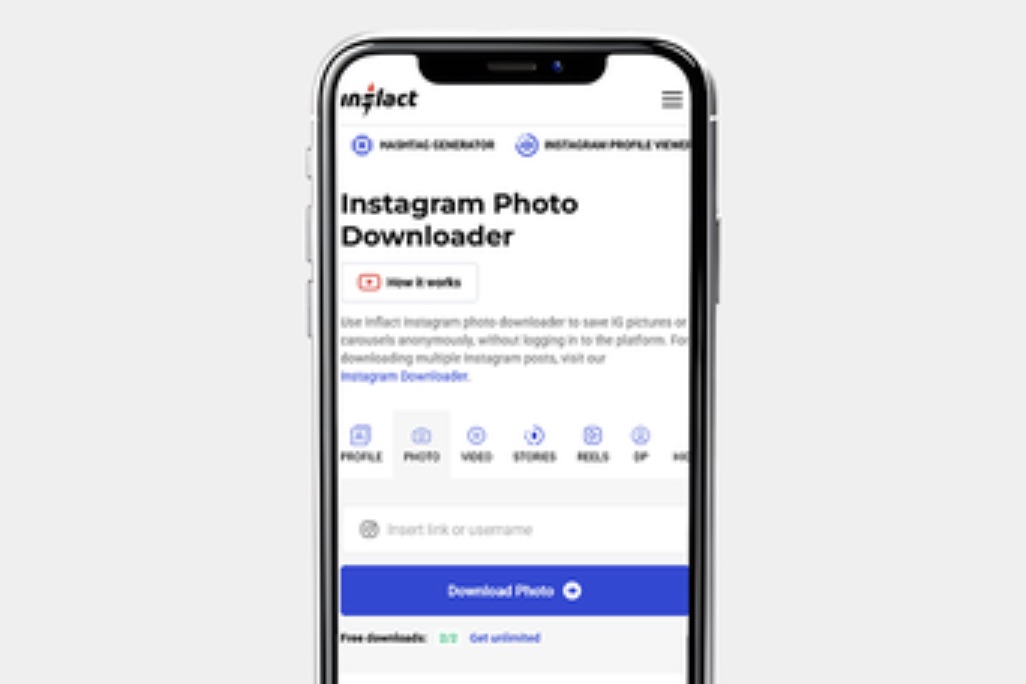
Just make sure to always respect copyright and only use an Instagram photo downloader link for inspiration or other lawful purposes.
Common Mistakes That Limit Your Audience Growth
Even the best content can fall flat if you’re making one too many mistakes. Take a look at the following things to watch out for:
- Posting inconsistently: Leave your audience hanging and you could lose them for good.
- Ignoring what your audience wants: Know who you’re talking to and what gets them excited.
- Using low-resolution visuals: Give your content the best possible look.
- Posting without a clear objective: What do you want to achieve with your content?
- Overloading posts with hashtags: Less is often more.
- Failing to respond to comments: Show your audience you care about what they have to say.
Avoiding these common mistakes is key to creating content that stops people in their tracks and builds your audience.
- Letting your branding look messy and unpolished.
- Forgetting to keep track of how well a post is doing.
A Reality Check Before You Hit Publish
Before you hit post, take a moment to ask yourself:
- Does this image grab me right from the start?
- Are your captions worth reading?
- Are you asking people to do something with this post?
- Is it on brand?
- Will people actually care about what you’re sharing?
Making a few tweaks here and there can make all the difference in seeing some real growth over time.
Content Creation Checklist – Is Everything Okay?
Before you publish, just check the following:
|
Grab attention from the start – does it? |
✓ |
|
Write a caption worth reading – yeah? |
✓ |
|
Make people want to do something with this – got it? |
✓ |
|
Use relevant hashtags that actually matter – yep |
✓ |
|
Is your branding consistent so people know it’s you? |
✓ |
|
Is it easy to read on a phone? |
✓ |
|
Give it a good proof-read? |
✓ |
|
Use top-notch visuals – nice! |
✓ |
Having a checklist that you can come back to time and time again helps you ensure every post is up to par and you don’t waste time on little mistakes.
The Bottom Line
Creating Instagram content that people actually care about is all about being creative, putting some thought into what you’re doing, and following through. Having a great image is a start – but it’s a lot more than that to get people to actually care about what you’re saying and share it with their friends.
Rather than jumping on the latest trend bandwagon, why not create a solid plan that builds on what’s already working for you and makes sense for your brand? Try out different formats and see what actually works, and then use all that data to make your next post even better.
With regular effort, some thought and careful planning – and maybe even a few tools to help make life a bit easier – you can start to see real engagement, get more followers and build a loyal following that just keeps growing naturally.

Home service work in Montana covers many trades, from remodeling and roofing to plumbing, electrical work, excavation, water wells, painting, and property maintenance. A bond is different from insurance because it protects a customer, public agency, or project owner when a business fails to meet a covered duty.
Many owners compare surety bonds online before applying, and resources such as suretybondsagent.com help business owners review common bonding needs, request pricing, and understand how they fit licensing or project requirements.
Montana Bonding Context for Home Service Work
The Department of Labor and Industry states that all construction contractors with employees must register, and construction contractor registration helps confirm compliance with the Montana Workers’ Compensation Act. The state lists a $70 non-refundable fee for the construction contractor registration application.
Some trades need a license or board approval beyond basic registration. Montana’s electrical contractor license requires a Montana licensed master electrician as the responsible party, and the responsible electrician’s license determines what electrical work the business is authorized to perform.
Water well contractors and monitoring well constructors have a separate bond rule under Montana Code Annotated 37-43-306, which requires a $25,000 surety bond or approved equivalent before work begins.
Types and Business Requirements

Home service companies need to separate statewide registration, trade licensing, municipal permits, customer contracts, and public project documents. Business bonding requirements differ by trade, location, project owner, and contract value, so the same company might face one rule in a private residential job and another rule on a city or county project.
Contractor Registration and Local Rules
A general remodeling, roofing, siding, painting, or repair company with employees should first review Montana construction contractor registration rules. Registration is not the same as a trade license, and it is not a guarantee of work quality. It shows that the company has completed a required state step tied to workers’ compensation compliance.
Local offices also matter because cities and counties set permit rules for streets, sidewalks, excavation, sewer connections, gas fitting, and right-of-way work. A contractor license bond at the municipal level protects the public office or affected property owners when the contractor fails to follow permit terms, restore work areas, or pay covered obligations.
Common Bond Types
Bond language changes by project, but the purpose is usually tied to license compliance, permit work, or contract performance. For home service companies, the most relevant categories include license and permit bonds, contractor bonds, performance bonds, and payment bonds.
The following comparison shows how several common bond categories apply to Montana service work:
|
Bond type |
Purpose |
Who needs it and common trigger |
|
Contractor license bond |
Supports compliance with license or permit rules |
Trade or municipal contractor when a board, city, or county requires it |
|
License and permit bond |
Protects a public agency tied to permitted work |
Excavation, sidewalk, utility, or right-of-way contractor before a permit is issued |
|
Performance bond |
Backs completion of contract work |
Contractor on public, commercial, or larger private projects |
|
Payment bond |
Helps protect covered suppliers and subcontractors from nonpayment |
Contractor using labor or materials from others on bonded work |
Customer Protection and Claims
A surety bond involves three parties: the principal, the obligee, and the surety. The principal is the business that buys the bond, the obligee is the public agency or customer requiring it, and the surety is the company backing the obligation. If a valid claim is paid, the business is generally responsible for reimbursing the surety.
Claims usually come from specific failures rather than ordinary dissatisfaction. A covered issue might involve abandoned work, permit violations, unpaid suppliers, failure to restore a public area, or noncompliance with a licensing rule. The bond form controls what is covered, so two businesses with the same trade might have different obligations.
Claim review depends on organized records:
- Signed contracts that state scope, price, schedule, and change order terms.
- Permit documents that identify the job location, agency, and covered work.
- Photos, inspection notes, invoices, and completion records.
- Customer messages, notices, and repair or correction timelines.
Good documentation helps a contractor respond when a city, customer, supplier, or project owner raises a complaint. It also helps the surety evaluate whether the issue fits the bond terms.
Application Steps and Renewal Timing
Getting bonded starts with identifying the exact requirement. A home service business should collect the obligee name, required bond amount, bond form, legal business name, ownership details, license or registration number, and requested effective date. For surety bonds for small businesses, pricing often reflects the bond amount, owner credit, business history, financial strength, and claim history.
Renewal timing deserves attention because a lapsed bond can affect licensing, permits, or contract eligibility. Some bonds renew annually, while others follow a project term, permit term, or license period. Owners should track renewal dates with contractor registration, trade license renewal, insurance expiration, and local permit deadlines so a job is not delayed by a missing document.
Stronger Preparation Before Bonding
Bonding works best when the business treats it as part of compliance. Montana home service companies should confirm whether they need state registration, trade licensing, a contractor license bond, a city permit bond, project bonding, workers’ compensation coverage, or an Independent Contractor Exemption Certificate before bidding or advertising work.
A prepared company also knows its bond amount, obligee, renewal date, claim triggers, and required records before the first customer call. That preparation supports cleaner applications, faster permit review, stronger customer trust, and fewer surprises when a city, board, lender, or project owner asks for proof of bonding.

More entrepreneurs than ever are building companies without ever hiring anyone, and the numbers back that up. Carta, a platform most startups use to manage their cap tables and track ownership, reports that the share of new startups launched by a single founder climbed from 23.7% in 2019 to 36.3% by the middle of 2025, meaning more than one in three new companies now begin life with just one person at the helm.
The Small Business Administration puts a similar figure on the wider economy, reporting that over 80% of small businesses in the United States have no employees at all. A few years back, running solo meant drowning in admin. Now it mostly means picking the right systems.
Why Solo Doesn’t Mean Isolated
Solo founders rarely do everything with their own two hands. Most quietly build a network of contractors and software that fills the gaps a traditional hire would normally cover.
The Contractor Habit
In its 2025 New Business Formation Survey, Gusto, a payroll and HR software company, found that one in three solopreneurs hired at least one contractor in 2024, and more than half of those planned to expand their contractor base in 2025.
That pattern shows up constantly. A solo founder might bring in a designer for a week, a bookkeeper for a quarter, or a lawyer for a single contract review. None of these call for a payroll team, benefits package, or an HR file. It just requires a system for paying people and getting paperwork signed quickly enough that nobody loses momentum waiting on approvals.
Get Paid Without a Finance Department
Payments are usually the first thing a solo founder automates, since cash flow problems hit faster than any other kind of problem. Instead of chasing invoices manually, most rely on payment platforms that handle recurring billing, late fee reminders, and tax documentation automatically.
Gusto reports that 77% of solopreneurs reach profitability within their first year, well above the 54% rate among businesses with employees. That number suggests solo operators are not just surviving; they are running lean operations that convert revenue into profit faster because there is far less overhead to cover.
Contracts and Paperwork on Autopilot
Paperwork is where a lot of solo founders used to lose entire afternoons, chasing signatures over email or printing documents just to scan them back in. That friction has mostly disappeared. Most clients today know how to add digital signature in word iphone and expect the same from their contractors. A signed agreement that used to take three days of back and forth can now happen before someone finishes their coffee — and this is a standard that applies to all niches, not just tech anymore.
Sign Documents From Anywhere
The same logic applies to onboarding new contractors, sending NDAs, or finalizing vendor terms. Solo founders tend to standardize a handful of document templates early on, then reuse them for every new client or hire instead of drafting from scratch each time. A few systems tend to repeat across nearly every solo operation, regardless of industry.
- Payment processing: Automated invoicing and recurring billing replace manual follow-ups on late payments.
- Contract templates: Reusable agreements cut drafting time down to minutes instead of hours.
- Digital signatures: Approvals happen from a phone or laptop without printing or scanning anything.
- Bookkeeping automation: Expense tracking and tax categorization run in the background instead of piling up for year-end.
None of these tools individually replace a team, but stacked together they remove most of the reasons a founder used to need one.
The Real Cost of Staying Small
Delaying that first hire pays off in a measurable way. Carta’s data shows solo founders wait a median of 399 days before their first hire, while founders who started with a partner take 480 days on average, which gives solo operators more time to build revenue before payroll enters the picture.

That gap adds up. A founder who waits an extra four months before their first hire gets four more months of runway, four more months to prove the business model works, and four more months where profit stays in their own pocket instead of covering a salary.
Even so, most solo operators eventually reach a point where automation alone is no longer enough, and the first hire becomes worth the cost.
Where This Leaves Solo Founders Today
None of this means solo founders are avoiding complexity; they are just managing it differently. Contracts still need signing, invoices still need sending, and clients still expect a fast, professional process regardless of how many people are behind the business. The founders who scale past the one-person stage tend to be the ones who built clean systems early, not the ones who tried to handle everything manually for as long as they could.

Bootstrapping to $190 Million: The Ultimate Cash Flow Playbook for E-Commerce and Retail

Why Cloud Migration Plans Break at the Handoff Between Teams

The Psychology of Wealth: A 3-Step Framework to Break Your Financial Ceiling

Impact of Internet Speed on Remote Work Productivity

How to Create Scroll-Stopping Instagram Content That Grows Your Audience

5 Ways For Startups To Succeed Making Acquisitions

77 Inspirational Quotes That Will Change Your Life

(Images) 52 Motivational Picture Quotes For An Epic Year Of Success
57 Memorable Kobe Bryant Quotes

40 Rare Motivational and Inspirational Picture Quotes

3 Prince EA Videos To Change Humanities Path To Greatness

(Video) What Is Success? An Entrepreneurial Story To Inspire You

(Inspirational Video) What If Today You Knew You Were Going To Take Your Last Breath?

How To Make Enough Money From A Blog To Quit Your Job – Kate McKibbin

How Finding Your Passion And Becoming An Entrepreneur Can Lead To Happiness – Chiquita Searle
-

 Success Advice2 years ago
20 Creative Ways To Make Money From Home
-

 Success Advice2 years ago
7 Habits of Highly Effective Mediocre People
-

 Creativity2 years ago
176 Inspirational Pablo Picasso Quotes on Art, Creativity and Life
-

 Life2 years ago
10 Ways Your Life is Like a Video Game
-

 Life2 years ago
13 Meaningful Ways to Show Someone They Matter
-

 Life2 years ago
The 5 Stages of a Quarter-Life Crisis & What You Can Do
-

 Did You Know1 year ago
7 Surprising Life Lessons Video Games Taught Me That School Never Did
-

 Success Advice1 year ago
Stephen Covey’s 8 Leadership Habits That Will Change How You Lead Forever